The Human Rights Defenders Coalition (HRDC) has backed the introduction of Tax Stamps by the Malawi Revenue Authority (MRA), saying the initiative is vital in strengthening the government’s capacity to fund essential services.
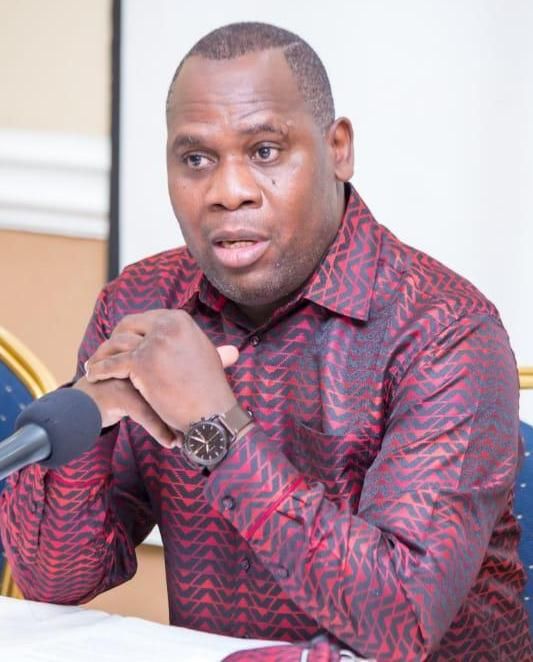
In a statement, HRDC chairperson Gift Trapence says the tax stamps are instrumental in combating tax evasion and fraud.
Trapense
He says the tax stamps will, among other things, address the smuggling of goods into the country.
However, Trapence has expressed deep shock at some quarters that have come out denouncing the implementation of tax stamps.
This comes as the Malawi First Movement, led by Bon Kalindo, intends to hold demonstrations against the tax stamps on August 8, 2024.
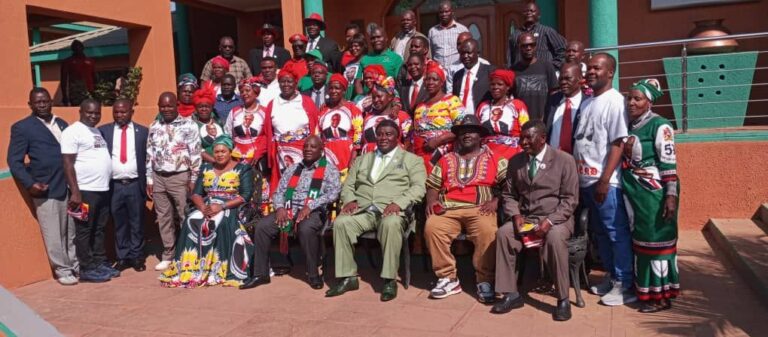
The leading candidate in the position of First Vice President at the fourth coming MCP Convention today engaged the Central Regional Committee. The soon to be Vice President took the opportunity to articulate his manifesto and reassure the grassroots party leaders that time has come for MCP to reclaim its rightful place as the greatest party in the land.
The meeting took place at Crossroads in Lilongwe. Zikhale was welcomed at the event by the Regional Chairman Zebron Chilondola.
Zikhale with some members of the Central Regional Committee
A total of 90 delegates were present at the meeting and these included Regional Chairs Lady Wendy Nalumo, and Regional campaign director Hon Madalitso Kazombo.
Zikhale has quickly risen to become the leading candidate and many people are just waiting for the day when he will be announced as the Party’s new Vice President.
Zikhale has won the hearts of many with his manifesto that promises more opportunities for the members and the likelihood that the party will become much stronger with him as he is a stronger campaigner, and accomplished political strategist.
Political activist Bon Kalindo has advised various groups, religious leaders and chiefs going to State House to comfort President Dr. Lazarus Chakwera not to forget the bereaved families whose loved ones perished in the plane crash in the Chikangawa forest in Mzimba district on Monday, 10th June, 2024.
Kalindo said he finds it strange that instead of people going to the families of the deceased including Dr. Saulosi Chilima, people are going to State House a development not only worrisome but suspicious that the mourners are paying khaki envelops to those coming to comfort them.
He said during the meeting with chiefs of the northern region, President Chakwera admitted that he is receiving insults and castigations over the death of Dr. Chilima and 9 others making him to speak for the things he does not want to speak.
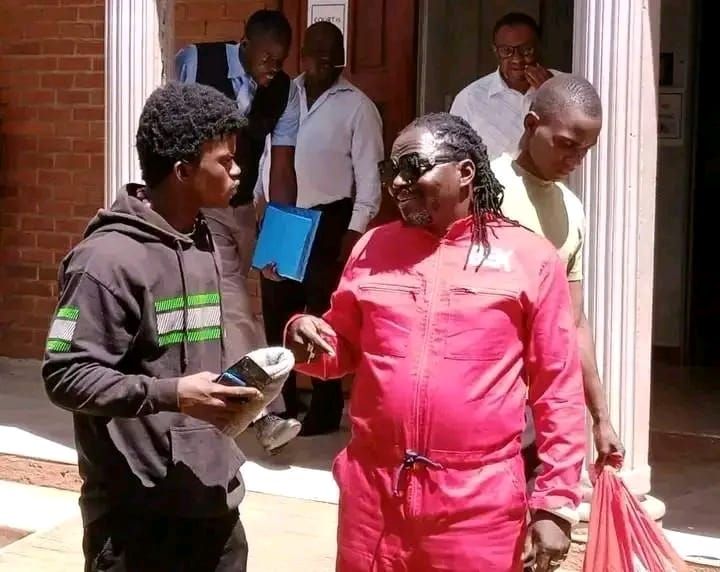
Bon Kalindo
Kalindo has concurred with President Chakwera that people have even composed songs of Chikangawa forest against him advising him to do the needful, release the report findings on the death of Dr. Chilima and nine others for the people to stop speaking against him.
He said in Iran, it took only a week to establish the reasons that made the helicopter which carried the country’s President to come out wondering why the report is taking so long in Malawi after the incident on 10th June, 2024.
The activist said Malawians are still mourning over the death of Dr. Chilima and nine others, they will stop mourning after the report has been released and made available to the general public but without the report, the mourning period still continues.
“From 10th June, 2024 till this day, there’s no report and even the MDF report is not available to the public only the autopsy reports from the hospitals, there’s growing pain in the eyes of Malawians,” said Kalindo.
He has also informed President Chakwera that a 70-year-old man Dytone Mhone who was arrested in Mzimba for sharing video clips of Chikangawa scenes is still languishing at Maula Prison in Lilongwe, he is poor and cannot afford to seek for legal representation for court bail.
The activist has finally invited all pensioners, THEBA People and Malawians of patriotic hearts for their country to join in solidarity protests in Blantyre and Lilongwe on 8th August, 2024 and on 15th August, 2024 Mzuzu, Mangochi and Zomba.
He has appealed to pensioners and THEBA People to form a network so that together with Malawians they can go to Parliament to stop parliamentary deliberations until government pays them their monies expressing his heartfelt sympathy for these two groups that many have died while waiting to access their monies.
Jumah says Malawi need a leader not a politician By Vincent Gunde President and Commander in Chief of Muvi wa Chilungamo Revolutionary Party (MRP) Bantu Saunders Jumah, says Malawi need a leader not a politician, a servant not a master and a leader not a boss for it to move out from being the poorest to a rich nation.
Jumah said Malawi has had six presidents, all with title holders on the land, Doctors and Professors but have left the country poor as it was in 1964 claiming that executive arrogance has made the country remain behind.
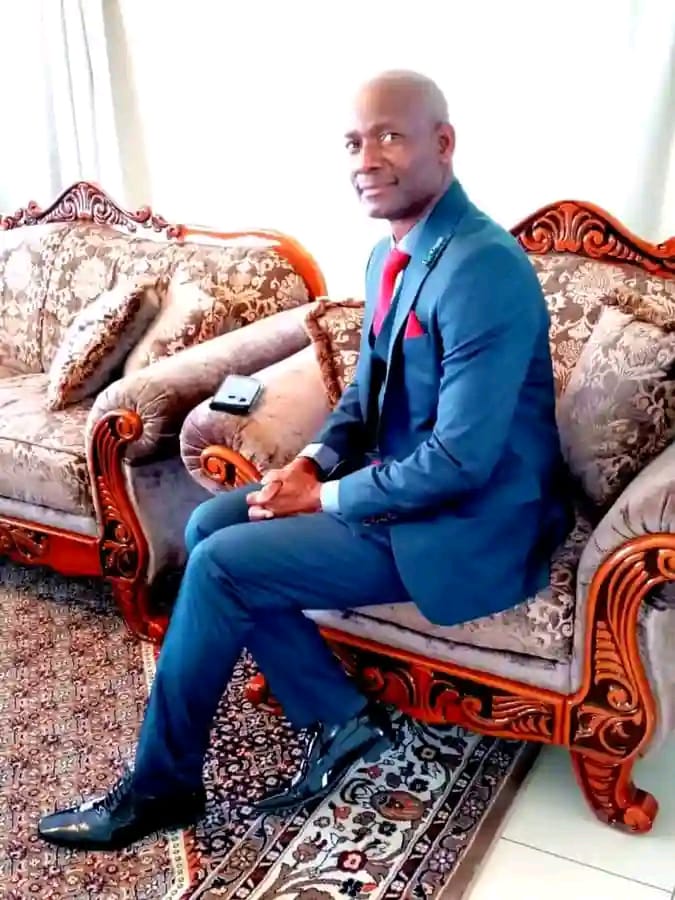
Bantu Saunders Jumah
He said President Dr. Lazarus Chakwera promised to change the country to prosperity within 2 years with assurance that if he fails, he will resign but executive arrogance has become a daily bread, Chancellor of all public universities in Malawi.
Speaking through a Revolutionary voice in various media platforms, Jumah said President Chakwera must go back to his words, stand up and apologize to Malawians for promising them the moon saying in 2025 Malawi will not have Chakwera because of executive arrogance.
Jumah said the development projects Chakwera is implementing is as a result of the development Agenda of Africa that by 2063, 55 nations forming the continent of Africa are economically independent and self-dependent from countries of the West.
He said Malawi created the National Planning Commission to monitor development to 2063 but on a surprise, 6 new political parties have managed to get a certificate of compliance while big parties UDF, DPP, AFORD and MCP do not dream of reaching 2063 only on paper.
The MRP President said Malawi has already lost 4 years of the development agenda 2063 with President Chakwera’s excessive borrowing for consumptions saying the national debt has reached K15 trillion and by the time the country goes to the 2025 elections, the debts will be over K17 trillion.
He has lamented that K15 trillion debts would have constructed a duo-carriage road from Nsanje-Chitipa, modern airports and other long-term infrastructures but on a sad note, it has gone into the pockets of politicians for mansions and handouts to the would-be voters.
Jumah has advised Malawians to remove executive arrogance if the country is to move forward but repeating the same executive arrogance leaders, Malawi will be poor forever observing that Malawi was not created to be poor, it would have been the second richest nation in the SADC region.
“Malawi more than ever, needs mindset change of ideas, new parties to give a new direction, everyone who has been tested for leadership must rest for new people with new ideas to take the country to another level of prosperity,” said Jumah.
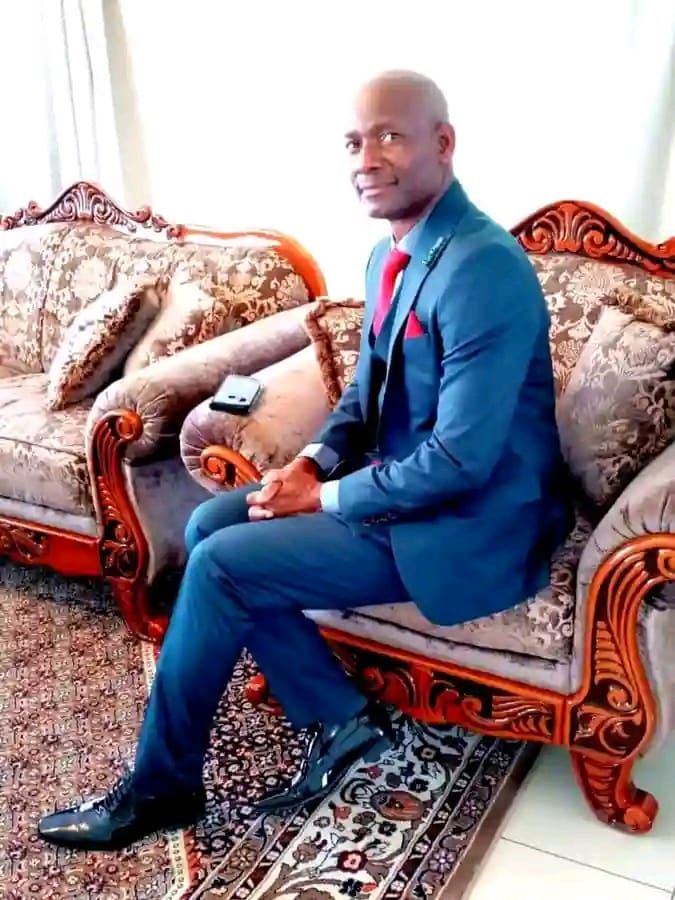
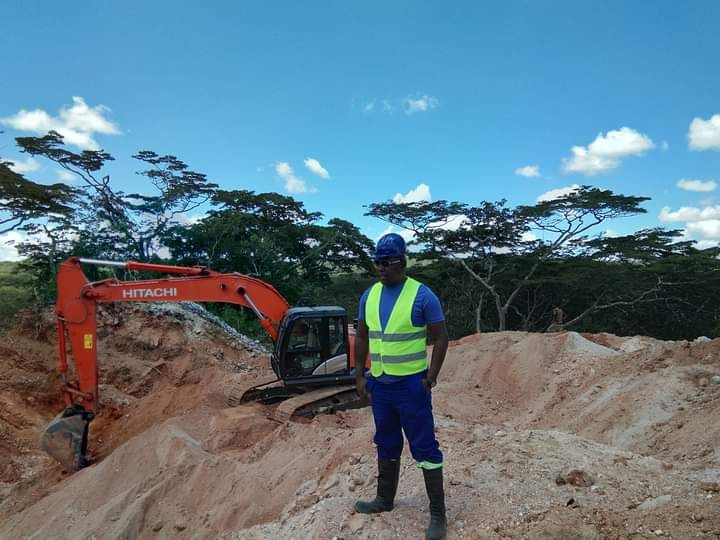
Yamikani Jimusole, one of the few active accredited Gemologists in the private sector and Chief Executive Officer (CEO) of Yami Gemstone Lab & Exports (YAGLE), a local mining and mineral trading business in Malawi, has threatened to take legal action against the Ministry of Mining and the Malawi government over alleged incompetence, undervaluation of gemstones, and lack of seriousness.
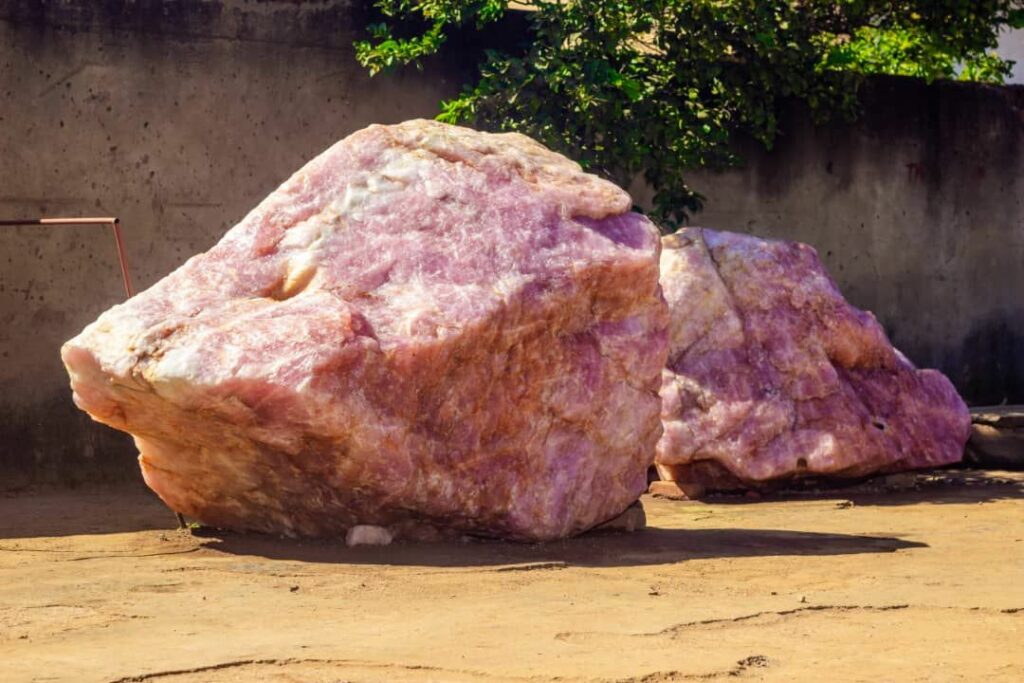
Since 2021, Jimusole’s company has been trying to engage with the Ministry’s laboratory department to verify the quality of their gemstones, including rare rose quartz.
Yamikani Jimusole
Despite numerous attempts, they have faced significant challenges.
In an effort to resolve the issue, Yami Gemstone Lab & Exports sent 63 samples to the laboratory, but only received two incomplete and substandard documents.
This has resulted in a significant loss of business and forced the company to close down due to lack of working capital.
Furthermore, the company invited the Ministry of Mining, in collaboration with the Malawi Revenue Authority(MRA) and Malawi Bureau of Standards(MBS), to assess and value their inventory in April.
However, it is now August, and they are yet to hear from them.
“This lack of seriousness and disregard for our business is unacceptable.
“We have tried to communicate with key stakeholders, including the Minister of Mining,Monica Changanamuno, her two Principal Secretaries, Dr. Joseph Mkandawire and Mr. Martin Kaluluma Phiri, directors, and other officials, but to no avail.
“We believe that the Ministry’s actions are not only incompetent but also malicious, and we will not hesitate to take legal action to protect our business and reputation,” he said.
Jimusole also highlighted the lack of expertise and infrastructure within the Ministry, saying:”Currently, the Ministry of Mining is the only or solo Gemological service provider in Malawi, although its laboratory is yet to be accredited.
“The Ministry’s solo accredited Gemologist, Mr. Rodrick Phiri, a graduate of the Asian Institute of Gemological Sciences, conducted laboratory tests, but his reports are substandard and fail to meet industry standards.”
Additionally, Jimusole pointed out that the Ministry lacks grading certification and appraisal systems.
“This means that Malawi continues to export its minerals without knowing their true market value, resulting in significant losses for local businesses and the economy,” he said.
Jimusole emphasized that gemstone and appraisal reports are supposed to meet minimum industry standards set by reputable associations like the International Colored Stone Association (ICA), Responsible Jewellery Council (RJC), and CIBJO, NAJA, just to name a few.
“It is unacceptable that the Ministry’s reports fail to meet these standards, further eroding trust in the industry,” he said.
Jimusole also disclosed that he expects its inventory to be valued in the millions of dollars, which will lead to the commercialization of their mining projects.
These projects have the potential to generate at least $1 billion annually in the near future.
“For a country facing forex shortages, we believed the ministry and government could have supported our efforts, but to no avail,” he said.
Jimusole drew parallels with Tanzania, which in 2017 under late President Magufuli imposed a ban on all gemstones exports for a few years while putting systems in place to protect the gemstone industry.
“Tanzania recognized the need to safeguard their industry and took bold action. Why can’t Malawi do the same?,” he said.
Jimusole wondered how the government can collect more revenue in the absence of proper Grading certification and appraisal systems, and when its own experts are undervaluing the gemstones.
He cited an example where in 2020, they sent 1.3 kgs of tourmaline samples to Columbia Gemhouse, which declared a value of $2500/kg.
Surprisingly, in 2022, Mr. Rodrick Phiri, the Ministry’s solo accredited Gemologist, valued superior quality tourmaline at $4/kg.
“This is a clear example of undervaluation, and it’s unacceptable.
“How can the government expect to collect fair revenue when its own experts are undervaluing the gemstones?,” Jimusole said.
In a separate issue, Jimusole highlighted the sale of a huge rock crystal by the Ministry of Mining in 2020, which was confiscated from Malawian and Chinese illegal miners.
The crystal was sold for below $3000, despite the then Minister, Rashid Gaffar, protesting that the stones could be worth over MK170 million.
“This is a clear case of undervaluation and lack of transparency.
“The government is losing millions of dollars in revenue due to its own incompetence and lack of expertise,” he said.
He said he will invite media houses to a press briefing where he will share evidence of the Ministry’s incompetence, including letters sent to key stakeholders, substandard gemstone and appraisal reports, and documentation of the company’s attempts to engage with the Ministry.
“I want to transparently share our experiences and the evidence we have gathered.
“We believe that the public has a right to know what is happening in the mining sector and how the Ministry is handling these critical issues,” Jimusole said.
He added:”As one of the few accredited Gemologists in Malawi and Africa, the country was supposed to be proud of its experts. Instead, we are being undermined and undervalued. I have vowed to lead by example and showcase the true potential of Malawi’s gemstone industry.”
With over 25 different types of gemstones discovered by YAGLE across Malawi, Jimusole is optimistic about the future.
“The future looks bright, and we are committed to developing the industry and creating opportunities for Malawians. We will not let the Ministry’s incompetence hold us back,” he said.
Jimusole’s determination and expertise have positioned YAGLE as a leader in the gemstone industry, and his efforts to promote Malawi’s gemstones globally are being recognized internationally.
Despite the challenges, Jimusole remains committed to his vision of developing Malawi’s gemstone industry and creating a positive impact on the economy and communities.
“We will continue to push for excellence and transparency, and we will not be silenced or deterred by the Ministry’s actions,” he said.
As a final warning, Jimusole has threatened that should the Ministry not respond within 7 days, he will be forced to seek an injunction stopping the Ministry of Mining from issuing gemstone export permits until proper grading certification and appraisal systems are put in place.
“We cannot continue to operate in an environment where our business is undervalued and undermined by the very authorities supposed to support us.
“We urge the Ministry and the government to take our case seriously and take immediate action to address our concerns and support the growth of the mining sector in Malawi.
“The good thing is that the Attorney General, Mr. Thabo Chakaka Nyirenda, is aware of our case, so it won’t come as a surprise,” Jimusole added.