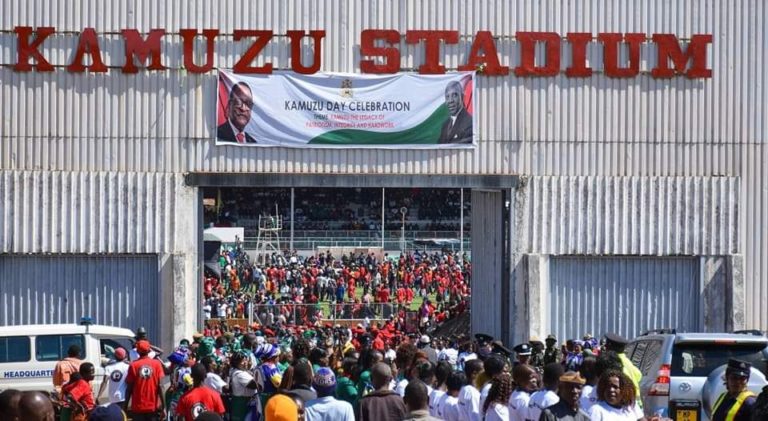
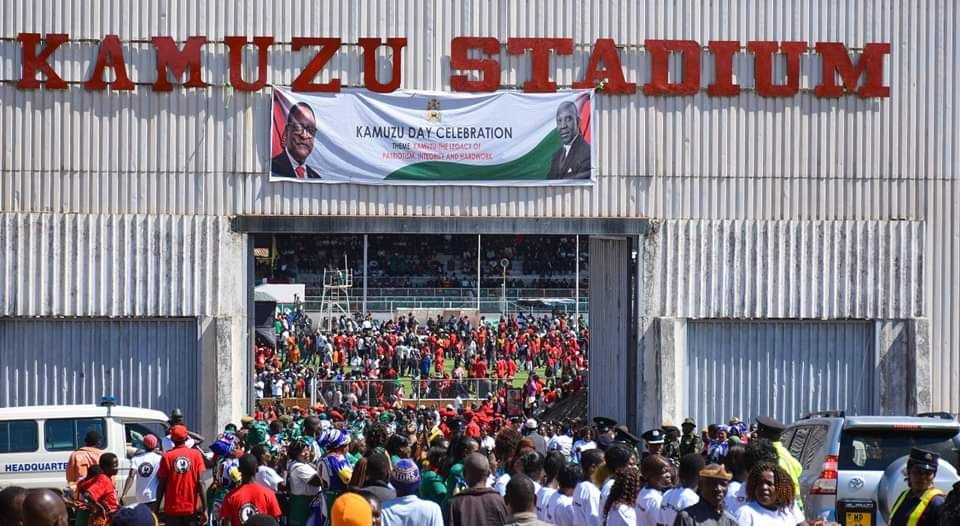
Kamuzu Day celebrations are underway at the historic Kamuzu Stadium in Blantyre City, with participants describing the day as a day of reflection on the life and the foundations that Kamuzu Banda laid for the development of the nation.
Minister of Health, Khumbize Kandodo Chiponda underlined the significance of the day, stating that it is important for the nation to celebrate the foundations that the Founding Father of the Malawi nation laid for the transformation of the country.
“It is important that we look back and learn from our founding father’s long-lasting foundations of development that he established for us which we are building on now,” she stated.
On his part, Minister of Defence, Harry Mkandawire, stated that he fondly remembers Kamuzu Banda for implementing transformative development projects in Malawi.
Citing the transformative effect of the road projects, Mkandawire said transportation projects such as the M1 road transformed the socio-economic lives of many Malawians.
He also applauded the Chakwera-led government for renovating and upgrading some of the critical infrastructures which were established by the late leader, citing government’s upgrading of the M1 road.
National High Priest of Rastas in Malawi, Rasta Nimrod Chilambe described the day as a special day for the rastafarian community for it reminds them that Kamuzu Banda once hosted His Imperial Majesty Emperor Hailie Selassie of Ethiopia to Malawi in 1965, which he said was an honor to the rastafarian community.
Concurring with other speakers, Chilambe said for the country to move forward, it has to reflect on the foundations built by Kamuzu Banda, also noting that the day has unified Malawians from all walks of life.
He then urged Malawians to continue working with President Dr Lazarus Chakwera, stating that Malawi as a country has the will and drive to build on Kamuzu’s long term and impactful socioeconomic development.
A pacesetter according to dictionary dot.com is a person, group or organization that is the most progressive or successful and serves as a model to be initiated a person or organization that is first to do something so as to set an example.
Kamuzu was the first President of the Republic of Malawi.
Let me from the outset state that I will not labor you to tell you who Kamuzu was, for a lot of literature has been written about him suffice to say he ruled Malawi from 1964 to 1993/94.
Dr.Hastings Kamuzu Banda, who led Malawi to independence in 1964 and was in power for 30 years, died in 1997 at Garden City Clinic in South Africa.
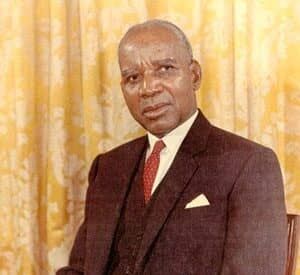
Kamuzu Banda
This article would like to recognize Kamuzu as a pacesetter a man of standards.
Despite Britain’s aid of about $25 million, independence revealed a Malawi economy so stagnant that it yielded an individual annual income of only $17.50 for a large segment of the black population.
The few available manufacturing jobs were hotly contested, and there was little domestic mining activity outside of lime quarrying for cement.
Malawi then Nyasaland was under British protectorate under the federation of Rhodesia and Nyasaland (There was south and North Rhodesia) It was Kamuzu Band who set the pace by weaning itself from the federation, by becoming the first country from the three to gain independence.The two gained it later. As a pacesetter Banda constructed foundations to shore up the teetering economy, establishing parastatal organizations, or state-run corporations.
The Malawi Development Corporation, formed in 1964, that promoted manufacturing operations and kept a close watch on all foreign companies by means of obligatory government partnerships.
ADMARC, founded in April 1971, is an agricultural cooperative with a national monopoly on fertilizer and seeds. Partly as a price-setter, the organization also handles export crops of tobacco, groundnuts, cotton, and maize; by the early 1980s it had burgeoned enough to boast shares in such profit-spinners as the Bata Shoe Company, Lever Brothers, and the Portland Cement Company.
A third important organization, regarded as a quasi- parastatal, was President Banda’s own Press Holding.
Initially set up in 1969 to print the party newspaper and finance the MCP, Press Holding also financed his tobacco-farming estates.
Profits from Press Holding and ADMARC were often mingled to finance the president’s petty schemes. One big beneficiary is the elite Kamuzu Academy, founded in 1981 which was established to provide a liberal arts education for the country’s top students.
The academy was was nicknamed the Eaton of Africa.During the commemoration on Kamuzu day at the CCAP Church in Kasungu on May 14 2019 Malawi Congress Party president, Lazarus Chakwera, said “people must appreciate that Kamuzu was beyond the party, but a national hero who had vision for this country.
Some of the things, that he stood for and set pace, is that we had the best civil service in this country and perhaps in Africa. Everybody wanted to work in the civil service.
The other area was the education system, agricultural system that was fully functioning and serving Malawians and everybody and prospering but services have deteriorated “ he said. As a pacesetter in the field of education Kamuzu was a highly educated man who instilled in his people a sense of aiming high. In this regard he established the university of Malawi.In order to avoid brain drain in the medical field he established the Malawi College of Medicine.
In the area of visible Leadership, Kamuzu also set a pace in the agriculture field as he established his own farms, Press farming and Agriculture were also established where he encouraged his people to go and learn modern agriculture methods and to this end he established the Natural Resources College and Bunda College of Agriculture in the hope of steering the economy through Agriculture.
To ensure that the masses were abreast with this philosophy of hard working spirit for self-reliance.
Kamuzu also set the standards in terms of youth development when he established the Malawi Young Pioneer. The aim was to provide the youth with skills so that they could be self-reliant and be disciplined and responsible youth. MYP (Malawi Young Pioneers) Training bases were established and spread across the country where the youth would be trained in various aspects of body, mind and soul, humanity with emphasis on hard work and commitment in all undertakings.
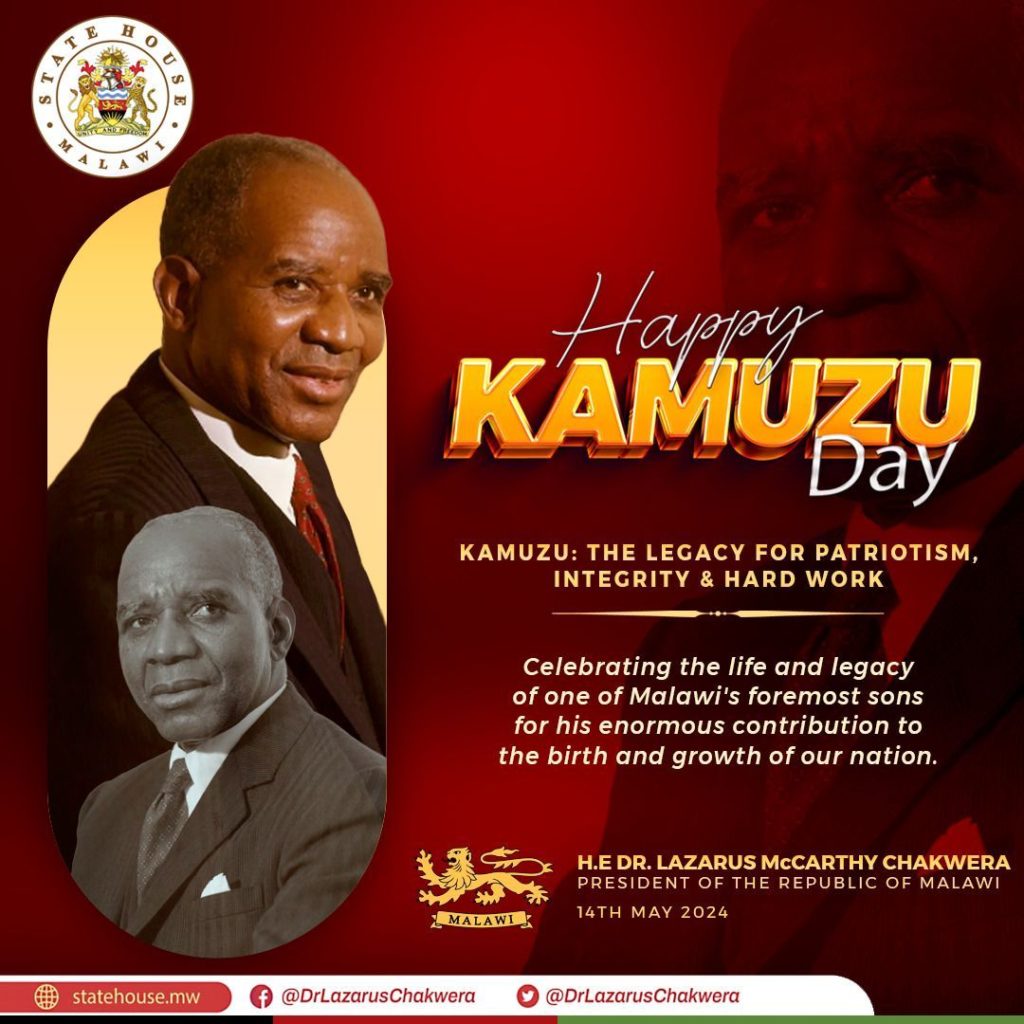
Hard work in simple terms is giving one’s all [Time, commitment, will, energy, in order to achieve a desired goal or objective] by using zeal and intelligence. “I want my people to work hard in the fields “Kamuzu would always say at every opportunity. Dr. Hastings Kamuzu Banda had several philosophies, however as we commemorate this day on 14 May popularly known as Kamuzu day it is high time we reflect on standards set by Kamuzu.
When Dr.Hastings Kamuzu Banda landed at Chileka airport way back in 1958, he openly and publicly declared that he had come to Malawi then Nyasaland to do several things among them. 1. Break the stupid federation of Rhodesia and Nyasaland and give his people freedom 2. Make sure his people had three essential things {food, shelter and clothing}.
He continued to say he wanted people to have bumper yields, houses that do not leak when it is raining and decent clothing not nyanda. In order to achieve this he laid down a framework in form of a foundation for people to help him achieve the number two agenda.
The foundations were dubbed as four corner stones. Loyalty ‘Discipline, Unity and Obedience He believed that if the masses followed the four corner stones they would achieve greatness.
Malawi was a one-party state with Malawi congress party as the only party. Whether there was separation of powers between Government and the party is a subject for another day.
He further instilled a culture of hard work in the Civil service for excellent service delivery and those who were hard workers were rewarded and motivated. He did not tolerate laziness and complacency.
It was no wonder that the philosophy later turned into quantifiable aspect when Malawi at that time through the process of hard work and commitment was dubbed /rated a star performer by the World Bank and was a model country to be followed and emulated.
Public sector reforms have been on going with an aim of ‘making huge efforts to improve the performance of the public sector through various reform initiatives. Anchored by the new public management (NPM) paradigm and demands for good governance, the reform initiatives have sought to reduce the core functions of the state, foster fiscal stability, emphasize managerial efficiency within the public sector, redefine relations between public and private sectors, promote economic development”.
There has been population growth in Malawi. In 1978 there were 7.2 million people while 2018 there were 19.16 million people and it is projected that by 2050 there shall be 45 million people scrambling for the same piece of land and natural resources that were being used by 3.963 people in the year 1964.
It is pleasing to note the Kamuzu made all efforts to control over population through several health initiatives at that time.
In infrastructure he was a pace setter by building the Lilongwe Capitol Hill where government sits probably the best government seat in Africa at that time.
He set the pace in unifying the nation by reminding Malawians that they were all Malawians and not Lhomwe, Tumbuka, Yao , Chewa etc.
In conclusion it is undoubtedly impossible for a country to progress without hard work, self-sacrifice and commitment hence all Governments emphasis on the same and we cannot deny the fact that Kamuzu set the pace and the predecessors are striving to beat the standards so set by the pace setter Kamuzu. As a pace setter the virtues of hard work and commitment that culminates into values and beliefs as a nation would instill a culture that would see a nation prospering together with its people regardless their color, creed.
In the final analysis the citizenry benefits from their sweat.Even Kamuzu for himself to reach the level he was (a man of high standards) had to endure a lot, sacrificed a lot, did a lot of hard work in Malawi, South Africa, America and the UK in his quest for a better life. May his soul rest in peace as we remember his day on 14 May.
*Stevie M Kauka is a fellow of the IPMM who likes to write on several issues in his own capacity*
As the 2025 presidential elections approach, many political analysts are predicting a tough road ahead for opposition parties seeking to unseat incumbent President Lazarus Chakwera.
While it is still early days, there are several reasons why Chakwera may not be easily defeated in the upcoming polls.
First and foremost, Chakwera’s Malawi Congress Party (MCP) has been gaining momentum since the 2019 elections, with a strong showing in recent by-elections and local government polls.
This suggests that the party’s support base is growing, and Chakwera’s leadership is resonating with voters.
Favourite to win- Chakwera
Secondly, Chakwera has made significant strides in delivering on his campaign promises, including infrastructure development, economic reforms, and social welfare programs.
These achievements are likely to resonate with voters, particularly in rural areas where development has been slow in coming.
Thirdly, Chakwera has maintained a strong relationship with international partners and donors, which has secured vital funding for development projects and boosted Malawi’s global standing.
This diplomatic clout will undoubtedly benefit his re-election bid.
Fourthly, the opposition parties are still grappling with internal divisions and leadership squabbles, which may hinder their ability to mount a united challenge to Chakwera’s presidency.
Lastly, Chakwera’s leadership style and charisma have earned him a strong following among key constituencies, including the youth and rural voters.
His ability to connect with ordinary Malawians and inspire hope for a better future is a significant asset in the upcoming elections.
While the opposition parties still have time to regroup and mount a strong challenge, it is clear that Chakwera’s advantages make him a formidable candidate for the 2025 presidential elections.
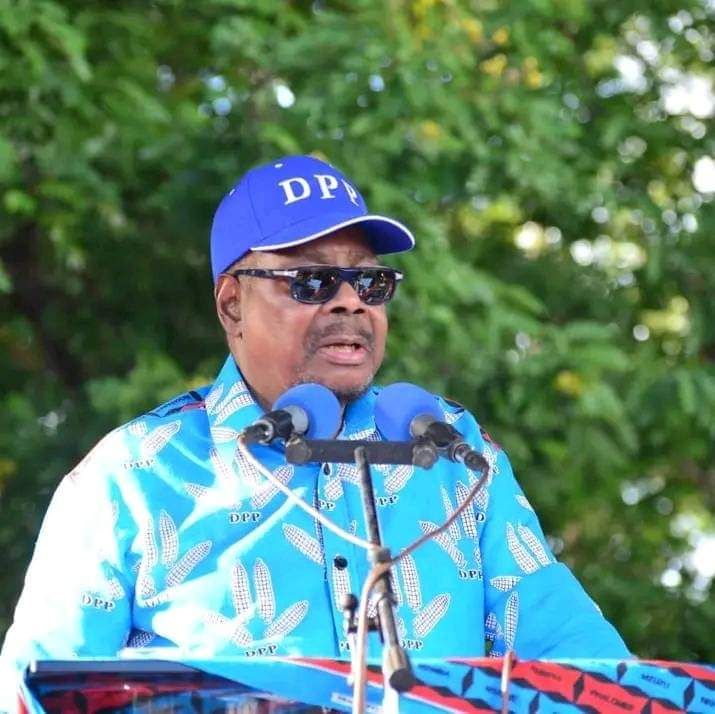
Former President and Democratic Progressive Party (DPP) leader Peter Mutharika has says it will take him only two years to address all the challenges facing the nation.
Mutharika said this on Saturday at Njamba Freedom Park in Blantyre, where he organized a mega political rally.
The former president who appeared energetic and determined criticized the Tonse Alliance-led government, saying it has failed Malawians miserably.
Mutharika boasted that during his presidency, which began in 2014, he successfully addressed socioeconomic challenges caused by the previous People’s Party (PP) administration within a year.
Mutharika
He also urged law enforcement agencies and President Lazarus Chakwera to hold those responsible for attacking DPP supporters in Mponela and Lilongwe.
Furthermore, Mutharika made a serious allegation, claiming that an unidentified church is plotting to rig the upcoming elections.
He then reminded Malawians of what he said on the campaign trail in 2019 when he told them that Malawi Congress Party (MCP) did not have the capability to manage government affairs.
“I told you that choosing MCP is choosing politics over development, now you can see for yourself,” said Mutharika citing high inflation as an example of the failures of MCP.
Before Mutharika took to the podium, other party leaders appraised him of the situation and urged him to return back to power because things have gone worse since he left government.
He since promised that he will soon be going on a nationwide tour to give hope to Malawians.
Alliance One Tobacco Malawi Limited, in partnership with Pyxus Agriculture Limited and Imperial Brands, has increased its sponsorship of the Chess School Project to K28 million, up from K12 million.
The project, implemented by the Chess Association of Malawi (CHESSAM), aims to promote chess in 21 rural-based primary schools in the central and northern regions.
During a signing ceremony in Lilongwe on Sunday, Alliance One Tobacco Malawi Limited Managing Director Simon Peverelle reiterated the company’s commitment to growing the sport, particularly in rural areas.
He expressed satisfaction with the program’s progress, noting that it has successfully developed chess among school children and helped reduce child labor in tobacco-growing areas.
Peverelle emphasized that chess is a suitable sport for school-going children, as it requires mental agility without physical involvement, making it an attractive alternative to football.
He reaffirmed the company’s dedication to supporting Chessam in its mission to develop the sport.
CHESSAM President Mpilo Mizere expressed gratitude to the two companies, praising them as true partners in the development of chess.
He said the increased sponsorship is expected to further enhance the project’s impact, promoting the sport and empowering school children in rural Malawi.
Chess is an abstract strategy game that involves no hidden information and no elements of chance.
It is played on a chessboard with 64 squares arranged in an 8×8 grid.
The players, referred to as “White” and “Black”, each control sixteen pieces: one king, one queen, two rooks, two bishops, two knights, and eight pawns.
White moves first, followed by Black.
The game is won by checkmating the opponent’s king, i.e. threatening it with inescapable capture.