

Saturday, April 18, 2026
No menu items!
spot_img
Home Blog Page 1191

Kalindo advises MCP delegates not to be carried away by money but vote for reliable people

0

By Vincent Gunde

Political activist Bon Kalindo has appealed to MCP delegates at the August elective conference to take Ngwazi Dr. Hastings Kamuzu Banda and John Tembo’s legacy in their heart not to vote for those who are displaying money to entice them vote for them saying money will not keep the party.

Kalindo said money is now free for all to the Convention delegates saying even President Dr. Lazarus Chakwera and his Vice Dr. Michael Usi have now turned into NEEF officers encouraging all to borrow the money without collaterals.

He said Malawians need to question in their hearts that hospitals are running without essential drugs, skyrocketing prices of essential goods, everything in Malawi has gone to the dogs, where are these people getting the monies for distributions?
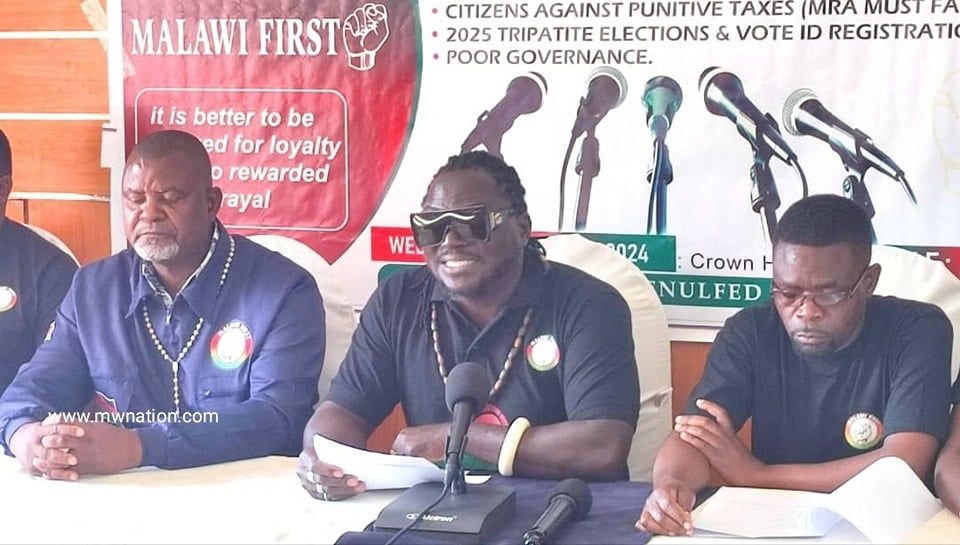
Kalindo (Centre)


Speaking through an audio clip, Kalindo has also advised delegates of the DPP, AFORD and UDF to borrow a leaf from the MCP ministers who have turned billionaires over a night claiming that some of them have reached a stage of throwing money in the stadium for people to collect as what happened at the Zomba stadium.

Kalindo said it was the people of Kasiya, Kabudula, Nsundwe, and other places that were receiving K900,000 via their mobile phones and now the opportunity has spread to the people of other regions to see the benefits of being in MCP where money is free for all.

He has reminded MCP delegates that stolen money from government coffers are the ones they are pocketing and as such, they need not to vote for money claiming that these people are not genuine members of the party, they are there to sale the MCP.

The activist has advised delegates to receive whatever they are given from corrupt ministers and other senior party members such as motorbikes, bicycles, but their vote should be on a person to keep the party to the next generation.

“Eat the free money it is your taxes, don’t feel mercy at them for giving you huge amount of money, remember your relatives at home they are dying for no Panadol and aspirin in hospitals,” said Kalindo.

Kalindo has also questioned the government why it wants to celebrate disbursement of K100 billion NEEF money to the beneficiaries on 25th July, 2024 in Balaka describing this function as another waste of government resources which could have gone a long way to procure medicines in hospitals.

He said the whole government is celebrating while 100 percent of it have gone into the pockets of ministers, senior government and state house officials with the ordinary citizens just hearing NEEF loans on paper.

Kalindo said people have now made a conclusion of not making any mistake to vote for the MCP to bounce back into government besides capturing all state institutions, activists and journalists to join it celebrating stolen taxpayers’ money for personal benefits.
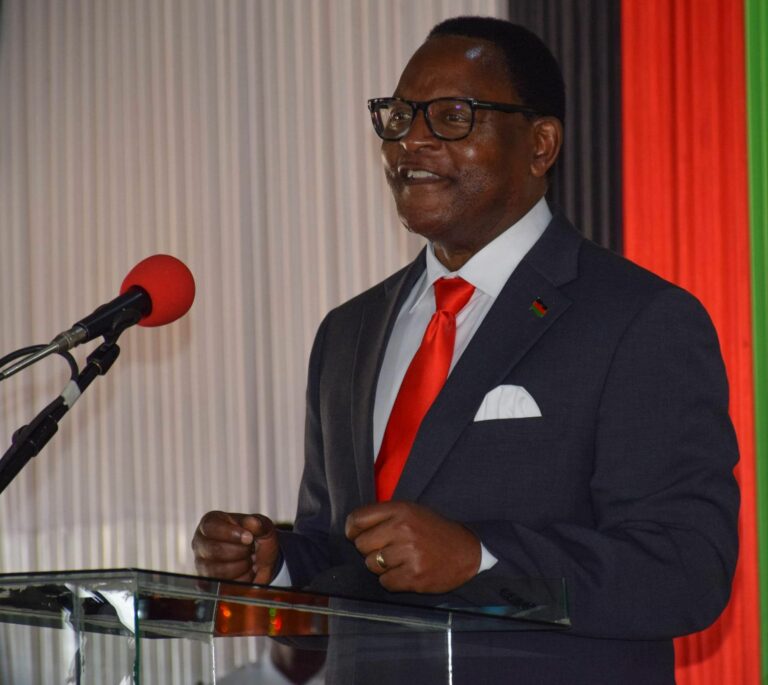

Chakwera urges Malawians to uphold their spiritual values

0

By Durell Namasani

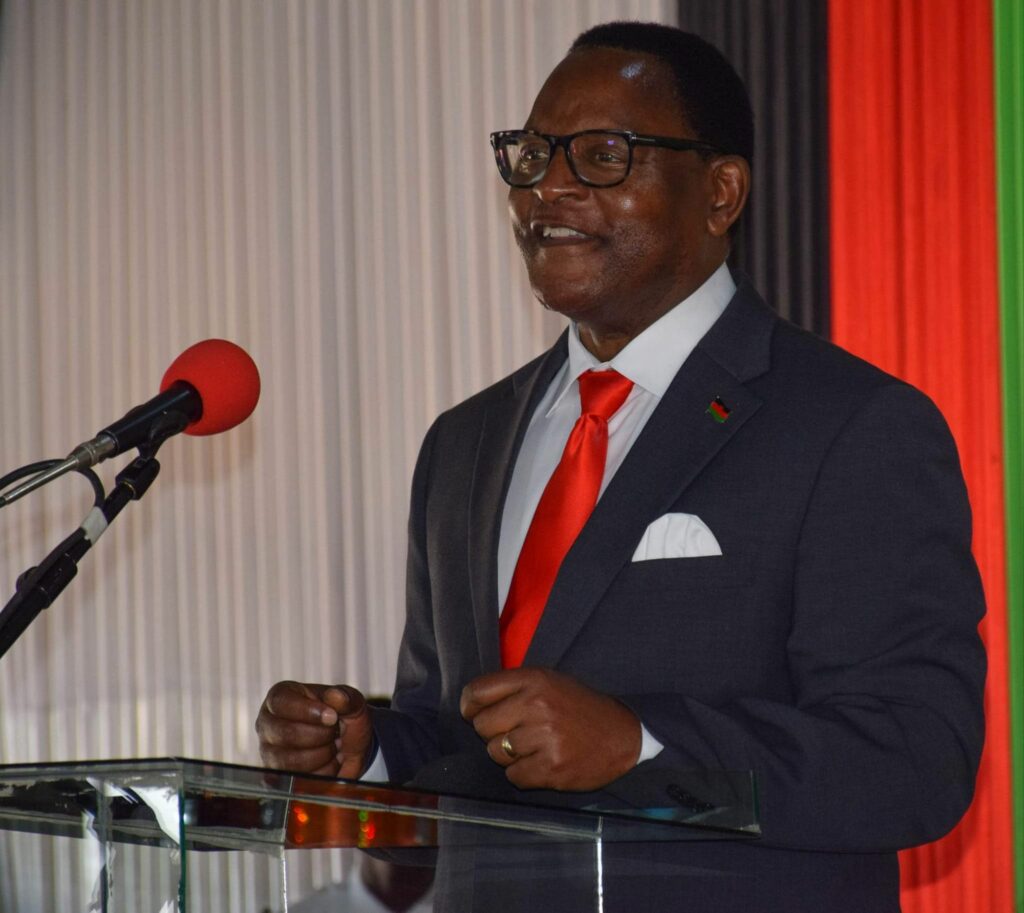
President Dr. Lazarus Chakwera has emphasised the importance of faith in nation-building, urging Malawians to continue being God-fearing citizens.

Speaking during a worship service at Monkey Bay Assemblies of God Church on Sunday morning, the President encouraged Malawians to hold onto their spiritual values, stating that God is the foundation of the nation.


President Chakwera urged Malawians to continue seeking divine guidance and wisdom, emphasising that this will lead to a more prosperous and harmonious society.

In his remarks, Resident Pastor at Monkey Bay Assemblies of God Church, Reverend Alex Msoliza Chirwa, reinforced the President’s message in his sermon by encouraging Malawians to refrain from seeking revenge for past wrongs and instead seek God’s will in all circumstances.

President Chakwera

Assessing Malawi’s leadership and IMF relations: A critical view

By Burnett Munthali

Malawi, a nation in Southern Africa, has long grappled with economic challenges that have led it to seek financial assistance from international institutions like the International Monetary Fund (IMF). The IMF’s role, in theory, is to provide guidance and support to countries in economic distress, but its policies and recommendations are often met with mixed reactions. This article examines the current leadership in Malawi and their approach to dealing with the IMF, questioning whether they possess the fortitude to challenge the institution’s guidance and decisions.

Malawi’s contemporary leadership has faced scrutiny for its handling of the nation’s economic policies. Critics argue that the current leaders lack the vision and courage needed to confront the IMF when its recommendations are seen as counterproductive or inappropriate for Malawi’s unique circumstances. This perception is fueled by the view that the leaders are excessively reliant on external aid and financial assistance, embodying a metaphorical “beggar” mentality.


LThe IMF often prescribes austerity measures, structural reforms, and fiscal discipline to countries in economic distress. While these measures are intended to stabilize economies, they can sometimes exacerbate poverty and social inequality. For Malawi, these recommendations might appear disconnected from the lived realities of its citizens, who struggle with basic needs and services.

Critics of Malawi’s leadership argue that instead of questioning or negotiating the IMF’s terms, the current administration acquiesces readily, prioritizing short-term financial relief over long-term sustainable development. This perceived lack of assertiveness is likened to the naivety of “kindergarten kids,” suggesting a lack of sophistication and strategic thinking.

The analogy of “mwala ku mwala katapila” (a stone hitting a stone) is used to describe the seemingly unproductive cycle of borrowing. This phrase highlights a concern that borrowing from international institutions, without addressing underlying economic issues, is akin to hitting a hard surface with no productive outcome. Critics argue that such borrowing, while providing temporary relief, often fails to address structural weaknesses within Malawi’s economy.

For Malawi to navigate its economic challenges effectively, strong leadership is crucial. This means not only accepting financial assistance but also critically evaluating the terms and advocating for policies that align with the country’s needs. Courageous leadership would involve engaging with the IMF in a way that prioritizes national interests, even if it means challenging established norms or facing short-term discomfort.

In conclusion, the current leadership in Malawi faces a critical test in its interactions with the IMF. The ability to confront and negotiate terms with the IMF, rather than passively accepting its recommendations, is essential for achieving sustainable economic progress. As Malawi continues to navigate its complex economic landscape, it will need leaders who are both resilient and innovative, capable of balancing external assistance with effective domestic policy and reform.

Doing business or farming in Malawi is more complicated

0

By Burnett Munthali

Operating a business or farming in Malawi presents significant complications that hinder growth and development. Among these challenges, a fundamental issue is the widespread lack of mathematical understanding among entrepreneurs and farmers, which impacts their ability to navigate and manage their operations effectively. However, this is only part of the broader problem.

Many business owners and farmers in Malawi struggle with basic mathematical concepts crucial for financial management. This deficiency affects:

Inadequate mathematical skills lead to poor budgeting and inaccurate financial forecasting, making it difficult to plan for future expenses or growth.

Without a clear grasp of cost structures, setting competitive prices becomes problematic, often resulting in reduced profitability or unsustainable pricing strategies.

Effective business decisions depend on analyzing data related to sales, costs, and market trends. A lack of mathematical expertise hampers this analysis, leading to suboptimal decision-making.

*High taxes and their impact*

High taxation is another significant barrier to business growth in Malawi. The high tax burden on businesses increases operational costs and reduces profit margins. This issue is compounded by:

High taxes on imported goods make even the most basic commodities expensive. This reduces the affordability of goods for consumers and increases costs for businesses that rely on imported materials.

*Challenges in farming*

Farming in Malawi faces its own set of severe challenges, particularly regarding high costs and productivity issues:

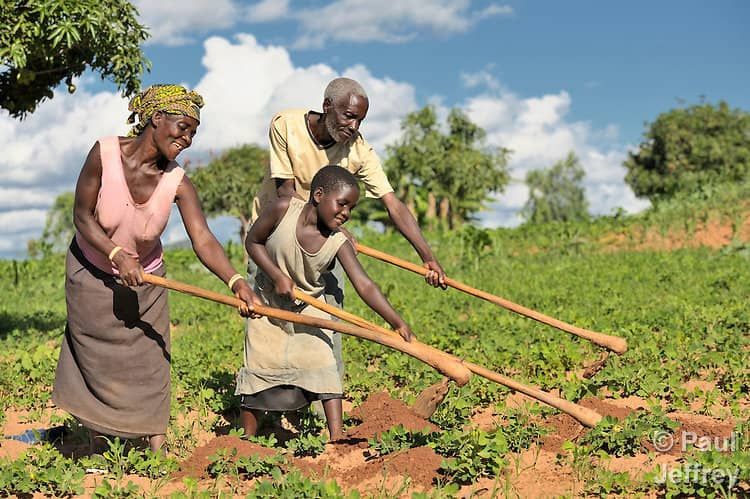
The high prices of fertilizers have escalated the cost of food production. This financial burden limits farmers’ ability to invest in necessary inputs, impacting crop yields and overall food security.

For the past 60 years, food production in Malawi has been fraught with challenges. Despite various interventions and efforts, breaking through these longstanding issues remains elusive.

*Overall business environment*

The current environment for business in Malawi is broadly unfavorable due to several factors:

Inadequate infrastructure, including poor transportation and unreliable energy supplies, increases costs and complicates business operations.

Navigating the regulatory landscape is cumbersome and time-consuming. The complexity of obtaining permits and meeting compliance requirements can stifle entrepreneurial activity.

Fluctuations in the economy, including currency volatility and inflation, create an unpredictable business environment that makes long-term planning challenging.

Access to affordable financing is restricted, limiting the ability of businesses to invest in growth and innovation.

In conclusion, the challenges of doing business or farming in Malawi are multifaceted and interconnected. From the lack of mathematical understanding to high taxes, expensive imports, and costly agricultural inputs, the environment for economic activities is difficult. Addressing these issues requires comprehensive reforms, including better educational support for mathematical skills, tax policy adjustments, infrastructure improvements, and more accessible financial resources. Only through a concerted effort to overcome these hurdles can Malawi hope to foster a more conducive environment for business and agricultural success.

Chithyola finally delivers nomination papers at MCP headquarters – Assures MCP followers of change in doing things

0


By Senior Political Editor

Thousands of Malawi Congress Party (MCP) supporters and senior party leaders on Saturday thronged,  party headquarters to witnes delivery of nomination papers by the hot candidate,  Honourable Simplex Chithyola Banda.

Banda, who is also Minister of Finance, arrived at the party headquarters while being escorted by District Chairpersons from Lilongwe , Dowa , Ntchisi,  Mchinji, Kasungu and others from the Northern region too numerous to mention.

Chithyola


To crown it all, Chithyola was also escorted by Regional Chairpersons from Central Region,  Patrick Zebron Chilondola, Lakeshore region chair Hon Chidzanja and more Members of Parliament.

Speaking during the function, Chithyola said he was so happy with the support that he received during the nomination process.

Chithyola said he did not anticipate such support from the MCP followers. He said that once voted into power, his first thing is to change the way things are being handled in the party.

He said currently it is sad that four years in Government the party infrastructure is still looking like a forgotten place’Bwinja’ .

In conclusion,  Chithyola pledged to creeate opportunities for the young people.