
Thursday, December 18, 2025
No menu items!
spot_img
Home Blog Page 1199

Chaponda clears DPP matters on Leader of Opposition

0

By Vincent Gunde

Mulanje South Legislator Dr. George Chaponda, says things are slowly moving faster in politics especially in the Democratic Progressive Party (DPP) claiming that some people are making deliberate efforts to distort information and destabilize the DPP following resignation of Dr. Kondwani Nankhumwa.

There have been social media reports that there is in fighting amongst senior members of the DPP on who will be the rightful heir to the thrown of Leader of Opposition after Nankhumwa announced to the general public that he has resigned as Leader of Opposition.
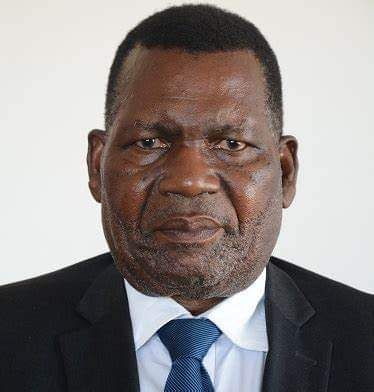
Dr. George Chaponda ‘these are matters of the law’

Social media eyes were on two DPP senior members Dr. George Chaponda and newly DPP appointed Leader of Opposition Mary Thom Navicha claiming that the DPP will find it tough to settle for one between these two for the position of Leader of Opposition in Parliament.

Writing on his official face book page, Dr. George Chaponda says now that Kondwani Nankhumwa withdrew the cases against the DPP and resigned as DPP leader of Opposition, the injunction against the election of him as Leader of Opposition is vacated, meaning that he is Leader of Opposition.

Chaponda says Parliamentary Standing Orders Section 35(1) states that “The Leader of Opposition shall be ELECTED by the party not in government having the greatest numerical strength in Parliament at any point in time and officially announced as such,” end of quote.

He says on Wednesday, 26th January, 2022 DPP Members of Parliament elected Dr. George Chaponda at the event that took place at the Page House in Mangochi which some MPs did not attend, one being Mary Thom Navicha because she was supporting Kondwani Nankhumwa.

The Parliamentarian says Parliamentary Standing Order Section 35(1) is very clear, Leader of Opposition is ELECTED, it is not APPOINTMENT like what the DPP did with Mary Thom Navicha dismissing social media reports that the DPP settled for Navicha as its Leader of Opposition.

“The DPP proceeded to inform the Speaker of Parliament Catherine Gotani-Hara of the results of the election that he is Leader of Opposition,” reads part of Chaponda’s writing on the wall.

He says Kondwani Nankhumwa and 22 other Members of Parliament stopped the announcement of the Speaker Catherine Gotani-Hara through a court injunction against the election of him as Leader of Opposition, an injunction the DPP struggled to vacate.

Chaponda has reminded Malawians that Speaker of Parliament was still recognizing Kondwani Nankhumwa as Leader of Opposition up to the date of his resignation saying if the Speaker does not declare him as Leader of Opposition, these are matters of the law, the DPP should elect him again as they did in 2022.
DADEN commits to improve quality of education in Dowa

0

By Vincent Gunde

The Dowa District Education Network (DADEN) working under the Civil Society Organizations Network for the district, says it is committed to make sure that the quality of education in the district’s schools is improving for effective teaching and learning.

The Network said the success of one institution can contribute to the successes of other institutions in the district by sitting down together to share the common projects which are being implemented the district.

Speaking during a meeting which brought together members drawn from CSOs implementing education projects in the district held at DAPP-Dzaleka Teachers Training College, the Network’s chairperson Gift Mwale, said the meeting was organized for the network members to share what they are doing in the district and the challenges they are facing in the education sector.

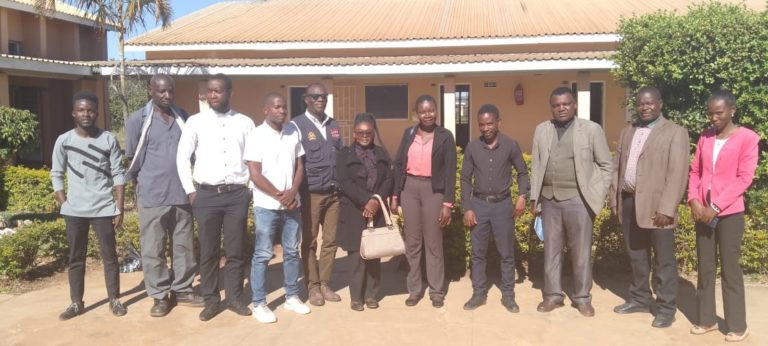
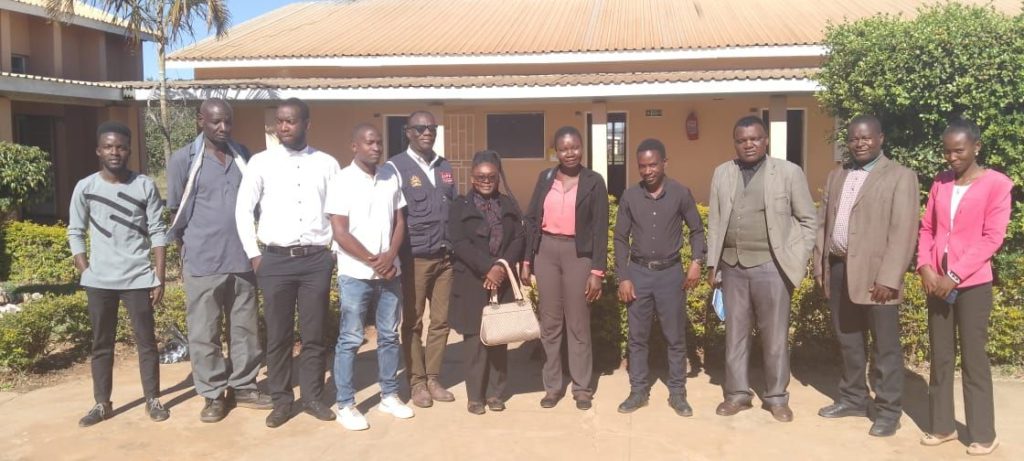
Members of Dowa District Education Network pose for a group photo.

Mwale said he has been impressed with what CSOs in education sectors are doing in the district and will share the good news to the council so that together in partnership can work to address the challenges to improve the quality of education in the district.
“We will share with the council what we are facing on the ground in order to improve the education sector in Dowa district,” he said.
Mwale appealed to existing CSOs implementing education programs and new partners to join the networking assuring them that in unity there’s power saying the knowledge shared can lead to the success of the district in the education sector.

In his remarks, College Principal DAPP-Dowa Blessings Kambewa, said the district has so many things hindering education to move forward such as absenteeism of learners and community participation for the network to deal with those challenges to make the district at par with other districts in Malawi.

Kambewa said DAPP-Dowa as an education institution, will continue training teachers to make sure that they are really needed in the society to fulfill its vision of producing teachers who can work anywhere in the country and make a lot of contributions around apart from helping learners to learn effectively in schools.
“We will continue helping the networking process so that education should be of good standards in the district,” said Kambewa.

TNM Super League: Another derby draw between Bullets and Wanderers as Silver Strikers extend lead on the log table

0

By McLloyd Kudzingo


FCB Nyasa Big Bullets and Mighty Mukuru Wanderers played out a one-all draw in a highly entertaining Blantyre Derby played at Kamuzu Stadium on Saturday afternoon.

The first half saw the Nomads playing a beautiful passing game and creating a number of scoring opportunities as compared to their counterparts.

Isaac Kaliati put Wanderers in front in the 21st minute as he finished well an excellent pass from Gaddie Chirwa.

Ephraim Kondowe had a chance to level the scores in the 42nd minute but his ball went over the cross bar when he was left with just the goalkeeper to beat.

Gaddie Chirwa receiving the man of the match award from Felistus and Moses Dossi Jnr children of the former Sports Minister Moses Dossi who passed away some weeks ago

In the second half, Bullets coach Kalisto Pasuwa made a double substitution bringing in the experienced legs of the Zimbabwean midfielder Ronald Chitiyo and the Nigerian striker Babatunde Adepoju who came in for Lloyd Aaron and Lanjesi Nkhoma.

Patrick Mwaungulu equalized for the People’s team just four minutes in the second half following a beautiful exchange of passes between Chitiyo and Kondowe who left the ball for Patrick Mwaungulu to put it to the far post beyond the reach of Nomads goalkeeper Richard Chipuwa.  

Gaddie Chirwa had a chance to put his name on the scoresheet in the 70th minute but Bullets goalkeeper Innocent Nyasulu cleared the ball only to find Christopher Kumwembe whose shot went over the cross bar.

Wanderers then made two changes, bringing in Balikinho Mwakayongo and Francisco Madinga for goal scorer Isaac Kaliati and Wisdom Mpinganjira while Bullets brought in Anthony Mfune for Ephraim Kondowe but it still ended in a stalemate.

After the match, Wanderers forward Gaddie Chirwa was voted man of the match.

In Mzuzu, the Mzuzu derby between Moyale Barracks and Mzuzu City Hammers also  ended 1-all at Mzuzu Stadium.

Khumbo Mhone put the soldiers in front in the 49th minute but Hammers equalised seven minutes later through
Isaiah Nyirenda.

Elsewhere, the match between Baka City and Silver Strikers ended in favour of the central bankers who beat the Karonga-based side 2-nil courtesy of an own by Chimwemwe Kalyala and Binwell Katinji’s late goal.

After Saturday’s results, Silver Strikers remain top with 13 points from four games followed by Mzuzu City Hammers who have now accumulated 10 points from the same number games.

Resources for Malawi to develop are already available – Dalitso Kabambe

0

By Burnett Munthali

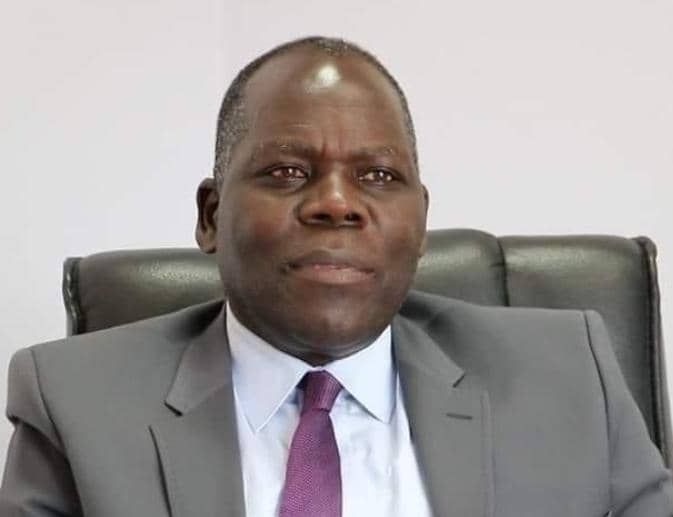
Former Reserve Bank of Malawi Governor, Dr Dalitso Kabambe says all what is needed for the country to develop is already available but the nation lacks thinking that can turn the resources into wealth.

Speaking to the audience at the Business Talk event in Lilongwe, Kabambe said the country is still depending on the wisdom of the British who came to set up tea and tobacco estates in Malawi, calling the youth to rise up and change the course with new ideas as there is so much more that can be turned into meaningful wealth enough to uplift the economic status of the country.

He further said there is too much concentration of resources at Capital Hill, proposing that district councils should be given, at least K100 billion, for development if the districts are to transform.

He said government’s obsession on borrowing is what is killing the country, taking up much of the resources that the private sector needs to borrow at low cost for industrial investments.

Kabambe called for a serious spul searching in the country to turn the potential of the country into meaningful change the country needs.

The event, which offered lectures on doing business, also attracted firms that showcased their products and services for the entrepreneurs’ appreciation. Businessman Napoleon Dzombe was expected to make his presentation but did not show up.

To ascertain immediate economic benefits for the people of Malawi arising from this strategic shift, the MGDS will in the next five years place emphasis on six key priority areas of agriculture and food security; irrigation and water development; transport infrastructure development; energy generation and supply.

Kabambe


Countries become wealthy by specializing in economic activities which embody increasing returns, technological change, and synergies with other industries in the economy.

If a country’s debt crisis is severe enough, it could result in a sharp economic slowdown at home that impedes economic growth elsewhere in the world. Rising costs of food and other goods and services due to inflation as a government prints money to support its expenditures.

Business plays a fundamental role in driving economic growth by creating jobs, generating income, and fostering innovation. It contributes to the overall prosperity of a nation by providing goods and services that meet the needs and desires of consumers.

The following are the roles of the businesses in society: It provides many job opportunities to the people living in the society. The business helps in generating income in the economy. Businesses help in the supply of goods and services which the people demand to fulfill their needs.

Businesses need to treat their stakeholders ethically and with respect by believing in corporate citizenship, in which they show commitment to ethical behavior by balancing stakeholders’ needs and protecting the environment.

Good citizens work to ensure that democracy is instilled, so that power is not displaced but rather dispersed among more than one center of power. When the people are heard, change can be made. But when the people actively take part, society can work to become a more inclusive, tolerant space for all people.

If I were President – Jimmy Korea Mpatsa

0


By Burnett Munthali

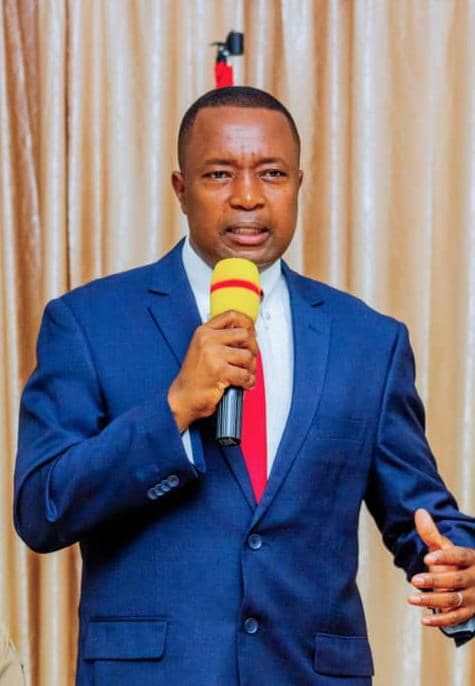
In his presentation titled ‘If I were the President’ at the Business Talk, businessman, Jimmy Korea Mpatsa, says Malawi’s poverty is by choice, stressing that the Presidency holds the key to solutions to most of the problems in Malawi.

He says in Malawi, everything revolves around the presidency hence problems like blackouts and all others can be resolved by presidential directions.

Mpatsa also spoke about the country’s food insecurity and low productivity because the country leaves much of the farming into subsistence farmers who depend on the rains.

He also talks about Admarc which he uttered has dysfunctional deports and often has low financial capacity to purchase produce from farmers in time.

In his presentation titled 'If I were the President' at the Business Talk, businessman, Jimmy Korea Mpatsa, says Malawi's poverty is by choice, stressing that the Presidency holds the key to solutions to most of the problems in Malawi
Jimmy Koreia Mpatsa

On trade policy , Korea Mpatsa voices the restrictions on exports of agricultural commodities discourages large scale commercial farmers who are risk averse as a result of policy inconsistencies.

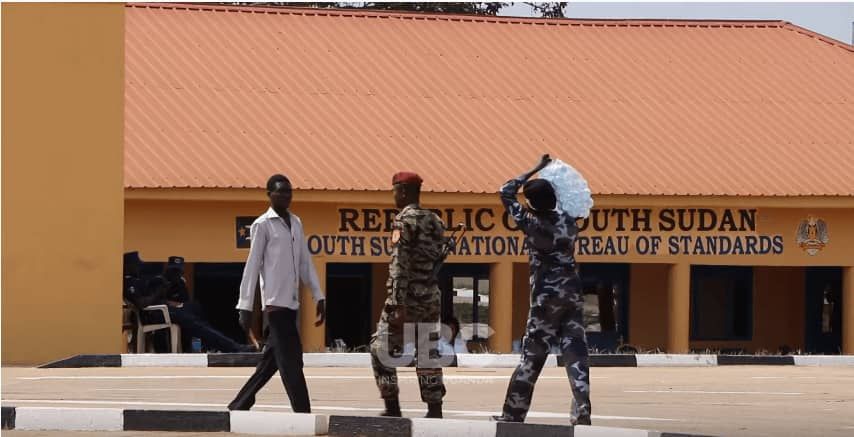
He pronounced that if he were President, when South Sudan and Malawi agreed on exports of various agricultural products, he would have created a special purpose vehicle to ensure production of the required volumes to ensure consistent supply and secure the market that was lost when only 5 percent of the required volume was met.

About 70 per cent of Malawi’s population currently lives below the $2.15 international poverty line with about 46 per cent of its national income being held by the top 20 per cent of the population.

Malawi remains one of the poorest countries in the world despite making significant economic and structural reforms to sustain economic growth. The economy is heavily dependent on agriculture, which employs over 80% of the population, and it is vulnerable to external shocks, particularly climatic shocks.

Why vote for a President? A presidential election is far more than a popularity contest or a struggle for party power. It’s a profound choice of goals for the nation. Do we want someone who can hold the same course, or chart a new course, or have no clear course at all? Is it possible that someone could respect and speak for our many different visions and be president of us all?

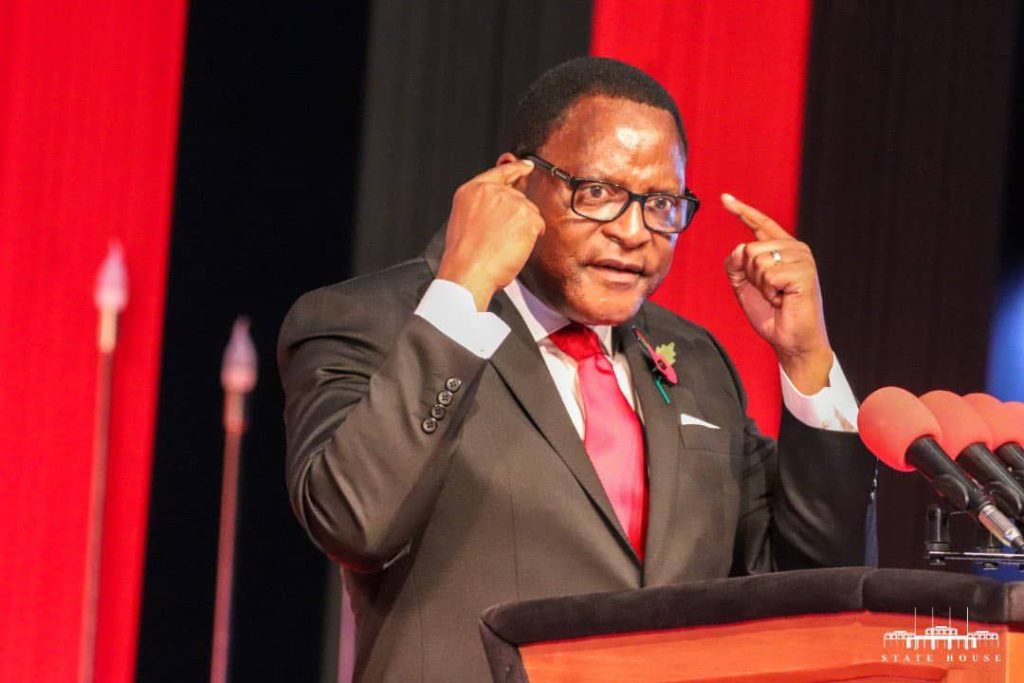
The President holds the key to solutions to most problems in Malawi

Investing in education, infrastructure, research, and development. Countries can build stable, growth-oriented economies by doing so. Public policies that promote international trade can also diversify an economy’s income and reduce its dependence on one industry or market.

Many factors interact to create a food insecure situation in Malawi: chronic poverty, low agricultural productivity, poor infrastructure, ecological constraints, inappropriate economic policies, limited arable land other demographic and social factors.

There is low agricultural productivity (especially in peasant farming) because of the use of traditional technologies, and other factors. And this results in food insecurity in many households. However, Malawi must implement different programmes and policies to increase productivity in agriculture.

For some time, Admarc has been faced with challenges bordering on alleged inefficiency and mismanagement and has consistently asked the government for bailout. Two years ago, the parastatal announced a turnaround strategy where, among other things, it wanted to revive its agro-processing and value addition activities.

Malawi trade policies on goods for which international trade is restricted include: synthetic animal feedstuff, rice, specified vegetables ands legumes, maize, live fish, including the eggs and spawn thereof, seeds for planting, wild animals, wild animal trophies and wild animal products.

Malawi and South Sudan in June 2021 signed a trade agreement that aimed to see Lilongwe exporting its surplus food to Juba to help ease a widening deficit of cereals in Africa’s youngest nation.

The two countries officially signed a memorandum of understanding (MoU) in Juba that allowed Malawi  to export to South Sudan products such as maize, maize flour, sugar, rice, groundnuts and beans but Malawi failed.

The deal also allowed South Sudan to export refined petroleum products to Malawi, a move which was expected to cut costs of importing from the Arab world, according to Minister of Trade Sosten Gwengwe but all was lost due to lack of proper planning and capacity.

Malawi failed to supply agricultural products to South Sudan