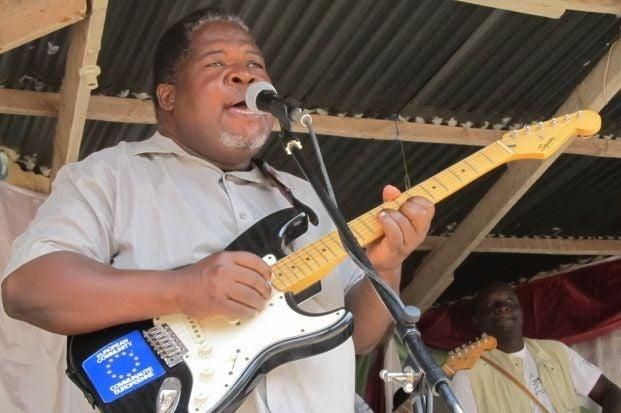
Renowned social media influencer, Stanley Onjezani Kenani has mobilized funds amounting to K14,150,950 million to aid Sir Paul Banda who has kidney problems.
Sir Paul, brother to Lucius Chicco Banda who succumbed to the same fate in June this year requires two trips a week to Queen Elizabeth Central Hospital (QECH) in Blantyre for treatment.
QECH is the only facility that has a dialysis machine for his treatment.
Paul Banda
The amounts for the initiative ranged from K750 to K1 million in contributions.
Kenani making the appeal said: “We need to honour our legends while they live. Paul Banda’s impact on Malawi’s music is nothing short of phenomenal. It is not for nothing we fondly call him “Sir” Paul Banda.”
He pointed out the “trips plus the general care of his condition needs the money” which will be given to him on Thursday July 18, 2024.
“His soothing voice used to reach us through MBC in the late 80s and early 90s, when he released albums that swept the country by storm,” Kenani said.
Sir Paul is known for trailblazing the entire explosion of talent from Balaka township.
His achievements stem from the late 1970’s when he formed Alleluya Banda, to the late 90’s when he produced many bestselling albums to emanate from Balaka.
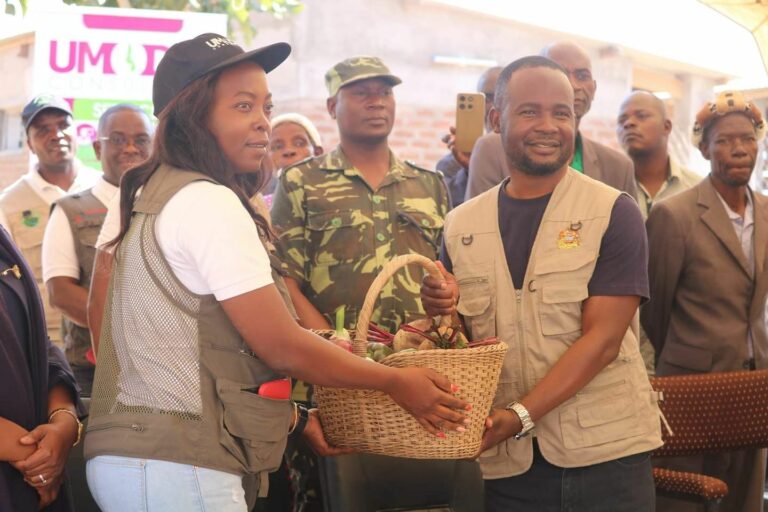
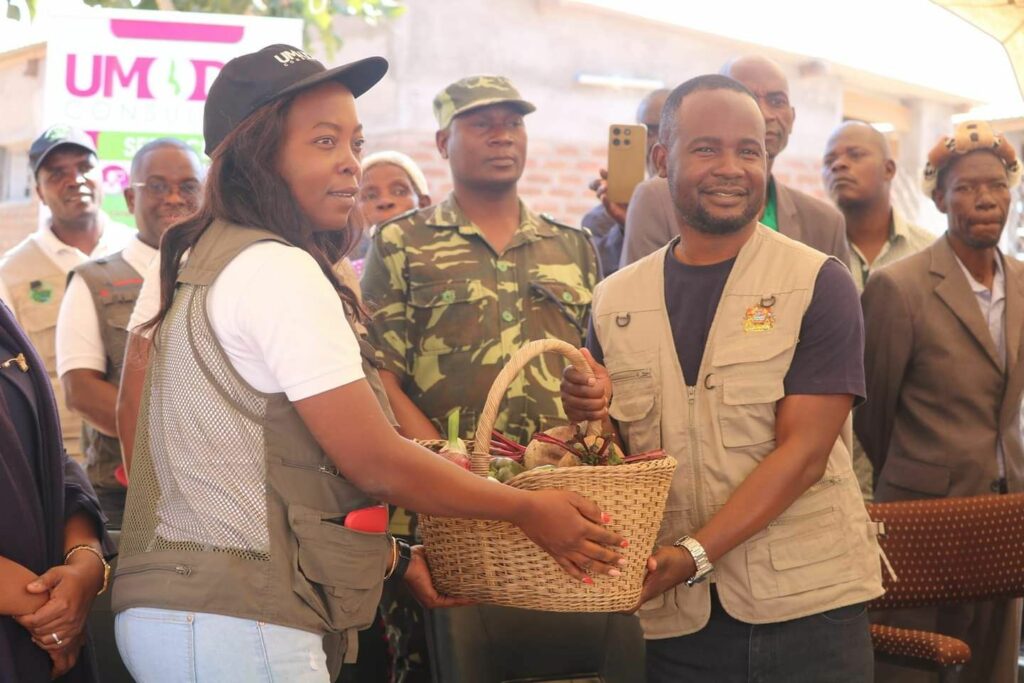
Minister of Trade and Industry, Sosten Gwengwe, M.P, yesterday lauded SMEs under United States of America African Development Fund (USADF Programme) for demonstrating seriousness towards sustainable livelihood improvement through agriculture.
Speaking during a field visit to Nchena and Changa Cooperatives under Senior Chief Simon in the district, the Minister said cooperatives and SMEs are the way to go if Malawi is to grow economically.
According to Gwengwe, USADF received funding from the Hemsley Charitable Trust (HCT) to implement a Livelihood Improvement Project (LIP) through Umodzi Consulting Limited, a local partner for USADF. The US$4.5 million programme is unique because it uses a “whole farm business” approach with the aim of delivering sustainable farming and increased incomes for local population with priority given to individuals with chronic diseases and their families.
Minister Gwengwe at the event
“I have been reliably informed that this funding was channelled to 14 cooperatives that were all trained by my Ministry. Their objectives were: to improve Patient Outcomes through improved diet diversification, nutrition & incomes, improved livelihoods through increased skills in value addition, development of market networks and trade activities, and improved resilience through the promotion of climate smart technologies that will improve resilience by the targeted community, ” he said.
While thanking the Minister for visiting them, members of the cooperatives appealed to the Minister to lobby for an increase in the grants.
Later in the day, the Minister travelled to Mount Soche Hotel in Blantyre, where he challenged agriculture commodity off-takers, processors, exporters, anchor farmers, aggregators, and SMEs to take advantage of the AGCOM grants to enhance value addition which will see Malawi shifting from being a predominantly consuming and importing economy to a producing and exporting one.
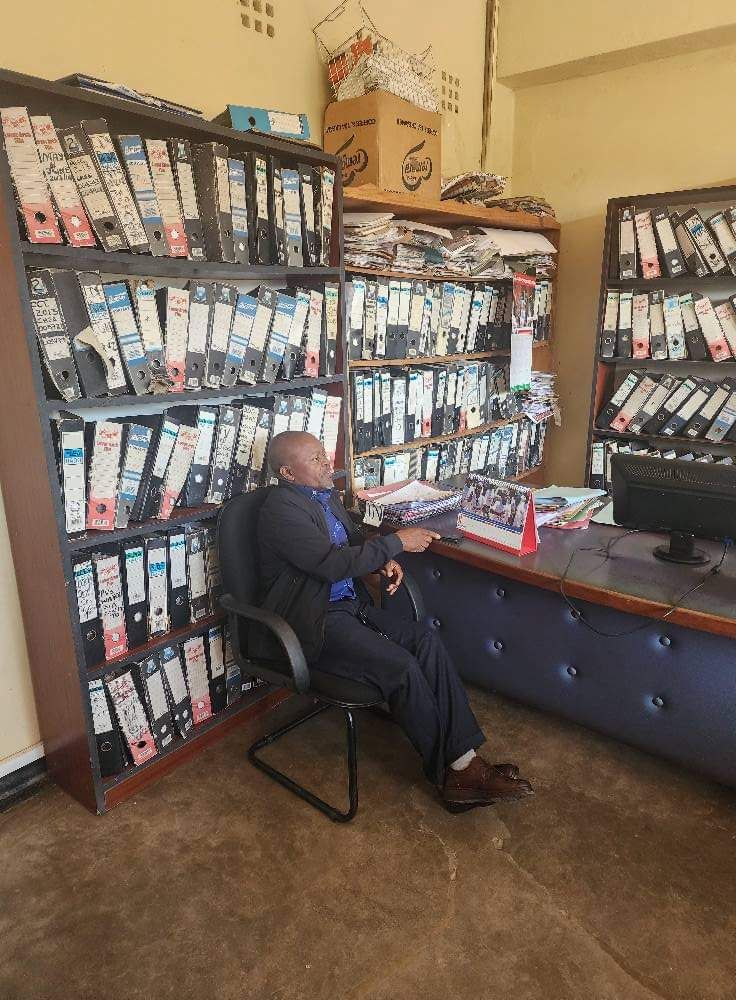
Vice President Dr. Michael Usi this morning just made a surprise visit to government offices in Chikwawa and caught some latecomers off guard!
At the District hospital, the Vice President did not find the District Health Officer Grace Momba in office after 8 am.
The VP called her on phone to come to the office. They had a discussion where she narrated the challenges the district hopistal is facing. She narrated she was not in the office because she was on her way to Nchalo for a workshop.
Usi In one of the offices
The VP encouraged the DHO to be progressive and proactive and lead by example through time management.
At the DC office, the Vice President said he was impressed to find that the DC Mr. Nadin Kamba who claimed was in office by 7: 28 am.
“That was a wake-up call! It’s time to step up our game and get to work on time,” said the veep.
Indeed let’s make the most of our workdays and deliver our best for the nation!
Dalitso Kabambe’s political career has been a rollercoaster ride of ambition, impatience, and ultimately, betrayal.
His departure from the ruling Democratic Progressive Party (DPP) has left many wondering about the real reasons behind his sudden exit.
In this feature, we delve deep into the events leading up to Kabambe’s decision to walk away from the party he once hoped to lead.
Kabambe- seeking new opportunities?
It all started with Kabambe’s aspirations to become the presidential candidate for the DPP.
However, his hopes were dashed when he realized that the party’s policy dictated that all aspirants must be elected at the party Convention – a process that did not guarantee Kabambe the position he desired.
Despite this, Kabambe expected to be handpicked by the then President, Arthur Peter Mutharika (APM), as his successor. But APM had other plans.
The turning point came during the National Governing Council (NGC) meeting, where APM announced his intentions to run for President in 2025.
Kabambe, who had been expecting APM to endorse him, was filled with anger and frustration.
In a fit of rage, he stormed out of Nkopola Lodge before the meeting was over, unable to contain his disappointment.
Not one to give up easily, Kabambe decided to take matters into his own hands.
He began working with Mulli, a controversial figure in Malawian politics, to launch an underground campaign to discredit APM.
Their aim was to tarnish APM’s reputation and boost Kabambe’s chances of winning the party’s nomination at the upcoming Convention.
However, their efforts did not gain much traction.
To make matters worse, Kabambe’s involvement in financing a court case against APM was exposed in the media.
It was revealed that he had failed to pay the individuals who had done his dirty work, leading to apologies and the withdrawal of the case against APM.
This revelation dealt a severe blow to Kabambe’s credibility within the party.
Despite his public facade of politeness and loyalty to APM, Kabambe knew that he had lost his standing in the DPP.
His impatience and misguided ambition had cost him dearly, and he was left with few options.
It was not until the suspicious death of Soulos Chilima that Kabambe saw an opportunity to reinvent himself.
Believing that he could take over the United Transformation Movement (UTM) following Chilima’s death, Kabambe saw a chance to fast-track his path to the presidency.
He saw UTM as a more promising platform for his ambitions than the DPP, where he had burned bridges and lost the trust of his former allies.
In the end, Kabambe’s departure from the DPP was a result of his own undoing.
His impatience, lack of foresight, and willingness to betray his party for personal gain led to his downfall.
As he sets his sights on a new political home, only time will tell if Kabambe can rebuild his reputation and achieve his ultimate goal of becoming President of Malawi.
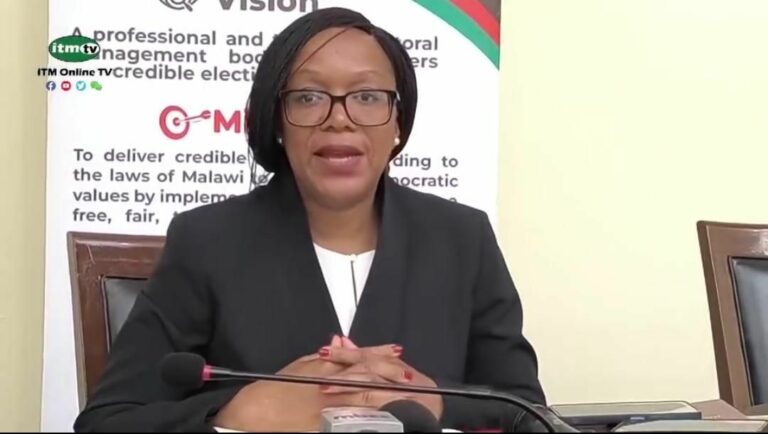
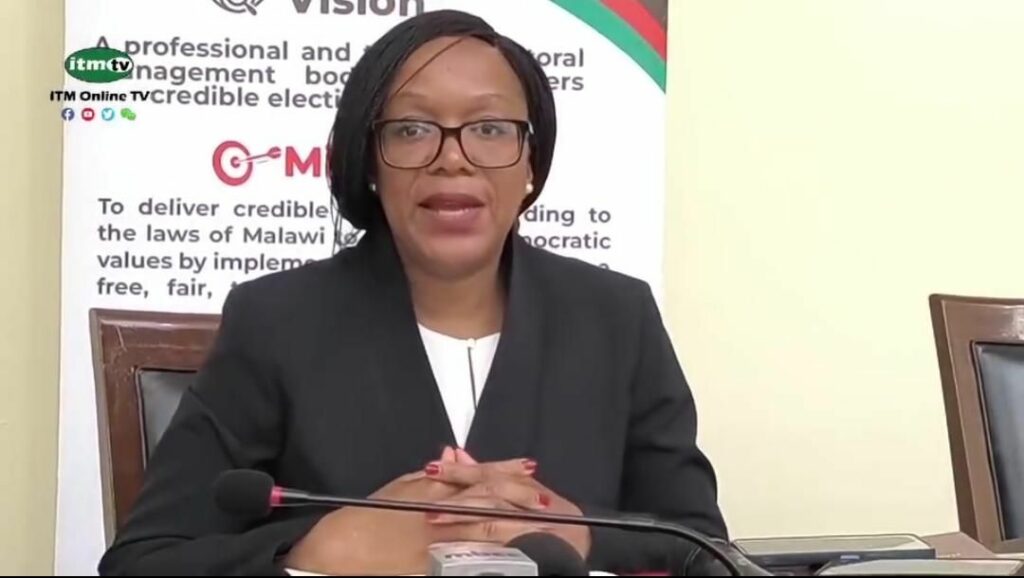
Malawi Electoral Commission (MEC) Chairperson Annabel Mtalimanja has emphasized that only individuals with national Identity Cards (IDs) will be registered as voters for the 2025 elections.
She said this during a press briefing in Lilongwe on Tuesday.
Mtalimanja encouraged those eligible to vote without IDs to apply for them, noting that expired IDs will still be accepted.
She unveiled the theme for the 2025 general elections as “Promoting Democratic Leadership Through Your Vote,” highlighting the significance of voting in a democracy.
Mtalimanja
The MEC chairperson stressed that voting is both a right and a civic duty, allowing Malawians to shape their country’s leadership and governance.
She announced that the 2025 General Election will be officially launched on August 2, 2024, in Lilongwe, with various stakeholders invited.
The MEC chairperson said during the launch event, the commission will update stakeholders on implemented activities and outline remaining major activities leading up to the polling day on September 16, 2025.
In preparation for voter registration, Mtalimanja said the commission will conduct demonstrations of the voter registration process using Election Management Devices (EMDs) from July 31 to August 16, 2024.
She said:”Additionally, pilot voter registration will be conducted in selected sites across the country to test registration devices and gather feedback.”
The MEC chairperson also announced that fresh voter registration will be conducted in three phases, with every individual required to register to vote by September 26, 2025.
“This will ensure the accuracy and integrity of the voter register, remove deceased individuals from the register, and provide accurate figures for logistical planning,” she explained.
Finally, Mtalimanja announced that 116 Civil Society Organizations (CSOs) have been accredited to conduct voter education for the 2025 General Election after a thorough process.