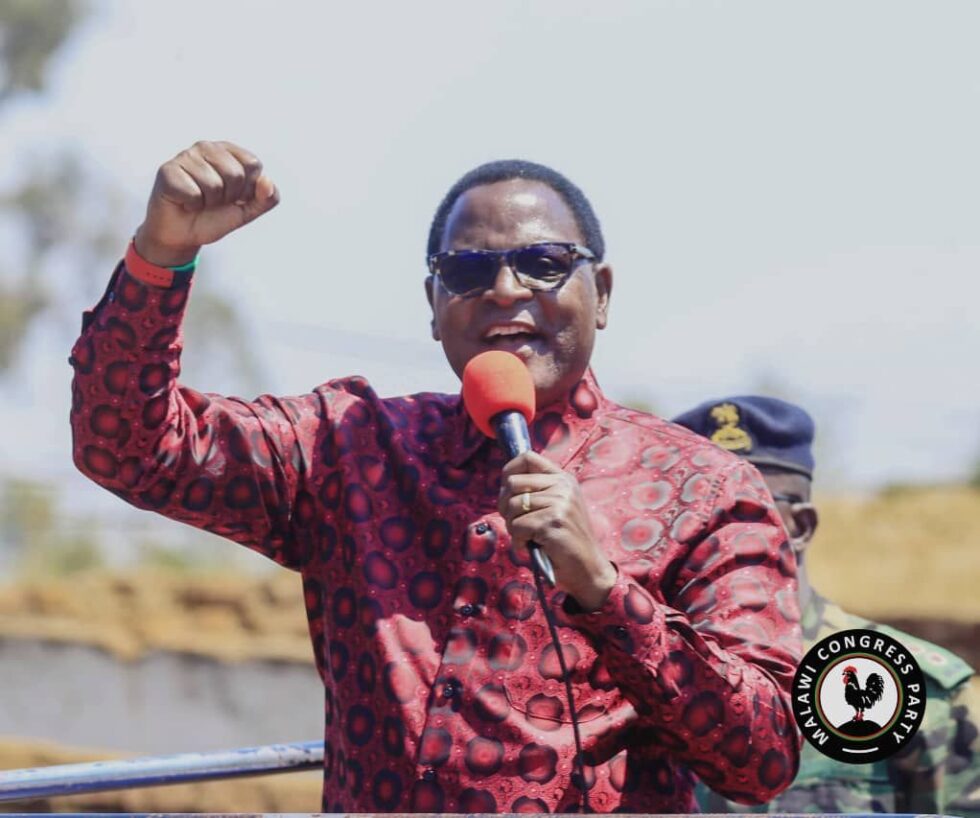
Minister of Information and Digitalization Moses Kunkuyu on Friday praised the Malawi leader, President Dr. Lazarus McCarthy Chakwera’s efforts, particularly in improving infrastructure, exemplified by the construction of durable roads that facilitate better connectivity, and economic opportunities for local communities.
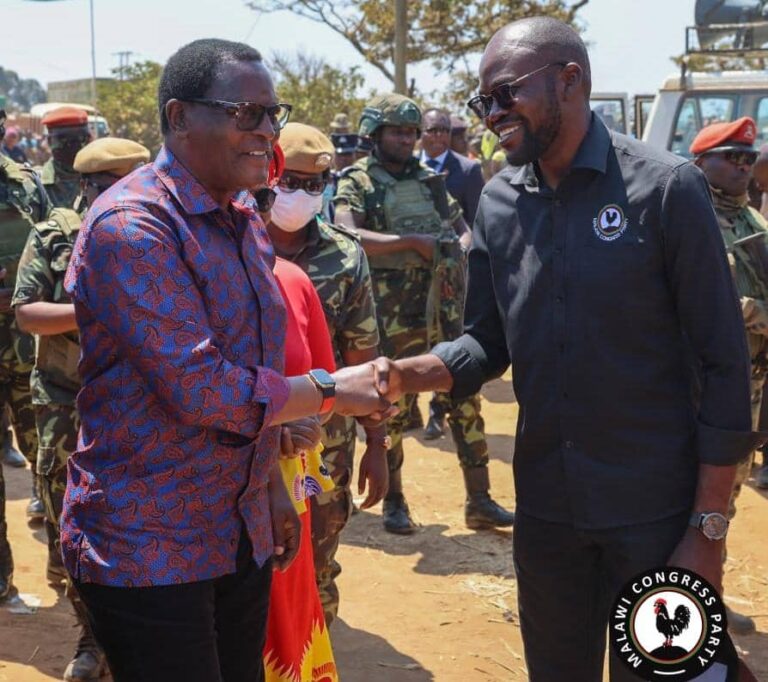
Kunkuyu made these remarks at Kasumbu Trading Centre in Dedza where President Chakwera organized a whistle stop rally.
Chakwera and Kunkuyu
Kunkuyu, who is also a shadow Malawi Congress Party (MCP) Member of Parliament for Dedza Mlunduni – Kanyama Constituency, also expressed gratitude for the National Economic Empowerment Fund (NEEF) loans, which he said have made a significant impact by providing financial support to many people in his area.
“This assistance has likely empowered local entrepreneurs and helped stimulate economic growth,” Kunkuyu told the president.
Furthermore, Kunkuyu assured the community of his dedication to utilizing Constituency Development Fund (CDF) resources responsibly, ensuring that they serve their intended purpose for the benefit of the people.
In his remarks, President Chakwera urged the people to give him a second term of office to continue the development projects which he has already started.
The Board of Trustees for Mulhako wa Alhomwe, says it has noted with dismay and disappointment over the conduct of UTM leaders who have resorted to using Mulhako wa Alhomwe structures for their political gains.
The Board has condemned and warn UTM leadership in strongest terms for using its structures for political reasons saying UTM has been involved in holding meetings and donations of some motorcycles to district chairpersons to canvass support from zones to support activities of the party.
It has advised the UTM leadership to take note that the district chairpersons they are using were expelled from the Mulhako wa Alhomwe and have no powers to act on behalf of the Mulhako wa Alhomwe.
Writing in a statement dated 27th August, 2025 signed by the Board’s Chairman Muchanakhwaye Mpuluka, the Board of Trustees has claimed that UTM leadership has been canvassing the appointment of Dr. Dalitso Kabambe as running mate for the DPP in the pretext that he comes from Lhomwe Belt.
The Board of Trustees has advised UTM leaders to know that Mulhako wa Alhomwe structures are not political areas, but serve the purpose of the Clan observing that each and every political party has its own structures.
It says use of Mulhako wa Alhomwe areas for political gains is tantamount to putting the name of Mulhako wa Alhomwe into disrepute reminding the UTM leaders that Mulhako wa Alhomwe does not encourage nepotism as UTM leadership is portraying.
“Mulhako wa Alhomwe does not in any way get involved in the appointment of running mates as this is always the prerogative of a President of any party,” reads the statement in part.
The Mulhako Board of Trustees has warned the UTM to desist from using Mulhako wa Alhomwe structures that failure to do so, will leave them with no option but to seek legal redress against them advising them that if they do not have political structures, they should create structures and use such structures to advance their political ambitions. Meanwhile, social media influencer Mneneri Joshua Chisa Mbele has written a food for thought on his face book page that there is no difference between a witch and ungrateful person citing the case of Dr. Dalitso Kabambe and Professor Arthur Peter Mutharika.
“Kodi a Kabambe anali ndani kupanda Professor Mutharika? Mneneri’s writings on the wall.
Authorities in Minneapolis have revealed that the school shooter was reportedly obsessed with the idea of killing children.
Investigators say this obsession played a significant role in the planning and execution of the attack.
Law enforcement officials are examining the shooter’s background, social media activity, and personal history to understand the motives behind the act.
The incident has left the local community in shock, raising concerns about school safety and mental health issues among youth.
Parents, students, and teachers are grappling with the trauma of the attack while authorities continue their investigation.
Officials are urging anyone with information about the shooter or similar threats to come forward to prevent future tragedies.
Mental health experts have emphasized the importance of early intervention and awareness to identify potential risks before they escalate.
Communities across Minneapolis and beyond are calling for increased security measures and support for affected families.
The revelation that the Minneapolis school shooter was obsessed with killing children underscores the urgent need for comprehensive strategies addressing school safety, mental health, and early warning signs of violent behavior.
Authorities face the dual challenge of providing justice for victims while preventing similar attacks in the future.
This tragedy highlights the critical importance of vigilance, community awareness, and proactive measures in safeguarding schools and children.
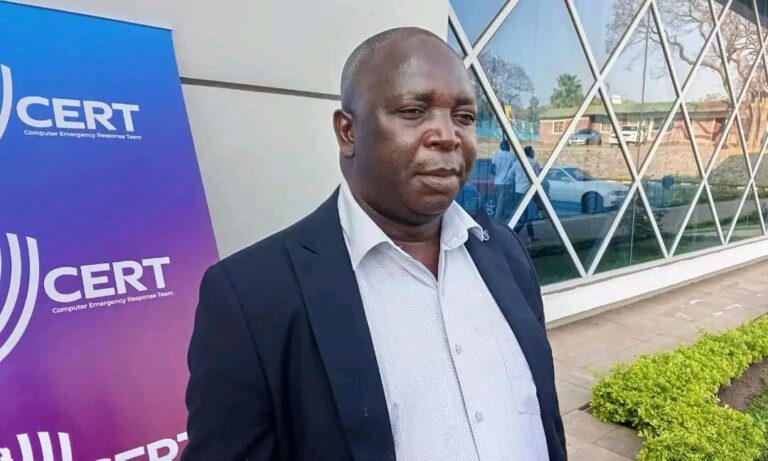
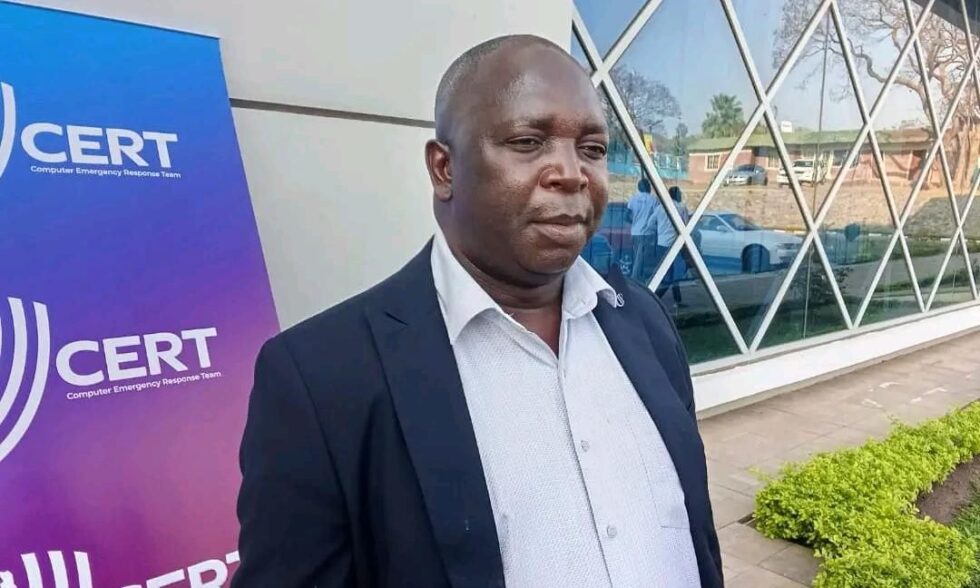
The Head of the Malawi Computer Emergency Response Team (mwCERT), Christopher Banda, says his office has intensified cybersecurity awareness and training initiatives as the country continues to face rising online threats.
Speaking during a cybersecurity awareness campaign and cyber drill held at Malawi University of Business and Applied Sciences(MUBAS ) in Blantyre on Thursday, Banda stressed the importance of equipping Malawians particularly students with the necessary knowledge and skills to stay safe online.
Banda
“We understand that a lot of threats are emerging, especially now that everyone is going digital. It is important for users to know what they should and should not do online in order to protect themselves,” he said.
According to Banda, the program focuses on two key areas which are creating awareness on online safety and conducting technical cyber drills.
He explained that students are being introduced to real-life cybersecurity challenges from the industry, an approach that not only enhances their studies but also inspires some to specialize in various cybersecurity fields.
“Cybersecurity is a global problem, not just a Malawian issue. As more people adopt digital services, cyber threats are also increasing.Criminals are taking advantage of this shift to launch attacks such as ransomware and mobile money fraud.That is why it is crucial for everyone to be aware and cautious when online,” explained Banda.
He further revealed that CERT Malawi is partnering with universities across the country, especially those offering technical programs, to encourage the development of cybersecurity-related courses.
Banda said the shortage of trained professionals in the sector poses a challenge to the industry.
“If universities can come up with more cybersecurity programs, we will be able to strengthen our cyber space with well-trained professionals. Currently, very few institutions are offering such programs, yet the demand is high,” said Banda.
He also highlighted the critical role cybersecurity will play as Malawi approaches the next general elections.
He noted that election periods worldwide are often marked by an increase in cyber-attacks and disinformation campaigns.
“As we head towards the elections, cyberspace attacks are becoming a serious challenge globally. We are therefore engaging different stakeholders, coordinating with partners, and conducting training sessions to ensure that Malawi is alert and well-prepared in the event of any cyber incident,” he said.
On his part, Head of Department of Computer Science and Information Systems (CSIS) at MUBAS, Dr. Patrick Chikumba said the institution has introduced new academic programs in cyber security as part of efforts to build national capacity in digital security.
Chikumba said the initiative is aimed at equipping young people with the necessary skills to safeguard the country’s growing digital space.
“Our population is largely composed of youth, and when we talk about digital transformation, youth are at the center of it. We cannot talk about digital development without them.Engaging students in this area is crucial to ensure that our nation becomes literate in cyber issues, and that they emerge as pioneers and champions of cyber security,” he said.
Chikumba further explained that the department is working closely with stakeholders in the cyber security sector to strengthen capacity building.
“To address the demand for cyber security skills, we have introduced new programs. One of them is a Diploma in Cyber Security, which targets individuals who may not be at university level but still want to acquire practical skills. In addition, we have rolled out a Degree in Cyber Security aimed at producing experts who can support Malawi in safeguarding its digital systems,” he said.
Chikumba emphasized that the programs are a strategic step toward positioning Malawi as a digitally secure nation, while empowering the youth to take a leading role in shaping the country’s digital future.
The initiative by CERT Malawi comes at a time when the country is increasingly embracing digital services, a shift that, while beneficial, also exposes users to a wide range of online risks.
President Lazarus Chakwera has encouraged farmers to practice winter cropping through NEEF farm input loans.
He made the call following poor harvests caused by erratic rainfall as a result of climate change.
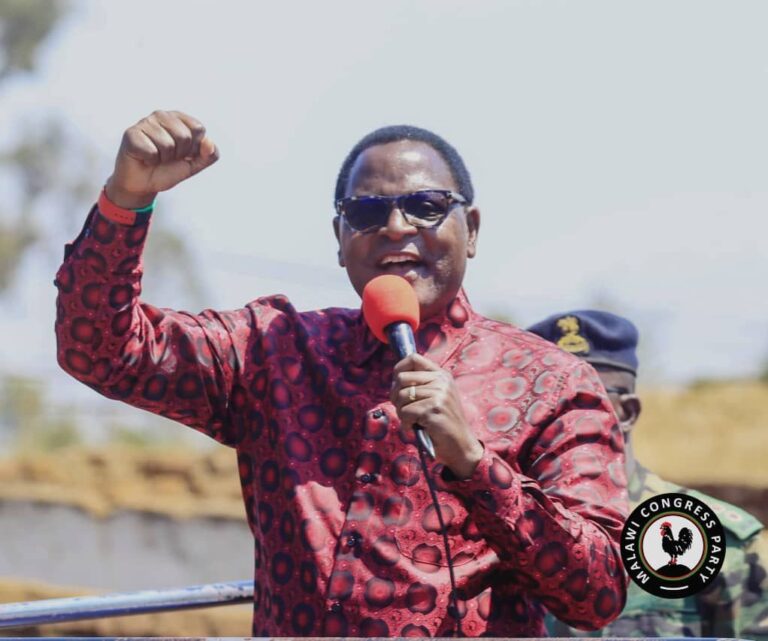
The President made the remarks at Njonja Trading Centre during his campaign trail for the September 16, 2025, General Election.
Chakwera
“I encourage you not to relent but to work hard in the fields during the winter season,” Chakwera said.
He assured the gathering that the National Economic Empowerment Fund (NEEF) would continue supporting farmers with farm inputs.
The President further pledged to transform NEEF into a bank if re-elected.
He stressed that the institution would remain a key pillar in empowering smallholder farmers and strengthening agricultural productivity.
“As chiefs, we are encouraging people to pay back the loans so that others can also benefit from them,” Chakwera added.
The President also highlighted that timely repayment of loans would ensure the sustainability of the programme and expand access to more farming households.
President Chakwera’s emphasis on winter cropping and NEEF loans reflects a broader effort to address the twin challenges of climate change and food insecurity.
By promoting year-round farming, he aims to reduce reliance on unpredictable rain-fed agriculture while strengthening farmers’ resilience.
However, the success of this initiative depends not only on access to inputs but also on the willingness of farmers to repay loans and on government’s ability to transform NEEF into a reliable financial institution.
If implemented effectively, this strategy could enhance food security, boost rural incomes, and reinforce the President’s vision of agricultural transformation.