The Lilongwe District Council has expressed concern over the increasing number of refugees and asylum seekers who have returned to their localities, despite having been relocated to the Dzaleka refugee camp earlier this year.
In an effort to address this issue, the council is urging all affected individuals to comply with the relocation order and return to the camp without delay.
The decision to relocate the refugees was made by the Ministry of Homeland Security, and the council is determined to ensure its enforcement.
Relocation Background and Importance
The relocation exercise, which commenced in May 2023, aimed to address various issues related to the presence of refugees and asylum seekers in local communities.
The Ministry of Homeland Security had identified the need for centralized facilities in order to provide adequate resources, assistance, and security for those seeking refuge.
This decision was reached at after careful consideration and consultation with relevant stakeholders.
Sensitisation Efforts and Voluntary Return
To effectively communicate the importance of the relocation order, the Lilongwe District Council will be collaborating with chiefs, councilors, local leaders, and the police force to conduct sensitization campaigns.
These initiatives will utilize the public address system and other platforms to encourage refugees and asylum seekers to voluntarily return to the Dzaleka camp.
Through these efforts, the council hopes to avoid confrontations with law enforcement agencies and ensure a peaceful transition.
Repercussions and Reporting
Refugees and asylum seekers who fail to comply with the relocation order may face repercussions, as stated in the previous public notice issued by the Ministry of Homeland Security.
The council emphasizes the importance of reporting any individuals who have returned or are suspected of returning to their localities.
Chiefs and block leaders are urged to collaborate with the police or district commissioner’s office to provide accurate information on the whereabouts of these individuals.
Conclusion
The Lilongwe District Council is committed to the successful implementation of the relocation exercise and ensuring the safety and well-being of refugees and asylum seekers.
By reminding affected individuals of the relocation order and conducting sensitization campaigns, the council hopes to achieve a voluntary return to the Dzaleka refugee camp.
The support and cooperation of local leaders, communities, and the refugees themselves are crucial in ensuring a smooth transition and realizing the long-term benefits of centralized facilities and assistance.
Established by UNHCR in 1994, Dzaleka is the largest refugee camp in Malawi, hosting over 43,000 refugees and asylum seekers.
The majority of them are from the Democratic Republic of Congo (DRC), while others are from Burundi, Rwanda, Somalia, and Ethiopia.
Democratic Progressive party DPP President Peter Mutharika has been told to resign from active politics and pave way for young blood.
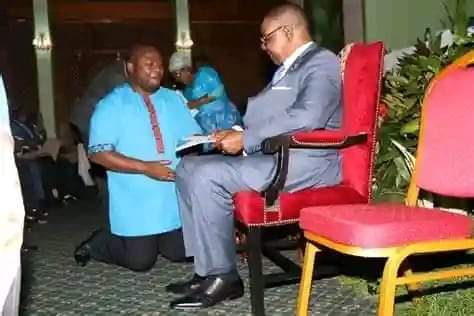
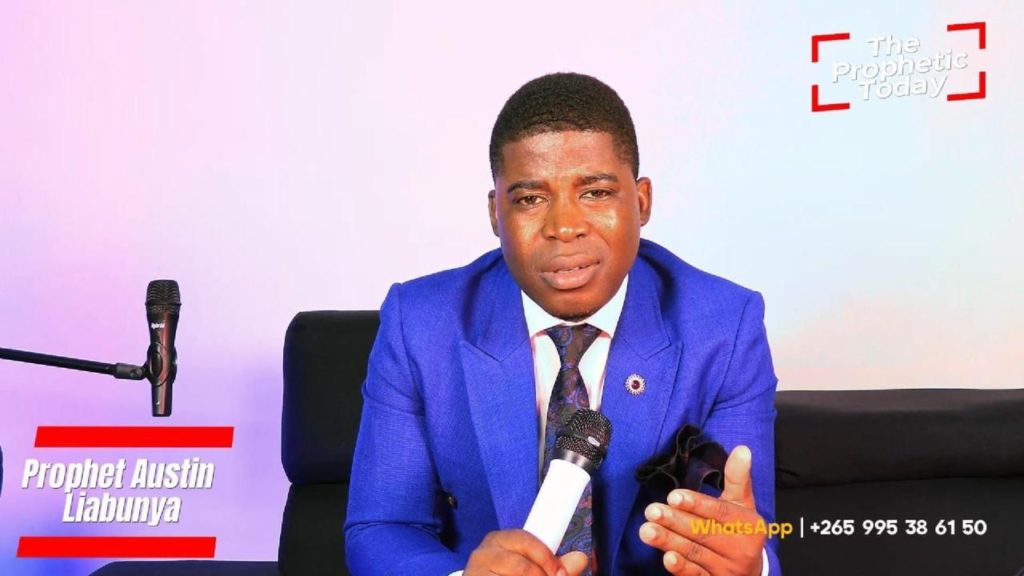
Prophet Austin Liabunya who is founder and President of Worldwide Winning Life Ministries International, in a brief video released on 21 January 2024, has since advised Mutharika to concentrate on an advisory role. Liabunya says it will be good for Mutharika to leave the political stage amicably without being embarrassed.
Liabunya says as far as he is concerned and for as long as he is a prophet, Mutharika will never rule Malawi again.
In his prophecy Liabunya reminds the former President that he once correctly prophesied Mutharika’s victory in 2014 albeit with the painful truth that he was going to be a one-term President. Despite this being a prophetic word, it echoes what several people have already said advising Mutharika to quit the political stage over his age.
Economy and politics are two topics that are strongly interconnected. The decisions made by political bodies have an influence on the economy of a nation, and how well the economy is doing is usually seen as a direct reflection of political policies and the success of the government in power. This articles takes a glance at the interconnection of economy and politics.
Economy and politics
Political choices regarding taxation, labour laws, and environmental regulations can significantly impact economic activity and determine the distribution of wealth and resources. Public sentiment and political ideology also play a vital role in shaping economic policies.
Adam Smith was an 18th-century Scottish philosopher. He is considered the father of modern economics. Smith is most famous for his 1776 book, The Wealth of Nations. Smith’s writings were studied by 20th-century philosophers, writers, and economists.
The Journal of Economic Literature classification codes associate political economy with three sub-areas: (1) the role of government and/or class and power relationships in resource allocation for each type of economic system; (2) international political economy.
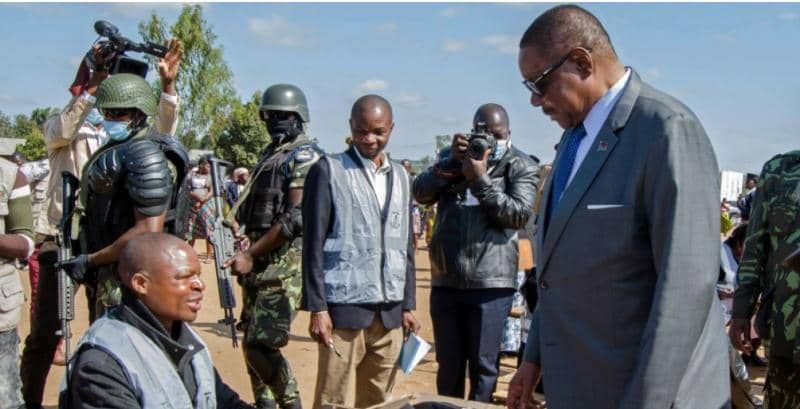
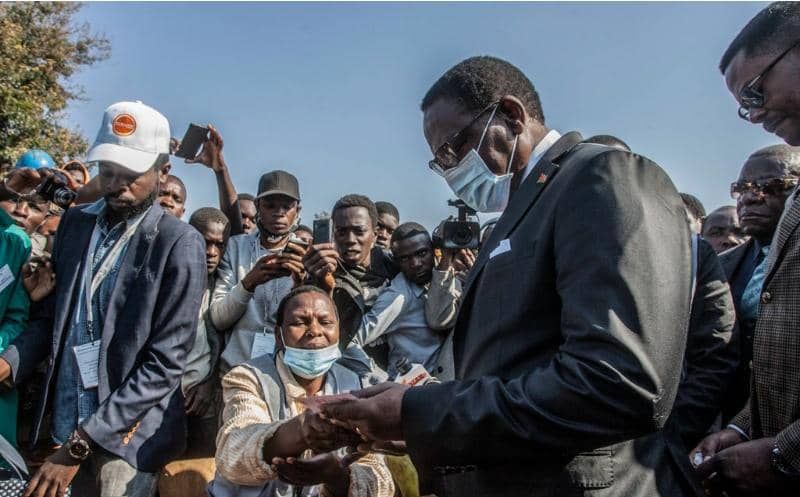
Former President Mutharika during 2020 fresh presidential election as opposition was poised to win
International political economy (IPE) is the study of how politics shapes the global economy and how the global economy shapes politics. A key focus in IPE is on the distributive consequences of global economic exchange. It has been described as the study of “the political battle between the winners and losers of global economic exchange.”
A central assumption of IPE theory is that international economic phenomena do not exist in any meaningful sense separate from the actors who regulate and control them. Alongside formal economic theories of international economics, trade, and finance, which are widely utilised within the discipline, IPE thus stresses the study of institutions, politics, and power relations in understanding the global economy.
Some factors drive economic growth. There are three main factors that drive economic growth: Accumulation of capital stock. Increases in labor inputs, such as workers or hours worked. Technological advancement.
Capital, Labor, and Productivity are the three primary economic drivers of growth. Strategically, capital is a hard one to manage. Our government runs at a capital deficit of somewhere over $18 trillion dollars. The United Kingdom has about $2.2 trillion in debt.
Three main factors that drive economic growth. Physical and human capital accumulation, technology, and institutions.
We also have Indicators of Economic Growth. In addition to GDP, two of the other most significant measures of economic growth are the Consumer Price Index (CPI), which measures pricing power and inflation, and the Monthly Unemployment report, including weekly non-farm payrolls.
Finally, There are 5 stages of economic development. Using these ideas, Rostow penned his classic Stages of Economic Growth in 1960, which presented five steps through which all countries must pass to become developed: 1) traditional society, 2) preconditions to take-off, 3) take-off, 4) drive to maturity and 5) age of high mass consumption.
Conclusion
It is therefore imperative that everyone registers now for the coming election in 2025 because whether one likes it or not, a leader must be chosen and will be chosen. The world is brimming with ambitious political leaders, but sadly very few matchups to the traits of good leadership. In fact, many political leaders appear to be severely lacking in some of the most essential qualities of a good leader, such as integrity and accountability. It’s no coincidence that the word “politician” has many negative connotations. But experience tells us that there is only a handful that comes near to the principles of leadership and shows strong indicators of a successful political leader.
Political leaders are vital – they determine the allocation of power and money through governmental policies, establish partnerships with other stakeholders, and make decisions that can have a major effect on a nation’s well-being and its citizens. Political leadership requires a leader to focus on a country’s long-term betterment, above and beyond any short-term personal gains. Strong political leadership requires a mixture of charm and honesty, and the capacity to evaluate a circumstance and make a judgment based on what will be better for the majority.
Opposition leader Chakwera during 2020 fresh presidential election as opposition was likely to win.
Our cultural adage says that no matter how dark the night may appear, a new day with the full light follows.
It is no longer a secret that the once mighty Democratic Progressive Party (DPP) has been riddled with leadership and succession quabbles for the past two years.
It appears like dust has begun to settle in the main opposition party.
At the centre of controversy were Kondwani Nankhumwa on one camp and Prof. Arthur Peter Mutharika (APM), the current party president on the other camp?.
It is on record that Kondwani Nankhumwa was agitated when APM preferred Dr. Dalitso Kabambe, a renowned economist to be his successor.
Booted out, Nankhumwa and Jeffrey
Unlike Kondwani Nankhumwa who had held many political party positions such as Vice President for the Southern region, Leader of opposition in Parliament and a member of National Governing Council (NGC), Dalitso Kabambe has never held any political position in the party.
Kondwani Nankhumwa therefore felt unfair and undemocratic to pave way to Dr. Dalitso Kabambe as the next torchbearer of the party. Frankly speaking, this sounds logical.
Perhaps the problem lay on the way, Kondwani handled his discontent with APM’s preferred successor.
Furthermore, when APM expressed his interest to be the torchbearer of the party, Kondwani decided to challenge the party president head on by convincing the erstwhile Secretary General, Gresseder Jeffrey to call for an elective party convention.
This was not the first time when Kondwani Nankhumwa openly challenged the party president, APM.
There was a time he conducted a political rally in the Southern region without even informing the party president.
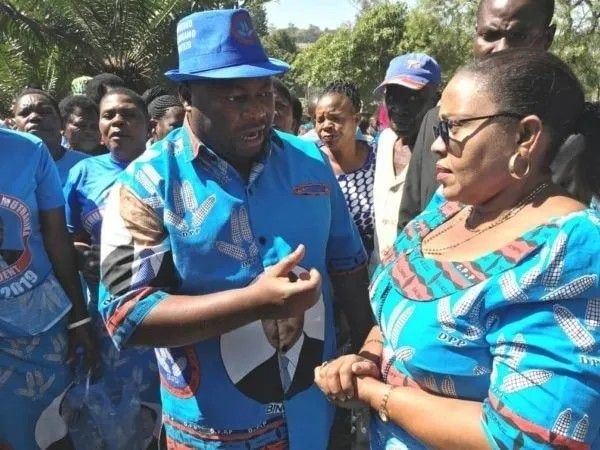
In fact, at one political rally, he used Bingu wa Mutharika’s face on the party cloth instead of the current party’s president as is the norm.
Furthermore, during a televised interview, Kondwani Nankhumwa admitted that it was the Speaker of the National Assembly who had handpicked him to be the Leader of Opposition in Parliament as a ‘precautionary measure’.
The normal procedure was for DPP to officially write to the Speaker of the National Assembly submitting the name of the preferred leader of opposition.
When the party wrote to the Speaker preferring Dr. George Chaponda as the Leader of Opposition, Kondwani rushed to the court for an injunction.
Even when Kondwani was expelled from the party for not attending the DPP internal Disciplinary committee hearing , the court granted him an injunction too.
The truth of the matter is that court injunctions propagated incessant squabbles in DPP.
However, the recent court rulings that endorsed APM’s decision to reshuffle NGC members ushered in a sense of sanity in the party.
Analytically, the recent expulsion and suspension of some DPP gurus owing to their gross indiscipline is welcome because it will deter future potential culprits from undermining the authority of the party president.
Without much ado, what lessons can we learn from the fracas in DPP?
Our lessons are referenced to Robert Greene who published a book titled ‘48 laws of power’.
It is recommended that every politician must read this book although some laws of power need to be applied with caution.
Frist, never outshine the master
Popularity and wealth prevented Kondwani Nankhumwa from appreciating that APM was still his political mentor and DPP party president.
Even though the tenure of office for DPP executive positions expired, the DPP constitution states that the party president remains in office till he hands over the mantle to his successor.
Frankly speaking, it was APM and his elder brother Bingu who had groomed Kondwani from grassroots level politics up to the extent of holding senior positions in the party such second vice president and Director of elections.
Second, conceal your intentions
It is widely believed that politics is a hide and seek game of tricks, distrust and dribbles.
If Kondwani Nankhumwa wanted to take over the party, he would have concealed such intentions by remaining loyal to the party president while organising internal parallel structures in the party.
Bingu wa Mutharika remained loyal to Bakili Muluzi who was promised to be protected from prosecution.But when Bingu finally became the State President, he publicly dumped Muluzi and the United Democratic Front (UDF).
Third, always say less than necessary
A hide and seek game of politics requires patience, composure and responsibility.
Kondwani Nankhumwa and his team were always unnecessarily vocal.
In all his senses how could Kondwani go full throttle in public claiming that they had taken over the party from APM? Yet he knew that the judges and justices who would determine his court case were listening attentively.
Fourth, use selective honesty and generosity to disarm your victim
This is where the game of politics becomes interesting.
Sir Newton Isaac discovered that if you apply a force to a target, you will get an equal and opposite force.
In the same vein of logic, if Kondwani Nankhumwa disguised himself to be honest and generous to the party leadership, it would have been difficult for the party to suspect his diabolical intentions of coup d’état.
*Fifth, keep others in suspended terror: cultivate an air of unpredictability*
During the DPP’s fracas, APM was utterly silent and many people thought that his meekness was a sign of weakness.
However, nobody predicted his move that he would invoke DPP constitution to reshuffle some members of the NGC.
On the other hand, every Nana and Nene predicted every Kondwani’s move.
In fact,his consolation, hope and strength rested on court injunctions.
It did not require a renowned philosopher or logician that when the courts get tired of Kondwani’s babyish groans, that would be his adverse turning point in his political career.
Sixth, know who you are dealing with. Do not offend the wrong person.
It seems like Kondwani Nankhumwa failed to distinguish between APM as a person and APM as a party president.
Did Kondwani Nankhumwa actually know which APM’s capacity he was fighting against?
Seventh, use the surrender tactic: Transform weakness into power
Kondwani Nankhumwa would have been more tactical by evaluating every step he took.
When he discovered that the coup d’état would not be successful, he would have surrendered earlier.
It is widely believed that if you cant fight them, just join them
*Eighth, keep your hands clean. Never do the dirty work yourself.*
Kamuzu Banda and John Tembo were acquitted in the Mwanza murder case simply because there was no evidence that implicated them.
Candidly speaking, there is a high chance that they were the masterminds behind the gruesome murder of the controversial cabinet ministers.
I laughed my lungs out when I watched Kondwani Nankhumwa insinuating, ‘Apa chipani sitinachitenge?’ I just knew that the coup d’état had dismally failed.
Ninth, plan all the way to the way to the end
Organising a coup d’état of a mighty political party DPP requires a good planning strategy.
Relying on the sympathy from the courts is not enough for courts don’t take sides because they are independent arbitrators.
It was therefore, important to include possible contingency plans and what-if scenarios in the coup d’état strategy.
Tenth, strike the shepherd and the sheep will scatter
The moment Kondwani Nankhumwa as the leader of the disgruntled DPP camp has been expelled from the party, his followers are likely to scatter.
In fact, this is the time when people will know his own intentions of causing havoc in the party.
Will Kondwani Nankhumwa form a new political party or he will join his political masters?
Conclusion
In conclusion, we pat on the back our own courts for eventually bringing sanity in the opposition party, DPP, because previous court injunctions were just temporary reliefs which were prolonging squabbles in the party.
We also concur with the bold step the DPP Disciplinary Committee took by recommending the suspension and expulsion of the culprits from the party.
This will act as a deterrent to potential offenders that undermining the party leadership tantamounts to mocking the whole party.
It is not true that the DPP party will disintegrate after the expulsion of the culprits.
In fact, it is a good strategy to build and transform the party. May peace and tranquility prevail thereafter.
It is important to appreciate that such disciplinary actions are normal in any political organisation.
For instance, Malawians are aware that the erstwhile opposition party, Malawi Congress Party (MCP) fired Dr. Jessie Kabwira and Prominent lawyer Gustavo Kaliwo before ascending to power.
To the expelled persons, all is not lost. They have a myriad of options to pursue.
They can seek legal relief though it is highly likely that they may lose the case with costs.
They can organise themselves and form a new party and later align themselves with any electoral alliance.
They can also join any political party of their choice or they can quit active politics and concentrate on private businesses.
Chiefs and non-governmental organizations in Machinga express alarm over the increasing incidence of early pregnancies among girls in the district.
This concern was said during a stakeholder meeting at Group Village Chipolonga in traditional authority Mtumbwinda facilitated by the Development Network for Youth Empowerment (DENEYE).
Area development committee representative Lanjesi Masale and women representative Hanna Wethiwa emphasized that a significant number of girls are leaving school due to cultural practices disrupting their education.
Lanjesi urged parents to actively prevent harmful cultural practices in the district to secure the future of their daughters.
“We appeal to stakeholders and the government to assist us in eliminating these harmful practices and raising awareness on sexual and reproductive health (SRH) to prevent early pregnancies,” he said.
He also commended DENEYE for their efforts in sensitizing communities about the importance of family planning methods for girls to pursue their goals.
In an interview, Shalid Ishmael, the executive director of DENEYE, expressed concern about the growing number of adolescents experiencing early pregnancies.
“Through the meeting, we have identified a need for increased awareness on contraception, so we will continue engaging communities and mothers’ groups on this issue,” he explained.
He appealed to other organizations in the country to provide funding, emphasizing that DENEYE is currently operating without any financial support.