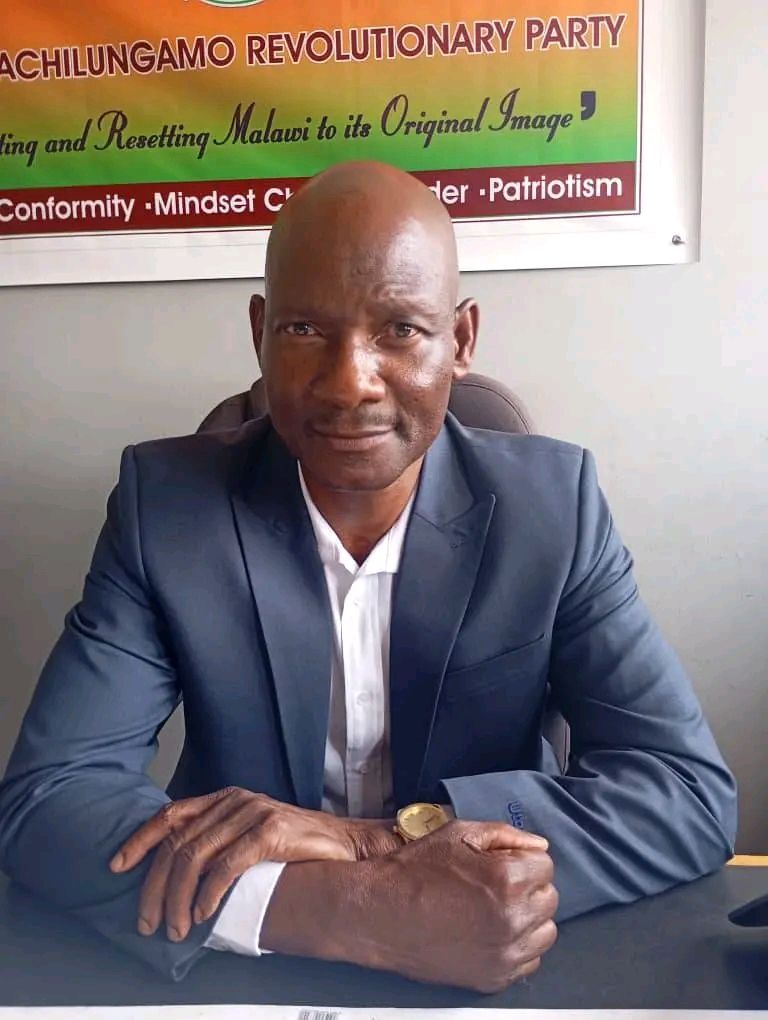
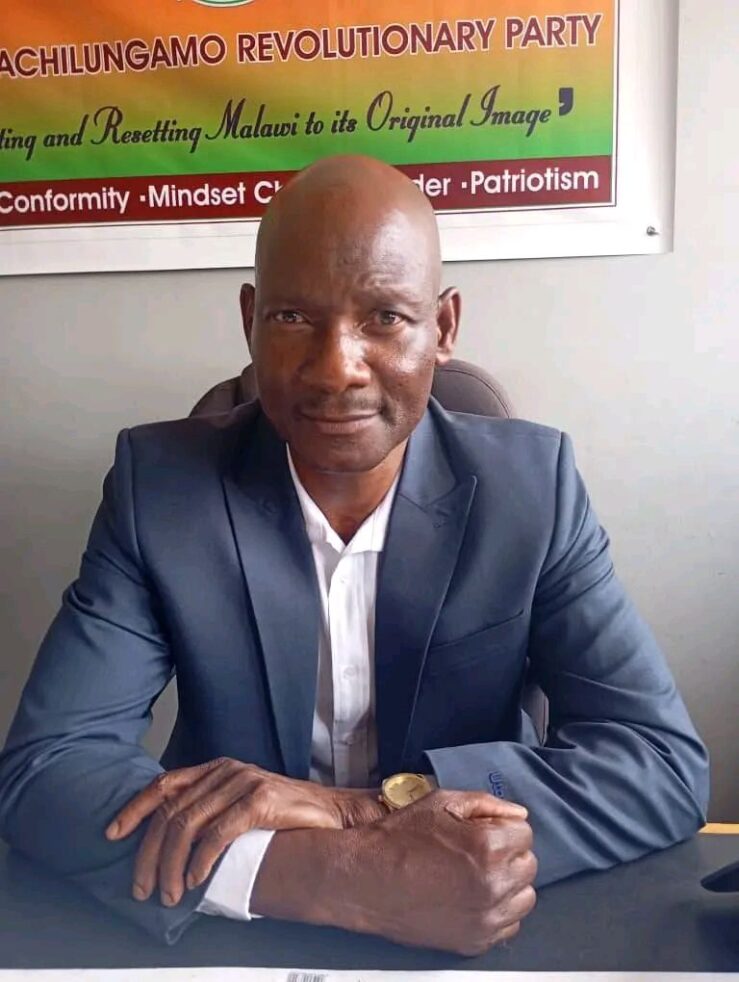
Revolutionary leader of Muvi wa Chilungamo Revolutionary Party (MRP) Bantu Saunders Jumah the Utopian, says Malawians have suffered enough and they have been patient for far too long.
Jumah said for 62 years of the country’s independence, Malawians have been told by political party leaders that things will be better but these things have been turned from better to worse.
He said people that are governing this country are all greed, they are for their own riches and not servant leadership case in point the cost of living, very expensive, electricity blackout and no fuel.
Speaking through a Revolutionary voice, Jumah said Muvi wa Chilungamo has been cleared by the Censorship Board asking MBC Director General Brian Banda that if the public broadcaster is for the people of Malawi and is being run by taxpayers money, let its Mindset Change program be heard on the radio and television.
Jumah said the Spear of Truth ” Muvi wa Chilungamo” is a Movement for justice, and accountability, a Movement that says enough is enough, they are the voices of the voiceless, they are the hope of the forgotten and they are the hope for a better Malawi.
He said no leader or political party can transform the country, the country needs everyone and Muvi wa Chilungamo is the change not clapping hands at stupidity but to tell the government and the ruling party in government nothing but the truth of Malawi.
The Revolutionary leader said Muvi wa Chilungamo is not begging for change, they are for the change, change never comes to those who wait but to those who rise up and speak with a loud and courageous voice, enough is enough.
He said Malawi is not poor or under created, it has been misled by politicians since 1964 observing that Kamuzu Banda was using the only single radio station MBC to spread propaganda and deceive the nation.
Jumah said MBC 1,2 and television of today remain the mouthpiece of a political party in government, opposition party views and those with dissenting voices and opinions cannot be heard, saying this is not a democracy Malawians fought for in 1992 and 1993.
Bantu Saunders Jumah
He said Malawi has been flooded with fear of unknown, during Kamuzu Banda’s era, people with dissenting voices, views and opinions were being thrown into Shire River for crocodile meat and under multiparty politics and democracy, they are being criminalized, or killed.
” On 10th June, 2024 nine innocent lives were lost in the Chikangawa forest because of fear of unknown, Dr. Saulosi Chilima posed as a threat to MCP President Dr. Lazarus Chakwera,” said Jumah.
He said that fear of unknown has grown in Justice Dr. Jane Mayemu Ansah SC (RTD), she has been turned into a useless Vice President because she is a threat to the DPP after President Professor Arthur Peter Mutharika quit from active politics in 2030.
The Revolutionary leader said Malawians cannot continue to be misled by politicians in government, they need to seek the truth and that truth can be found in one and only Muvi wa Chilungamo Revolutionary Party (MRP) to stop the mentality of clapping hands at nonsense.
Jumah said Malawi is a country rich in land, rich in people, and rich in potential, what the people are lacking, is not resources, what they lack is truth, leadership, and courage to take away the fear of unknown urging Malawians regardless of party affiliations to join Muvi wa Chilungamo for change.
In recent days, there have been several confrontational remarks made by prominent figures, including Tamia Ja, Alexious Kamangila, and Bakili Muluzi TV. It is quite intriguing to observe this trend.
Tamia is a content creator on various social media platforms, with a focus on addressing social and economic issues, particularly scandals involving high-profile individuals.
Alexious Kamangila is an esteemed legal professional who received his formal education at Chancellor College, the University of Malawi.
Prior to pursuing his PhD at the University of Galway in Ireland, he held positions at several private companies, including Mbeta Associates. Additionally, he worked as a legal advocate, representing disadvantaged clients in a variety of legal matters.
Alex has gained recognition on his Facebook page for uncovering instances of corruption in the judiciary and other government organizations, in order to advance the battle against this vice.
As an example, he previously labeled Judges Chikopa and Manda as corrupt judges.
Bakili Muluzi TV (BMV) is a channel run by an anonymous individual, focused on delivering political and historical information to the public.
When ex-President Bakili Muluzi disassociated himself from Bakili Muluzi TV, it became evident that he had no ties to this channel.
There is a belief that BMV was instrumental in removing the Chakwera administration from office by highlighting instances of poor governance and promoting the agenda of the Democratic Progressive Party.
Although they have varying goals, the trio remains widely favored by numerous people in Malawi.
Recently, there has been a back-and-forth exchange of words among Jamia, Kamangila and BMV regarding their efforts to establish themselves as the most popular.
Regrettably, this exchange of words has put the trio in a vulnerable position where they have disclosed their personal and private matters.
In the midst of their conversation, it was revealed that Kamangila had gotten his maid pregnant and they now have a child together. As a result, their official marriage came to an end. Kamangila has not denied this accusation.
In trying to tarnish Kamangila’s image, it was observed that Kamangila ran away from Malawi from a perjury case to Ireland where it is also alleged that he impregnated his senior.
In response, Kamangila dismissed the BMV accusations by implying that his education level is subpar due to his inadequate proficiency in English.
This situation has now become intriguing as Kamangila continues to criticize Tamia for allegedly accepting bribes from influential figures like Mpinganjira and Bushiri in order to create her content
Observing this, Kamangila could potentially delve deeper into exposing her true self. However, Tamia countered by disclosing that she is not a virgin and has a child. She then shared that she has embraced her identity as a lesbian and is financially stable.
The recent trend of exchanging insults has caused confusion among followers. In reality, these followers are not interested in the personal scandals of celebrities.
In a nutshell, the trio is recommended to cease exchanging offensive remarks, and instead focus on delivering their message objectively without personal attacks.ick Dzida
In recent days, there have been several confrontational remarks made by prominent figures, including Tamia Ja, Alexious Kamangila, and Bakili Muluzi TV. It is quite intriguing to observe this trend.
Tamia is a content creator on various social media platforms, with a focus on addressing social and economic issues, particularly scandals involving high-profile individuals.
Alexious Kamangila is an esteemed legal professional who received his formal education at Chancellor College, the University of Malawi.
Prior to pursuing his PhD at the University of Galway in Ireland, he held positions at several private companies, including Mbeta Associates. Additionally, he worked as a legal advocate, representing disadvantaged clients in a variety of legal matters.
Alex has gained recognition on his Facebook page for uncovering instances of corruption in the judiciary and other government organizations, in order to advance the battle against this vice.
As an example, he previously labeled Judges Chikopa and Manda as corrupt judges.
Bakili Muluzi TV (BMV) is a channel run by an anonymous individual, focused on delivering political and historical information to the public.
When ex-President Bakili Muluzi disassociated himself from Bakili Muluzi TV, it became evident that he had no ties to this channel.
There is a belief that BMV was instrumental in removing the Chakwera administration from office by highlighting instances of poor governance and promoting the agenda of the Democratic Progressive Party.
Although they have varying goals, the trio remains widely favored by numerous people in Malawi.
Recently, there has been a back-and-forth exchange of words among Jamia, Kamangila and BMV regarding their efforts to establish themselves as the most popular.
Regrettably, this exchange of words has put the trio in a vulnerable position where they have disclosed their personal and private matters.
In the midst of their conversation, it was revealed that Kamangila had gotten his maid pregnant and they now have a child together. As a result, their official marriage came to an end. Kamangila has not denied this accusation.
In trying to tarnish Kamangila’s image, it was observed that Kamangila ran away from Malawi from a perjury case to Ireland where it is also alleged that he impregnated his senior.
In response, Kamangila dismissed the BMV accusations by implying that his education level is subpar due to his inadequate proficiency in English.
This situation has now become intriguing as Kamangila continues to criticize Tamia for allegedly accepting bribes from influential figures like Mpinganjira and Bushiri in order to create her content
Observing this, Kamangila could potentially delve deeper into exposing her true self. However, Tamia countered by disclosing that she is not a virgin and has a child. She then shared that she has embraced her identity as a lesbian and is financially stable.
The recent trend of exchanging insults has caused confusion among followers. In reality, these followers are not interested in the personal scandals of celebrities.
In a nutshell, the trio is recommended to cease exchanging offensive remarks, and instead focus on delivering their message objectively without personal attacks.
In September 2025, Malawians voted for a change in government, choosing Professor Peter Mutharika over former President Chakwera by a significant margin. This is a widely acknowledged fact.
Indeed, there was a strong belief that President Peter Mutharika would fulfill the hopes and aspirations of Malawians.
Despite the decrease in the cost of Maize per bag, numerous individuals continue to face financial difficulties due to the continuously increasing prices of essential items and services.
It is disheartening to see that when individuals express dissatisfaction with the Mutharika administration’s lack of action on economic issues, they are directed to the former president, Chakwera, as if he is still in charge.
To put
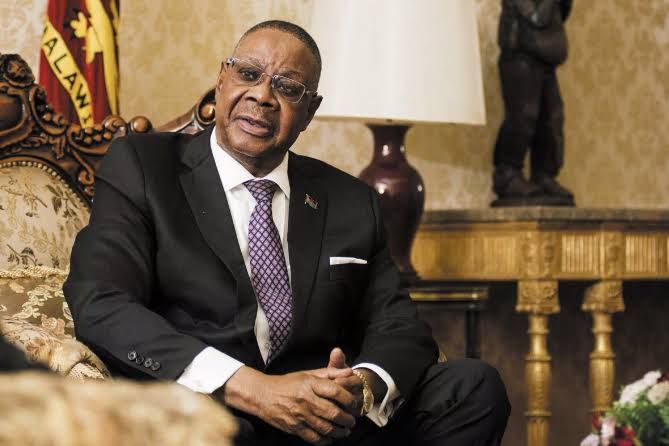
Mutharika
it simply, President Mutharika is currently the leader of Malawi.
As the leader of the country, Mutharika bears the duty of addressing all the economic challenges that are affecting the people.
I urge the people of Malawi to also alter their way of thinking too.
For instance, while there were numerous cases of corruption under the Chakwera administration, this does not give the Mutharika government a reason to condone corruption once again.
Despite the economic struggles experienced by individuals under Chakwera’s leadership, this should not serve as justification for the current Mutharika government to also allow people to suffer financially.
It should be recognized that the citizens of Malawi brought about a change in their government in September 2025 because they desired a transformation in the provision of public services and improvement in their personal lives.
Regrettably, after five months of APM’s leadership, there has been no improvement in the delivery of public services. In fact, these services continue to decline and there are no concrete plans from the current government to improve them.
We urge the DPP government to develop strategies for enhancing public services, such as public health services, infrastructure development, education services, and other social amenities.
It is true that the people of Malawi had confidence in the DPP administration, believing that it would effectively address corruption and resolve various socio-economic issues.
Regrettably, even after five months, corruption is still widespread as government officials continue to seek out opportunities for corrupt activities.
The Amaryllis Hotel scandal is a highly notable case involving accusations of government officials participating in financial fraud.
It is extremely revolting that President Mutharika has failed to take action against the officials implicated in this scandal. According to government protocol, when a government official is suspected of committing a grave offense such as corruption, they must be suspended or put on leave to allow for a comprehensive and unbiased investigation.
During the initial period of Peter Mutharika’s term, we observed an occurrence where the Minister of Agriculture, George Chaponda, was implicated in a corruption scandal involving the procurement of maize. As a result, APM suspended him from his ministerial position. However, upon Chaponda’s exoneration of any wrongdoing, he was subsequently reinstated.
It appears that APM is currently toterating corruption. This has been observed multiple times when individuals with corruption allegations, like Norman Chisale and Enoch Chihana, were appointed and subsequently had their charges dismissed.
Being a law professor, APM was presumed to have knowledge of the laws, regulations, and protocols of Malawi. However, citizens have observed several irregularities in regards to the implementation of the rule of law.
At one point, APM chose Henry Mathanga to serve as the deputy Governor of the Reserve Bank of Malawi, even though he was not working for the bank at that time. Later on, they attempted to deceive the Malawian people by claiming that he was an employee of the bank at the time of his appointment. This goes against the Reserve Bank act in Malawi which outlines the proper procedure for appointing a Reserve Bank Governor.
It has been observed that certain CEOs and directors are being hired without undergoing a fair interview process, as seen in the case of Brian Banda and numerous others.
Despite claims that he is a skilled journalist, strict adherence to the rule of law and proper procedures was necessary in order to select the most qualified candidate through a thorough interview process.
The dpp administration is urged to avoid using nepotism, tribalism, ethnicity, and regionalism as factors in selecting individuals for public positions, as was done by the previous chakwera government.
During the previous administration, we observed that the Chakwera Government primarily selected individuals from the central region with a Chewa background for public positions. Similarly, the current DPP government is following suit by appointing individuals from the Lhomwe belt. It is crucial that public appointments prioritize merit rather than political affiliations.
Although we acknowledge the significance of taxes in the progress of our nation, numerous Malawians have voiced their worries about their excessive amount and the fact that they are applied to every purchase. As a result, the cost of living has become unaffordable and overwhelming for many Malawians.
We are thus urging the DPP administration to decrease taxes in order to improve the quality of life for Malawians.
It is often said in the realm of politics that even as things may change, they ultimately end up remaining similar.
Prior to the 2025 September elections, there was widespread dissatisfaction with Lazarus Chakwera’s government due to the constant rise in prices.
Therefore, they chose to switch the ruling party in Malawi from the Malawi Congress party to the Democratic Progressive Party, which is headed by Professor Peter Arthur Mutharika.
Regrettably, after five months under the Mutharika administration, there has been a sharp increase in the prices of goods and services, causing high inflation. Despite this, people’s salaries have not seen any growth.
There is a strong argument that President Peter Mutharika has only been in power for five months during his second term, leading people to believe that it is too early to hold him responsible for not fulfilling his campaign pledges.
Despite initial indications of achievement, the expected results have not materialized. While we acknowledge that the cost of a bag of maize has decreased and is still declining, taxes remain burdensome and the cost of goods and services remains high.
It is crucial for President Mutharika and his government to present a detailed plan outlining how they will fulfill their campaign promises within the next five years.
Hence, we urge the dpp administration to classify the campaign pledges into those that can be realized immediately, within a year, and within three years. Additionally, there should be a separate category for long-term promises that can only be fulfilled by the end of APM’s term.
The implementation of austerity economic policies should not be treated as a mere melody that can be easily recited without any tangible efforts being made.
When funds saved through economic austerity measures are directed towards corruption rather than the development of our nation, it becomes a significant issue.
We are asking the DPP government to adopt a well-rounded strategy in handling the economy.
We urge the present DPP government to promptly pursue legal action against individuals facing corruption allegations, regardless of their political ties.
This will ensure that if they are proven guilty of engaging in corrupt activities, their ill-gotten funds and assets will be seized and returned to the government’s primary account for the purpose of advancing the country’s development.
In conclusion, we respectfully ask for State President Mutharika to assert himself as the leader of the nation.
Pointing fingers at ex-president Chakwera will not resolve the issues at hand. It is clear that leadership entails finding solutions, and thus the problems mentioned in this piece must be dealt with promptly.
U.S. President Donald Trump has issued a stark warning to Iran, threatening military action if the country does not reopen the Strait of Hormuz, a vital route for global oil shipments, by the second week of this month.
The Strait of Hormuz carries roughly one-fifth of the world’s oil supply, making it a strategic chokepoint that has long drawn international attention and heightened tensions in the Middle East.
Trump indicated that any failure to comply could lead to strikes on Iran’s critical infrastructure, including power generation facilities and key construction projects.
Tehran quickly responded, with officials warning that any attacks on its citizens would trigger a “major disruption,” hinting at the potential for escalation into a broader conflict.
Trump
Neighboring countries have expressed concern, as many rely heavily on oil shipments passing through the strait. Governments are closely monitoring the situation to prevent a regional crisis.
The uncertainty has already impacted global oil markets, with traders fearing supply shortages and potential spikes in fuel prices if the strait remains blocked.
Tensions come amid a backdrop of triangular strain involving the United States, Israel and Iran, with previous confrontations involving targeted strikes and cyber operations raising fears of direct military clashes.
Diplomatic channels remain open behind the scenes, but no formal negotiations have yet been announced to de-escalate the standoff.
The international community, including European nations and the United Nations, has urged restraint and dialogue, warning of the far reaching consequences of any military escalation.
Beyond oil, the crisis threatens shipping insurance costs, regional trade flows, and economic stability for countries dependent on Middle Eastern trade routes.
Domestically in the U.S., Trump’s hardline approach may appeal to parts of his political base that favor assertive foreign policy, while critics caution that threats of military action could exacerbate tensions without a multilateral strategy.
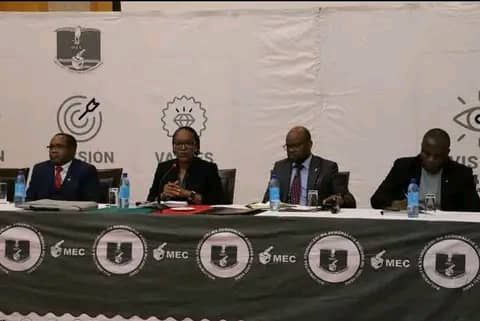
It has now been four months since the High Court, under the stewardship of Judge Simeon Mdeza, delivered a clear and unequivocal ruling ordering the Malawi Electoral Commission (MEC) to relocate its headquarters from Lilongwe to Blantyre.
This ruling came after MEC challenged President Peter Mutharika’s executive order mandating the relocation. The court dismissed MEC’s application and affirmed the president’s directive, expecting prompt compliance.
Malawi Electoral Commission
Yet, despite the passage of significant time, MEC has obstinately refused to move, flagrantly disregarding the court’s authoritative mandate.
This act of defiance raises serious concerns about MEC’s respect for judicial authority, the rule of law, and the very foundations of democratic governance in Malawi.
The judiciary in Malawi stands as a pillar of justice and fairness, charged with interpreting the law and ensuring that all entities, regardless of their status, abide by the rule of law.
The High Court’s decision on this matter was unambiguous, reflecting not only a legal interpretation but a binding order. The expectation is simple: MEC must comply.
Failure to do so is not merely a bureaucratic oversight but a direct challenge to the supremacy of the judiciary and the legal framework that governs the nation.
What makes MEC’s continued refusal even more egregious is the fact that the commission’s chairperson is herself a judge. A judge, by training and profession, is sworn to uphold the law, respect court orders, and embody the principles of justice.
The chairperson’s position should be one of the highest example in demonstrating obedience to the courts.
Instead, this scenario paints a troubling picture of selective compliance and undermines public confidence in both the commission and the judiciary. If a judge leading MEC can choose to ignore a clear court order, it sends a dangerous message that legal rulings can be flouted with impunity.
The role of MEC is fundamentally tied to the credibility and integrity of Malawi’s electoral processes.
Its mandate includes ensuring transparent, fair, and accountable elections, which are cornerstones of a functioning democracy.
However, respect for the judiciary and the legal system is equally critical. When MEC chooses to defy a court order, it risks eroding its legitimacy and, by extension, the public’s trust in the electoral system.
The commission’s actions—or lack thereof—jeopardize the very democratic values it is supposed to protect.
Moreover, the principle of separation of powers in a democratic state demands that the executive, legislature, and judiciary operate within their respective domains, respecting the boundaries and decisions of each other to maintain balance and order.
The High Court’s ruling was a clear exercise of judicial authority, and MEC’s non-compliance directly challenges this balance.
By refusing to relocate, MEC is not only defying the president’s directive, which the court has validated, but it is also undermining the judiciary’s role as a check and balance in governance.
It is important to emphasize the legal implications of MEC’s continued non-compliance.
The court’s order is binding and enforceable. Failure to obey such orders constitutes contempt of court—a serious offense under Malawian law.
Contempt of court is designed to protect the dignity, authority, and effectiveness of the judiciary. It ensures that court orders are respected and followed to preserve justice and social order.
MEC’s refusal to move its headquarters to Blantyre, therefore, places it squarely in contempt of the High Court. This is not a mere technicality but a grave legal breach that warrants immediate remedial action.
The consequences of MEC’s contempt extend beyond legal ramifications.
They reflect a blatant disregard for governance norms and threaten to trigger a constitutional crisis.
If one of the country’s key constitutional bodies openly disrespects the judiciary, it creates a precedent for other institutions or individuals to do the same, leading to institutional breakdown and chaos.
Upholding the rule of law means ensuring that no one—not even entities entrusted with critical national responsibilities—is above the law.
It is also worth reflecting on the practical implications of MEC’s refusal to relocate.
The president’s executive order to move MEC’s headquarters to Blantyre was presumably motivated by strategic considerations, including decentralization of government functions and equitable development.
By not complying, MEC is obstructing government policy aimed at national progress.
This not only delays administrative efficiency but also portrays MEC as an institution resistant to governmental directives, thereby politicizing an entity that should ideally remain neutral and cooperative in the national interest.
The public deserves transparency and accountability from MEC regarding its failure to implement the court’s ruling. Silence or vague excuses only fuel speculation of internal disagreements, political interference, or deliberate obstructionism.
As a body funded by taxpayers and charged with safeguarding democratic processes, MEC owes the citizens clear explanations and swift corrective actions.
Its current stance undermines public faith and diminishes its stature.
It is critical for all stakeholders—the judiciary, the executive, civil society, and the general public—to demand that MEC immediately honors the court’s order.
The judiciary must consider employing stronger enforcement mechanisms, including holding MEC in contempt formally and imposing penalties if necessary.
The executive should reinforce the rule of law by supporting judicial decisions and ensuring compliance.
Civil society and the media must continue to hold MEC accountable, amplifying the call for respect of the court’s ruling.
The Malawi Electoral Commission’s refusal to relocate its headquarters to Blantyre as ordered by the High Court is a serious affront to the rule of law and judicial authority.
This defiance, coming from a commission chaired by a judge, is particularly troubling and undermines the credibility of both the judiciary and the electoral body.
Continued non-compliance risks contempt of court charges and sets a dangerous precedent that threatens democratic governance in Malawi.
It is imperative that MEC promptly complies with the court order to restore respect for legal institutions and reinforce the principles of justice and accountability that are essential for the nation’s stability and progress.
The time for excuses has long passed; MEC must now act decisively and uphold the law it is sworn to respect.