
Tuesday, December 16, 2025
No menu items!
spot_img
Home Blog Page 17

Illegal mining in Malawi turns into death trap

0

By Chisomo Phiri

Illegal mining continues to pose a serious threat to lives and the environment in Malawi. Unregulated pits and tunnels, often dug without proper safety measures, have led to multiple accidents, injuries, and fatalities in recent years.

Authorities warn that illegal mining sites are prone to collapses, flooding, and exposure to hazardous chemicals, making them extremely dangerous for workers and nearby communities.

Despite the risks, many people continue to engage in these activities due to unemployment and poverty.


A Deadly Collapse in Kasungu

On September 30, 2025, an open-pit gold mine in Kasalika Village, Sub Traditional Authority (Sub T/A) Suza, in Kasungu District, collapsed. The tragedy killed eight people including women and left five others injured.

According to eyewitnesses, a drilling machine was being used late at night, and its strong vibrations caused the wall of one trench  about 15 feet high —to cave in.

Kasungu Police Officer-in-Charge(OC) Obrey Nyirenda called the site a death trap warning that the combination of deep trenches and unstable soil made it extremely hazardous.

Kasungu District Commissioner(DC) James Kanyangalazi described the incident as heartbreakingand said local authorities had alerted central government agencies, including the Department of Disaster Management, to provide urgent assistance.


Experts Call for Urgent Reform

In the wake of the Kasungu disaster, mining experts and civil society groups renewed their calls for the formalization of Malawi’s small-scale mining sector.

Prominent mining expert, Grain Malunga,said that most illegal miners lack the tools, training, and technical support needed to operate safely.

Kennedy Rashid, coordinator for the Natural Resources Justice Network (NRJN), argued that formalization would not only improve safety, but also help the government better regulate the sector and derive revenue.

A Pattern Across the Country

This is not the first time that informal operations have turned fatal.

Years earlier, three women died at an alluvial mining site along the Nanthenje River, buried alive when a riverbank collapsed during panning activities.

Mining and Trade Review, in a field report, said that as many as 3,000 men, women, and children were working in that area,many hauling soil by head, in extreme conditions.

Moreover, a report focused on Nathenje, Lilongwe, highlighted the proliferation of heavy machinery, such as generators and stone mills, in informal mining camps.

These machines, often smuggled in from other countries, significantly raise the risk of severe accidents.

Historic Incidents Show the High Stakes

Illegal mining deaths in Malawi are not limited to recent years.

In 2019, a 34-year-old man named Maxwell Kaomba died in an illegal gold mine near the Kasama River after a rock fell on him.

In another case, a 37-year-old miner was killed at Jalawe Coal Mine in Rumphi when a large stone struck him.

How the Danger Compares Globally

While Malawi grapples with this crisis, similar patterns are emerging elsewhere. In Zimbabwe, six illegal miners died in July 2025 when a hoist failed at the abandoned Mazowe Mine, sending them plunging 45 meters down a shaft. Their deaths echo the high-risk nature of illegal mining across the region.

Why It Keeps Happening

Analysts point to several root causes. Poverty and limited alternatives drive many miners to informal mining because agriculture and other income sources are insufficient. Many miners operate without training, relying on dangerous practices and rudimentary equipment. Regulatory gaps leave local authorities struggling to monitor remote mining sites, while unsafe infrastructure exposes workers to collapsing pits and unstable ground.

What Needs to Be Done

Experts and civil society are calling for reform. They argue that small-scale mining should be formalized, with legal frameworks, licensing, and technical training to allow miners to operate safely and contribute to government revenues.

Decentralizing oversight by empowering local governments to monitor community-based mining activities is also essential. Safety protocols, such as stabilized pit walls, safe machinery, and regulated working hours, need enforcement. Additionally, raising awareness among miners and communities about the risks, while providing alternative livelihood programs, is critical.

Conclusion

The Kasungu tragedy is only a flashpoint in a much deeper crisis. As long as illegal mining remains unregulated, lives will continue to be lost. Reform is not just necessary,it is urgent.

Malawi targets industrial growth and improved trade links at AU-EU Summit

0


By Burnett Munthali

Minister of Foreign Affairs, Dr. George Chaponda, has emphasised that the African Union–European Union (AU-EU) Summit presents a crucial opportunity for Malawi to advance its long-term development agenda.

Speaking on the sidelines of the Summit in Luanda, Angola, Chaponda said the meeting offers a strategic platform for Malawi to engage development partners on issues of industrial development and digital industrialisation.

Mwanamveka


He noted that the European Union remains one of Malawi’s strongest and most reliable partners in development cooperation.

Chaponda highlighted that the EU supports Malawi through grants, concessional loans, technical assistance, trade facilitation, and energy-sector investment.

He said these forms of support continue to play a critical role in strengthening the country’s economic resilience and expanding its development capacity.

The minister also stressed that Malawi’s lack of direct access to the ocean remains one of its biggest barriers to economic growth.

He added that for Malawi to effectively integrate into regional and global markets, improving transport corridors is essential.

Chaponda revealed that he intends to raise the issue of the Nacala Corridor during the Summit discussions.

He explained that enhancingo the Nacala transport route could significantly improve the flow of goods and services into Malawi.

According to the minister, a functional port along the Nacala Corridor would make it easier for Malawi to import essential commodities, particularly fuel.

He said ensuring a steady and efficient supply of fuel is vital for the country’s economic stability and industrial productivity.

Chaponda further noted that both road and rail infrastructure are central to Malawi’s access to the sea through neighbouring countries.

He observed that strengthening these transport networks would improve trade logistics and reduce import and export costs.

“The development of a port on the Nacala Corridor will boost trade and development in terms of access to the market for our products and also bring vital supplies such as fuel,” Chaponda said.

The most recent AU-EU Summit before this year was held in February 2022 in Brussels, Belgium.

During that 2022 meeting, leaders from both unions agreed on a renewed joint vision aimed at strengthening cooperation and shared development objectives.

This year’s Summit marks the 25th anniversary of the AU-EU partnership.

The event is being co-chaired by Angolan President João Lourenço and the President of the European Council, António Costa.

Malawi’s delegation to the Summit is being led by Vice President Dr. Jane Ansah.

Her leadership at the high-level meeting underscores Malawi’s commitment to deepening cooperation with both African and European partners.

The Summit is expected to produce strategic outcomes that will shape Malawi’s development path in the years ahead.

Analyst urges Chakwera to reassess his leadership credibility after Tanzania snub


By Burnett Munthali

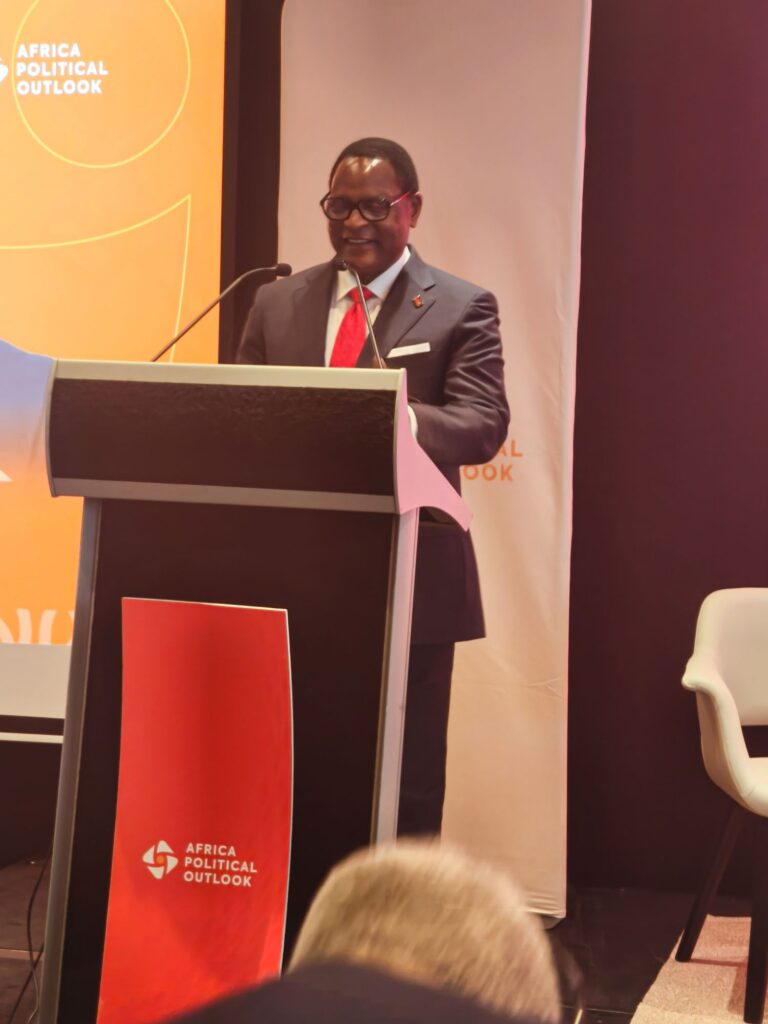
One of Malawi’s outspoken social commentators has challenged Malawi Congress Party (MCP) president Dr. Lazarus Chakwera to seriously re-examine his leadership credibility ahead of the 2030 elections.

The call follows a decision by a Tanzanian human rights organisation rejecting a proposal for Dr. Chakwera to mediate political negotiations aimed at restoring peace in Tanzania.

Chakwera


Commentator Patrick Theu said the development is embarrassing and should serve as a wake-up call to Dr. Chakwera regarding how his leadership record is perceived beyond Malawi’s borders.

He argued that the rejection does not only reflect concerns about Dr. Chakwera’s governance at home, but also paints a troubling picture of how neighbouring countries view the former President.

Theu said such external reactions suggest that issues that occurred during Dr. Chakwera’s administration have damaged confidence among some Malawians as well as regional partners.

He added that if Dr. Chakwera truly believes he can regain national trust in 2030, he must critically evaluate the legacy of his leadership and take responsibility for past shortcomings.

He further stated that international credibility is essential for any leader seeking another mandate, and the Tanzania incident should not be brushed aside.

Meanwhile, the Malawi Congress Party has not issued any statement responding to the Tanzanian organisation’s position.

The silence from the party has left political observers waiting to see whether MCP will defend its leader or choose to avoid the growing debate around Dr. Chakwera’s suitability for future leadership roles.

Vice President Jane Ansah arrives in Angola as Malawi joins crucial AU–EU deliberations

0


By Burnett Munthali

Malawi’s Vice President, Dr. Jane Ansah, touched down in Angola on Saturday night to participate in a series of high-profile African Union meetings that are expected to influence regional cooperation and development priorities.

She landed at Dr. António Agostinho Neto International Airport in Icolo e Bengo province, where she was welcomed by Minister of Foreign Affairs Dr. George Chaponda, Malawi’s Ambassador to Angola Margaret Constance Kamoto, and several officials who had gathered to receive her.

Ansah in Angola


The Ministry of Foreign Affairs reports that Dr. Ansah will represent Malawi at the 7th African Union–European Union Summit, an important platform where leaders from both continents will assess their partnership and explore ways to enhance collaboration in key areas such as security, governance, economic progress, migration, and global cooperation.

During her stay, Dr. Ansah is also expected to engage with various partner nations to discuss Malawi’s strategic response to ongoing national pressures, including shortages of food, fuel, fertilizer, foreign exchange, and essential medical supplies. These discussions will form part of Malawi’s broader diplomatic efforts to strengthen support systems amid global and regional challenges.

This year’s summit carries special significance as it marks 25 years of cooperation between the AU and EU—an evolving partnership that has shaped policy dialogue and development initiatives across Africa.

Meeting proceedings will be jointly led by Angolan President João Lourenço and European Council President António Costa. Their leadership will be complemented by the participation of European Commission President Ursula von der Leyen and African Union Chair Mahmoud Ali Youssouf, underscoring the summit’s high-level representation.

Held under the theme “Promoting peace and prosperity through effective multilateralism,” the gathering aims to reinforce constructive engagement and deepen joint commitments as both continents navigate complex political and economic realities.

Vice President Jane Ansah arrives in Angola as Malawi joins crucial AU–EU deliberations

0


By Burnett Munthali

Malawi’s Vice President, Dr. Jane Ansah, touched down in Angola on Saturday night to participate in a series of high-profile African Union meetings that are expected to influence regional cooperation and development priorities.

She landed at Dr. António Agostinho Neto International Airport in Icolo e Bengo province, where she was welcomed by Minister of Foreign Affairs Dr. George Chaponda, Malawi’s Ambassador to Angola Margaret Constance Kamoto, and several officials who had gathered to receive her.

Ansah in Angola


The Ministry of Foreign Affairs reports that Dr. Ansah will represent Malawi at the 7th African Union–European Union Summit, an important platform where leaders from both continents will assess their partnership and explore ways to enhance collaboration in key areas such as security, governance, economic progress, migration, and global cooperation.

During her stay, Dr. Ansah is also expected to engage with various partner nations to discuss Malawi’s strategic response to ongoing national pressures, including shortages of food, fuel, fertilizer, foreign exchange, and essential medical supplies. These discussions will form part of Malawi’s broader diplomatic efforts to strengthen support systems amid global and regional challenges.

This year’s summit carries special significance as it marks 25 years of cooperation between the AU and EU—an evolving partnership that has shaped policy dialogue and development initiatives across Africa.

Meeting proceedings will be jointly led by Angolan President João Lourenço and European Council President António Costa. Their leadership will be complemented by the participation of European Commission President Ursula von der Leyen and African Union Chair Mahmoud Ali Youssouf, underscoring the summit’s high-level representation.

Held under the theme “Promoting peace and prosperity through effective multilateralism,” the gathering aims to reinforce constructive engagement and deepen joint commitments as both continents navigate complex political and economic realities.