The Chief Resident Magistrate Court in Zomba has ruled that former Malawi Electoral Commission (Mec) commissioner Linda Kunje and her driver Jones Tewesa have a case to answer on criminal reckless and negligence.
The two are said to have obstructed President Lazarus Chakwera’s convoy in December last year along the Zomba- Blantyre road. Kunje defied traffic police orders to stop her vehicle paving way for Chakwera’s convoy. Chief Resident Magistrate Austin Banda, who is presiding over the case, is expected to communicate the date the two will start to enter defence.
Linda Kunje, to answer charges blocking the President.
Early in the day A truck driver was been arrested for obstructing President Lazarus Chakwera’s convoy along the M1 road in Mzimba.
National Police Spokesperson, James Kadadzera, confirmed the arrest of the truck driver who has been identified as Lusungu Chibisa Chirwa.
Chirwa was arrested at Kadikechi trading center along the M1 road in Mzimba and according to Kadadzera, the driver did not also have a driver’s licence at the time of the arrest.
Judge Annabel Mtalimanja has granted the State an order of inquest into the death of former Director of Criminal Investigations Department at the Malawi Police Service, Bob Mtekama.
Mtekama, who died in August 2020, was at the centre of investigations into several high profile cases, including the 2014 death of Anti-Corruption Bureau Director of Corporate Affairs, Issa Njauju.
The State, through the office of Director of Public Prosecutions, had asked the High Court to grant the order to establish the cause of his death though reports indicate it was due to Covid-19.
Renowned Crime Buster, Bob Mtekama died at Adventist hospital in Blantyre but his death is shrouded by suspicion and foul play.Mtekama was admitted to the hospital with diabetes and died mysteriously and his family believes that he was poisoned.No postmortem was done.
The late Bob Mtekama
The police through National spokesperson, James Kadadzera issued a press release claiming that Bob Mtekama had died of Covid-19 which the family trashed as a blatant lie and a cover up.
Mtekama’s young brother, Majido Mtekama told the local paper: “It is not true that Bob died of Covid-19. Someone is trying to cover up something. It is a lie, Bob never tested for coronavirus because if he did, he would have been sent to a quarantine centre and not be allowed in a communal room in the hospital.
“The death report never indicated anything about Covid, it said Bob died of a kidney failure and diabetes, which can be disputed as there was no autopsy done, for reasons best known to the police.
Majido Mtekama said that “a mysterious man who sneaked into Bob’s hospital room at 04:00 am” and when they approached him to ask him what he was doing in Bob’s room at such ungodly hour he told them he was a police officer from the welfare and that he was sent by the commissioner.
“When pressed as to why he came at that time, the man ran off and vanished and after that Bob who had improved and was due to be discharged deteriorated and died later in the day. All we want is justice for Bob. We know there is nothing that will bring him back but we only rest after knowing who killer our brother,” he said.
Bob Mtekama was tasked to handle all the high-profile cases, which included the mysterious death of ACB’s Issa Njaunju, Buleya Lule, Robert Chasowa and Kalonga Stambuli, among others.
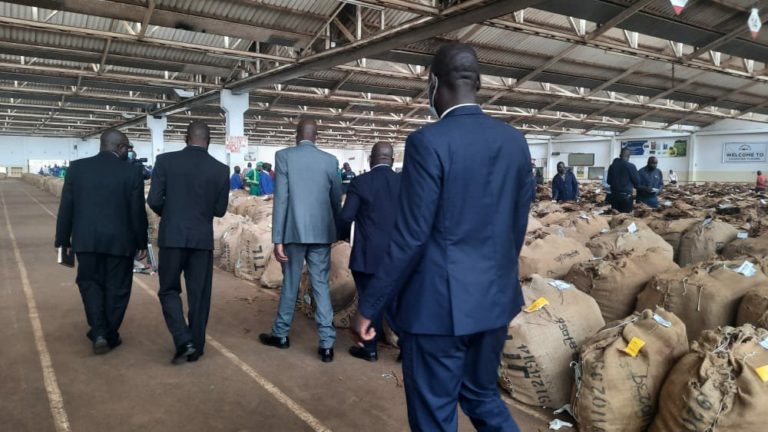
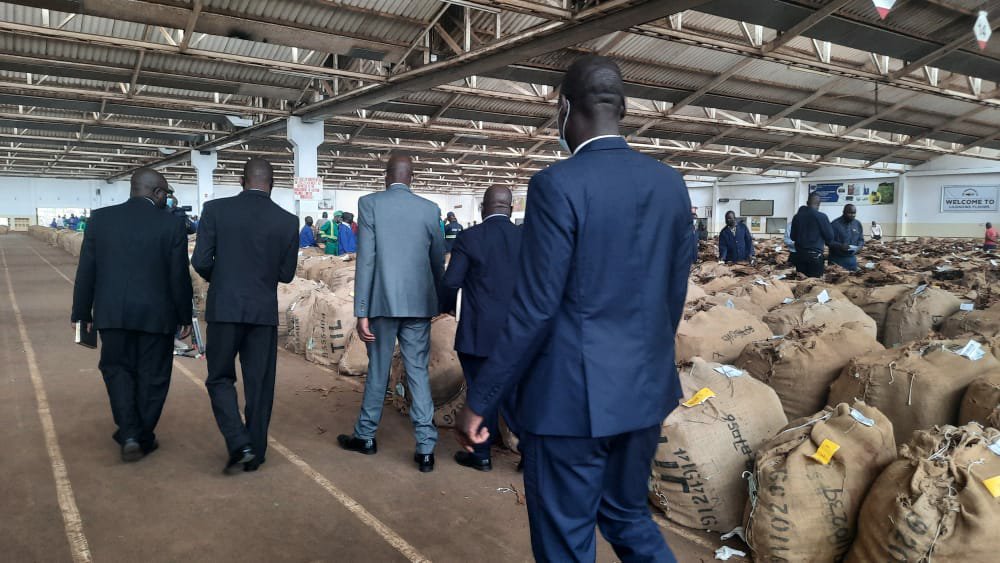
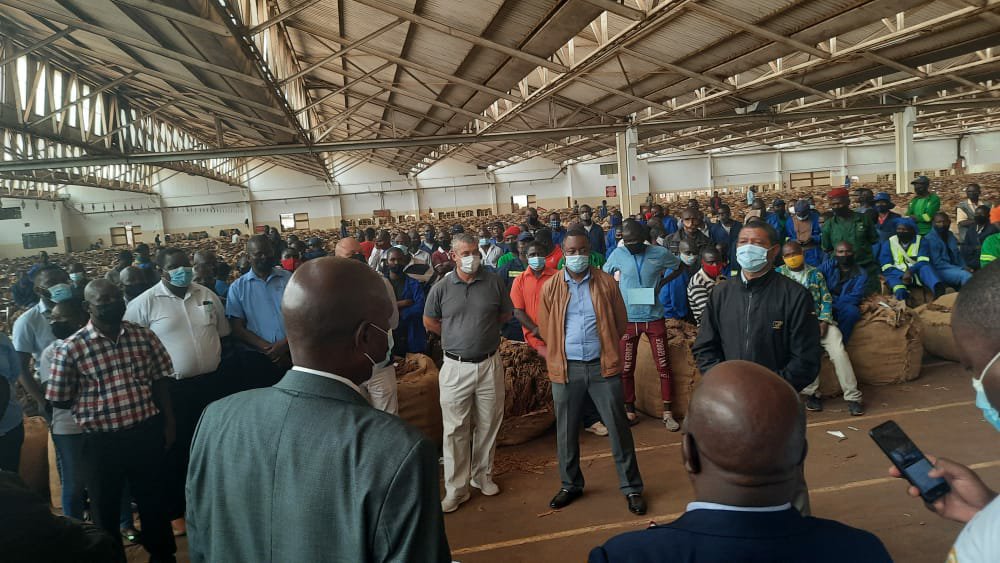
Business has come to a standstill at Lilongwe Tobacco Auction floors in Lilongwe this morning.
The market for the country’s gold leaf has been suspended over what farmers have claimed to be continued low prices on offer.
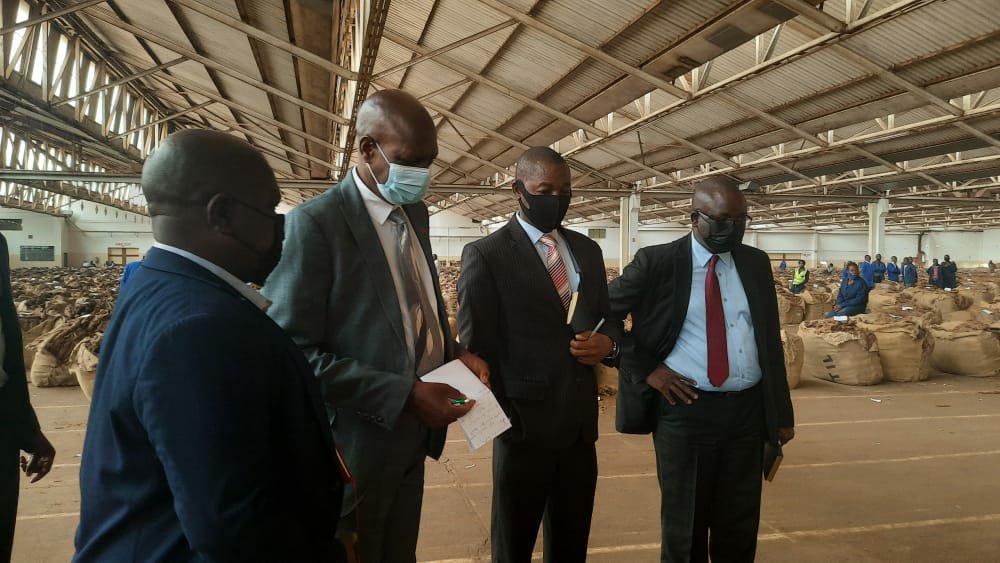
Hon Lobin Lowe at the Auction Floors
Minister of Agriculture Lobin Lowe, who also rushed to the floors when tipped, confirmed of the development, arguing that he found some buyers offering as low as 50Cents per kilo of the green gold which is below government’ set minimum prices for the crop.
Lowe has since argued the buyers to be inconsistent with the country’s laws in dealing with the farmers by offering improved prices for the leaf.
However, the buyers seem not ready to bulge as they insist that the leaf on offer is of low quality, hence even the offered 50 cents is just there as a ‘favour to the farmers’
A few months ago Retired Chief Justice Lovemore Munlo SC, “My Lord ” as I liked to address him against his preference (he preferred achimwene, meaning, “my brother”), paid me a surprise visit at my Phalombe home, accompanied by his wife.
He brushed aside my offer of proper chairs, and insisted that we just chat in the khonde. My workers were over-awed. Word had quickly spread around about who abwana’s distinguished-looking visitor was, and yet the visiting abwana insisted on sitting on the khonde. But this was no surprise to me, for Chief Justice Lovemore Munlo always carried himself like an ordinary man.
Even with his simple appearance many in my village were aware that the mysterious sudden visitor had previously served in various portfolios in government. He had retired as the biggest judge in the land, but before that he had been deputy Minister of Foreign Affairs, Minister of Justice and Attorney General (1993 to 1994), Justice of the High Court of Malawi (1990 to 1992); Director of Public Prosecutions (1984 to 1987); Senior State Advocate (1980 to 1984) and State Advocate (1976 to 1980), and many other things. He had also served Africa in Arusha and as Registrar for the Residual Special Court for Sierra Leone .
My visitor and I talked, literally non-stop, for two hours, maybe longer. We reminisced about our youthful days down in Mulanje. And about how, years later, we ended up together again at Chancellor College as the proud “Class of `76,” and even much later in government.
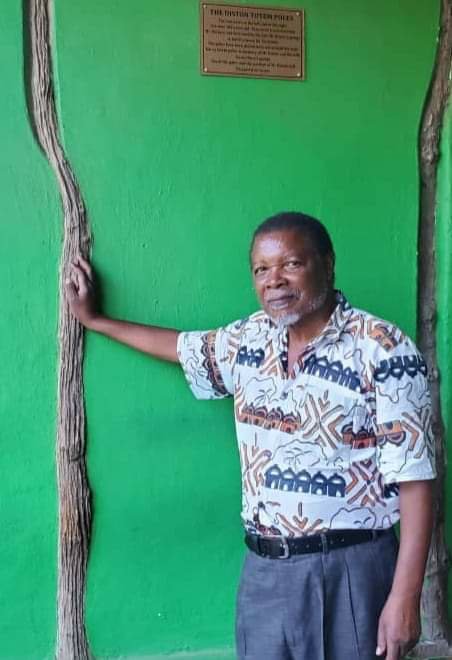
In the picture he’s paying homage to my late parents in the ritual of touching my father’s totem pole. We joked that perhaps the Retired Chief Justice might get even more Solominic wisdom than he already had by touching that old totem pole, seeing as my father had been one of the “justices” at the royal court of Mwene Phodogoma.
Many who knew Chief Justice Munlo remarked on his exemplary humility. In the Elhomwe language his surname means “fire”, but his personality was anything but fiery. That said, one of Chief Justice Munlo’s attributes was that he could be quite blunt when necessary and did not easily suffer fools. I remember him being particularly brutal in his exchanges with one of our presidents who had the misfortune of crossing his path. Hapless ministers fared even worse, and I can testify that I was no exception, for he was that good kind of friend who did not hide it when he thought you had made a mistake.
Alas, it now turns out that, although we did talk once or twice on the phone afterwards, that visit a few months ago was his farewell to me. The passing of Retired Justice Lovemore Munlo, who only a while ago sat in front of me on that khonde with his wife…well, it is very hard not to take it personal, very hard.
That picture by the totem pole is of a simple man. But Lovemore Munlo was an extraordinary citizen of our land who will be remembered for his remarkable contributions to the country and to Africa. As for me, I will forever cling to that image of him smiling as he touched the totem pole.
I offer condolences to his dear wife and the rest of the family. May His Soul Rest in Peace.
***Views expressed are those of the author Dr Ken Lipenga, as extracted off his Facebook wall**
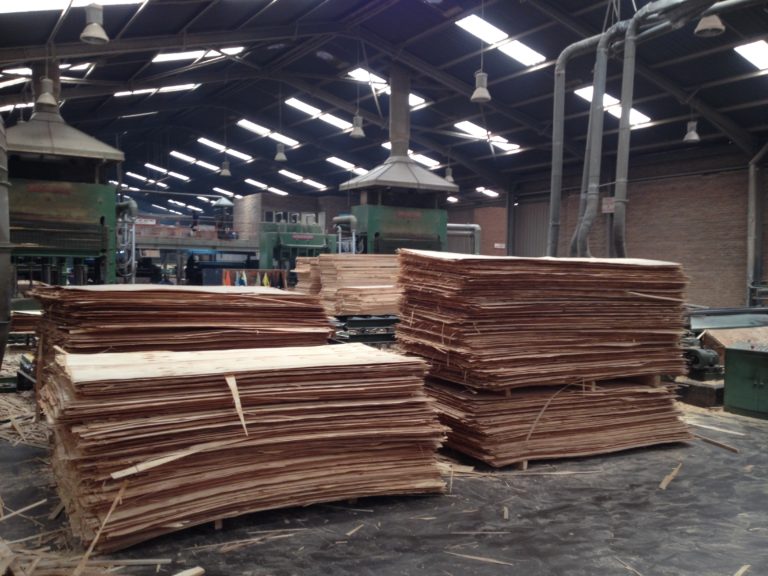
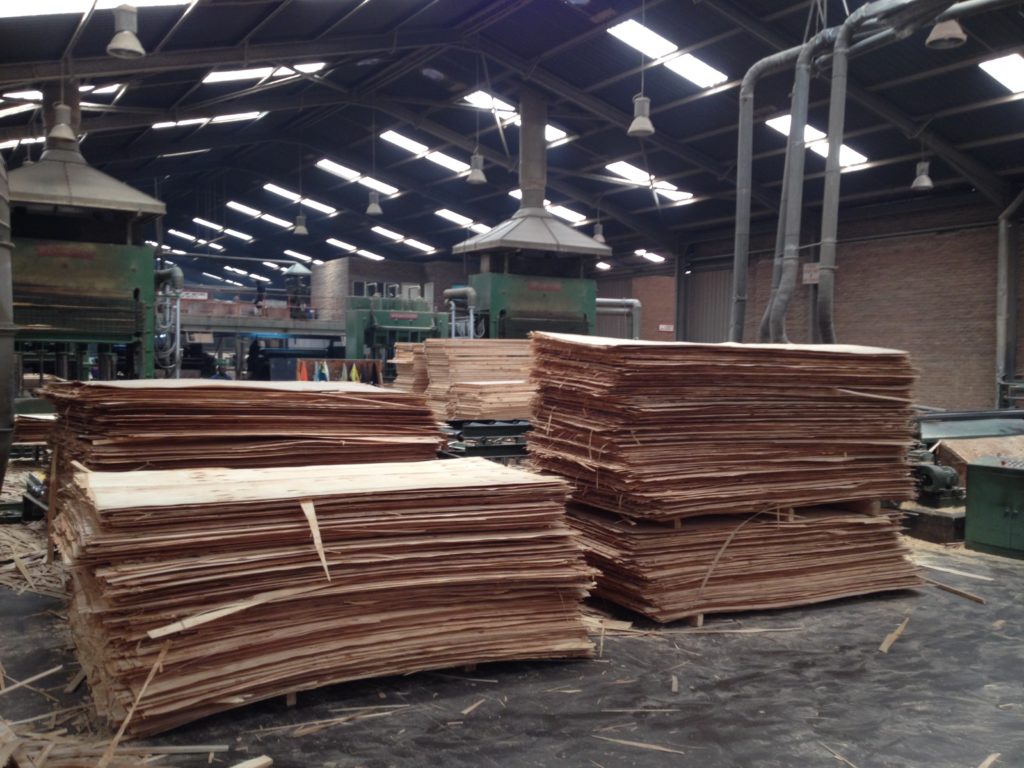
A 100 million US Dollars ( MK80.7 billion) new briquette manufacturing factory has been commissioned at Chikangawa in Mzimba District courtesy of RAIPLY Malawi Ltd.
Commissioning the new factory, Minister of Forestry, Nancy Tembo, said the plant will solve the charcoal burning challenge which the country is facing. “I am very excited to come here and commission this briquette factory. I should commend and congratulate RAIPLY for being the government’s true partner in the issues of environmental care and job creation,” explained Tembo.
She then called on companies and individuals to adopt the use of briquettes as opposed to promoting the illegal charcoal business. RAIPLY’s Chief Executive Officer, Khrishna Das, said the company had already employed over sixty people to the new plant alone. “So far we have about sixty employees and we hope to employ more after we expand the factory,” said Das. On the issue of sustainability, the CEO said the company has plenty of raw materials to keep the factory afloat.
Taking his turn, Inkosi ya Makosi M’mbelwa the fifth of Mzimba, said apart from conserving trees the plant will offer business opportunities among his subjects. The company was officially opened on 16 September 1991 by the country’s first President late Dr Hastings Kamuzu Banda, for purposes of manufacturing furniture and planks.