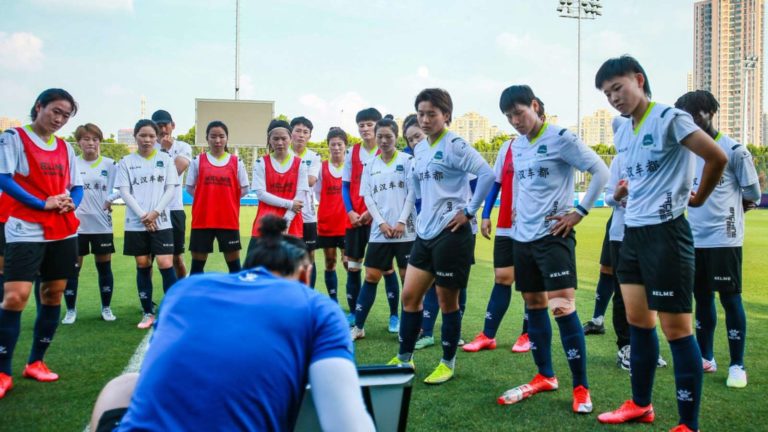
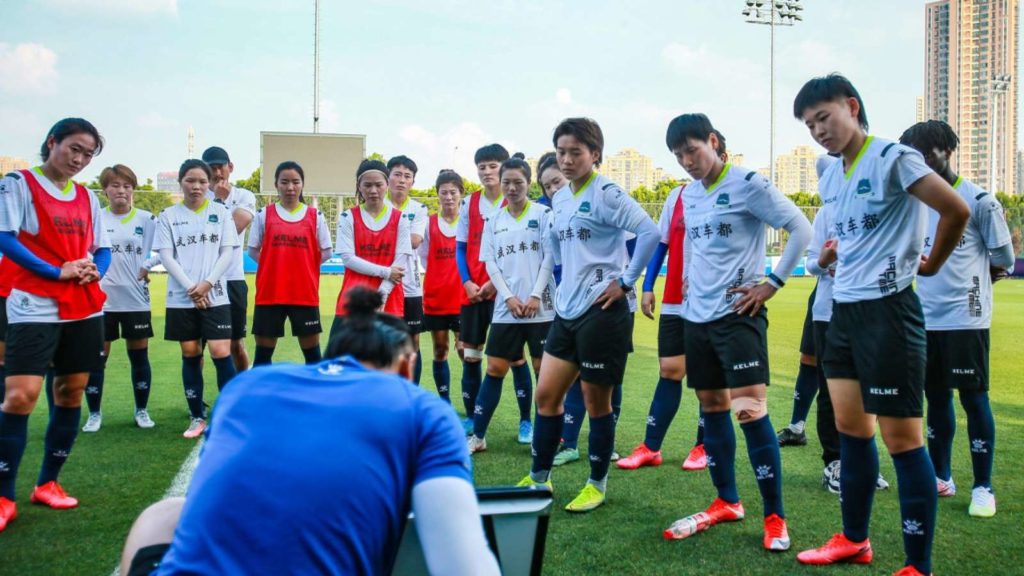
The Malawian forward got to work officially with her Chinese teammates and coaching crew for the first time
Temwa Chawinga has resumed training for the first time with her new teammates at Chinese club Wuhan this week since signing in January.
Temwa joined the Chinese Women’s Super League (CWSL) outfit on a two-year deal after mutually parting ways with Swedish side Kvarnsvedens with 18 months left on her deal.
On arrival in China, she became the second Malawian to move to the Asian nation after her sister Tabitha, but normal life soon disappeared in Wuhan as the epicentre of the Covid-19 outbreak.
Despite the lockdown easing after nearly three months in April, the striker was still worried about going out, having been indoors for 76 days, but insists she has not regretted joining the Chinese club.
Since mid-May, Chinese authorities granted clubs permission to resume training for the first time after the lockdown restrictions were eased.
Hopes of the league season kicking off in the coming weeks are now increasingly likely, with Guangdong, Changchun, Jiangsu Suning and now Wuhan resuming training.
“Wuhan Jiangda are back to the training sessions!,” the Chinese women’s team confirmed via Twitter on Tuesday.
“For this busy first day of June, the club had the return of seven players who were part of the #SteelRoses training camp in Suzhou last month.”
The 21-year-old shot into the limelight in Europe since joining Swedish club Kvarnsvedens in 2017, scoring 59 goals in 57 matches, including 35 in 28 games in all competitions last season.
She was impressive on her continental campaign with the She Flames, scoring six goals in four games and finished joint-second top scorer with her sister Tabitha in the Caf Women’s Olympic qualifiers.
Wuhan will be hoping to improve on their rankings and challenge for glory this season with the acquisition of Chawinga after they finished fourth last season with 19 points from 14 games.
Malawi authorities should ensure a free and fair, as well as safe, vote during upcoming presidential rerun elections amid the Covid-19 pandemic. On May 8, 2020, the country’s Supreme Court upheld the Constitutional Court’s February order nullifying President Peter Mutharika’s narrow victory in the May 2019 elections, citing serious irregularities, and ordered new elections within 150 days.
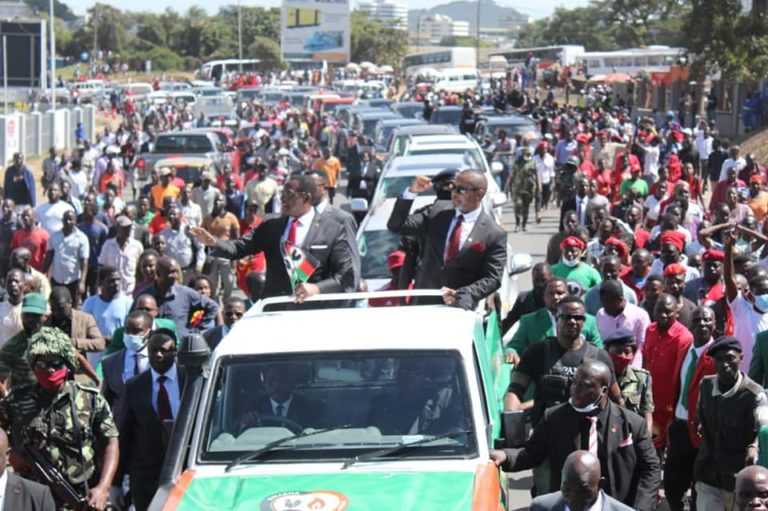
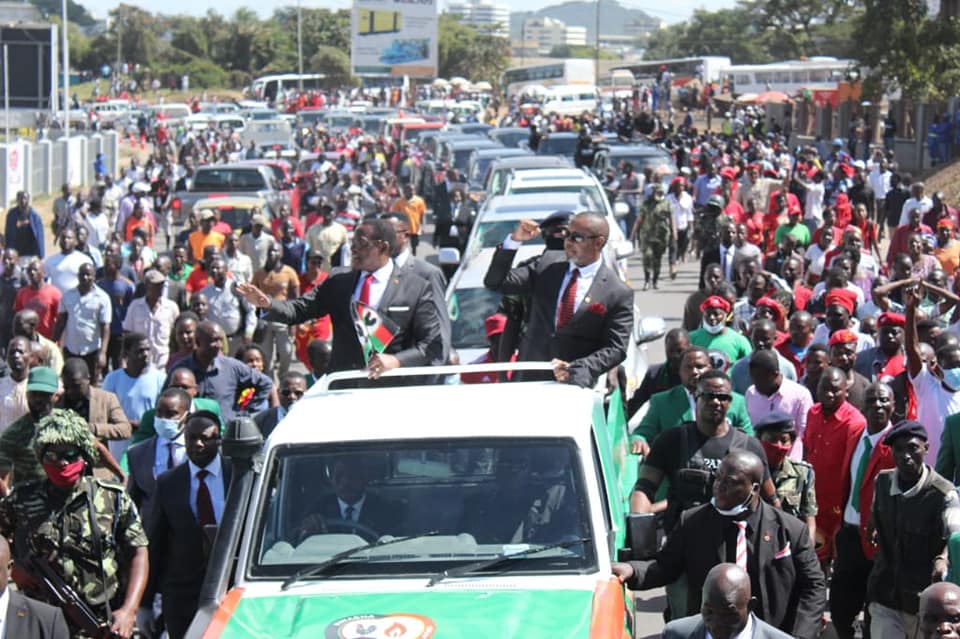
The rerun election, scheduled for July 2 pending parliamentary approval, sets Mutharika, from the ruling Democratic Progressive Party (DPP), against Lazarus Chakwera, a candidate supported by an opposition coalition, including the Malawi Congress Party and the United Transformation Movement. Since May, there has been a spike in politically motivated violence against opposition politicians, human rights activists, and journalists, with no arrests of those allegedly responsible, the Malawi Human Rights Defenders Coalition (HRDC) reported.
“Malawi authorities should immediately develop processes that will ensure free, fair, and safe elections,” said Dewa Mavhinga, southern Africa director at Human Rights Watch. “They should enforce a range of measures to safeguard citizens against violence, and appropriately prosecute those responsible.”
The campaigns for the presidential rerun vote are taking place within the context of the Covid-19 pandemic, with 284 confirmed coronavirus cases in Malawi as of June 1. The government said that the virus will not interfere with the election.
On the night of May 4, unidentified people threw a Molotov cocktail into the office of the United Transformation Movement, led by Vice President Saulos Chilima, in the capital, Lilongwe, causing the deaths of three people and severely injuring three others.
Last week, videos went viral on social media showing groups of men dressed in Democratic Progressive Party regalia threatening violence and declaring Mangochi, a township in eastern Malawi, a “no-go area” for opposition parties.
On May 24, the Catholic Bishops in Malawi issued a collective pastoral letter outlining eight issues of concern in the country, including “increased acts of political violence,” which they condemned “in the strongest terms possible.”
On May 29, the campaign convoy of Vice-President Chilima, who had fallen out with President Mutharika and is Chakwera’s running mate, was stoned in Phalombe, Mutharika’s home area in the country’s south. Zodiak, a private Malawian broadcaster, reported that several journalists traveling in a press bus with Chilima’s convoy were injured.
The HRDC reported that during the last week in May, 12 suspected ruling party supporters physically assaulted the HRDC leader, Timothy Mtambo, in Blantrye, Malawi’s second largest city. His official security detail apprehended the attackers and handed them over to the police, who allegedly promptly released them without charge.
An HRDC leader for Rumphi district in northern Malawi, Walita Mkandawire, told Human Rights Watch that on June 1, a cabinet minister threatened him on his mobile phone with violence and death if he did not stop his activism.
The Media Institute of Southern Africa, Malawi Chapter (MISA Malawi), reported that on May 30, a group of people assaulted Malawi Broadcasting Corporation (MBC) journalists with metal bars at Mponela in Dowa, central Malawi. The next day, MISA Malawi issued a statement expressing concern that “journalists are increasingly becoming victims of political violence as the country prepares for the fresh presidential elections.” The institute said that political party leaders and the Malawi Police Service should make a commitment to end political violence.
Under the African Union Declaration on the Principles Governing Democratic Elections in Africa, all African governments are committed to the responsibility to “safeguard the human and civil liberties of all citizens including the freedom of movement, assembly, association, expression, and campaigning as well as access to the media on the part of all stakeholders, during electoral processes.”
Malawi, as a party to the International Covenant on Civil and Political Rights, is also obligated under article 25 to ensure that: “Every citizen shall have the right and the opportunity … [t]o vote and to be elected at genuine periodic elections which shall be by universal and equal suffrage and shall be held by secret ballot, guaranteeing the free expression of the will of the electors.” This obligation requires governments to take positive steps to provide the services and infrastructure to ensure citizens can safely and effectively exercise their voting rights.
“Malawi authorities should fulfill their obligation to guarantee the rights of all eligible Malawians to vote in free and fair elections,” Mavhinga said. “Political violence needs to end to ensure a conducive environment for a credible vote.”
Flames legend Ernest ‘Wire’ Mtawali has been named in South African Premier Soccer League (PSL) top outfit Mamelodi Sundowns’ all-time dream team.
The Pretoria-based side’s supporters voted for the club’s All-Time African Dream Team in celebration of May as the Africa Month.
Mtawali, who became the first foreigner to win the South Africa Player of the Year Award in 1985, is the only Malawian appearing on the list.
Other high-profile Malawian players to have turned out for the Brazilians include the Malunga brothers Holman and Kennedy, Chancy ‘Vinny’ Gondwe, Lovemore ‘Rambo’ Chafunya and Cedric Nankhumwa.
Ernest Mtawali
In an interview from his Johannesburg base, Mtawali, who also played in French, Argentine and Saudi Arabian top-flight leagues, said he felt honoured.
“It’s an honour because Sundowns have a history of signing top-class players and to be named in the dream team is humbling,” he said.
According to supersport.com, it was not easy to land on the starting eleven that could crack the nod into the list of incredibly talented players that have worn the yellow and blue of South Africa’s record holders for the most championship titles won since the start of the Premier Soccer League era.
Others appearing on the list are Ugandan goalkeeper Dennis Onyango, who is currently considered the best goalminder on the continent, Zimbabwe’s quartet of Peter Ndlovu, Khama Billiat, Methiod Mwanjali and Esrom Nyandoro, Nigerian Raphael Chukwu, Roger Feutmba from Cameroon and Anthony Laffor from Liberia.
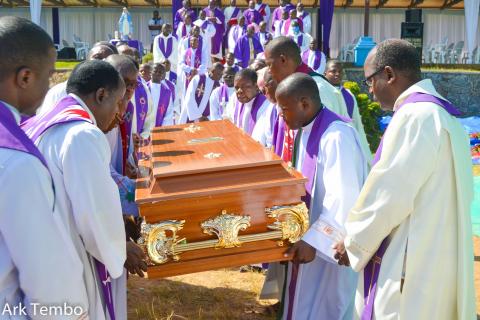
There was somber mood at Limbe Cathedral Cemetery on Saturday afternoon as the faithful lowered the casket of Rev. Fr Stanislaus Chinguo at exactly 1:05pm.
Limbe Cathedral Choir sung, “Ndigoneranji m’manda ndekha, Apapa tsalani ngakhale mundikonda Ambuye tsogoleleni ndili ndekha” as the brown casket was slowly going down to Fr Chinguo’s last resting place.
Aged 51, Reverend Father Chinguo, spent 26 years in priesthood after being ordained on July 23, 1994, by the late Bishop James Chiona at Limbe Cathedral.
Father Chinguo was born on January 19, 1969, at Mlapa Village in Traditional Authority Mkanda in Mulanje District.
During the requiem mass outside Limbe Cathedral, relatives, nuns, priests, and believers joined in to celebrate the life of a man who gave hope and deliverance to Christians.
Notable Bishops who attended the requiem mass included Bishop Peter Musikuwa of Chikwawa Diocese, Bishop George Tambala of Zomba Diocese and Bishop Montfort Stima of Mangochi Diocese.
Archbishop Luke Thomas Msusa of Blantyre Archdiocese, who led the Mass, praised the deceased as an extraordinary priest who had love for his sheep, development and education.
“Rev Fr Chinguo was a self-driven priest who has been a role model to many priests, his love for his duty as a Shepherd and for children, especially seeing them attend school, is beyond human description,” His Lordship Msusa said.
Archbishop Msusa further said while the deceased was serving at Pius XII Seminary, he helped many seminarians because he was very brilliant in English.
“His contribution is vividly evident in every area he served,” Archbishop Msusa said.
He added that at the time of his sickness, Father Chinguo always remembered God as he used to spend much of his time in the Chapel.
Reverend Father Frank Mwinganyama, the Blantyre Archdiocese Communications Officer, said at the time of his death, the late Father Chinguo had been battling kidney failure, diabetes and high blood pressure for three years.
“He has been battling with diabetes, high blood pressure and Kidney failure for three years and was sent to India for further treatment.
“He continued to serve as usual but later on he retired after his health deteriorated and was staying at Limbe Cathedral,” Fr Mwinganyama said.
Reverend Father Benedicto Masuwa who was staying with the late priest, said Father Chinguo was a darling to serving God because even after the sickness, he continued to show interest in serving the Lord.
“Although he was in pain, one would hardly know due to his resilience and hard work while performing his duties.
“Most priests would doubt his condition. One day, someone asked me whether he was really sick because he would ably move around his house and do various kinds of work without aid,” Reverend Father Masuwa said.
He said the deceased’s pride was in helping the needy and serving God.
Reverend Father Stanislaus Chinguo did his early primary education at Mulanje L.E.A, Zomba Government (Bwaila), Namulenga and Montfort Demonstration School before joining Pius XII Minor Seminary in 1981.
In 1988 he went to Kachebere Major Seminary where he did Philosophy up to 1990.
He later went to St. Peters Major Seminary to study Theology from 1990 up to 1994.
Reverend Father Chinguo also did a Masters in Moral Theology in Kenya from 1999 to 2002.
The late Father has been a priest for 26 years and served in various parishes before breathing his last on Thursday.
After his ordination on July 23, 1994, Father Chinguo had served at Pius X11 Minor Seminary from 1994 to 1997, Nthawira Parish from 1997-98. He was Parish Priest at Bangwe from 1998-99 before going to Kenya in 1999-2002 to study Moral Theology..
The late Reverend Father Chinguo also served in the following parishes, Nguludi, Njuli, Mwanga, Lunzu and Nthawira Parish.
During his sickness, he retired and was staying at St. James Rectory in Limbe Cathedral until his last day on earth on 28 May, 2020 at Mwaiwathu Private Hospital in Blantyre.
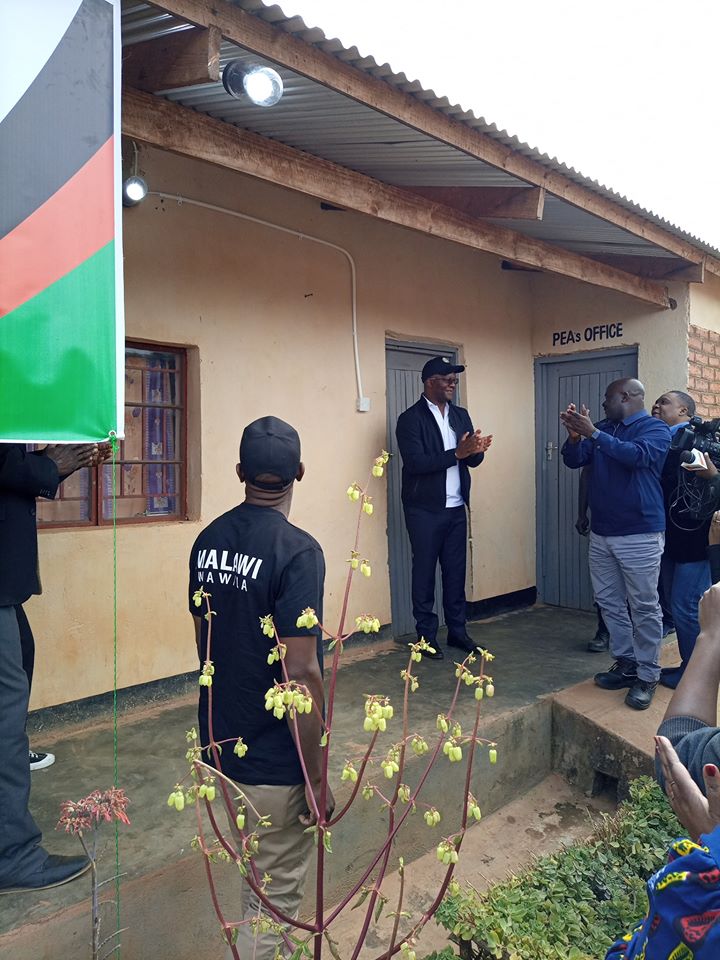
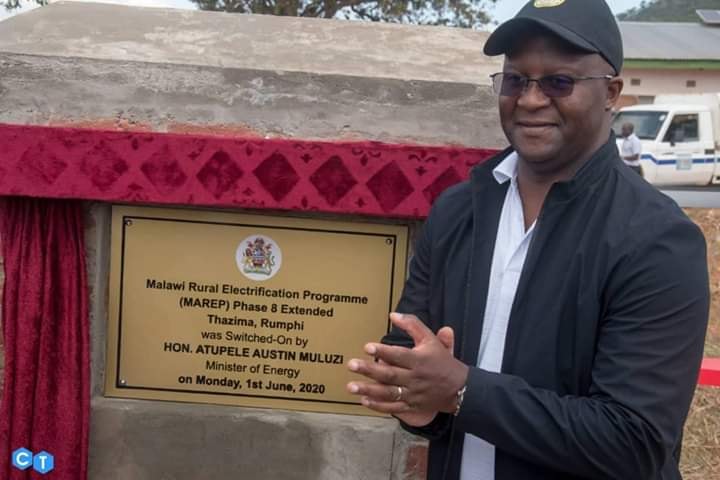
Democratic Progressive Party (DPP) and United Democratic Front (UDF) Alliance running mate for the forthcoming fresh Presidential election, who is also the Minister of energy today officially marked the installation on electricity in Thazima Rumphi. Atupele who is in the north as part of his campaign trail was accompanied by Member of parliament for the area Kamlepo Kalua.
The event which was extended MAREF PHASE 8 Powerline however has received widespread criticism as it highlights lack of proper development from the government “we are a joke of a country ” commented one on facebook. others have questioned why up to three cabinet ministers can attend an event like this . a claim they said is waste of governement resources. Ministers Kamlepo Kalua, Jappie Mhango were also in attendance
Atupele who is in the north for campaigning donated maize flour to 400 needy households in Mzuzu on sunday.
Speaking Sunday at Katoto Secondary Ground when he led DPP and UDF leaders in a charity initiative during which he distributed maize flour to the needy, Muluzi called for the need for Malawians to be united.
He said he was sent by the President, Prof. Peter Mutharika to deliver the donation on his behalf and that noting the high turnout of the needy.
Muluzi pledged that he would on Tuesday district 10,000 tablets of soap and maize flour bags respectively.
“I want to ask fellow politicians to make sure that they take a leading role in encouraging their supporters to live peacefully and assist each other in times of need so as to promote development in the country,” he said.
Since last year, the country has been going through difficult times as evidenced by protests and demonstrations which in most cases turned violent leading to destruction of both public and private property.
“Many businesses came to a halt as a result of such demonstrations which is negatively affected and continue to affect the country’s economy. It was for this reason that I am in Mzuzu to provide the little that I have to cushion people’s livelihoods which were disturbed by following the demonstrations.
We are one Malawi and despite having different political views, we need to co-exist peacefully for the good of our country,” Muluzi said.
DPP Regional Governor for the North, Christopher Mzomera Ngwira said the people in the region suffered heavily during the 12 months demonstrations which were being staged by Human Rights Defenders Coalition (HRDC) and opposition parties.
“As a region, we experienced heavy damage of property and businesses and I believe it would take long to recover from such damages mainly at household levels.
Each of the beneficiaries who were all not in any party regalia went away with 25 kilogramme of flour and tablets of soap.