
Friday, April 24, 2026
No menu items!
spot_img
Home Blog Page 2187

Frank Mwenifumbo wants Nthakomwa to drop out- Arranges youths to heckle her

0

By Saulos Kanyama

It seems Mwenifumbo’s association with Political Violence is becoming a common occurrence. It has been established that whenever Frank Tumpale Mwenifumbo is contesting in an election,  intimidation , physical confrontation are the order of the day . It is no wonder Karonga central is now known as “Benghazi” a moniker for being a centre of political violence.

UTM Party supporters who came to give morale to their candidate Frank Mwenifumbo on Wednesday evening spoiled the first live political debate the National Initiative for Civic Education (NICE) Public Trust organised for the five Parliamentary candidates contesting for the Karonga Central Constituency on November 10 by-election when they showered insults at the independent Candidate Florence Shackie Nthakomwa.
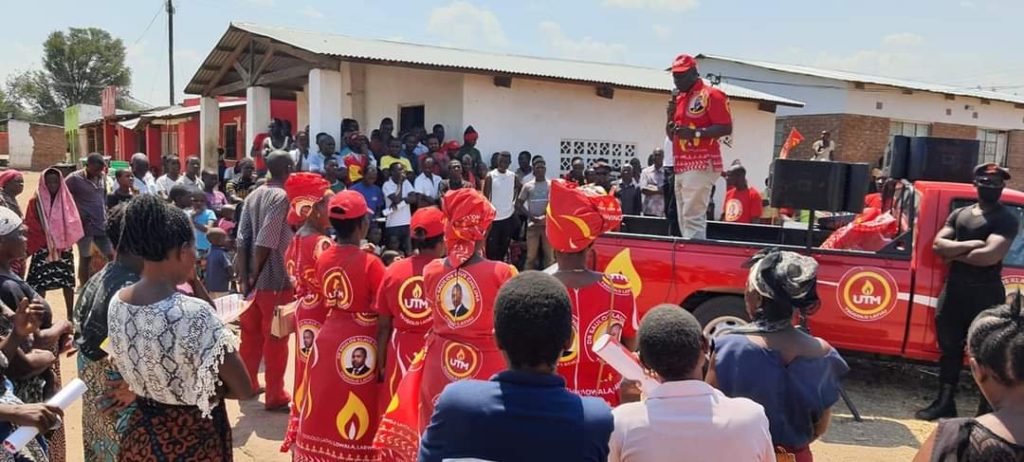
Mwenifumbo Campaigning

It is reported that the UTM youths , who are alleged to have been given money my Mwenifumbo started harrassing Nthakomwa when she was boarding her vehicle at Tuntufye FM radio campus in the presence of the party’s regional governor for the North Dr. Moses Mlenga and regional director of women Bridget Nkhoma.

Nthakomwa who  was UTM candidate at last years general election confirmed this and has a strong word for those perpetrating political violence in the area.  “This is  embarrassing, disgusting and deplorable taking into consideration that incident took place before senior party officials who failed to control the situation”.Nthakomwa has since threatened to report the disgraceful behaviour to relevant authorities for action.

She said: “During the campaign the UTM Party has been trailing my campaign team everywhere I go. On top of that, they have been castigating me during their campaign rallies. And today they pinned it down when they undressed me right after the debate by calling me a prostitute “

A team of our investigators have since established that the attack was a calculated move  by Mweneifumbo who is bitter that Nthakomwa is contesting as an independent. Mwenifumbo feels Nthakomwa will divide UTM votes as the people in the area have sympathy for her in the manner the party ditched her for Mwenifumbo.

It has been established that Mwenifumbo  promised money to the UTM youths so that they embarrass Nthakomwa. It is an attempt to frustrate her and hit her confidence so that she can drop off of the race
Mtambo graces Mkulamchere cultural celebrations as it centres on Ending child marriages

0

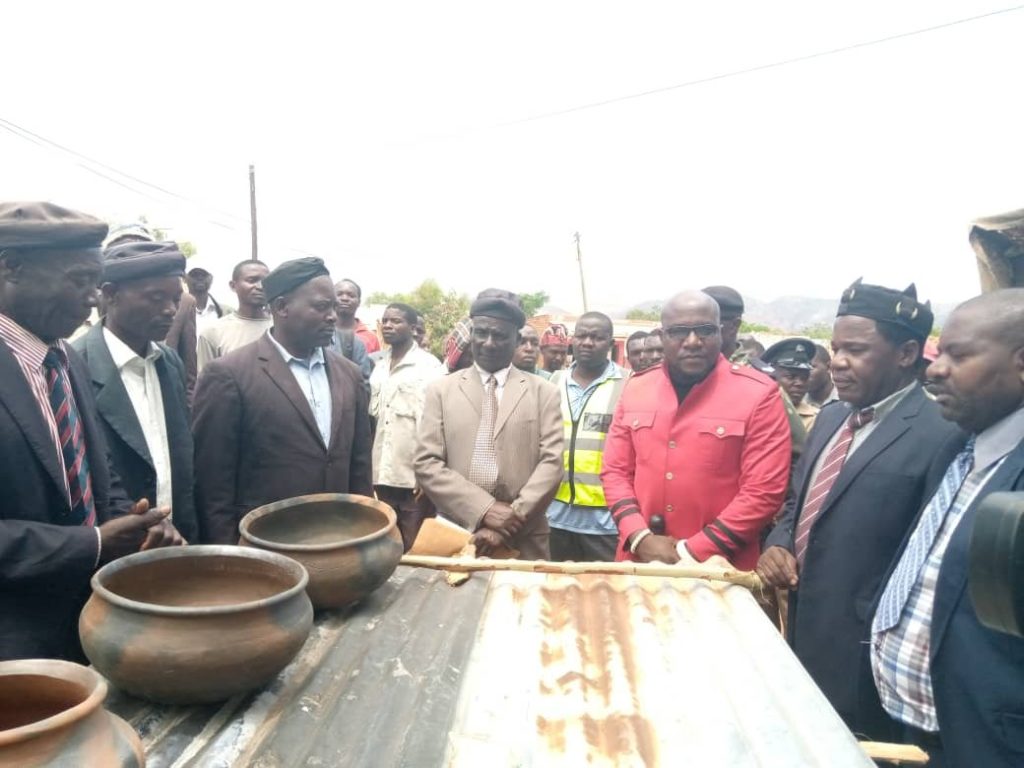
The Minister of Civic Education and National Unity Timothy Mtambo on Saturday graced the Mkula Mchere cultural celebrations in Rumphi. He was the guest of honour at the event that took place at Senior Chief Mwankhunikira headquarters.This is an yearly event that is celebrated as part  of appreciating cultural existence.

Mkulamchere celebrations this year was held under the theme Ending Child Marriages as the chiefs aim to civic educate the locals on the need to end the tradition of getting young girls into marriage an at early age. Mtambo  presence as Minister of National Unity  was warmly appreciated by the chiefs and the locals in the area. He becomes the first minister to grace the occasion since the founding of the Mkulamchere heritage.

Mtambo at Mkulamchere Cultural celebrations in Rumphi

Speaking to reporters at the end of the ceremony Hon Timothy Mtambo said  he was happy that the organisers of the cultural event had decided to theme it Ending Child Marriages “ Government is at the forefront of eradicating child marriages and it is good to see traditional chiefs taking this proactive role. We need to end child marriages as it evil“

On the the cultural event , the honourable minister  said cultural celebrations are good for Malawi as  they help to unify people .”These events helps to promote unity and diversity . Culture brings identity to the people . We have young people here who are learning cultural activities that the old generation were doing “ . He went on to say these events are learning experiences for the young generation and helps to preserve the culture as it is being passed from generation to generation .

On his part senior chief Mwankhunikira thanked the honourable minister for making himself available to attend the event “We thank Hon Mtambo for honouring us by attending this event ,this cultural event is important to us as its a way to remember our ancestors, our  kids need  to know where our grandfathers come from and how they lived”

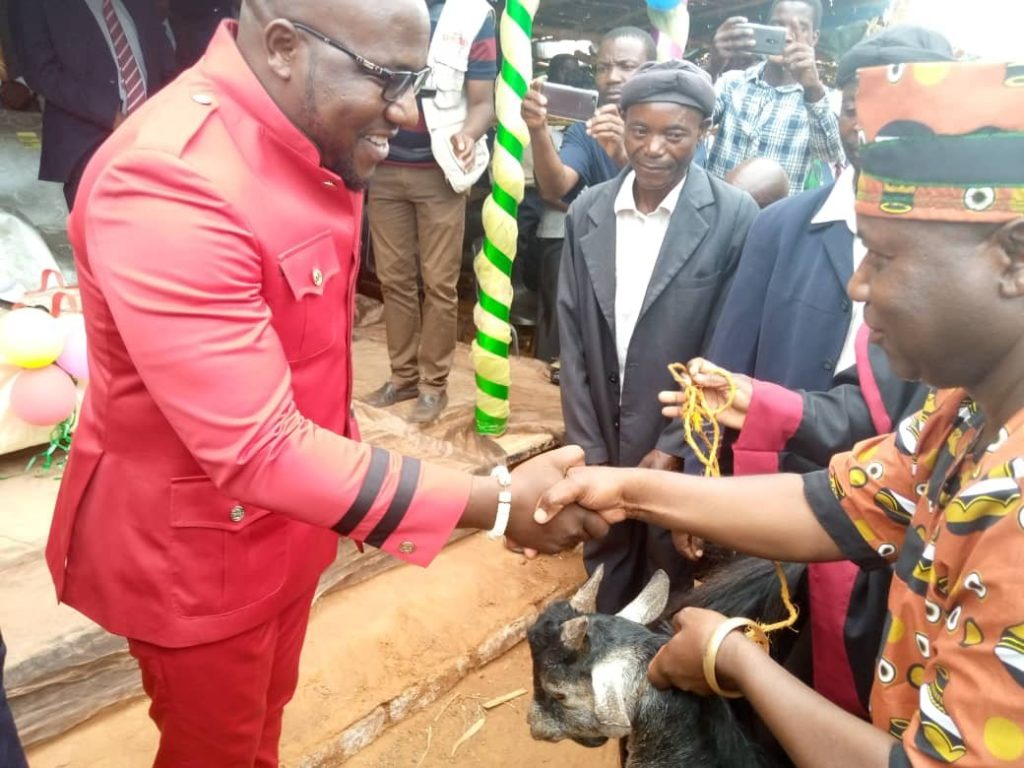
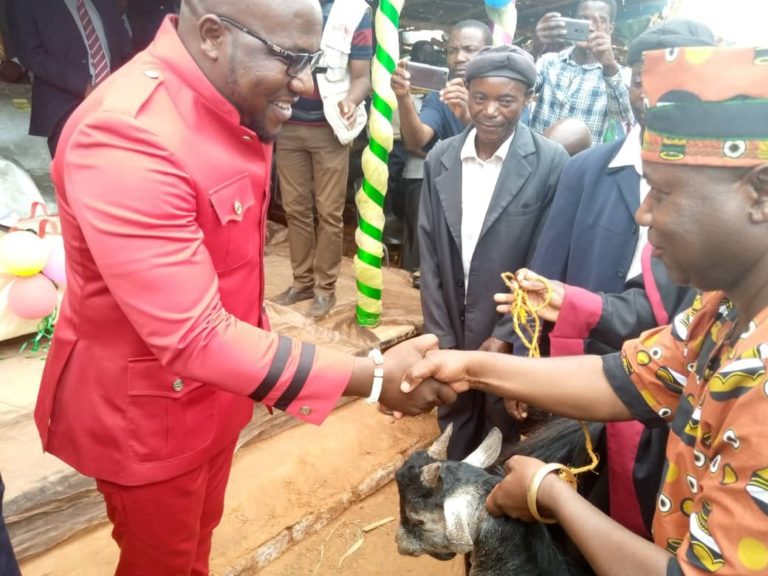
The Minister receiving gift of the a Goat from the chiefs

Mtambo also took advantage of the event to encourage young people  to rise up to the occasion and not fall prey to politicians who only want them for votes or political violence. He highlighted that  time has come  for the youths to use their energy for positive things such as development , educations and Job creation. He also reminded the people on issues of mob justice where he encouraged  them to refrain from taking the law into their own hands but to involve the police or traditional leaders if they have any differences. The minister assured the people that Government under the leadership of Dr Lazarus Chakwera  is geared to help them , empower them and work towards developing the country.

 As a symbolic gesture of respect, the chief gave Mtambo a gift of a goat .

Government promises loan to graduating students

0

Written by Emily Kaliwo

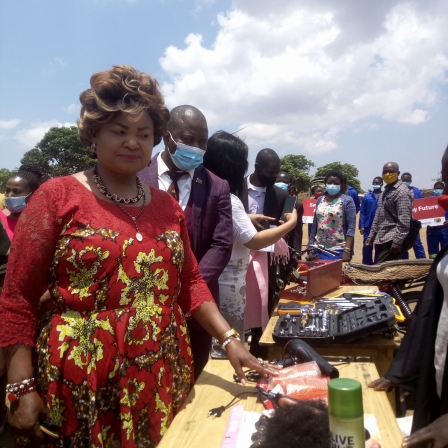
Government has promised to provide loan to Agro-food processing students who have graduated with certificates and diplomas from Magomero Development and Social Work College to ensure they transform their lives and their respective communities.

Minister of Gender, Community Development and Social Welfare, Patricia Kaliati made the pledge on Wednesday at Magomero during the graduation of 141 students

She said Agro-food processing is important for the society such that there is need to support sector saying the sector has a potential to create jobs for the country.

Kaliati

“This will help to add food value for people in the country which will help to minimize malnutrition,” Kaliati said, adding that only health people could contribute to the development of the country.

The Minister urged the newly graduating students to form Agri-business cooperatives to access markets for the agro food while ensuring ethics and profession saying government was looking forward for good results as the government anticipates employ them.

Kaliati commended the GIZ for supporting the college by introducing integrated social protection course among others. Principal for Magomero College, Thokozani Mtapaonga thanked government for initiating construction of class rooms which are under construction.

She also thanked World Food Programme, Afikepo and the GIZ as development partners in many college’s programmes.

Mtapaonga expressed concern over inadequate staff at the college which prompted them to hire lecturers from Chancellor College in Zomba. She asked government to provide bus to facilitate the college’s student’s field visits.

Grandaunts were awarded with Certificates in Integrated Social Protection, Community Development, Social work and Diploma in Community Development and Social work<

Abida Mia says govt set to build low-cost houses for needy Malawians

0

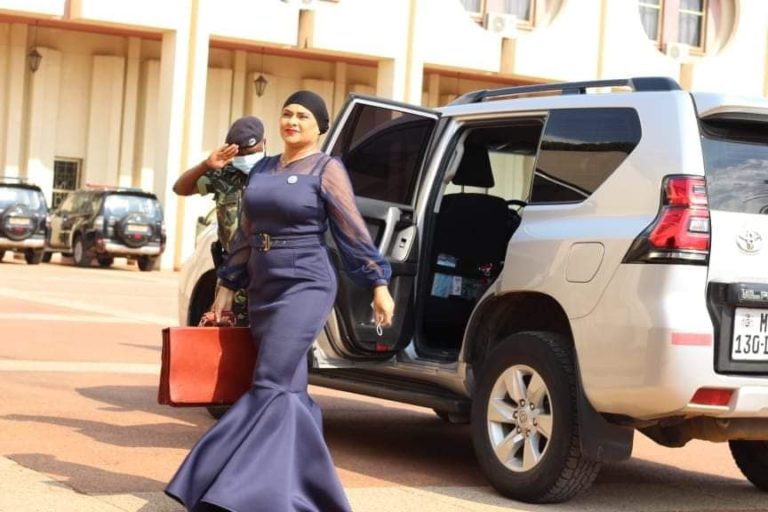
Deputy Minister of Lands, Abida Mia, has said government is set to  offer citizens decent housing, announcing plans to start constructing low-cost houses for needy Malawians.

Mia told reporters that government will provide loans for construction of urban houses that will cost K7.5 million each, meant to cater for low-income and vulnerable households.

“Government through Ministry of Lands will embark on slum upgrading project which will be implemented as a pilot project in Lilongwe once all logistics are in place,’’ she said.

The deputy minister said houses are meant to improve the living standards of needy Malawians.

“The houses are expected to cost K7.5 million each, and government shall provide loans for the people to build the houses,” Mia said.

Abida Mia

She said the number of beneficiaries would rise in the subsequent years as government will be increasing funding to the programme.

Lilongwe City Mayor, Juliana Kaduya, said the council plans to find solutions for people living in the city, especially those staying in substandard houses and lacking access to basic public services, among other things.

Experts are certain that, with government’s commitment, it is possible for Malawi to achieve the ‘city without a slum’ status. They underline that by upgrading informal settlements and providing soft loans for locals to build low-cost houses, Malawi can make it.

In 1987 World Bank released money through the Office of the President and Cabinet (OPC) to develop 2 000 plots in Lilongwe in Area 47 Gulliver and Kameza and Manja in Blantyre aimed at providing low-cost housing to low-income urban dwellers in Malawi.

Malawi Housing Corporation (MHC) was then tasked to implement the first phase of the project, giving mortgages to prospective home owners through the New Building Society (now NBS Bank) using the full-recovery principle.

Under this principle, those who bought the houses at $165, then, were expected to pay for them in instalments of up to 25 years. They were also required to extend the houses as part of the purchase agreement. The terms of the sale stipulated that those who did not fulfil the extension clause would lose them.

Quota on Kaunjika is ideal than a ban

“Augment the Argument” By Cosmas Steven Mvula

The tough call by local textile manufactures that government should ban importation of kaunjika (second-hand clothes) indicates a deficiency in policy making as a developing country. Much as there is a  need to appreciate that our textile industry deserves our attention to realize its potential we need not to forget that we have not started enjoying economies of scale in the industry to necessitate the production of clothes at fair prices for the citizens.

We need not to be reminded that Malawi is a small economy rated as amongst the poorest countries in the world. We have too many things to work on as a country from a dream for safe portable water for some people to a dream for food self-sufficiency.

Over 15 million people in Malawi live in abject poverty but we expect them to start buying new clothes from Malawian manufactures though we know that the prices for the clothes will not match the buying power of the citizens. Will that be a fair deal?

Many school children in the villages are go to school bare footed and with torn clothes every day. Isn’t it a sign that we have other better things to attend to before we get to improving the local textile industry? The economy of ordinary  Malawians needs to be taken into consideration before we make the final decision as a country. Yes the local industry needs to grow but how best can we make it grow?

On the other side, why a call for a ban on kaunjika clothes and not on new clothes from other countries? Isn’t it certainly because we know it ourselves that the quality of our clothes is wanting and we can’t match genuine clothes manufactured abroad? Why not call for a ban on Chinese clothes which have a short life span and remains a big ploy to steal the poor’s money by the foreign country? Can’t the ban for these clothes create more market for the local manufacturers whilst allowing poor Malawians enjoy the cheap kaunjika clothes?  That, in itself, is a sign that we accept the infancy of our textile industry and calling for the ban of kaunjika is a decimal call for the industry captains.

Even if the ban may be effected can we supply the current demand for cheap clothes at the prices the citizens are willing and able to pay? Can we absorb the needed labor force for the sudden growth to meet the demand on the market?

All these questions are meant to drive us into settling for decisions aimed at growing our textile industry overtime.

Therefore, we have a number of options to pursue instead of completely banning kaunjika.

There is a need for huge investments in the textile industry and a need to give ourselves ample time until we define ourselves fully grown to clothe ourselves. There is a need to invite foreign companies to invest in Malawi and use locally available materials which implicitly improve lives of cotton farmers.

There is a need to ban low class Chinese clothes. This will create room for growth of the local industry because the gap created will make Malawians divert to the locally manufactured clothes.

There is a need to introduce a monthly quota for kaunjika which may make a very good transition to a fully grown industry. This would be a fair deal for both consumers and local manufacturers whilst we allow our economy to grow slowly before we get to a level of completely banning kaunjika. This will mean that Malawi imports a number of kaunjika bales per month which will create room for local manufacturers to serve the gap deliberately created for their growth.

Additionally, hiking the import taxes on some kaunjika clothes say men trousers, for example, will mean that the quantity of importation on such clothes will be controlled and eventually creating room for local industry growth.

For words are meaningless without intent and follow through, there is a need for policy change to allow the proposed changes to be effected and become  operational. The policy makers need to understand the difference the proposed options may can bring in the lives of both the citizens and the local manufacturers. In that way sanity will prevail and both sides will feel treated fairly

***Views Expressed are those of the Author***