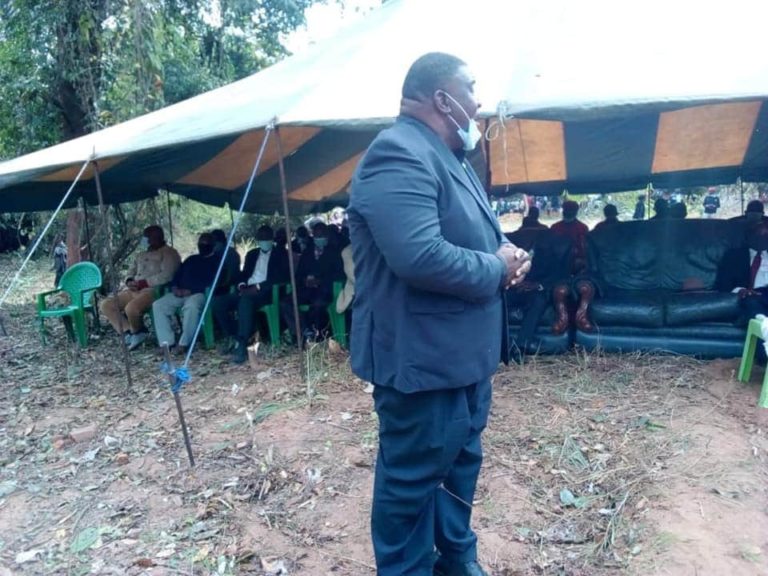
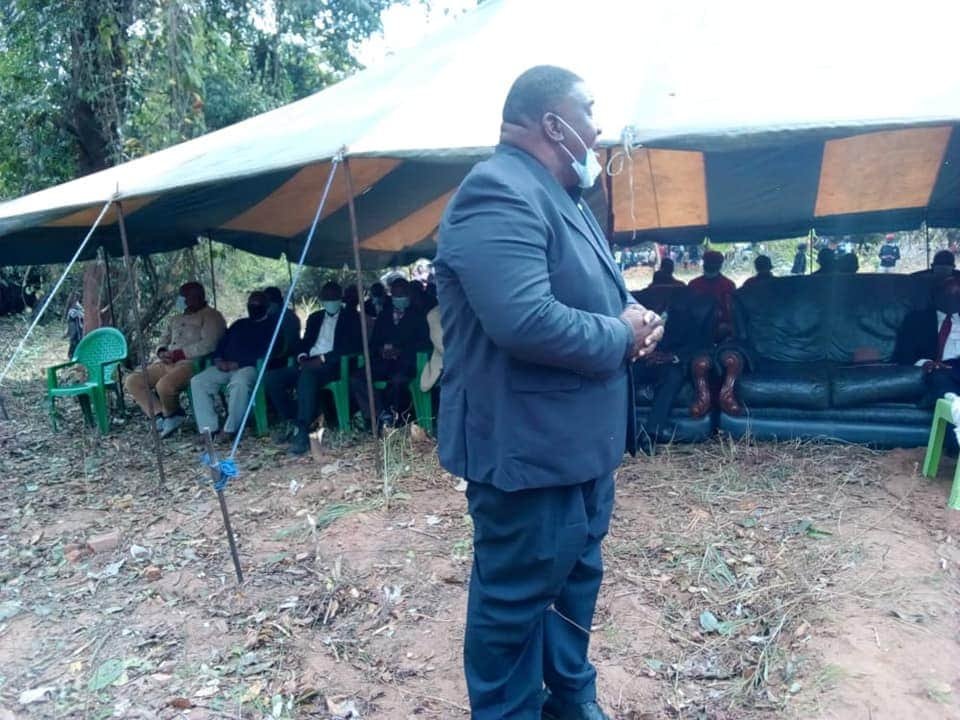
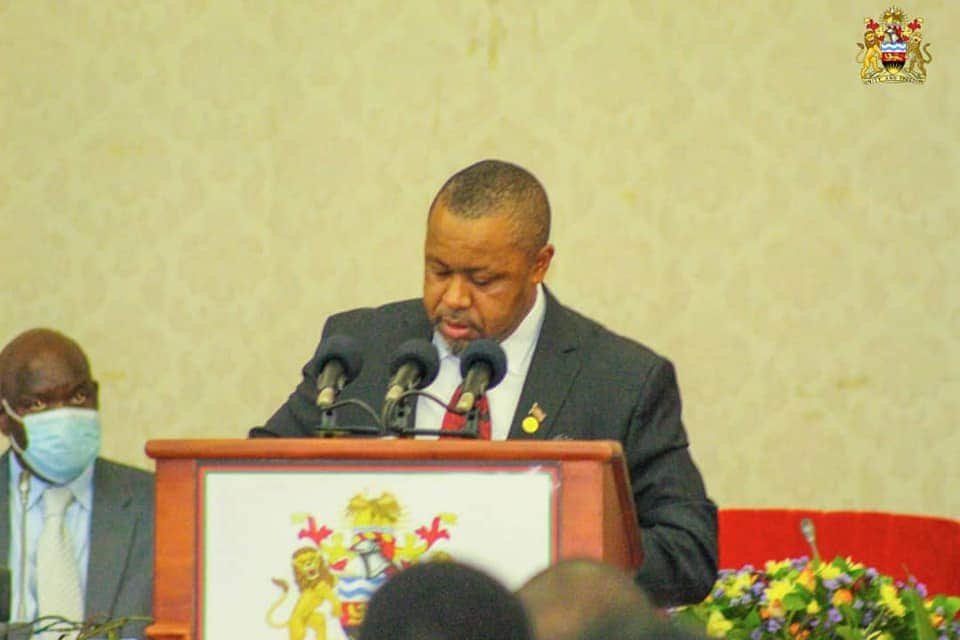
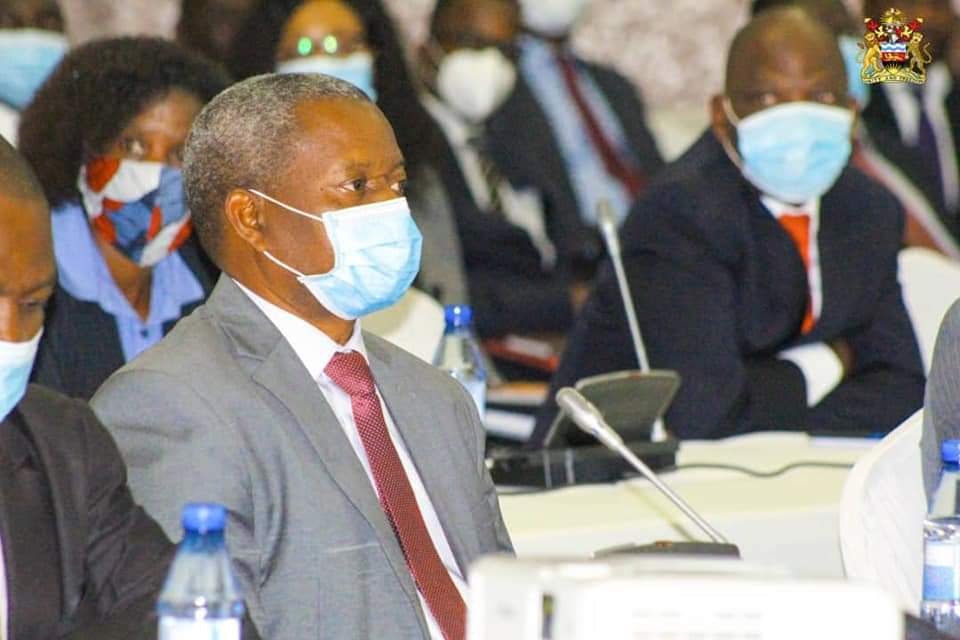
The current member of parliament for Nkhatabay South Dr Ken Zikhale Ng’oma on monday led mourners as they laid to rest Hon Sam Kandodo Banda. He was the former member of parliament for the area
Sam Kandondo Banda, one of the prominent politician and pioneers of multiparty democracy in Malawi died at the age of 88. He was buried at his home village in Kande Nkhatabay.
Dr Ken Zikhale Ng’oma- speaking at the funeral
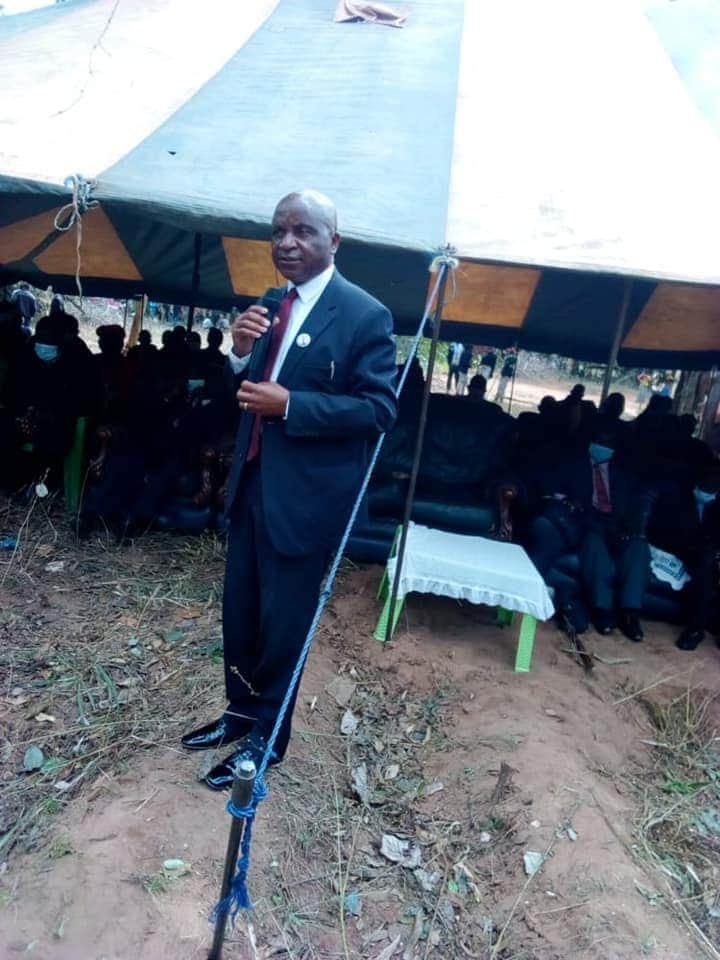
Also in attendance at the funeral was MCP Second Vice President Harry Mkandawire who represented state president Dr Lazarus Chakwera. Hon Sam Kandodo Banda , came to prominence as a member of Alliance for Democarcy (AFORD) in its early days . He together with other MPS like Green mwamonde later branched out to form Movement for Genuine Democratic change (MGODE)
Kandodo lost his seat in 2004 to Hon Aleke Banda of the then Peoples’ Progressive Movement party. Speaking to 247Malawi News Zikhale said he together with the people of Nkhatabay South are saddened with the death of the former MP ” Hon Sam Kandodo Banda was a great servant not only for the people of Nkhatabay but for all Malawians” said Zikhale
Among the noticeable people during the ceremony were Oro Saka, Dr Wilson Banda, senior Chief Fukamapiri ,TA Zilakoma, TA Malanda and a representative for TA Mzoma
Hon Harry Mkandawire- represented State President Dr Lazarus Chakwera
Amidst a loud public outcry on the country’s limited and uncoordinated civic education on various issues, including the current Civid-19 pandemic, Minister of Civic Education and National Unity, Honourable Timothy Pagonachi Mtambo, has assured Malawians that plans are at an advanced stage to launch National Civic Education Policy within the current financial year.
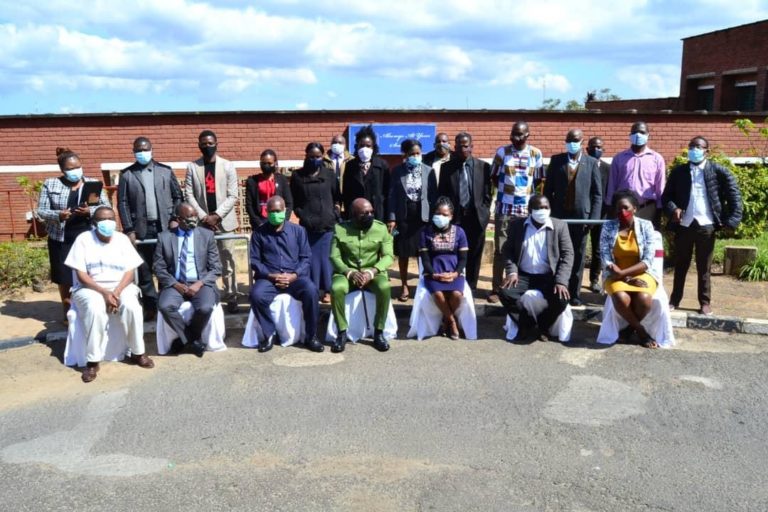
Mtambo made the remarks on Monday in Blantyre during the official opening of a capacity building workshop for community radio stations and National Initiative for Civic Education (NICE) staff on Covid-19 and SADC Regional Integration.
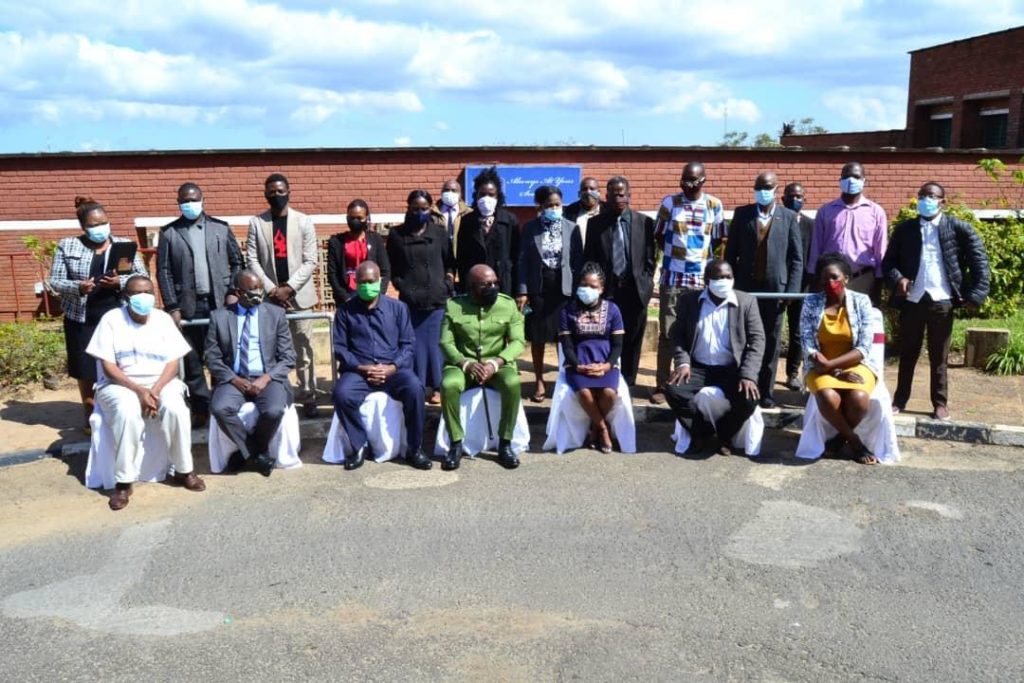
Mtambo and workshop participants
Mtambo said once finalized, the policy document will go a long way in guiding and regulating the provision of civic education services in the country.
Turning to the Covid-19 pandemic which has so far claimed over 100 lives and inflected close to 3700 people in the country, the Minister called upon civic education providers in the country to join the fight against the pandemic.
“It is pleasing to note that NICE Trust, as a civic education organisation has mainstreamed Civic-19 in all its mobilisation and awareness activities. This is commendable. May I call upon other civic education providers to join the fight against the pandemic,” said Mtambo.
The Minister further commended NICE Trust for organizing the workshop, saying it has come at the right time in the fight against Covid-19, considering that the organisation and community radios work with grassroots communities and relay information in the languages the local communities understand.
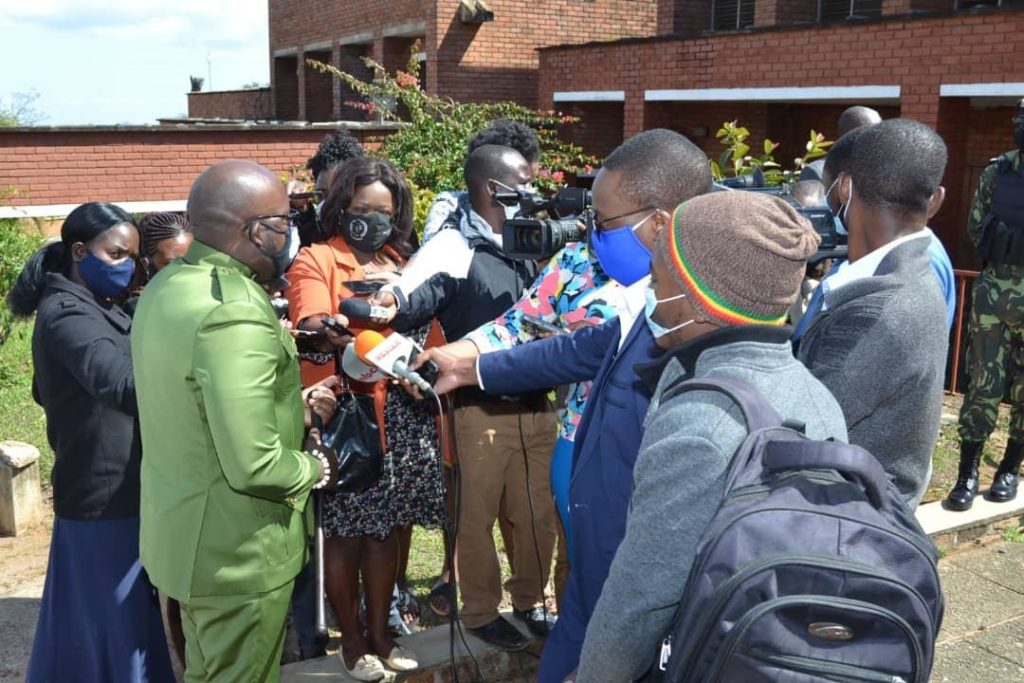
The Minister talking to the media
Apart from investing in the awareness campaign against Covid-19 pandemic, Mtambo said his Ministry will work with various stakeholders in popularizing the various international and regional protocols to which Malawi is signatory.
“It is sad to note that there hasn’t been much public awareness in Malawi on the Southern African Development Community (SADC) regional integration. Malawians need to know the SADC protocol to which Malawi is part and parcel of. Likewise, they need to know the economic benefits of regional integration in the SADC region,” said Mtambo.
The Minister has since said his ministry will conduct bench-marking tours to appreciate the nature of civic education in SADC as well as establish partnerships with various civic education stakeholders in the country.
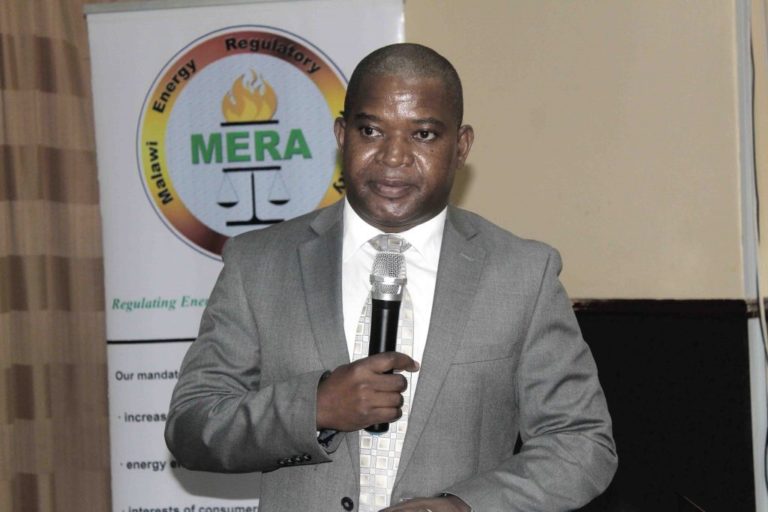
Malawi Police Services in Lilongwe have confirmed the arrest of Malawi Energy Regulatory Authority (MERA) Chief Executive Officer, Collins Magalasi over reasons the law enforcers are yet to disclose . It is however suspected that he has been arrested on possible corruption charges.
The National Police public relations officer, James Kadadzera, confirmed the development, adding that Magalasi has been arrested alongside Bright Mbewe from the procurement Office and Mera Spokesperson Patrick Maulidi.
But Kadadzera refused to disclose reasons of their arrest to avoid as investigations are underway.
The arrests follows reports of corruption in the procurement of a new mobile laboratory fuel testing van which MERA awarded to City Motors for the contract value of K704 million.
On 7th May 2019, MERA paid City Motors MK563, 200,000.00 which translates into 80 percent as advance payment.
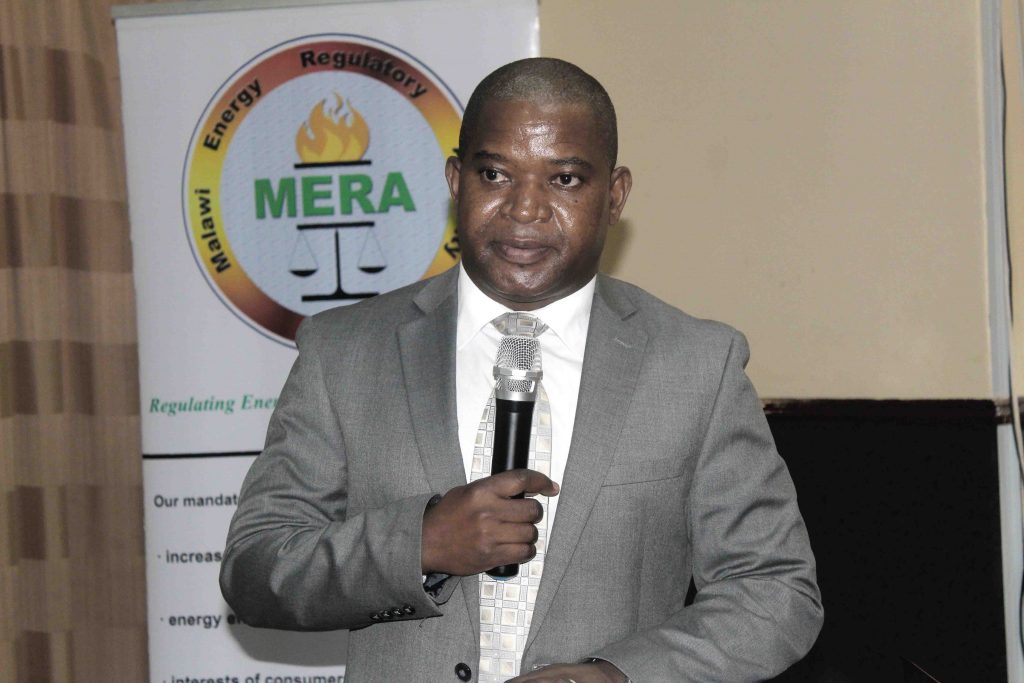
Collins Magalasi
MERA advertised for the procurement of a mobile fuel testing laboratory van. On 3rd April 2019, MERA entered into a contract with City Motors for the supply of the said laboratory van for the contract value of K704 million.
Almost a year later, on 17th April 2020, MERA paid MK140.8 million to City Motors translating to 20% of the contract sum.
The mobile laboratory van was delivered to MERA in April 2020, a year after the contract was agreed. Furthermore, delivery was made almost a year after the 80 advance payment.
The contract indicated that the van would be an Iveco Daily Panel but what has been delivered is a Mitsubishi.
The Former president Peter Mutharika’s security aide, Norman Chisale, is still in custody at Chichiri Prison despite being granted bail by High Court Judge Sylvester Kalembera earlier today.
According to Chisale’s lawyer, Chancy Gondwe, the accused was not released because they delayed to serve the police and Chichiri Prison documents of the bail.
Gondwe said they only managed to serve on the state advocate and delayed to serve on the other parties such as Southern Region Police Headquarters and Chichiri Prison Service.
Chisale was arrested for the case of attempted murder following an incident in Blantyre where he shot a woman in May this year.
Following Chisale’s arrest, the woman said she never intended to lay charges against Chisale and she also revealed that Chisale has been helping her since the incident.
Chisale is also answering two separate counts of fraud and money laundering which relate to the importation of freed duty cement worth K5 billion.
I am very sure that every well-meaning Malawian is following the latest developments in our country and what the current government is doing, with keen interest to ensure that the democratic gains made over the past 12 or so months, translate into socio-economic gains, national development and poverty reduction.
I have decided to provide my thoughts on the current public discourse on power sector reforms (PSR). My commentary is based on some articles I have read on social media in the past few days related to energy industry.
First of these articles is an update from the Vice President on his engagement with officials from ESCOM and EGENCO regarding challenges they are facing. This article was written on his Facebook Wall on 22/07/20. Challenges cited by EGENCO with relevance to operationalisation of PSR are to do with billions of unpaid electricity bills sold to ESCOM and non-conclusive unbundling process that has left EGENCO without legal title of assets. ESCOM, on the other hand, cited the k1.8 billion monthly bill due to EGENCO which ESCOM feel is unsustainable. Dr Chilima has promised to convene a meeting in the next few days with key stakeholders in the sector to try to map a way forward and to make some key decisions. The second article appeared in Nyasa Times with the title “MRA’s board member Lincoln Bailey opposes Power market Limited: ‘Malawi power sector focus wrong.’ There are two main issues which have caught my attention in this article: (1) where Mr Bailey is opposing issuance of a single buyer license to another state power company, Power Market Limited, on the basis that it will just add to the electricity tariff burden due to increased transaction costs, and (2) he has argued that power generation, transmission and distribution should be maintained under a unified ESCOM, that is, return to the past where ESCOM was a vertically integrated company with the three functions under one roof. The main argument here is that focus should be on increasing generation capacity and reliability of transmission and distribution under one ESCOM, and not on reforms. More on these later.
Vice President Chilima in one of the public sector reforms meeting
A brief context to the subject of electricity reforms in Malawi shows that a history of reforms in Malawi can be traced back to the enactment of 1998 Electricity Act, following the repeal of 1963 Act. This act paved the way for the liberalisation of the electricity sector with the aim of encouraging private sector participation. It also resulted into corporatisation of ESCOM and granting of Generation, Transmission and Distribution licences. Over the years further legislation has been introduced such as the Energy Regulation Act 2004 which resulted in the establishment of MERA, and Rural Electrification Act 2004 to provide a framework to facilitate investment into rural areas and thereby increase electricity access.
Despite the reforms, the performance of the sector has remained abysmal to say the least. There has been a lack of investment especially in generation capacity which has hampered socio-economic development at a massive scale. Power supply is erratic, unreliable and prone to hydrological and environmental constraints. The incumbent utilities (ESCOM and EGENCO) have been plagued by financial mismanagement and political interference which has made it difficult for them to attract investment into the sector. According to World Bank estimates, Malawi loses up to 7% of its GDP annually due to power cuts, more than any other country in Africa. In comparison, Kenya, Niger, Madagascar and Benin lose under 2%. Annual loss of 7% in economic output is a huge barrier to achieving sustainable socio-economic development in the country.
The power sector reforms introduced by the Electricity (Amendment) Act 2016 are meant to address the above inadequacies in the sector. To be honest, they are the deepest reforms so far in the power sector which, if implemented properly, may just set us on a path of sustainable investment in the sector by encouraging innovation, diversification and private sector participation. Three main features of the 2016 reforms are the delinking of generation from ESCOM by formation of EGENCO, establishment of a Single Buyer licence (responsible for long term planning and procurement of generation capacity) and establishment of a Market and System Operator. This sort of industry structure is not unique to Malawi, it has been followed by many other countries since the beginning of power reforms in early 1990s. To facilitate participation of Independent Power Producers (IPPs), many countries have had to unbundle the sector in this way (1) because it is relatively easier to introduce a market mechanism and competition in generation rather than in transmission and distribution, (2) to ensure a level playing field and avoiding impartial purchasing and dispatch decisions and/or a perception thereof, by the power off-taker/single buyer entity (ESCOM). For this reason, in my opinion, the suggestion that we should abandon the EGENCO project at this stage and to go back to the previous state of a vertically integrated utility will just set us up on a backward footing. We have had all functions of generation, transmission, distribution and supply under one company before (ESCOM) and we Malawians are all witnesses of the pains that we have had to endure up until this day. So, in all honest, I can’t see what we will be trying to achieve by going back. Let’s stay focused, steady and progressive in our pursuit of healthy investment in this sector. I am very confident that with the determination of the current government, the objectives of the Electricity (Amendment) Act 2016 can be realised.
My ask to the Vice President as he is discussing with stakeholders and making key decisions is to resolve the legality of the newly formed state company, Power market Limited (Single Buyer). Section 5 sub section 2 of the Electricity (Amendment) Act 2016 says, and I quote “on commencement of this Act, the Authority shall issue licenses for system and market operation and single buyer to the current holder of transmission and distribution licences.” The current holder of transmission and distribution licences is ESCOM. I am not aware of any other legislation subsequent to the 2016 Act, that may have established the function of a Single Buyer outside the current holder of transmission and distribution licences. Accordingly, we should simply follow the law by operationalising the entity of Single Buyer within ESCOM, rather than creating another company, unless the law is changed. Let me add that other countries which have had success in attracting IPPs in the sub Saharan region such as Uganda, Kenya and Namibia all have single buyer functions within the transmission licensee. Malawi will not be unique by following this structure. Additionally, ring fencing the single buyer entity within ESCOM, would result in lower transaction and agency costs.
The final point I would like to make as we are thinking about operationalising the reforms is the urgent need to address the management and financial health concerns of the incumbent entities, that is, ESCOM and EGENCO. Yes, these entities have talked about the financial challenges they are facing. However, we should look at the bigger picture of how these institutions can operate as commercial entities instead of using the current challenges to try to stifle reforms. I don’t need to repeat here a catalogue of mismanagement, mis procurement, corruption, fuel scandals and political interference which have rendered these institutions financially unsustainable and operationally unstable. These failures have been adequately catalogued in several reports, the current one being “Report on Building and Unleashing ESCOM’s Potential in The New Environment” and many other sources. I am very confident that by addressing these failures, these institutions can return to financial health and profitability and be able to honour obligations to one another and indeed to the IPPs once they become operational.
Maxwell Mulimakwenda is a Manager at National Grid in UK, a multinational energy company operating in UK and US but is writing in his personal capacity. You can address any feedback to mmulimakwenda@yahoo.com