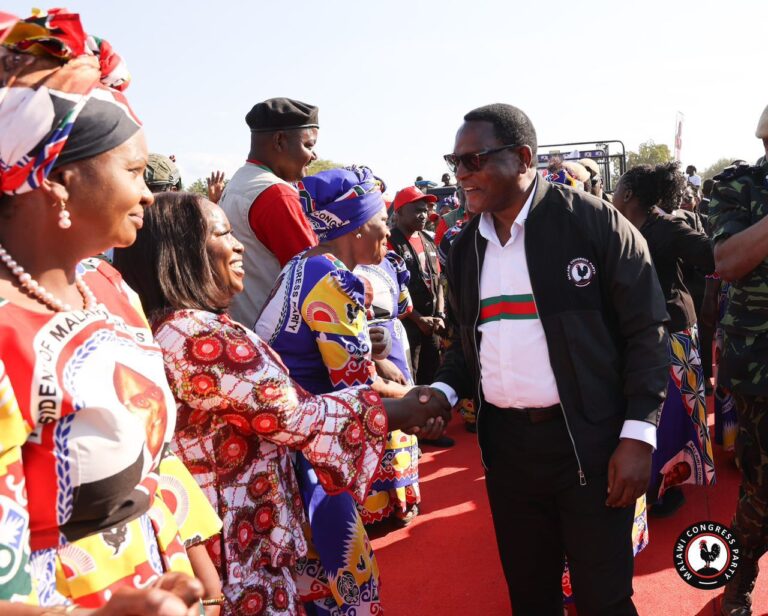
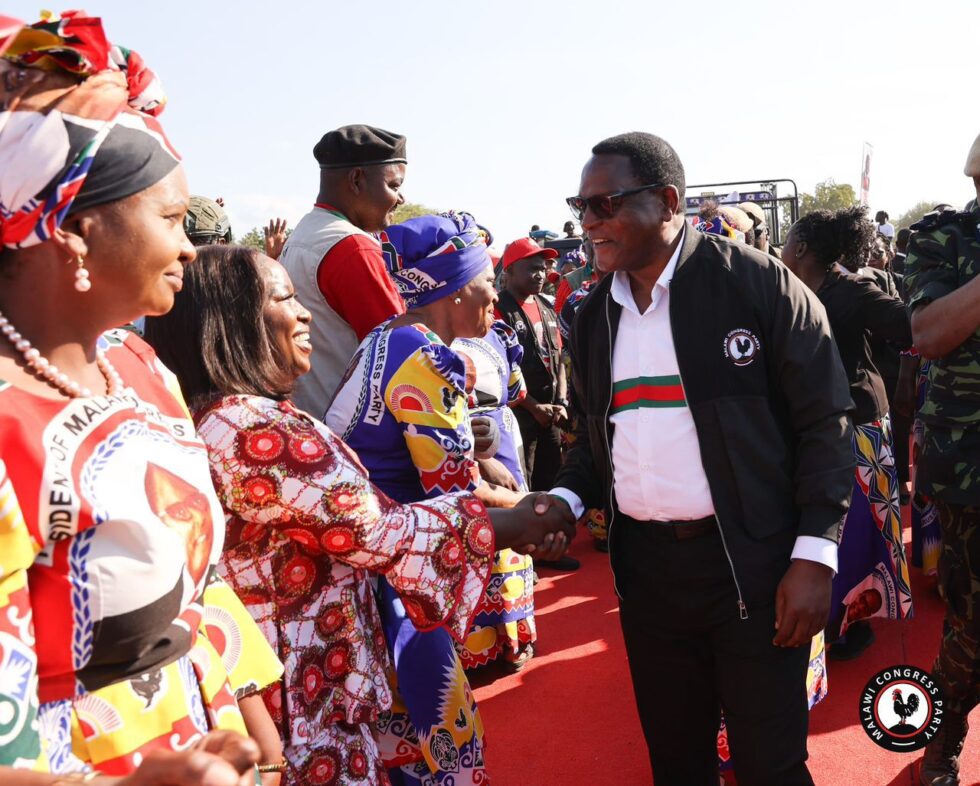
Malawi leader President Dr. Lazarus McCarthy Chakwera on Friday delivered a bold manifesto speech to the huge crowd that gathered at Ngabu sports ground in the Lower shire, Chikwawa district.
The Malawi leader who is also Malawi Congress Party (MCP) President assured people that he is optimistic that come September 16, people will re-elect him as the state President based on his inclusive manifesto for what he is going to deliver in the next five years until 2030.
Chakwera said the first pillar is on Food Security as he will ensure that there is enough food for all Malawians. On that one, he said his government will introduce fertilizer manufacturing company for Malawians to be accessing cheap fetelizers made locally as Malawians right now are struggling to buy the commodity which has increased with 500%.
The second pillar is on Job Creation where the Malawi leader has assured people in the lower shire of creating projects in 10 sectors which will create over 750,000 jobs within a year with 3 million jobs to be created by 2030.
The second pillar is on Wealth Creation where the President said 10 thousand youths and women will get access to MK10 million for business startup and transformating NEEF into Agriculture Development Bank where people will be getting agricultural loans.
The other pillar is on Tsogolo account where Chakwera highlighted that this is structure to end poverty as every born child will be having MK500,000 deposited into the account and it will be getting interest up until the child reaches the age of 18.
On the other hand the Malawi leader is also promising people about the Good Governance saying that his government will make sure there is women and youth involvement in his cabinet with about 4 youths with the ages of below 35 appointed as ministers.
He also mentioned of Public Service Delivery as another pillar emphasizing that 72 new projects are on table for the Southern region to benefit with development activities to make sure the young people have to earn a living.
In a bold blend of culture, music, and sports, National Bank of Malawi Plc (NBM) and the Football Association of Malawi (FAM) have turned to art to amplify the excitement around the launch of Malawi’s first-ever women’s football league by adopting “Pangolin”, a popular track by singer Jetu, as the championship’s official theme song.
The collaboration was announced Friday morning at the NBM head office in Blantyre, ahead of the league’s kick-off on Saturday at Mpira Stadium.
The use of Pangolin, remastered specifically for the occasion, marks a strategic move to connect the competition with national identity and artistic expression, offering fans more than just football on match days.
FAM’s Competitions Director, Gomezgani Zakazaka, couldn’t hide his excitement about the championship finally coming to life.
“This is a moment of pride for us. It’s not just about football, but about celebrating women’s presence in the sport,” said Zakazaka, adding that the expectations on the participating teams are high.
NBM’s Marketing and Corporate Affairs Manager, Akossa Hiwa, described the decision to use Jetu’s Pangolin as a tribute to the strength, resilience, and uniqueness of Malawian women.
“We believe women are like pangolins rare, resilient and powerful. Bringing Jetu into the picture is our way of blending entertainment with empowerment,” Hiwa said.
As part of the campaign, Jetu is expected to perform live during Saturday’s launch match between FCB Nyasa Big Bullets Women and Kukoma Ntopwa Women, promising an electric atmosphere that transcends sport.
The NBM Women’s Premiership will run from July until February 2026 and is expected to reshape the landscape of women’s football in Malawi.
Now that former President Professor Arthur Peter Mutharika has officially named Dr. Jane Ansah as his running mate ahead of the September 2025 polls, political dynamics in Malawi have taken an interesting twist.
The bold decision by the Democratic Progressive Party (DPP) to settle on a legal heavyweight like Dr. Ansah has raised the stakes and challenged other political players to rethink their strategies.
Dr. Ansah, with her impeccable credentials and controversial yet resilient legacy, has re-entered the political spotlight with renewed energy.
DPP Ticket Mutharika and Ansah
This move has put the spotlight squarely on President Dr. Lazarus Chakwera, who is now under pressure to pick a running mate that can not only match but potentially surpass the influence and weight of Dr. Ansah.
As the 2025 elections draw near, the question on every political analyst’s mind is: Who should Chakwera choose as his running mate?
To answer this question, one must consider a few critical factors: regional balance, gender representation, political loyalty, national appeal, and crisis management skills.
President Chakwera’s current Vice President, the late Dr. Saulos Klaus Chilima, left behind a legacy that will be difficult to replace.
Dr. Chilima was not just a political ally but also a key figure in the Tonse Alliance’s success in 2020, commanding youth support and Central Region loyalty.
Now, with his absence, Chakwera has a significant void to fill—both strategically and emotionally.
One name that has surfaced in some political circles is that of Dr. Michael Usi, the current Minister of Natural Resources and an influential figure in the UTM party.
Dr. Usi commands respect in the Southern Region and possesses the charisma needed to counterbalance the Mutharika–Ansah ticket.
However, the death of Chilima has left UTM in a period of transition, and it remains unclear whether Usi can galvanize the same momentum without Chilima’s shadow.
Others suggest Khumbo Kachali, a seasoned politician from the North, whose experience and alliance history with the People’s Party and MCP may be seen as a balancing act in regional politics.
Yet, critics question whether his return would signal progress or simply a recycling of old political faces.
From a gender perspective, some believe Chakwera should consider a female running mate to respond to the DPP’s Jane Ansah selection and appeal to female voters across the nation.
Names like Agnes Nyalonje and Catherine Gotani Hara have been floated as potential contenders—women with strong credentials and clean reputations.
Nyalonje’s educational background and reforms in the education sector make her a strong technocratic choice.
Gotani Hara, as the current Speaker of Parliament, carries legislative experience and a track record of leadership that could be vital on the campaign trail.
But Chakwera also has to think beyond gender optics and ask: who brings electoral value, mobilization strength, and national unity?
In the Central Region, the MCP stronghold, younger leaders like Eisenhower Mkaka or Ken Kandodo may bring energy and continuity, but might not have enough national pull to shift voter sentiment.
What is clear is that Chakwera’s choice must not be based on political loyalty alone, but on the running mate’s capacity to inspire confidence, energize the base, and counter DPP’s aggressive resurgence.
The DPP has fired the first serious shot by fielding a surprise but impactful candidate in Jane Ansah.
This move rebrands the DPP as a party willing to break convention and defy critics in pursuit of power.
The ball is now in Chakwera’s court.
His next move could either solidify his leadership and re-energize the Tonse Alliance—or risk giving momentum to the opposition.
As the political chessboard continues to shift, Malawians eagerly await to see who Chakwera will pick to stand by his side in what promises to be one of the most fiercely contested elections in the country’s democratic history.
Because in Malawi’s current political climate, a running mate is no longer a ceremonial figure—it is a decisive factor between victory and defeat.
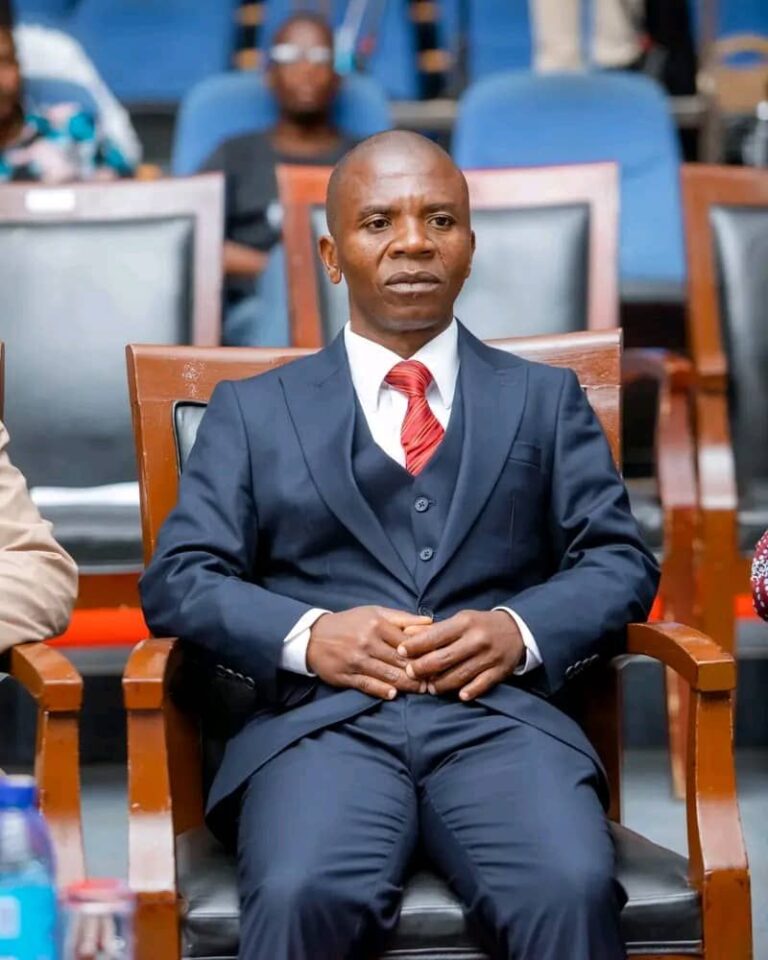
Millward Tobias has entered the 2025 presidential race as an independent candidate, adding a bold and thought-provoking dimension to Malawi’s political landscape.
He is widely known as a policy analyst, researcher, and governance advocate who has spent years offering insight into the country’s political and economic systems.
Tobias formerly served as the Executive Director of the Centre for Research and Consultancy (CRC), where he became a respected voice on issues of transparency, fiscal discipline, and evidence-based policymaking.
Milward Thomas
With academic grounding in governance and public administration, he brings to the race an intellectually grounded approach rooted in reformist ideals.
Unlike candidates backed by large political parties, Tobias’s independent bid underscores his commitment to putting the Malawian citizen at the center of national leadership.
He has consistently criticized political patronage, resource mismanagement, and partisan governance, arguing that these problems have undermined national development.
His decision to contest as an independent is seen as a rejection of the entrenched political culture dominated by party politics and recycled leadership.
In various policy commentaries, Tobias has called for a meritocratic public service, comprehensive electoral reforms, and prudent fiscal policies to restore public trust in government institutions.
He also advocates for youth empowerment, education reform, and a responsive health care system that serves all Malawians regardless of social class.
Critics may argue that independent candidates face enormous structural and financial barriers in Malawi’s winner-takes-all political environment, but Tobias appears undeterred.
He has already built a modest but growing base of support among urban youth, civil society actors, and disillusioned voters seeking a non-traditional option.
His candidacy is expected to inject issue-based dialogue into the 2025 campaign season, pushing other candidates to articulate more concrete plans beyond slogans and rhetoric.
Millward Tobias represents a class of emerging leaders who are not only knowledgeable about Malawi’s systemic challenges but are also willing to challenge the status quo from outside the political elite.
As the election nears, it remains to be seen how far his message will resonate with voters and whether the appetite for clean, independent leadership will translate into votes.
Nonetheless, his bold entry into the race is a reminder that democracy thrives when diverse voices and new alternatives are given space to compete.
In this high-stakes election, Millward Tobias’s presence is more than symbolic—it is a call to rethink leadership in Malawi from the ground up.
Malawi’s First Lady, Madam Monica Chakwera, is emphasizing the need for communities to change their mindset towards people with disabilities, highlighting the negative impact it has on families.
She also stressed the importance of collaboration between the government and private sector to ensure every Malawian, especially those in remote areas, has access to essential healthcare services.
Madam Chakwera urged companies and organizations to complement the government’s efforts in providing healthcare in remote areas.
This call to action aligns with her ongoing advocacy for improved healthcare and social welfare in Malawi.
As the wife of President Lazarus Chakwera, Madam Monica Chakwera continues to play a significant role in promoting the welfare of Malawians through her Shaping Our Future Foundation.