Mighty Tigers secured a vital away win against Karonga United at Karonga Stadium on Saturday afternoon courtesy of Greyson Msowoya’s lone goal in the second half.
Msowoya scored with a brilliant header just a minute from half time after Moyale Barraks players failed to clear an aerial ball in the penalty box.
Man of the match Alex Kambirinya
After the match, Tigers’ defender Alex Kambirinya was voted man of the match.
Following the win, the Kau Kau Boys are now on position 9 on the log tale with 6 points from 4 games.
Despite the loss, Karonga are a step ahead of Tigers with the same number of points after playing three games but the northern region outfit have a superior goal difference.
Elsewhere, Moyale Barraks and Blue Eagles played out to a goalless draw at Mzuzu Stadium.
Moyale are third on the log table with 8 points from 3 games followed by Eagles who have also accumulated 8 points from 6 games but the former have a better goal difference.
On Sunday, Mzuzu City Hammers will host Songwe United at Mzuzu Stadium as Chitipa United play Civil Service United at Karonga Stadium
The National Bank of Malawi (NBM) plc has given K12 million to the Tertiary Students Sports Association of Malawi (TESSAM) to support the national sports festival in Lilongwe this weekend.
The cheque handover was conducted on Wednesday at the bank’s head office in Blantyre, marking another milestone in NBM plc’s ongoing commitment to youth and tertiary education development.
The much-anticipated TESSAM Sports Festival will bring together students from over 15 universities, both public and private, and will be hosted across three major venues: African Bible College (ABC), Bambino School, and the Bingu National Stadium.
Speaking after presenting the cheque, NBM plc’s Marketing and Corporate Affairs Manager, Akossa Hiwa, emphasised the Bank’s deep-rooted dedication to empowering the country’s youth.
“NBM plc believes in youth development, and it also believes in the development of tertiary institutions. This is part of a comprehensive strategy that we have towards youth engagement—ensuring we support them in all spheres during their studies,” said Hiwa.
Hiwa highlighted that this is not the first time the bank has supported TESSAM, having also contributed in 2024.
“In addition to this K12 million donation, we have other ongoing initiatives by the Bank aimed at supporting youth, including a university-based college basketball program that has significantly contributed to the development of basketball in Malawi. Furthermore, the Bank continues to run its ‘More Excellence Program,’ which includes scholarships, mentorships, the provision of academic equipment, and performance-based student awards.”
“This is all part of our integral plan to target and engage with our youth stakeholders, who are part of the ‘Bank of the Nation’. They graduate and grow with us, and go on to work with us in different spheres of development and the economy,” added Hiwa.
TESSAM Treasurer Tadala Namaona expressed immense gratitude on behalf of the association, describing the donation as both generous and unexpected.
“We have received this with much joy because we did not expect it. I know the National Bank does a lot for the country, but this was a surprise. They supported us last year, but this year’s support has more than doubled. We are very happy with this sponsorship.”
“With the coming in of the National Bank, we know it is going to be an even greater event than what we had last year. It means more resources, better organisation, and more exposure for our athletes,” said Namaona.
The TESSAM Sports Festival is expected to draw large crowds, competitive teams, and a renewed spirit of youth development.
The Malawi National Examinations Board has implemented a range of measures to ensure the integrity of this year’s examinations. With the Primary School Leaving Certificate of Education, Junior Certificate of Education, and Malawi School Certificate of Education exams set to take place in the coming months, MANEB is confident that it has put in place all the necessary systems to guarantee credible results.
According to MANEB, preparations for the exams have been thorough, with successful registration of candidates, online payment of exam fees, and stakeholder engagement meetings. The board has also secured exam materials and made arrangements for practical exams.
Ben Navitcha
The PSLCE exam is scheduled for May 21st to 23rd, while the JCE exam will take place from June 3rd to 12th. The MSCE exam is set for July 1st to 25th, 2025. MANEB’s efforts to ensure exam integrity are a welcome development for candidates, parents, and educators.
Education expert Ben Navitcha praised MANEB’s commitment to credible exams, but also emphasized the importance of candidate integrity. “Candidates must avoid any form of malpractice and focus on preparing well for the exams,” Navitcha said.
Navitcha also urged schools, particularly private institutions, to maintain high standards and refrain from condoning cheating.
“Such practices undermine the value of the certificates issued to candidates and compromise the credibility of the education system,” Navitcha noted.
MANEB’s role in ensuring exam integrity is crucial, and the board’s efforts to guarantee fair and transparent exams are commendable.
By taking steps to prevent malpractice and promote candidate integrity, MANEB is helping to maintain the value and credibility of Malawi’s education system.
As the exams approach, candidates are advised to prepare diligently and avoid any form of malpractice. Parents and guardians also have a responsibility to ensure their children adhere to exam rules and regulations.
MANEB’s assurance of credible exams this year is a positive development for Malawi’s education sector.
With the necessary measures in place, stakeholders can have confidence in the exam process and the results that follow.
MANEB’s commitment to exam integrity is a step in the right direction for Malawi’s education system.
By prioritizing credible exams and promoting candidate integrity, MANEB is helping to maintain the value and credibility of the certificates issued to candidates.
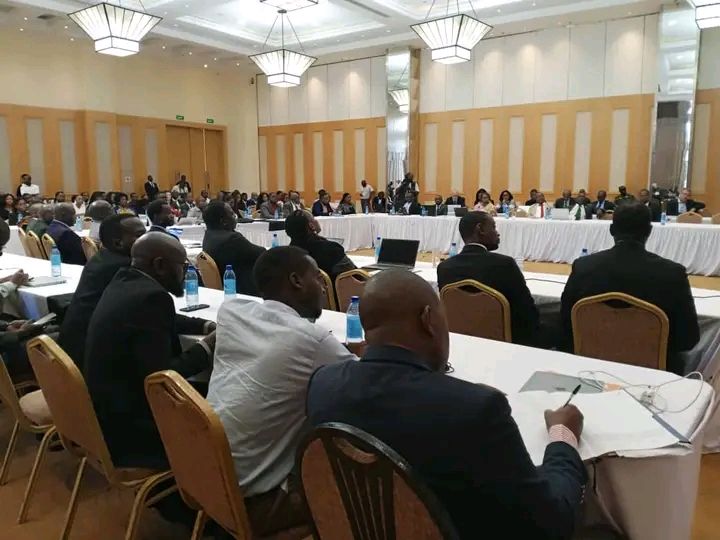
Malawi’s mining sector is on the cusp of a major transformation, thanks to a recent three-day mining lab organized by the Presidential Delivery Unit (PDU).
The lab brought together stakeholders to identify key areas that need improvement to boost the sector’s contribution to the country’s economy.
According to Janet Banda, Head of PDU Lab, the outcomes of the lab will have a profound impact on the sector.
“We have identified critical areas that require attention, and we are committed to working with stakeholders to implement the necessary changes,” she said.
The lab highlighted several key areas that need improvement, including infrastructure development, energy access, financing, and policy framework enhancements.
These areas are crucial to facilitating sector operations, attracting investments, and stimulating economic growth.
Minister of Mining, Ken Zikhale Ng’oma, emphasized the importance of tangible outcomes. “We need to move beyond rhetoric and ensure that our words are translated into action,” he said, adding that, “The government is committed to creating an enabling environment that attracts responsible investments and ensures equitable benefit sharing.”
The PDU, in collaboration with stakeholders, will develop a roadmap to implement the agreed-upon issues.
This roadmap will serve as a guide for the sector’s transformation and ensure that Malawi’s mining industry contributes significantly to the country’s economic growth.
The government’s commitment to improving the mining sector is a welcome development.
With a well-planned roadmap, Malawi’s mining sector can realize its full potential and drive economic development. The sector’s growth can also create jobs and stimulate economic growth, ultimately improving the lives of Malawians.
The lab’s outcome demonstrates the government’s dedication to improving the mining sector.
By implementing the necessary changes, Malawi can unlock its mining potential and reap the economic benefits.
As the sector continues to evolve, it will be crucial to monitor progress and ensure that the agreed-upon issues are implemented effectively.
The transformation of Malawi’s mining sector is a complex process that requires careful planning and implementation. The PDU’s efforts to develop a roadmap will be critical in guiding the sector’s growth.
With a focus on infrastructure development, energy access, financing, and policy framework enhancements, Malawi’s mining sector can become a significant contributor to the country’s economy.
As the sector moves forward, it will be essential to ensure that the benefits of mining are shared equitably among stakeholders.
The government’s commitment to responsible investments and sustainable mining practices will be crucial in achieving this goal.
With the right approach, Malawi’s mining sector can become a driver of economic growth and development, ultimately improving the lives of Malawians.
The Malawi Government has embarked on an ambitious project to improve the living conditions of its security personnel.
In a bid to enhance the welfare of officers, the government is constructing 64 modern houses for officers in the Central East Region Police in Kasungu.
This initiative is part of a broader effort to provide decent and sustainable housing for members of the Malawi Police Service, Malawi Defence Force (MDF), the Department of Immigration and Citizenship Services, and the Malawi Prison Services.
The project has made significant progress, with several units already completed and others at advanced stages.
The construction of these modern houses is not only addressing the long-standing issue of inadequate accommodation for security officers but also delivering economic benefits to the local community.
Over 400 temporary jobs have been created for residents, providing valuable income and skill development opportunities.
For many years, security officers have struggled with overcrowded and substandard housing, often accommodating large families in limited spaces.
This development marks a significant turning point in the government’s efforts to prioritize the welfare of its security personnel.
The provision of modern housing will improve the quality of life for officers and their families, as well as bolster operational efficiency.
The project’s benefits extend beyond the security personnel to the local community. The creation of temporary jobs has provided valuable income opportunities for residents, contributing to the local economy.
This initiative demonstrates the government’s commitment to enhancing the welfare of its civil servants and its dedication to providing decent and sustainable housing for its officers.
The completion of this project is expected to have a lasting impact on the lives of security personnel and the local community.
The modern houses will not only improve the quality of life for officers and their families but also contribute to the overall effectiveness of the security sector.
With reduced travel distances, officers will be able to respond quickly to emergencies, ultimately strengthening law enforcement, national safety, and public service delivery.
The government’s investment in the welfare of its security personnel is a commendable effort. The success of this project will depend on the government’s continued commitment to its completion and the welfare of its security personnel.
As the project nears completion, it is expected to serve as a model for future initiatives aimed at improving the welfare of civil servants.
The Malawi Government’s initiative to provide modern housing for security personnel is a significant step towards enhancing their living conditions.
The project’s success will have a positive impact on the morale and productivity of security personnel, ultimately contributing to the country’s overall security and stability.