Monday, May 4, 2026
No menu items!
spot_img
Home Blog Page 4

NBS Bank, MDF seal 10-year partnership to sustain veterans’ welfare support

0

By Linda Kwanjana


NBS Bank has signed a 10-year Memorandum of Understanding with the Malawi Defence Force (MDF), cementing its long-standing commitment to supporting war veterans through the MDF Veterans Thanksgiving Golf Tournament.

The agreement was signed at Kamuzu Barracks in Lilongwe, formalising years of growing support during which NBS Bank’s sponsorship increased from K16.5 million in 2020 to K100 million in 2025. This makes the bank the tournament’s lead sponsor and the largest private sector contributor to veterans’ welfare through the initiative.
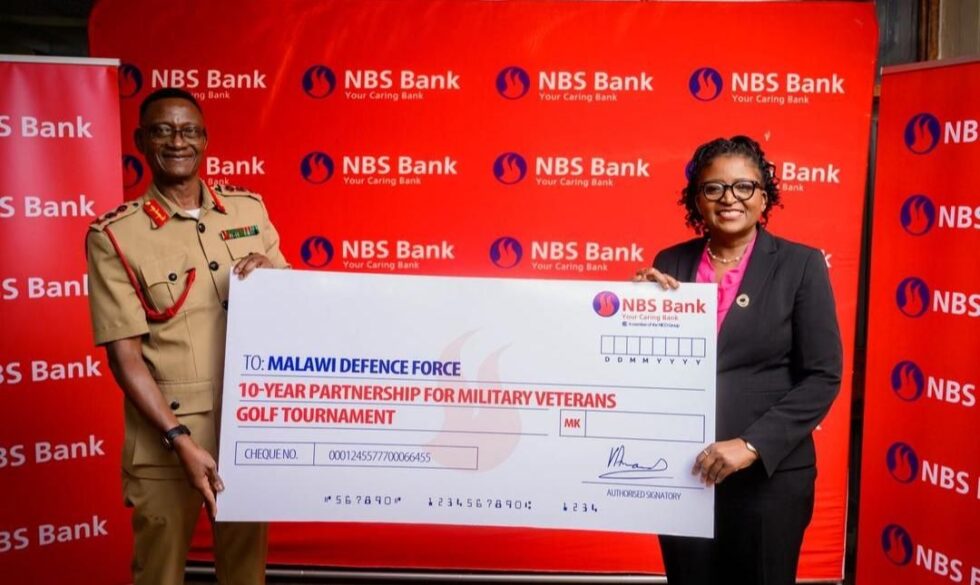

Speaking during the signing ceremony, NBS Bank Chief Executive Officer, Temwani Simwaka said the partnership reflects the institution’s commitment to national service and remembrance.

“Service to the nation does not end at retirement. As a proudly Malawian Bank, we recognise that the peace and progress we enjoy today was built on the sacrifices of these men and women,” said Simwaka.

She added that the Bank views the partnership as a long-term responsibility rather than a short-term sponsorship arrangement.

“This is not just about sponsorship. It is about standing with those who served, consistently and meaningfully, for years to come,” she said.

MDF Chief of Defence Force, General George Jaffu, described the initiative as a symbol of unity and gratitude towards retired soldiers.

“This tournament is more than a sporting event. It is a platform for national unity and a vehicle for honouring those who gave everything so that others could live in peace,” said Jaffu.

He added that the 10-year agreement would ensure continuity in veteran support programmes.

Over the years, proceeds from the golf tournament have supported housing, healthcare, food, clothing, and general welfare needs for veterans and their dependants.

NBS Bank has also expanded its support beyond financial contributions, introducing financial literacy training, SME advisory services, and tailored banking solutions for retired military personnel.

In earlier interventions, the Bank also supported veterans through its parent company, NICO Holdings Group by donating wheelchairs to veterans with mobility challenges, further strengthening its welfare-focused approach.
Atupele calls for stronger institutions to combat corruption

0

By Chisomo Phiri

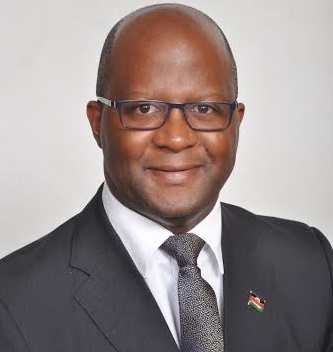
President of the United Democratic Front (UDF), Atupele Muluzi,has emphasized the urgent need for systemic reforms and stronger institutions to effectively tackle corruption in the country.

Responding to concerns raised by legal practitioner Counsel Alexious Kamangira in an interview with 247 Malawi News, Muluzi described the issues as valid and widely shared, welcoming the call for open and healthy debate on corruption and governance.

Atupele Muluzi


He noted that corruption remains one of Malawi’s most pressing challenges, warning that it distorts the economy, undermines public trust, and entrenches inequality.

According to Muluzi, practices such as cartel-like behavior and parallel exchange rate arbitrage disproportionately harm ordinary citizens by increasing the cost of living, limiting opportunities, and weakening public services.

The UDF leader highlighted his long-standing stance on governance reforms, stating that over the past two decades he has consistently advocated for a radical transformation of Malawi’s systems.

However, he acknowledged that reform efforts often face resistance from entrenched interests.

“In Malawi, reformers are often vilified because change threatens those who benefit from the status quo,” he said, adding that a cabal continues to resist meaningful reforms.

Muluzi also raised concerns about the role of the media, cautioning that a compromised press undermines accountability.

He stressed that the media must act as watchdogs, exposing wrongdoing without fear or favor.

The son to the second Malawi president Bakili Muluzi further called for a stronger and more independent civil society to promote transparency and hold leaders accountable.

Despite the challenges, he rejected authoritarian approaches, arguing that Malawi’s path forward lies in improved governance grounded in strong checks and balances.

He underscored the importance of functional institutions, fair enforcement of rules, and equality before the law.

“Corruption is largely a symptom of weak systems,” said Muluzi, urging comprehensive reforms to strengthen institutions, close loopholes, and curb abuse.

He pointed out that rent-seeking behavior has persisted since independence and can only be addressed through deliberate and sustained efforts.

Muluzi commended Kamangira for speaking out, describing such actions as both difficult and necessary in the fight against corruption.

For further insight into governance and reform, the UDF president recommended the book The Essence of Success, which explores development challenges and solutions, including perspectives drawn from Malawi.

He concluded by stressing that lasting change depends on good governance, effective leadership, and systems designed to serve all Malawians equally.

PIL touts historic zero-accident record in fuel haulage

0

By Linda Kwanjana

Petroleum Importers Limited (PIL) has recorded a major safety breakthrough, delivering over 180 million litres of fuel into Malawi without a single accident or spill in 2025, marking a first-of-its-kind achievement in the country’s fuel transport sector.

The milestone, celebrated during this year’s World Day for Safety and Health at Work celebrations in Blantyre under the theme ‘Zero accidents. Zero spills. My 100% commitment’ on Tuesday, highlights a rare success in a high-risk industry where fuel transportation is often associated with serious hazards.


In his address at the event, PIL General Manager, Martin Msimuko said the achievement reflects a deliberate, industry-wide commitment to prioritising safety over speed.

“We want transporters to put safety first so that fuel is delivered into the country without accidents. What we have achieved shows that zero accidents is not just an ideal, it is possible,” said Msimuko.

Msimuko noted that the industry has significantly improved its safety record compared to previous years.

“This is a major shift from the past, where we could record seven, nine or even ten accidents in a year,” he said.

He attributed the success to strong coordination among transporters, brokers and drivers, as well as strict adherence to safety protocols.

Given the highly flammable nature of petroleum products and the challenging conditions of many transport routes, Msimuko described the zero-incident record as a significant achievement not only for the industry but also for public safety.

“These tankers move through communities and along difficult roads. Any accident can have devastating consequences, so maintaining zero incidents is critical for protecting lives and property,” he said.

Directorate of Road Traffic and Safety Services representative, Madalitso Gunsaru, commended PIL’s record, describing it as a model for the broader transport sector.

“This milestone proves that even in high-risk operations like fuel transportation, safety can be managed effectively,” he said.

Gunsaru also indicated that Malawi recorded 3,984 road accidents and 1,033 fatalities last year, adding that PIL’s clean safety record offers a practical example of what disciplined adherence to safety standards can achieve.

He further emphasised the need for sustained collaboration among all stakeholders, including drivers, regulators, insurers and health institutions.

“Safety is a shared responsibility. What PIL has demonstrated is that with commitment and coordination, we can significantly reduce accidents on our roads,” he said.

PIL is a consortium of four oil marketing companies, namely TotalEnergies, Puma, Engen, and Petroda.

NBM plc emphasises on procedure in customer transactions in Hotel inquiry

0

By Linda Kwanjana

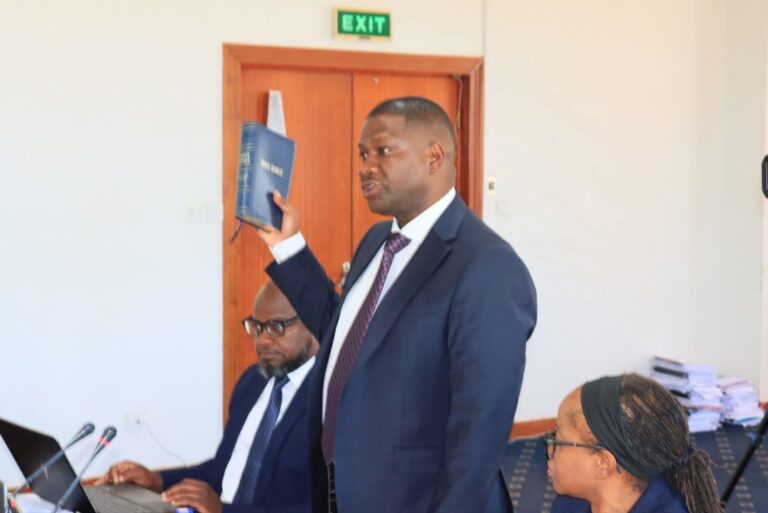
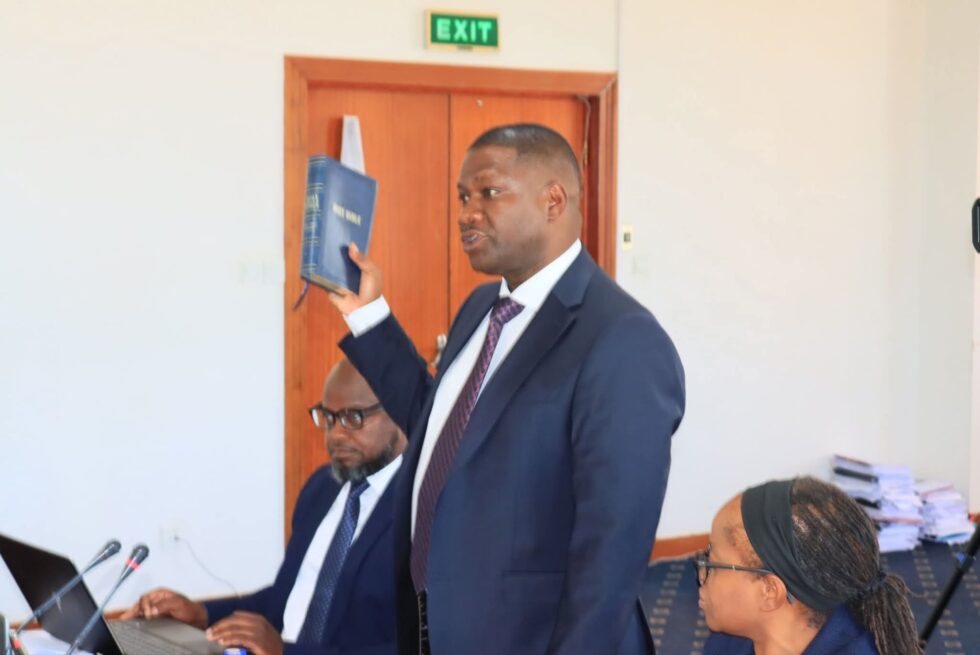
A team from National Bank of Malawi (NBM) plc led by its Chief Executive Officer Harold Jiya appeared before the Parliamentary Accounts Committee (PAC) in Lilongwe where they emphasised on the importance of customer confidentiality and the rule of law while respecting the jurisdiction of Parliament on the inquiry.

The Bank was appearing before PAC which is investigating the controversial sale of Amaryllis Hotel by the Public Pensions Trust Fund (PPTF).

NBM Head of Legal and Company Secretary Zunzo Mitole flanked by Jiya and NBM Chief Risk Officer Charles Ulaya, said banks are limited with respect to the customer information that they can give out.

“The Data Protection Act, under section 8, prohibits the disclosure of customer data or information without the explicit consent of the customer. Also, the Financial Crimes Act under section 24(1) prohibits the disclosure of the fact that a suspicious transaction has been made or even that a suspicion was formed with respect to a transaction.”

“Meanwhile, there is also The National Assembly (Powers and Privileges) Act provides that any witness appearing before Parliament or a Committee of Parliament is immune from being sued for any statements made to Parliament or a Committee of Parliament, meaning that a witness can disclose anything without fear of repercussions.”


“There is therefore a conflict between this Act and the Financial Crimes Act, the Data Protection Act the Directive on Financial Services (Fair Treatment of Consumers) 2024. In law, where two laws are in conflict with each other, the one that takes precedence is the one that addresses the issue at hand or in dispute.”

She therefore said that the Bank was obliged to follow the Financial Crimes Act and the Data Protection Act and would not disclose anything.

‘It is our view that since these two laws are superior to the National Assembly ( Powers and Privileges) Act, legal practice therefore demands that the bank should not disclose any FIA reporting and any customer data,” explained Mitole.

The bank did not disclose any transactions from the account which received the proceeds from the sale of the hotel by PPTF.

Jiya explained that they complied with regulations governing the banking industry.

PAC Chairperson Steve Baba Malondera suspended the meeting saying they will invite the bank again after looking at the relevant laws so that they get the information they are looking for.

Hypocrisy in a suit: Why Chithyola Banda should spare  Malawians the lectures


By Jones Gadama

Leader of Opposition Simplex Chithyola Banda’s International Workers’ Day statement reads like a script written in a house of mirrors.

He points to a governance crisis, economic hardship, corruption, fuel shortages, youth unemployment and low farm gate prices as evidence of government failure, yet he is the last person who should be lecturing the nation on any of these ills.

The rot he decries today was planted, watered, and harvested by the very party and system he served for five years before his party was democratically ousted from power. Malawians have not forgotten. 

Banda’s sudden outrage over the Amaryllis Hotel Scandal insults public memory. Corruption did not arrive in Malawi last week.

Simplex Chithyola


The procurement rackets, the inflated contracts, the allowances culture, and the weaponization of state institutions were perfected when his own political family held the keys to Treasury. For years, audit reports gathered dust, whistleblowers were hounded, and public trust was auctioned to the highest bidder.

To now stand on a podium and accuse DPP of tolerating graft is political amnesia at best and deliberate deceit at worst. Accountability cannot be outsourced to speeches; it starts with owning the legacy you helped build. 

The fuel queues he laments did not appear overnight. They are the tail end of years of unsustainable subsidies, forex mismanagement, and politically driven import deals that were signed when his party controlled the levers. The same technocrats he now blames were once shielded by the same opposition benches whenever tough reforms were proposed.

You cannot sabotage the fuel pricing mechanism for years, hollow out reserves through patronage, and then demand an “urgent plan” as if the crisis dropped from the sky. Workers are indeed suffering, but they are paying the price of decisions taken when Chithyola Banda’s allies were in charge of the pump. 

His warning on youth unemployment and low farm gate prices is equally hollow. Malawi’s jobs crisis is the product of two decades of missed industrial policy, abandoned irrigation schemes, and a fertiliser programme run like a campaign tool.

Those failures have fingerprints, and many belong to the same political machine that now claims to speak for the youth.

Farm gate prices collapsed because marketing boards were politicised, ADMARC was stripped of capital, and middlemen with party links were allowed to rig the market. To now pose as the defender of the farmer is to pretend Malawians have no memory of who broke the scale. 

Perhaps the most galling part of Banda’s statement is his condemnation of “politically motivated arrests” and poor conditions for civil servants.

The record is public. When his side held power, critics were dragged to court on dubious charges, civil society leaders were threatened, and civil servants who refused to play politics were transferred to the edges of the country.

Salaries were delayed then too, promotions were sold, and ghost workers thrived. The same institutions he now says are weak were deliberately weakened to protect vested interests. 

Opposition is a constitutional duty, but credibility is its currency. Chithyola Banda is bankrupt on that front. He cannot inherit the sins of his party in silence and then return as a preacher of reform.

If he truly cares about workers, he should start with an apology for the years of plunder and policy failure that created today’s pain.

He should tell Malawians what his side did with the chances they had, and why the same people who manufactured the crisis should be trusted to diagnose it. 

Until then, he should spare the nation the sermons. Malawi does not need recycled outrage from architects of the collapse. It needs solutions from people who did not dig the hole.

Workers’ Day deserves honesty, not hypocrisy. Chithyola Banda had his turn at the wheel, and the car is where it is because of that drive.

He should sit down, shut up, and let the country heal without his commentary.