
Friday, December 26, 2025
No menu items!
spot_img
Home Blog Page 503

An analysis of Sameer Suleman’s warning to President Chakwera and the MCP

By Burnett Munthali

Sameer Suleman’s remarks at the Nancholi Rally reflect the growing political tensions in Malawi as the country approaches the next general elections.

His speech, directed at President Lazarus Chakwera and the ruling Malawi Congress Party (MCP), is a stark warning of the consequences of corruption, misgovernance, and alleged abuse of power.

Suleman’s strong stance on accountability, economic mismanagement, and political intimidation highlights key issues that could define Malawi’s political landscape in the coming months.

Suleman accused Chakwera’s administration of corruption, particularly alleging that MCP officials have secretly acquired properties in Dubai as part of a plan to escape justice once they lose power.
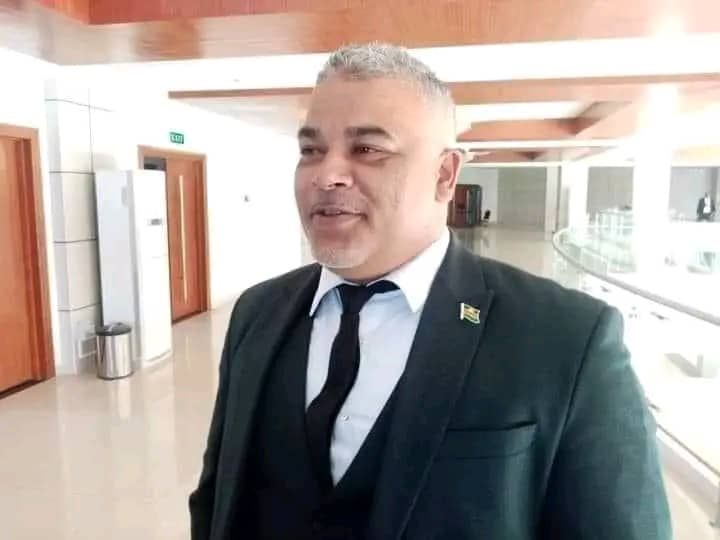
Suleman

These allegations, if proven true, paint a picture of systemic corruption within the government, where high-ranking officials prioritize personal wealth accumulation over national development.

The accusation that Malawi’s national debt has risen to K19 trillion from less than K4 trillion in just five years under Chakwera’s rule is alarming.

If true, this raises concerns about how public funds are managed and whether the government’s borrowing has yielded any meaningful development projects.

Suleman’s question about where the borrowed money has gone implies that government resources may have been misused or diverted into private investments, such as hotels and lodges.

The issue of debt accumulation is critical because high national debt burdens future generations and limits the government’s ability to invest in key areas such as infrastructure, education, and healthcare.

The absence of visible development despite the sharp increase in debt suggests inefficiency, misallocation of funds, or outright looting of public resources.

Beyond corruption and economic mismanagement, Suleman raised concerns about political intimidation and suppression of opposition voices.

His assertion that the DPP will not tolerate intimidation from the ruling party suggests a perception that the MCP is using state power to silence its opponents.

He further warned that the DPP would not allow the arrest or assassination of its leader, former President Arthur Peter Mutharika.

This is a serious claim, as it suggests that there are fears within the DPP leadership that state institutions could be used to politically persecute Mutharika.

Whether these fears are based on solid evidence or political rhetoric, the fact that Suleman is issuing public warnings indicates a deepening mistrust between Malawi’s major political parties.

Additionally, Suleman referenced MCP’s history of eliminating political opponents, a reference to Malawi’s past under the one-party rule of Kamuzu Banda, when dissent was brutally crushed.

By bringing this up, he is invoking historical fears of dictatorship and positioning the DPP as defenders of democracy.

However, it remains to be seen whether these claims will resonate with the electorate or if they are purely strategic political messaging.

Suleman’s remarks add fuel to an already highly charged political environment in Malawi.

With elections approaching, such accusations and warnings contribute to a climate of tension, polarization, and uncertainty.

The battle between the ruling MCP and the opposition DPP is likely to intensify, especially if Suleman’s warnings translate into legal action against government officials accused of corruption.

The possibility of former President Mutharika running for office again adds another layer of complexity to the political landscape, as his potential candidacy is both a threat to MCP’s continued rule and a rallying point for opposition forces.

If the DPP can prove its allegations and gain public support, MCP’s credibility could be severely damaged ahead of the elections.

However, if Suleman’s claims remain unsubstantiated, they may be dismissed as political propaganda aimed at rallying the opposition base.

The next few months will be crucial in determining whether these corruption allegations will lead to real accountability or simply remain part of the ongoing political battle between the ruling party and the opposition.

Either way, Malawians will be watching closely, demanding both transparency and justice from their leaders.
MAWU launches short story writers competition

0

By Dean Chisambo

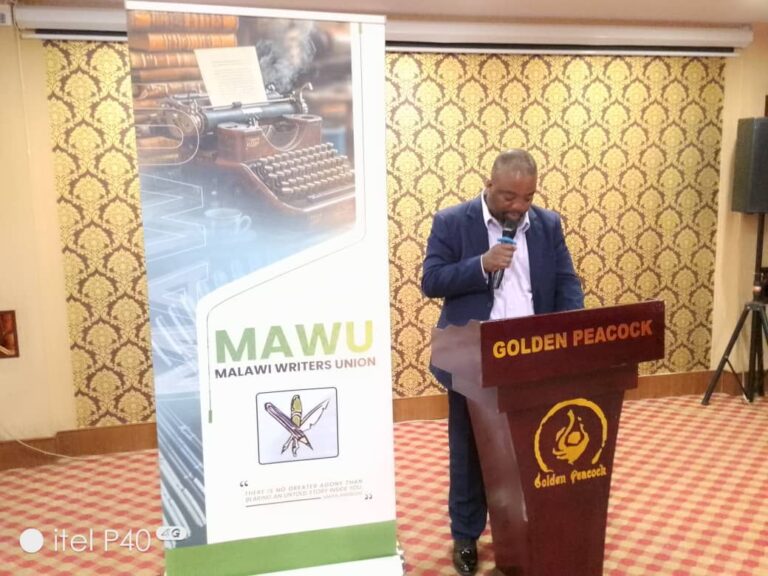
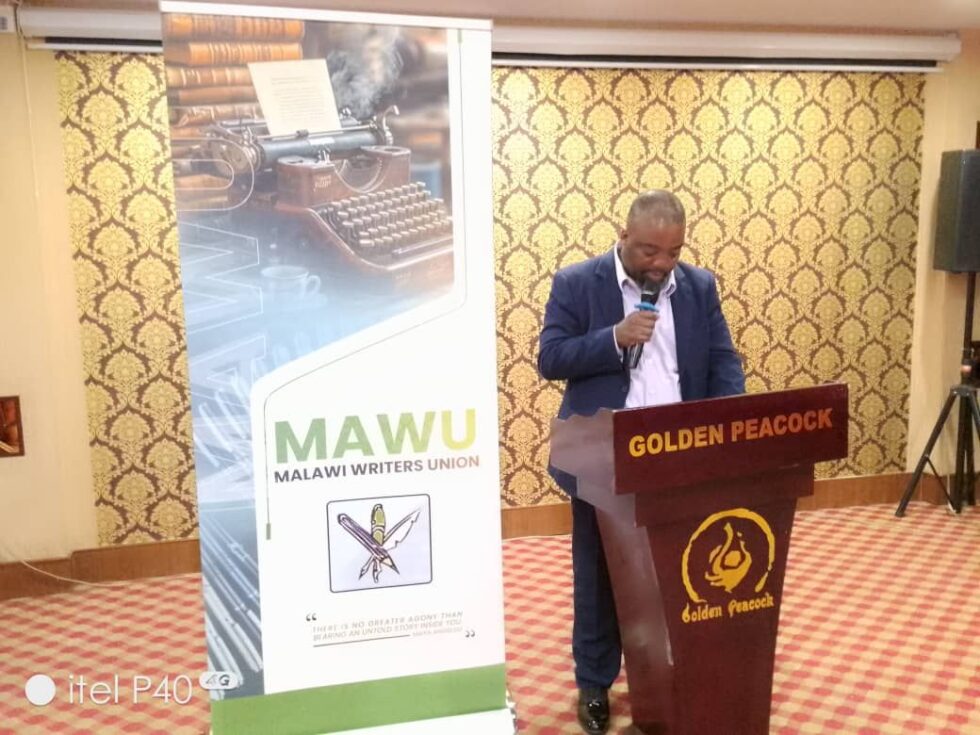
The Malawi Writers Union (MAWU) has launched a short story writers’ competition aimed at uncovering new talent in the country.

Speaking during the launch on Friday, MAWU Board Chairman Lawrence Kadzitche highlighted the challenges faced by the country’s literary scene.

He pointed out that while people are writing, the reading culture has diminished, as many read only for examination purposes.

Publishers predominantly focus on educational books, resulting in the closure of bookshops.

Kadzitche stated, “When people buy books, they are typically books that will help them pass exams.”

“Even when they are ready, they just read to pass those exams.”

He revealed that K2 million has been allocated to the competition, though the total cost will likely reach K3 million.

This amount will cover not only prize money but also the venue and logistics.

In his remarks, MAWU President Shadreck Chikoti emphasized that the initiative’s goal is to enhance the reading culture and promote literary works.

He said, “You see how much we are putting writers on a universal platform in terms of current affairs, because we are talking about Artificial Intelligence (AI).”


Chikoti further explained that the competition would promote both current affairs and literature.

He disclosed that the competition will have two categories: one for secondary school students and another for the general public.

The competition is open to Malawians both in the country and in the diaspora.

Chikoti shared that the first prize in the general category is K1 million, while the first prize for secondary school students is K350,000.

Other prizes will also be awarded.

He further emphasized that the most important aspect of the competition is that the winning short story will be published in an anthology.

Chikoti also noted that as MAWU celebrates 30 years of existence, it plans to host an Indaba, an international trade fair, and showcase anthologies, short stories, and poetry.

He urged support from both the government and the corporate world to make these initiatives successful.

One of the participants, writer, fiction author, and poet Kondwani Sichali, shared his thoughts on the competition.

He noted that it will help raise awareness in both urban and rural areas about AI and its role in combating misinformation and disinformation.

The theme for the competition is “Artificial Intelligence and Mental Health.”

MAWU, established in 1995, is celebrating 30 years of existence and has produced renowned writers such as Steve Chimombo, Jack Mapanje, and many others.

CSEPWP participants in Nkhata Bay thrive through small-scale businesses

0

By Burnett Munthali

Some participants of the Climate Smart Enhanced Public Works Programme (CSEPWP) in Sanga, Senior Chief Mankhambira, Nkhata Bay, have shared how the initiative has empowered them to earn a living through small-scale businesses.

The programme, which focuses on restoring natural resources while improving livelihoods, has provided participants with financial resources that have enabled them to start income-generating activities.


Mary Manda, one of the beneficiaries, revealed that she has used her K48,000 monthly wages from the programme to establish a fish-selling business and venture into piggery.

She explained that by investing her earnings in these businesses, she has managed to reduce her reliance on natural resources such as firewood and charcoal, which are major contributors to deforestation.

Manda emphasized the importance of using the programme’s proceeds wisely, urging her fellow participants to invest in sustainable businesses instead of engaging in activities that harm the environment.

She pointed out that the primary goal of the CSEPWP is to restore natural resources, and participants can contribute to this objective by reducing their dependency on unsustainable practices.

John Longwe, a 23-year-old hawker, also shared how the programme has transformed his life.

He stated that the World Bank-funded CSEPWP gave him the opportunity to start a grocery business while simultaneously engaging in activities that support environmental conservation.

Longwe noted that before joining the programme, he struggled to find a stable source of income, but his involvement in the initiative has enabled him to achieve financial independence.

District CSEPWP Facilitator, Edward Ngwemba, disclosed that 15,418 people are currently benefiting from the programme.

He further stated that there are plans to expand the programme in the next phase to accommodate more people who can contribute to natural resource restoration while improving their economic status.

Ngwemba expressed optimism that with continued support and proper utilization of wages, more participants will transition from depending on environmentally harmful activities to running sustainable businesses.

The CSEPWP, which integrates environmental conservation with economic empowerment, continues to make a significant impact in Nkhata Bay by promoting sustainable livelihoods and reducing pressure on natural resources.

With participants like Manda and Longwe investing in businesses that align with conservation efforts, the programme stands as a model for balancing economic growth with environmental sustainability.

Chikwawa District Council cracks down on sugarcane theft with licensing system

0

By Shaffie A Mtambo

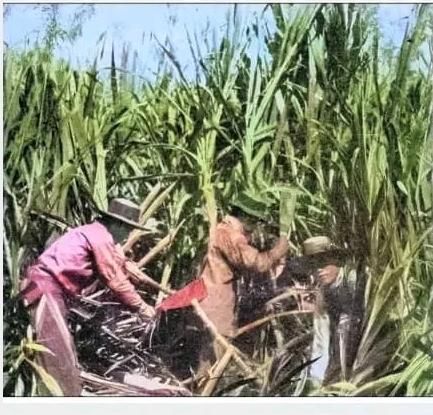
Chikwawa District Council’s recent ban on sugarcane markets, except for licensed vendors, is a bold move to tackle rampant sugarcane theft in the district.

This resolution, effective from March 15, 2025, aims to protect Illovo Sugar company’s Nchalo Estate, which has lost a staggering 980 tonnes of sugarcane to theft since January.

Dr. Albert Nkumbwa, Estate Support Management officer at Illovo Nchalo, commended the council’s resolution, emphasizing its potential to minimize losses and stabilize prices.


To enforce the ban, police and security agents will confiscate sugarcane from unlicensed individuals.

Senior Chief Ngabu urged local leaders to take a firm stance against theft, ensuring that those caught are held accountable.

The ban also introduces a licensing system, requiring sugarcane producers and sellers to obtain permits from the Chikwawa District Council’s Director of Administration.

Illovo Sugar company’s Nchalo Estate is a significant player in the district’s economy, producing over 150,000 tonnes of sugar per year.

The estate’s production has been affected by theft, with output dropping to 116,000 tonnes in 2023 and 130,000 tonnes in 2024.

Celebrating the Life and Legacy of Ebenhaezer Dibakwane a shining star in South African comedy

By Shaffie A Mtambo

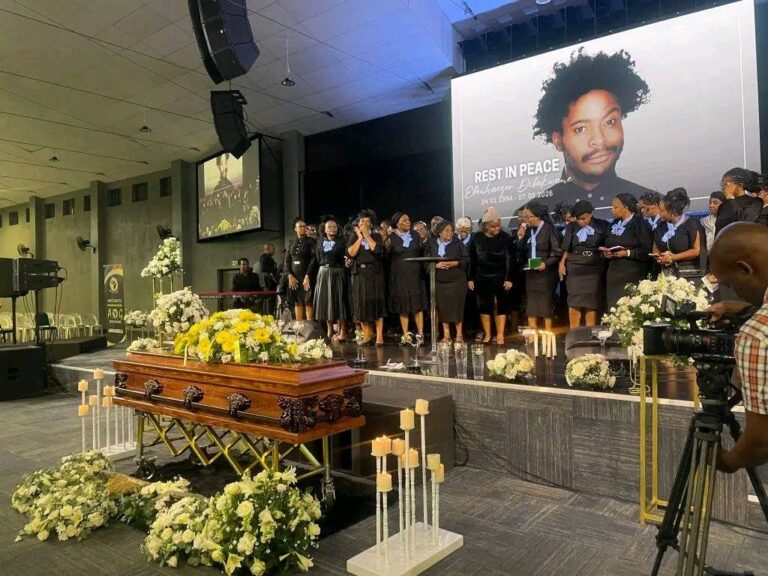
On Friday, March 14, 2025, the South African entertainment industry bid a final farewell to beloved comedian Ebenhaezer Dibakwane, affectionately known as Ebby.

The 31-year-old entertainer’s passing on March 7, 2025, left a profound impact on his fans, friends, and family.

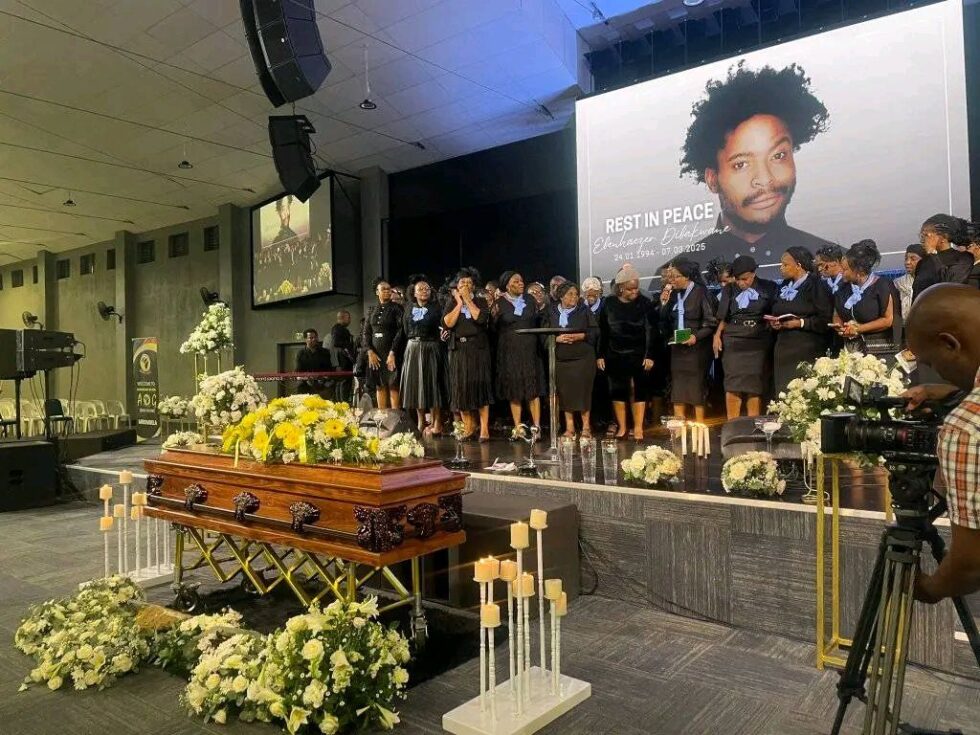
The emotional funeral ceremony, held in Mbombela, Mpumalanga, was a testament to Ebby’s enduring legacy.

Speakers remembered him as a highly intelligent, selfless, and incredibly talented individual who left an indelible mark on the entertainment industry.

Ebby’s brother, Lesedi Dibakwane, delivered a heartfelt tribute, reflecting on their childhood and the remarkable qualities that defined him.

He spoke about Ebby’s exceptional intelligence, kindness, and creative genius, which were evident from an early age.

Lesedi also shared stories about Ebby’s journey in the competitive Johannesburg comedy scene, where he earned recognition and accolades, including the Comic Choice Award.

A close friend, Siyabonga “Stig” Sesanti, revealed that Ebby had struggled with depression and suicidal thoughts for a long time.

Siyabonga urged fellow artists to speak out and seek help for their mental health struggles, emphasizing the importance of prioritizing well-being.

Ebby’s parents, Paul and Lucy Dibakwane, expressed their love and pride for their son in a heartfelt letter.

They shared how they had supported his decision to pursue a career in comedy, despite the challenges and uncertainties.

The South African entertainment industry has lost a talented and vibrant performer, but Ebby’s legacy will continue to shine bright, inspiring future generations of comedians, actors, and storytellers.