Thursday, December 25, 2025
No menu items!
spot_img
Home Blog Page 517

Sunganimoyo urges Chakwera to address Malawian concerns seriously

0


By Vincent Gunde

An aspirant Presidential candidate Isaiah Emmanuel Sunganimoyo, has urged President Dr. Lazarus Chakwera to address Malawian concerns seriously and consider the long time implications of his actions saying Malawians are in pain and suffering.

Sunganimoyo has advised President Chakwera that the people of Malawi deserve better not the way they are living today with no hope for a better tomorrow saying this is the time for leadership that truly represents their interests.

He has warned President Chakwera that failure to address the concerns in as soon as yesterday, and failure to take measures to solve the challenges Malawians are sailing through, he will challenge him in the 16th September,2025 elections.

Writing in a message of celebrating his 47th birthday on 7th March, Sunganimoyo said Malawians regardless of their political party affiliations are sailing through pain and sufferings assuring President Chakwera that he is wanting to challenge him despite being a member of the MCP and coming from the same tribe and religion with him.
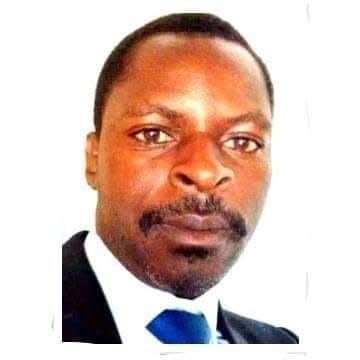
Sunganimoyo


Sunganimoyo said this is the time for a change assuring President Chakwera and Malawians that he is willing to stand on the 16th September, 2025 elections as an aspiring presidential candidate to ensure that Malawians receive the leadership they deserve.

He said he has noted with a great concern that the 1964 Cabinet crisis and the SONA of 2025 are striking observing that in 1964 Kamuzu Banda was in disagreements with his ministers over economic management and diplomatic relations.

The independent candidate the SONA of 2025 ha made Malawians criticizing the country’s leadership for failing to address pressing economic issues such as forex, fuel shortages and the rapid rise in commodity prices of essential goods such as maize which has reached K110,000 for a 50 Kilogram bag.

“The SONA has far reaching consequences and alarming for Chakwera’s leadership and his MCPs reputation are at risk,” reads Sunganimoyo’s writings on the wall.

He said there is loss of public trust by Malawians in President Chakwera as he is being seen ignoring critical socio-economic issues, increased opposition, the SONA has already been criticized by opposition parties who may use it to attack Chakwera’s leadership and policies.

Sunganimoyo has  claimed that in the MCP, there are internal conflicts, the SONA may exacerbate internal conflicts and election consequencies saying with elections looming in September, 2025 the SONA may harm Chakwera’s re-election chances.
Ben Longwe claims DPP has never fought a good battle

0


By Vincent Gunde

Human Rights Advocator Sir Charles Ben Longwe, says since President Dr. Lazarus Chakwera took office of the presidency in June, 2020, the Democratic Progressive Party (DPP) has never fought a good battle saying the Age Limit Bill is a strong poison which was initiated a long time ago and now it is in the ring, Parliament.

Ben Longwe has reminded Malawians that some of the DPP MPs endorsed Professor Arthur Peter Mutharika and others, said no to this and have joined the MCP and Agape Khombe for the bill to be tabled in Parliament to create tension in the DPP.

He said DPPs Mary Navicha went to court to obtain an injunction against tabling the age limit bill but High Court judge Kenyatta Nyirenda rejected for the bill to go in Parliament but the question still remains, who is being targeted?

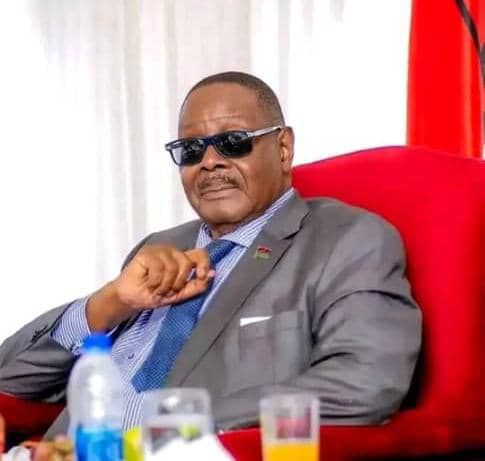
Mutharika


Speaking from his Hard Knocks University, Ben Longwe said one who is being targeted not to stand in the 16th September, 2025 elections, is Professor Mutharika appealing to Mec and the NRB to freeze the whole system of voter registration exercise for all over-aged voters not to take part in the voting processes.

Ben Longwe said all the over-aged people registered their names in the voter registration exercise to vote for a fellow over-aged Mutharika now that the law has barred him from standing, the over-aged people will not find a candidate of their choice to be voted for, their choice was Mutharika.

He has argued that there are grandfathers and mothers in the August House representing their constituencies saying this bill must also target them, their names must be taken off from MEC and NRBs voter registration exercise for the youth, those who are not above 60 years to be in Parliament.

The Advocator said for the age limit bill to make sense, it should have started a long time ago before Mec and NRB commenced voter registration exercise as this could have given ample time to all the grannies not to register their names because their preferred candidate was not allowed to stand in the elections.

“Professor Mutharika is old, Malawians are all aware, don’t bring politics into the National Assembly for the law to target one person, whether you like it or not, we will not allow this nonsense,” said Longwe.

He said the country has found itself in many problems ranging from poor governance to economic crisis questioning where the youth? Saying one of the youthful presidential aspirants is Dr. Atupele Muluzi urging all the youth in the country to vote for him if the grannies like Professor Mutharika cannot help.

Ben Longwe said in the June, 2020 elections, the youth won the elections and why not in 2025 claiming that the country has a youthful President Dr. Lazarus Chakwera but he is going to come 16th September, 2025 elections, the youth themselves are tired of him.

He has finally warned Members of Parliament that if Parliament cannot stand with the rights of the citizens, then there’s no Government and Parliament and this calls for an Interim Government to be formed in Malawi to oversee the elections coming in September advising them to continue with their stupidity by lighting the fire to see how Malawi will be.

Choosing rights, equality, and empowerment for all women and girls

By Burnett Munthali

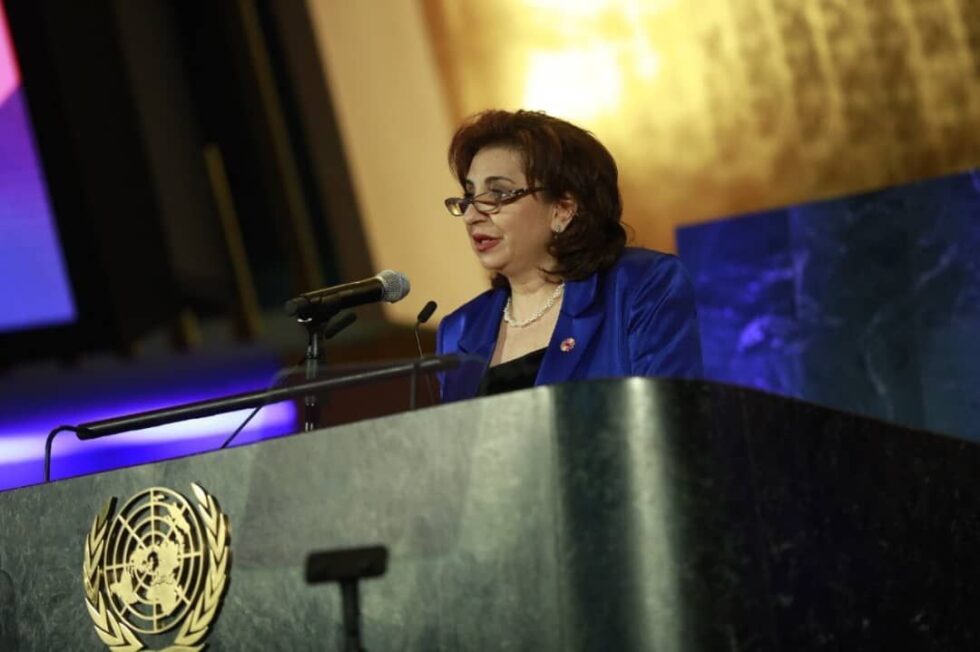
The United Nations recently marked the 50th International Women’s Day with a powerful call for gender equality.

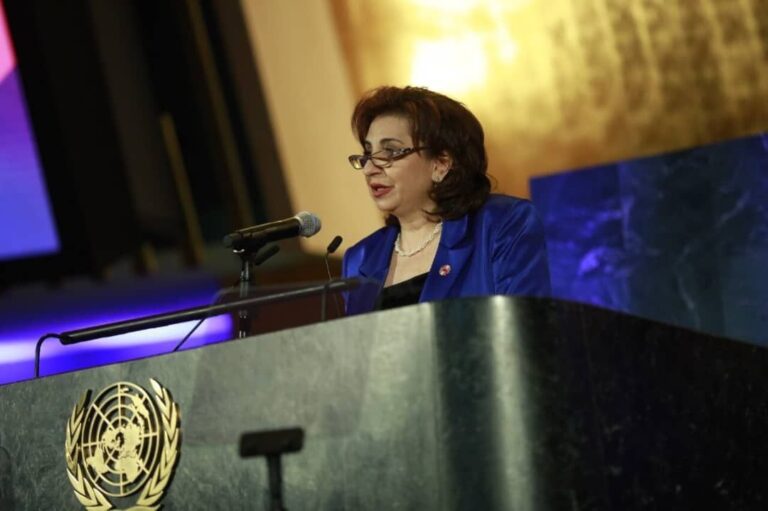
At the heart of this celebration was a speech by UN Women Executive Director Sima Bahous, delivered at the UN General Assembly Hall on March 7, 2025.

Bahous emphasized that the urgency of gender equality has never been greater, nor have the challenges been more apparent.

She acknowledged the growing obstacles faced by women and girls but reaffirmed that the movement for gender equality remains unshakable.


Her speech aligned with the UN Secretary-General’s Gender Equality Acceleration Plan, which calls for a united front to champion women’s rights and dismantle systemic inequalities.

Bahous highlighted the importance of protecting women human rights defenders, who often face threats for their activism.

She stressed that achieving equality for all women and girls is not just a slogan but a commitment that the world must honor.

The theme of this year’s International Women’s Day was clear: “For ALL women and girls. Rights. Equality. Empowerment.”

Bahous reminded the audience that equality with exceptions is not true equality.

She acknowledged that history has repeatedly seen pushback against gender equality, but insisted that this resistance must not deter the movement.

She stated that the movement for women’s rights is growing and encompasses individuals across the world, whether physically present or engaging remotely.

Bahous celebrated the power of International Women’s Day as a moment of unity for those who believe in the cause of gender equality.

She also took time to reflect on key anniversaries that reinforce the global commitment to women’s rights.

This year marks the 30th anniversary of the Beijing Declaration and Platform for Action, a landmark agreement on gender equality.

She expressed hope that its commitments would be reaffirmed in a strong political declaration at the 69th session of the Commission on the Status of Women.

Additionally, this year is the 25th anniversary of Security Council Resolution 1325, which recognizes the vital role of women in peace and security.

Bahous linked these milestones to the final stretch of the 2030 Agenda for Sustainable Development and its gender-related goals.

She argued that true progress requires placing women at the center of decision-making processes in all areas of life.

She pointed out that in conflict zones such as Afghanistan, the Democratic Republic of the Congo, Palestine, Gaza, Haiti, Myanmar, and Sudan, women bear the heaviest burdens.

Yet, despite these hardships, she emphasized that when women are included in peace processes, the results are more inclusive and sustainable.

Bahous underscored that societies thrive when women’s voices are heard and economies prosper when women lead.

She urged leaders across all sectors—from governments to boardrooms, classrooms to households—to embrace women’s equality as a fundamental solution to global challenges.

She spoke passionately about the transformative power of women’s leadership, citing real-world examples where gender equality has led to progress.

She also acknowledged the inspiring young women and girls she has met, who continue to push for change and offer innovative solutions.

She shared that these young leaders remind her of the urgency and potential for progress.

Bahous admitted that she is not blind to the realities of violence, discrimination, and misogyny that women still face.

However, she expressed unwavering certainty that gender equality is the key to accelerating progress and transforming societies.

She challenged the world to make the right choices—choices that will be remembered in history as defining moments for gender justice.

She called on all stakeholders to stand firm in choosing rights, equality, and empowerment for all women and girls.

She concluded with a powerful declaration that the movement is unstoppable, the resolve unbreakable, and the cause undeniable.

As she wished everyone a happy International Women’s Day, she also extended her best wishes to those observing Ramadan, emphasizing peace and hope.

Her speech served as a resounding reminder that gender equality is not just a vision but an achievable reality that requires collective commitment and action.

Government to complete all projects outlined in State of the Nation Address – Minister Ching’oma

0

By Burnett Munthali

Minister of Homeland Security Ezekiel Ching’oma has assured Malawians that the government will complete all the development projects that President Lazarus Chakwera outlined in the State of the Nation Address (SONA).

He emphasized that the projects, including the construction of houses for security officers, remain a priority for the government and will be implemented as promised.

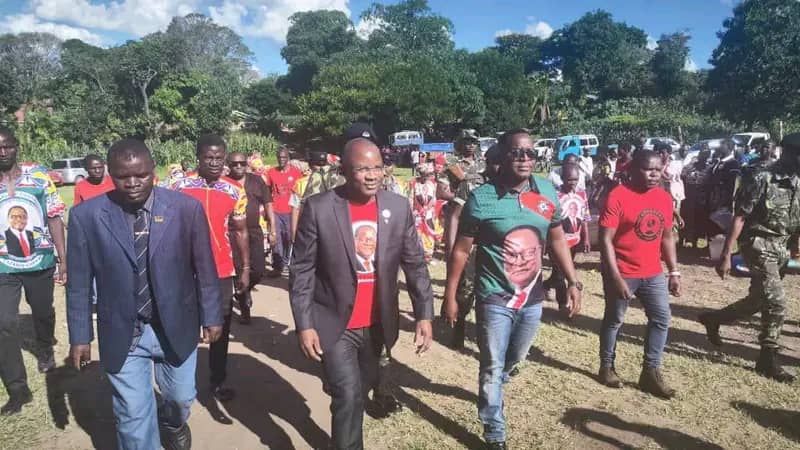
Ching’oma and Baba Malondela


Ching’oma made these remarks during a stakeholder engagement in Lilongwe Mpenu Nkhoma Constituency.

He was accompanied by Deputy Minister of Transport, Steve Baba Malondera, as part of a national exercise aimed at explaining the details of the SONA to the public.

The exercise was organized in response to criticism from various quarters, with some arguing that certain projects mentioned in the address were non-existent.

Among the projects that had been questioned was the construction of security officers’ houses in Phalombe, which was wrongly indicated as completed.

Ching’oma acknowledged the concerns raised but blamed some politicians for misrepresenting the SONA by focusing only on a few isolated projects.

He said the government remains committed to transparency and accountability in implementing its development agenda.

According to Ching’oma, the nationwide exercise by ministers is aimed at providing Malawians with an accurate picture of the government’s achievements over the past four years.

He reiterated that despite the criticisms, the government has made significant progress in infrastructure development, security, and other key sectors.

Ching’oma further urged Malawians to seek factual information from government representatives rather than relying on misleading statements from opposition politicians.

He expressed confidence that once the public understands the full scope of the development initiatives, they will appreciate the efforts being made by the Chakwera administration.

Malondera, on his part, echoed the sentiments of his colleague, saying that the government will not be distracted by political attacks but will continue to focus on fulfilling its promises.

He encouraged stakeholders and community members to actively engage with government officials to get firsthand information on ongoing projects.

The meeting in Lilongwe Mpenu Nkhoma Constituency is part of a broader effort by ministers to clarify issues surrounding the SONA and ensure that citizens are well-informed.

As the government pushes forward with its development agenda, it remains to be seen how effectively it will address concerns about project delays and transparency.

With the 2025 general elections approaching, the success of these projects will likely influence public perception of the Chakwera administration’s performance.

World Vision Project instils hope for children with disabilities in Dowa

0

By Kondwani Kandiado

For some time in Kasangadzi Area Programme -under Traditional Authority Chakhaza in Dowa, raising a child with disability has not been easy.

Some children had been suffering stigma in communities they lived in which was at times extended violation of their rights to education among other abuses.

However,  the inception of  World Vision’s, ‘Able To Thrive project’ has brought a sigh of relief for households with children with disabilities and the children  themselves.

It was common for some households to lock their children in houses for fear of suffering humiliation and stigma,” recalls Eva Mwafulirwa a Malawi council for disability affairs  community rehabilitation Assistant in Kasangadzi Area Programme .

She says through the initiative, Parent Support groups that comprise women and men that have children with disabilities are equipped with some skills on the need  to refrain from infringing on their children’s rights and also fight stigma.

“Through these groups we train these mothers and men to ensure that their children are given a chance to interact with fellow children regardless of their disabilities and that these children are encouraged to be in school,” Mwafulirwa says.

She says with the inception of Able to Thrive initiative,oftentimes, the children with disabilities are encouraged to engage in exercises as advised by the health authorities in the area.
Mwafulirwa added that women looking after children with disabilities are also encouraged to have backyard gardens to help prevent malnutrition among the children with disabilities.

“We are happy to see that households  are adhering to the knowledge we impart on them as we are able to observe some changes  on how they take care of their children with various disabilities,” she explains.

As if this is not enough, mothers with children with disabilities are encouraged to join Savings for transformation  groups so that they are able to provide basic needs for their children with disabilities.

Mwafulirwa applauds world Vision for helping create a conducive environment for children with disabilities through provision of their vital needs.

A standard 3 learner with hearing impairment at Chikhobwe primary school Chisomo Dickson said the project has assisted him access a hearing aid gadget.

“This has helped improve my hearing capacity in class and has also enhanced my hearing whenever I am interacting with my peers. Am optimistic that my dream of becoming a medical doctor will be achieved,” he says.

Peter Singaniza, chairperson of Psychological First Aid in Kasangadzi Area Programme recalls that in the past, some parents with children with disabilities  looked at having a child with disability as a curse.

“We are glad that through a series of trainings we give them in collaboration with World Vision, there has been mindset shift for those households as they are able to look at these children as children with potential to do well in life,” he says.

The organisation’s  project manager Kenan Nyirenda says  ‘Able to Thrive Project’ is  significant as it directly addresses the barriers that children and persons with disabilities face in accessing education, healthcare, and social inclusion.

“By providing assistive devices, advocating for inclusive policies, and improving accessibility in schools and communities, the project enhances the quality of life and independence of children with disabilities.

“It also promotes awareness, reducing stigma and discrimination, which are major obstacles to inclusion,” he says.

Nyirenda says the  nutrition interventions specifically for children with disabilities  are crucial for improving the health, education, and social participation of children with disabilities.

“By addressing their unique dietary needs, these interventions contribute to their overall development, inclusion, and long-term well-being.” said Nyirenda.

The project is funded by World Vision USA, and other partners, that support disability rights and education.

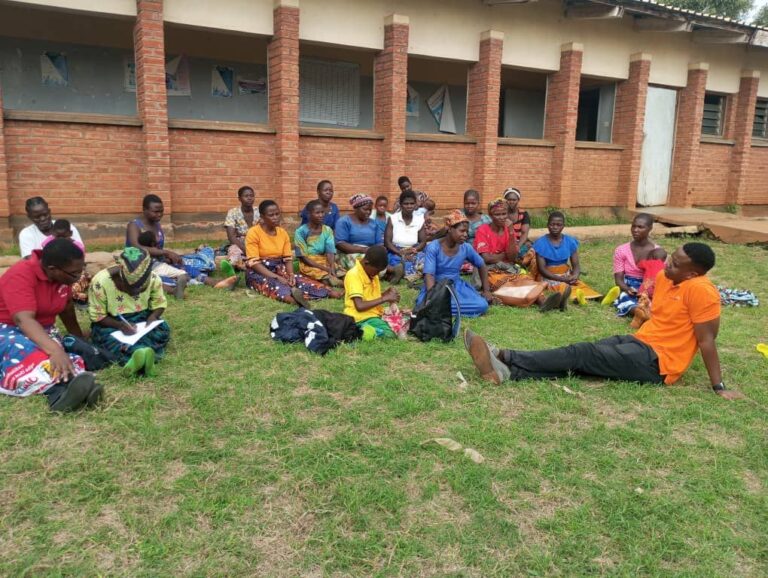
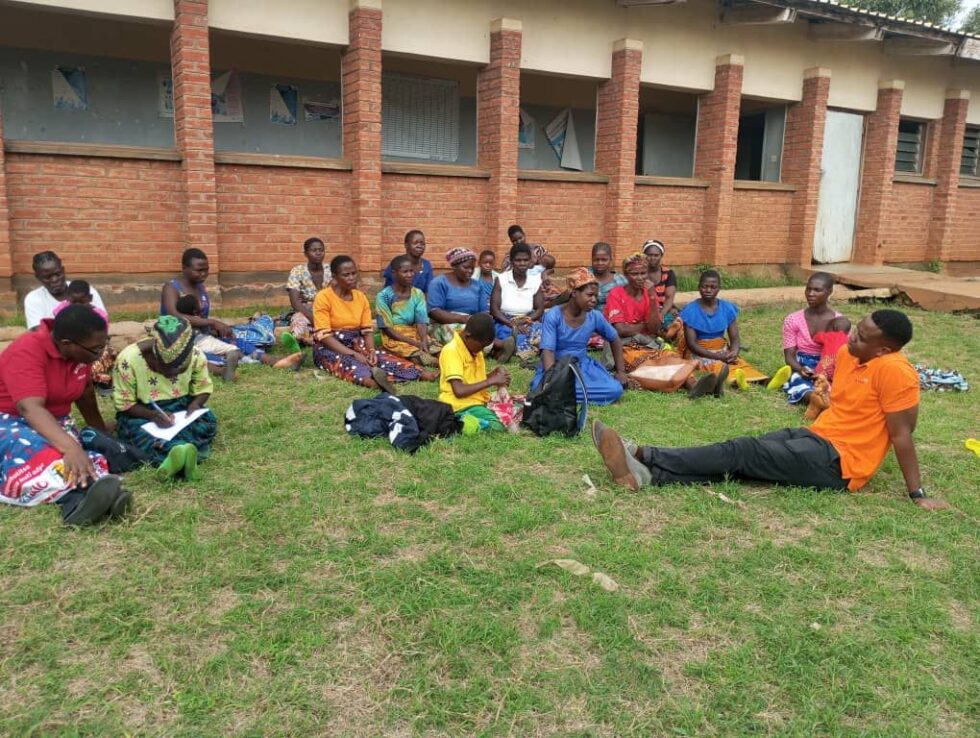
Pic: world Vision officials interacting with children with some disabilities in Kasangadzi AP.

END