
Thursday, December 25, 2025
No menu items!
spot_img
Home Blog Page 518

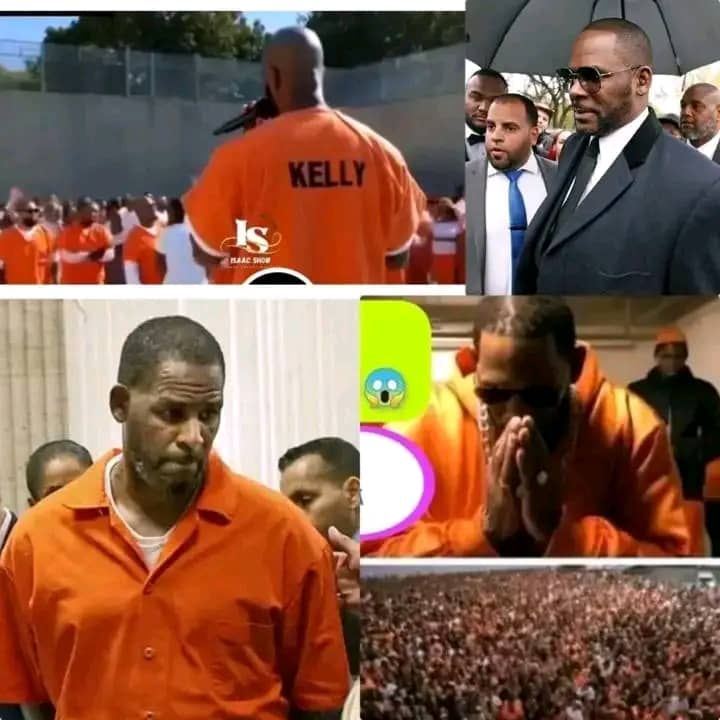
R . Kelly’s 2025 emotional and gospel album: A cry for freedom and redemption

By Burnett Munthali

R. Kelly, once heralded as the King of R&B, has been the subject of countless headlines over the years, from his rise to fame to his downfall amid criminal charges.

His 2025 album promises to be a deeply personal and introspective project, one that touches on themes of emotional struggle, redemption, and the yearning for freedom.

With the release of this album, Kelly steps into a new chapter of his musical career, one that seeks not only to reassert his musical talent but also to address the emotional and spiritual turmoil that has followed him.
It is an album that seems to carry the weight of years of controversy, legal battles, and personal reflection.

The title itself is telling: “A Cry for Freedom and Redemption.”

These two powerful words encapsulate the essence of what the album is about—freedom from the chains of past mistakes and the hope for a redemption that can only be found through deep spiritual reckoning.

Kelly, throughout his career, has been known for pouring his emotions into his music, and this album appears to be no different.

What stands out about this project is its focus on gospel music—a genre that has the power to heal, uplift, and inspire.

Gospel music, often rooted in the themes of salvation and forgiveness, aligns perfectly with Kelly’s personal journey.

The album is expected to blend his signature R&B style with soulful gospel elements, creating a sound that is both familiar and refreshingly new.

At its core, the album seems to be an exploration of the internal conflict Kelly has faced over the years.

His public persona, marked by his musical genius, has been contrasted with his private struggles, including the legal troubles that have overshadowed much of his life.

This album seems to offer a window into the emotions he has grappled with as he navigates this tumultuous period.

R. Kelly’s lyrics in this album are expected to be raw and honest, delving into his longing for personal freedom.

It is a cry for liberation from the mistakes of his past and a desire for the opportunity to rebuild his life.

The freedom he seeks is not just from the confines of the legal system but from the emotional weight of guilt and shame that he has carried for so long.

Equally significant is the theme of redemption.

Redemption in the gospel context is not just about forgiveness; it is about transformation and renewal.

This concept seems to resonate deeply with Kelly as he strives to reclaim his identity, both as an artist and as a man.

The album promises to explore the idea that it is never too late to seek change, to ask for forgiveness, and to make amends for past wrongs.

Throughout the project, there is an undeniable sense of hope that permeates the music.

While the album may touch on the darker aspects of Kelly’s life, it is also a testament to the possibility of change.

The emotional depth of the album suggests that Kelly is not simply reflecting on his past but is actively seeking a way to move forward, to heal, and to find peace within himself.

This emotional and gospel-centered album represents more than just a new release; it signifies R. Kelly’s attempt to reclaim his narrative and use his music as a form of self-therapy.

The therapeutic potential of music, particularly gospel, has been well-documented, and Kelly’s decision to venture into this genre could be seen as a step toward emotional healing.

Listeners can expect to hear powerful vocals, stirring melodies, and lyrics that speak to the universal human experience of seeking redemption.

For Kelly, this album may very well be his attempt to reconcile with himself and with the world.

It offers a glimpse into the man behind the controversies, showing a side of him that is vulnerable, seeking grace, and yearning for a second chance.

Ultimately, R. Kelly’s 2025 emotional and gospel album is not just a musical project—it is a cry for freedom and redemption.

It is a heartfelt plea for a fresh start, a new beginning, and a hope that through his music, he can begin to heal not just himself, but also those who have supported him throughout his career.

Whether or not the world is ready to forgive him, Kelly is using his platform to make one last plea for redemption through the power of his music.


Catholic church set to release pastoral letter criticizing MCP-led government

0

By Twink Jones Gadama

The Malawi Catholic Church is set to release a pastoral letter tomorrow, titled “Who Will Roll the Stone for Us,” as part of the Lent season tradition.

The Malawi Conference of Catholic Bishops has instructed all Catholic churches to read the pastoral letter to their congregations.

The pastoral letter is expected to have a significant impact on Malawi’s political landscape ahead of the 2025 general elections.


The bishops are calling on God to choose a leader who will serve the country with dedication and integrity.

This is not the first time the Catholic bishops have criticized the MCP-led government.

Previously, they have spoken out against the government’s unfulfilled promises, which have contributed to Malawi’s economic challenges.

The Catholic Church has a history of speaking out against social and political injustices in Malawi.

In 1992, a pastoral letter written by Catholic bishops helped bring an end to the one-party system under Dr. Hastings Kamuzu Banda and ushered in a new era of multiparty democracy.

The upcoming pastoral letter is expected to address various issues affecting Malawians, including economic challenges, corruption, and political violence.

The bishops’ call for a leader with dedication and integrity is seen as a message to the government to prioritize the needs of its citizens.

The Malawi Catholic Church’s decision to release the pastoral letter comes at a critical time in the country’s history, with general elections scheduled for later this year.

The letter is expected to resonate with many Malawians who are seeking change and a better future for their country.

Ex-convict, 2 others, arrested over burglary, theft of K18.6m items in Lilongwe

0

By Shaffie A Mtambo

Police at Chitipi in Lilongwe have arrested three men over suspicion that they have been behind a series of burglary and theft of K18.6 million worth of household property and medical drugs.

Lilongwe police officer inspector Hestings Chigalu,says law enforcemencers have so far recovered six plasma screens, a motorcycle, laptop, three cellphones, assorted medical drugs and kitchen utensils, among others.

The suspects have been identified as Yosafati Siyasiya (ex-convict), 40years,Alex Chirwa, aged 25, and Chisomo Petala, 18years old.


They have been terrorizing Chitipi, Njewa, Kasiya and M’bwatalika areas.
And at Mpingu Trading Centre, they broke into Sunrise Mission Clinic, and stole assorted medical drugs valued at K3 million.

The suspects sold the drugs at GMC Medicine Store at Chinsapo 2, whose owner has also been arrested, and some drugs have been recovered from his store.

Yosafati Siyasiya, who was released from Maula Prison on December 16 last year after serving his sentence for committing similar offences, went on burglary and theft spree just a day after his release.

With his accomplices, on December 17, 2024 Siyasiya went to a certain accountant’s house where they stole 2 Thinkpad laptops, 2 tablet phones, 3 expand bags full of clothes, among others, all valued at K13 million.

At least six households have been attacked since December, before their arrests on Thursday, March 6, 2025

Efforts are underway to recover more stolen items.

Yosafati Siyasiya comes from Kafansiyanji Village, Traditional Authority (T/A) Dzoole, Dowa, Alex Chirwa hails from Kam’machira Village, T/A Malili, while Chisomo Petala comes from Mpingo Village, T/A M’bwatalika, both in Lilongwe District.

Kawale Blames Useless Government Bureaucracy and Sabotage at Agriculture Ministry

0

By Greyson Masewe

The Ministry of Agriculture led by Sam Kawale MP has recently come under fire from the public, political experts and agriculture specialists for failing to adequately deliver on the infamous AIP and Mega farms. Hunger has continued to loom deep in the rural and peri-urban settlements over the past 18 months while Government continues to spend billions on agriculture.

Political commentators have sided with Kawale highlighting the key challenges that require in-depth Public Sector reforms and overhauls. Some of the challenges posed are the slow Government machinery while others have cited sabotage by affiliates of the fallen DPP regime.

Investigation by our reporter indicates that Ministry of Agriculture seems to perform below expectations while it is one of the most highly funded and considered flagship carrier for Chakwera’s adminstration. Many people have complained why projects and programs under Ministry of Agriculture and other ministries are always delaying. Here is what Minister for Agriculture Sam Kawale MP said:

“I would like to thank everyone who has expressed their frustrations on this. Your feedback is important, and I appreciate the opportunity to clarify how your ministry of Agriculture operates within the broader government framework in the context of fertilizer and maize. Kawale sought to clarify the stages and steps so that Malawians understand how much his Ministry struggles with the bureaucracy in a bid to deliver the best for Malawians.”

Sam Kawale

Kawale further outlines the steps towards finding of his Ministry and clarifies what transpires under planning state.

“The planning stage is done before the budget is passed. Submission and passing of the budget means planning stages have been considered.”

“On procurement of maize and fertilizer which starts immediately after the budget is passed, the process is done through tenders as well as walk in deliveries depending on the product.”

Kawale has also bemoaned dependency on untimely funding as a major setback for the Ministry. “The Ministry of Agriculture, like all government institutions, relies on the Treasury (Ministry of Finance) to release funds for programs such as the Affordable Inputs Programme (AIP) and ADMARC maize procurement.” Here’s how the process works: he said.

“On Budget is approval, Parliament allocates funds to ministries during the national budget process. However, this must lead to Funding. Under Funding this is when Treasury says they’ve “funded” a program, it means the money is earmarked for that purpose, not actually giving the Ministry money, but instyructing Accountant General to fund the Ministry once money is available.”

The next step is Disbursement: This refers to the actual transfer of funds fryom Accountant General to our ministry’s accounts. Delays in disbursement directly affect our ability to procure fertilizers, open ADMARC depots, or purchase maize on schedule. 

Kawale also cautioned that it is important to note that, “When passing the Budget, it doesn’t mean that money allocated to Ministries is readily available. No. Treasury collects money on a daily basis from several sources. Once the money is collected, they fund and disburse to Ministries.”

Timing is another challenge faced by the Ministry of Agriculture, Kawale bemoaned.

“If funds are released early, we can pay for fertilizers immediately and procure maize during harvest time when prices are lower, and farmers have produce to sell. 

If disbursements are delayed, we are forced to implement programs late, which disrupts markets and leaves farmers vulnerable to vendors, in case of maize, and late delivery of fertilizer

If funds are not released at all, critical programs stall entirely. 

On DMARC and Minimum Pricing Kawale said his Ministry shares the people’s frustration about ADMARC’s delayed maize purchases. “Our goal is to open deports immediately after harvest to protect farmers’ incomes. We managed to do that last year. However, without timely disbursements, ADMARC cannot mobilize resources in time.”

On pricing, minimum farmgate prices Kawale suggested that the aim is to shield farmers from exploitation, but we’re mindful of balancing affordability for consumers. 

Fertilizer Procurement is another critical component that has suffered useless bureaucracy leading to poor AIP.  Kawale argues that the same funding challenges affect the AIP. Late disbursements delay fertilizer deliveries, impacting planting seasons. We’re advocating for earlier releases to align procurement with farmers’ needs. The disbursements are both Malawi Kwacha and USD since imports are paid in Forex.

The Minister however said his Ministry is committed to improving these processes and will continue engaging Treasury to prioritize timely funding.

“Please know that our team works tirelessly within the constraints we face, and we’re open to further suggestions to strengthen Malawi’s agricultural systems.

So when you notice that a certain Ministry is not implementing a certain program on time, just know that the above reasons are some of the factors.”

For many Agriculture experts and those wondering why Malawi still faces hunger when generally the rains are good in most parts of the country, and there are plenty rivers and lakes bursting with fresh water year round, they argue the major problem is useless Government bureaucracy and sabotage, hindering growth and development.

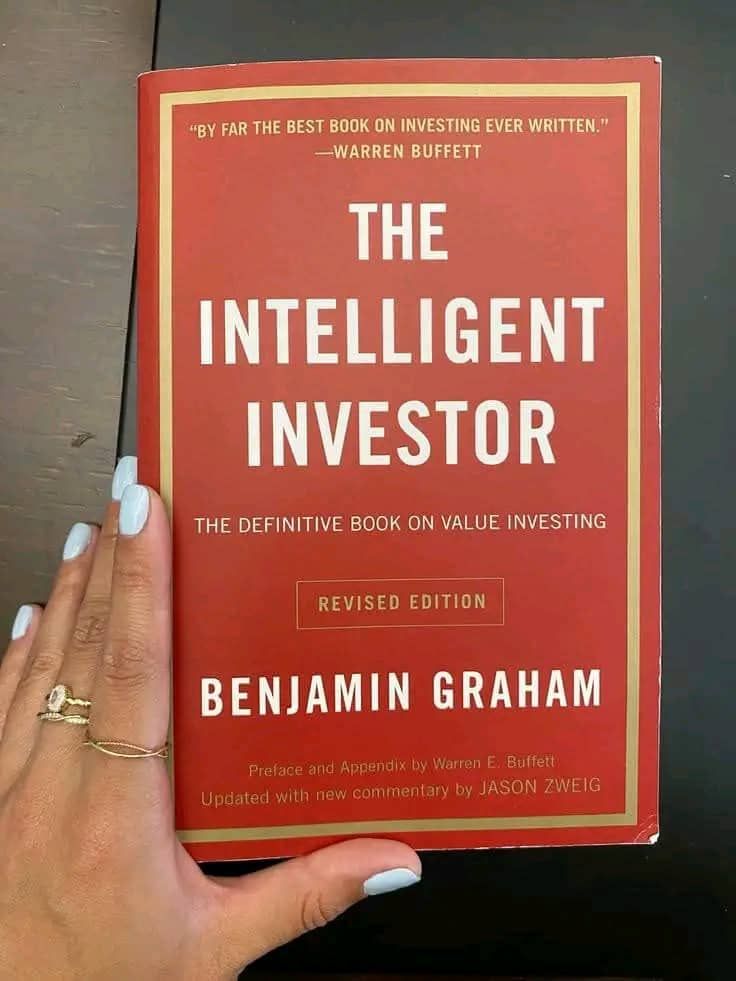
Book analysis: The intelligent investor by Benjamin Graham

0

By Burnett Munthali

Benjamin Graham’s The Intelligent Investor is a masterclass in value investing and rational financial decision-making.

The book’s timeless principles—such as focusing on intrinsic value, maintaining emotional discipline, and seeking a margin of safety—serve as a guide for navigating the often unpredictable world of investing.

Graham’s wisdom reminds us that success in investing doesn’t require brilliance or market timing; instead, it requires patience, consistency, and a commitment to sound principles.

Whether you’re a novice or an experienced investor, the lessons from this book provide a framework for building wealth over the long term while minimizing unnecessary risk.

Key lessons from the intelligent investor

1) The difference between investing and speculating

Benjamin Graham emphasizes the critical distinction between investing and speculating.

Investing involves thorough analysis, the safety of principal, and aiming for adequate returns over the long term.

Speculation, on the other hand, is akin to gambling—focused on short-term price movements without considering underlying value.

2) The importance of a “Margin of safety”

One of Graham’s most famous principles is the concept of the margin of safety.

This involves buying investments (such as stocks) at prices significantly below their intrinsic value.

A margin of safety provides a cushion against potential errors or unforeseen market downturns.

This principle helps protect investors from unnecessary risk.

3) The stock market is not always rational

Graham introduces the metaphor of Mr. Market, a fictional character who represents the stock market’s erratic behavior.

Mr. Market offers prices daily, but these prices are often driven by emotions like fear or greed rather than rational analysis.

An intelligent investor recognizes these fluctuations as opportunities rather than reasons to panic.

4) Investing requires discipline, not emotion

Successful investing, according to Graham, requires a cool, rational mindset.

Reacting emotionally to market swings—whether through fear in a downturn or euphoria in a bull market—leads to poor decision-making.

Discipline and patience are key to long-term success.

5) Know the difference between price and value

Graham underscores the importance of understanding the difference between a stock’s price and its intrinsic value.

The price of a stock reflects what the market is willing to pay at a given moment.

Intrinsic value, however, is what the company is truly worth based on its fundamentals.

Intelligent investors focus on value rather than being swayed by short-term price movements.

6) The defensive vs. Enterprising investor

Graham outlines two types of investors.

The Defensive Investor prefers a low-risk, hands-off approach, focusing on diversification and stable investments like bonds or blue-chip stocks.

The Enterprising Investor is more active and willing to put in extra effort to research undervalued stocks or take calculated risks.

Both approaches can be successful, but investors must choose based on their temperament, time, and resources.

7) Diversification reduces risk

Graham advocates for diversification as a way to protect against potential losses.

By spreading investments across different industries, asset classes, and geographies, an investor reduces the impact of any single company or market downturn on their overall portfolio.

Diversification acts as a shield against unexpected market fluctuations.

8) Resist the temptation to time the market

Timing the market—trying to predict when prices will go up or down—is a losing strategy, according to Graham.

Instead, intelligent investors should focus on long-term trends and resist impulsive trading.

A disciplined investment approach, rather than reacting to short-term volatility, is key to sustainable growth.

9) Earnings and dividends matter

For Graham, the foundation of any stock’s value lies in its earnings and dividends.

He emphasizes the importance of analyzing a company’s financial health, growth potential, and dividend history.

Strong earnings and consistent dividends indicate a company’s ability to generate long-term value for investors.

10) Be wary of market predictions and gurus

Graham warns against relying on market predictions, media hype, or so-called “experts.”

The future of the market is inherently uncertain, and no one can consistently predict its movements.

Instead, investors should base decisions on sound analysis and the principles of value investing.

The Intelligent Investor remains one of the most influential books on investing ever written.

Graham’s principles have stood the test of time, providing a roadmap for financial success regardless of market conditions.

Investors who apply his teachings—focusing on value, maintaining discipline, and avoiding speculation—are better positioned for long-term wealth creation.

Whether you are new to investing or a seasoned professional, this book offers invaluable wisdom that can shape your financial future.