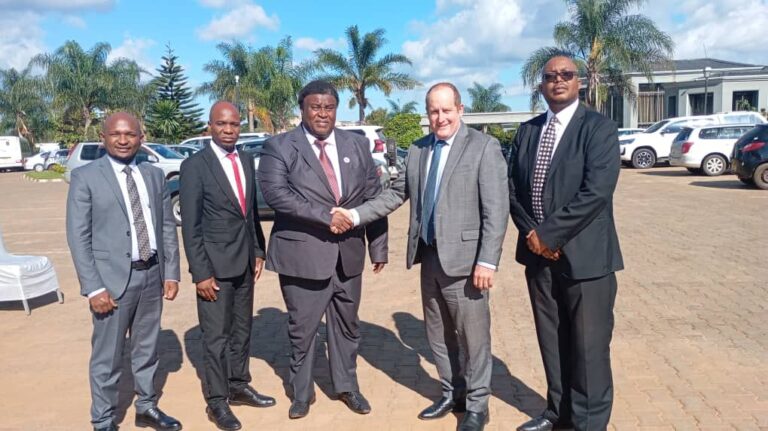
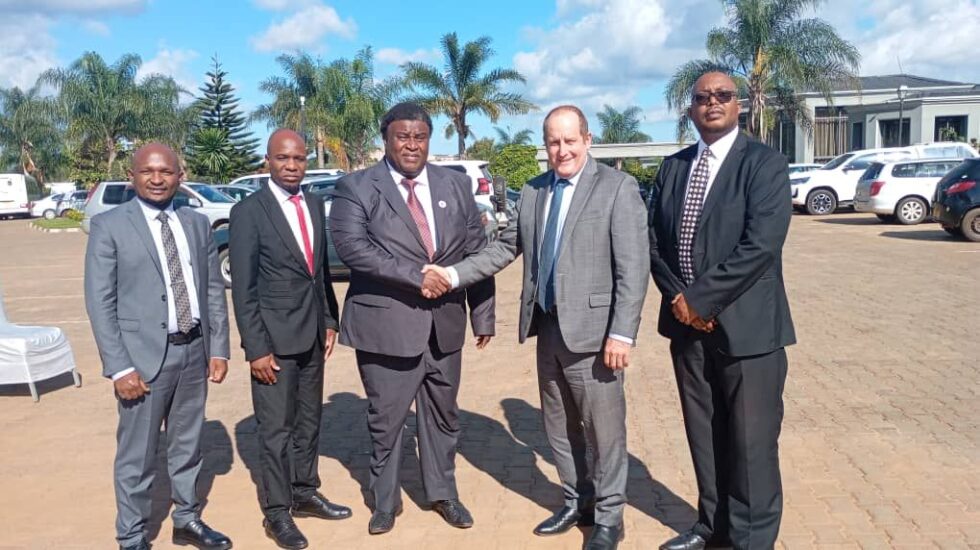
Chirwa Mineral Limited, an Australian expolration company, Founder and Managing Director, Mr Cadell Buss, today met Minister of Mining, Dr Kenneth Zikhale Reeves Ng’oma MP, at Grand Palace in Mzuzu, where he pronounced his intention of rolling out heavy metal sands (HMS) and Rare Earth Elements (REEs) by end of August, 2025.
The company identified Lake Chirwa basin as their mining zone. Chirwa minerals has MotaEngil in it with 30% shares. They have identified 2.4 million tones (Mt) of Total Heavy Minerals (THM) at 1.0% cut-off.
Chirwa was listed on Australian stock Exchange in 2023, have done so far airborne high-resolution magnetic and radiometric survey over 708 square kilometres to enhance drill planning on rare earth and position itself as a key player in the critical minerals sector in Malawi
Malawians have started benefiting, through training of local Malawians, jobs opportunities & infrastructure development, shortly the firm will bring about economic prosperity and forex in the country.
Standard Bank Malawi has reaffirmed its commitment to women’s empowerment by sponsoring the upcoming Wealth Women Summit with MWK 10 million.
The summit, organized by Wealth Malawi, is a platform dedicated to fostering networking, learning and growth opportunities for women.
Now in its fifth edition, this year’s event will feature diverse segments, including Fashion for Knowledge, Power Pairing Sessions, and keynote speeches from influential leaders.
Tamanda Ng’ombe handing over sponsorship money to Harry Chima
In a symbolic gesture, Standard Bank Head of Marketing, Tamanda Ng’ombe, officially handed over the MWK 10 million sponsorship to Harry Chima, Managing Executive at Wealth Malawi.
Speaking at the event, Ng’ombe emphasized the bank’s dedication to championing women’s inclusion and creating a better future for the girl child.
“We are thrilled to invest in the Wealth Women Summit, an event that reflects our core belief in the potential of women and girls in the overall socio-economic development of Malawi.
This Women’s Month is an opportunity for us to participate in a global movement that looks to advance women’s inclusion, create opportunities for girls, and foster an environment where success is shared,” said Ng’ombe.
March is widely recognized as Women’s Month, with International Women’s Day falling on March 8.
The 2025 theme, Accelerate Action, urges women to uplift one another and use their influence to drive gender inclusion.
Standard Bank has aligned with this global movement by championing the concept of “Women Helping Women,” which it has adopted as its theme for the month.
Wealth Malawi’s Managing Executive, Chima, expressed gratitude for Standard Bank’s unwavering support, noting its long-standing role as a partner and advocate for women-focused initiatives.
He highlighted a key segment of this year’s summit that will address the barriers young girls face in accessing education, aiming to spark meaningful dialogue and collaboration.
“Standard Bank has always been a strong supporter of our mission to empower women. This year’s summit will not only celebrate women’s achievements but also tackle critical issues affecting young girls’ access to education. We are grateful for Standard Bank’s continued partnership in driving impactful change,” said Chima.
The Wealth Women Summit will bring together influential women from various sectors to engage in transformative discussions, build valuable connections, and drive actionable change. With Standard Bank’s support, the summit aims to amplify women’s voices and accelerate the push for gender equality and economic empowerment.
Standard Bank Malawi is a leading financial institution committed to delivering innovative banking solutions that empower individuals, businesses, and communities.
Through initiatives like the Wealth Women Summit, Standard Bank continues to demonstrate its dedication to advancing women’s economic empowerment and contributing to Malawi’s overall economic growth.
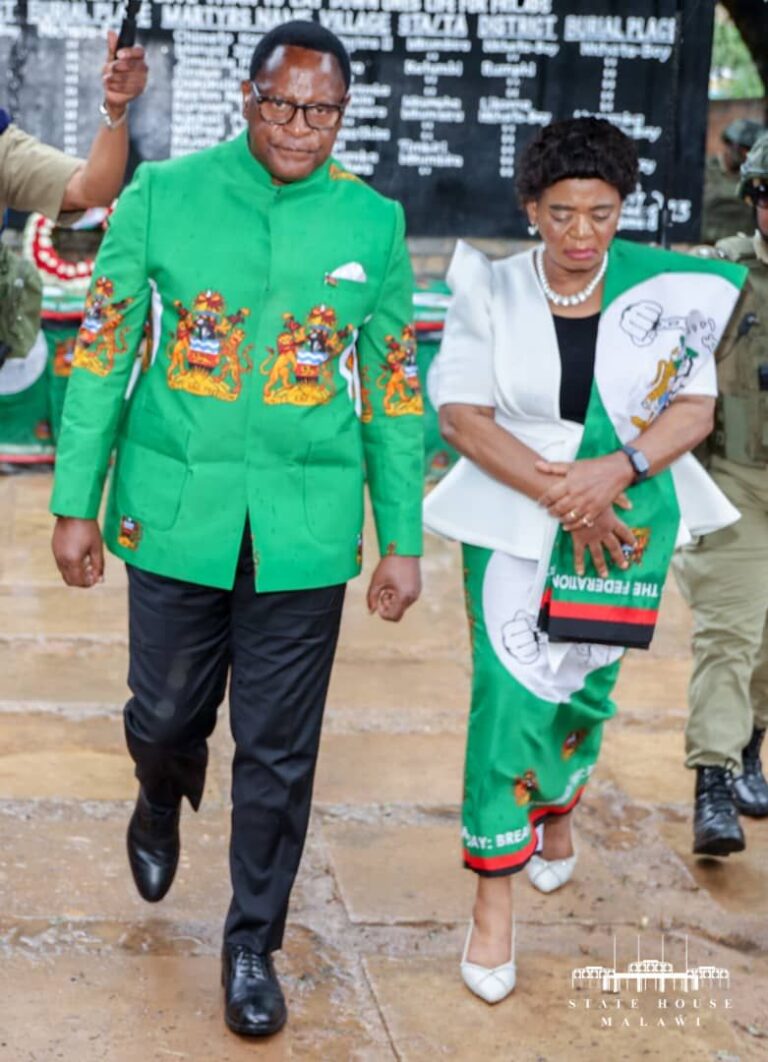
Political activist Bon Kalindo has claimed that President Dr. Lazarus Chakwera is a Martyr himself as he is seen taking his SONA to the youth to clarify on the projects he presented in Parliament as completed while not existing on the ground.
Kalindo has questioned President Chakwera that why he is travelling with his SONA to the youth after withdrawing its content to Parliamentarians in the August House observing that all this is happening to drain government resources.
He has claimed that the youth who are invited to his SONA are going away with K200,000 each wondering for what purpose, covering for transport reimbursements within the city or bribing them to support the same withdrawn SONA.
Speaking through an audio clip, Kalindo said President Chakwera took his time to respond to the questions posed by Dr. Patience Namadingo at Sanjika Palace in Blantyre arguing that Namadingo posed his questions in Blantyre but President Chakwera responded to him in Mzuzu and this is clearly speaking for itself that President Chakwera is Martyr.
Kalindo said Dr. Namadingo asked President Chakwera to prove himself if he was indeed the President Malawians were expecting or the one to be but President Chakwera proved himself by pointing at projects which were initiated by the DPP under Professor Arthur Peter Mutharika.
He said Malawians are in pain and suffering with the leadership of Martyr moving with SONA while the country is breeding and yet forex is going up after government assuring the citizens that it will be available on the market.
The activist has accused the MCP government for dressing its gangsters with police and MDF uniforms beating up people that were holding peaceful demonstrations in Lilongwe on Tuesday expressing fears that Malawians will see red on the 16th September, 2025 General Elections.
He said it is not surprising that God has turned away his face from the MCP claiming that most of its primary elections are ending with confusions, and misunderstandings citing the one which was conducted at the BICC in Lilongwe.
Kalindo said credible and transparent primary elections would have been done after Parliament was dissolved for all to compete but the MCP paid deaf ears and the results are coming and the party should bless itself for more independent candidates which will divide its votes.
“Malawians wants prices of essential commodities to lower as they were yesterday, they are demanding maize prices to be affordable to all including the poor to afford,” said Kalindo.
He has finally asked President Chakwera to stop taking his SONA to the youth describing those activities as time wasting and draining public resources which would have gone a long way towards implementing equally important projects across the country.
In a significant move, the Treasury has announced a reduction in the allocation to the presidency vote, which covers the salaries for both the State President and the Vice President, The Daily Times has learned.
This decision marks a shift in the allocation of public funds, particularly affecting the financial provisions set aside for the country’s top two political leaders.
The presidency vote is traditionally used to fund the salaries, allowances, and operational costs related to the positions of the President and Vice President.
These positions, which represent the highest offices in the country, are typically seen as receiving substantial financial support, given their national significance.
However, the recent cut in this allocation comes at a time when the government is grappling with a range of economic challenges.
The country’s financial constraints have prompted the government to make adjustments in various sectors, including the presidency, as part of broader fiscal management and budgetary constraints.
This move is expected to have various implications, both politically and financially.
On one hand, it signals a shift in government priorities, as officials attempt to rein in public spending amidst a difficult economic climate.
On the other hand, it raises questions about the impact of such cuts on the functioning of the presidency and the ability of the State President and Vice President to carry out their duties effectively.
Details regarding the exact amount of the reduction have not been disclosed, but the decision has already sparked debates among politicians and the general public.
Some view the cut as a necessary step in ensuring that public resources are utilized more efficiently, especially given the high levels of debt and economic hardship facing many citizens.
Others, however, have raised concerns about the potential consequences of reducing financial support for the highest offices in the land.
There is a fear that such cuts could undermine the ability of the President and Vice President to perform their roles effectively, especially in terms of administrative duties, security, and official functions.
The reduction in the presidency vote is also likely to have political ramifications, as it could be seen as a statement on the government’s commitment to reducing expenditure and addressing concerns about the use of public funds.
This could either strengthen the administration’s position on fiscal responsibility or lead to criticism from political opponents who may interpret the move as a politically motivated decision.
In the context of the broader budget, this cut represents a small but symbolic step toward addressing the fiscal imbalance that has plagued Malawi in recent years.
While it is unlikely to have a major immediate impact on the overall functioning of the government, it may serve as a signal of the administration’s intention to tighten its financial belts and reassess the allocation of public funds.
It is also worth noting that the decision comes at a time when many Malawians are calling for greater transparency and accountability in the allocation and use of public resources.
With the country facing mounting economic challenges, the reduction in the presidency vote may be viewed as a step toward addressing concerns about excessive spending at the highest levels of government.
As the government continues to grapple with economic difficulties, it will be important to monitor the longer-term effects of this decision on both the functioning of the presidency and public perception of the government’s commitment to fiscal responsibility.
It remains to be seen whether this move will lead to further cuts in other areas of government expenditure or whether it will be viewed as a one-off adjustment to address immediate budgetary constraints.
In conclusion, the Treasury’s decision to slash the allocation to the presidency vote represents a significant step in Malawi’s ongoing efforts to manage its finances more effectively.
While the reduction in funding for the State President and Vice President may be seen by some as a necessary move, it is important to consider the broader implications for the country’s governance and political landscape.
As Malawi continues to navigate its economic challenges, the government’s ability to balance fiscal responsibility with effective governance will be crucial in determining the country’s future.
Education authorities in Malawi have expressed satisfaction with the progress made in the review and development of a new curriculum, which is now at the conceptualization stage for secondary and primary teacher education.
This milestone marks a significant advancement in the country’s educational reforms, signaling a positive trajectory for the future of the sector.
Principal Secretary in the Ministry of Basic and Secondary Education, Rachel Chimbwete Phiri, provided an update on the implementation process.
According to Phiri, the process is proceeding smoothly, largely due to the excellent collaborative efforts between various stakeholders involved in the development of the new curriculum.
These efforts, she noted, have played a crucial role in ensuring the success of the initiative.
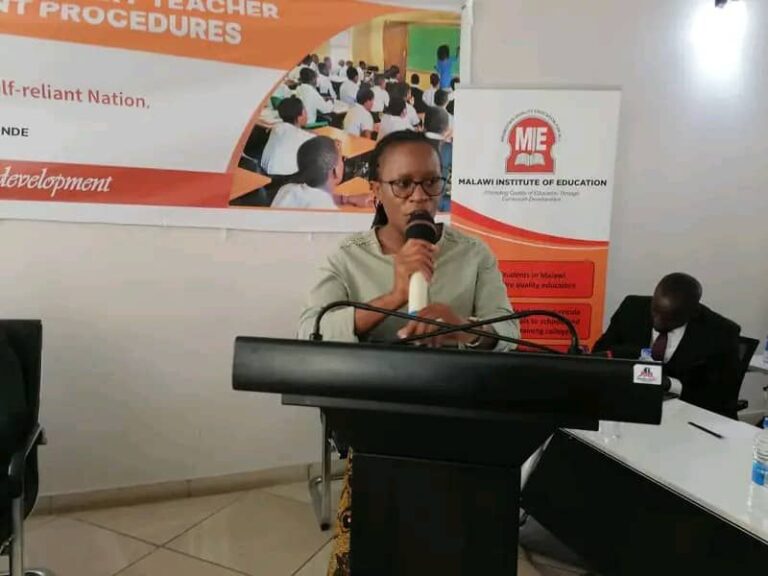
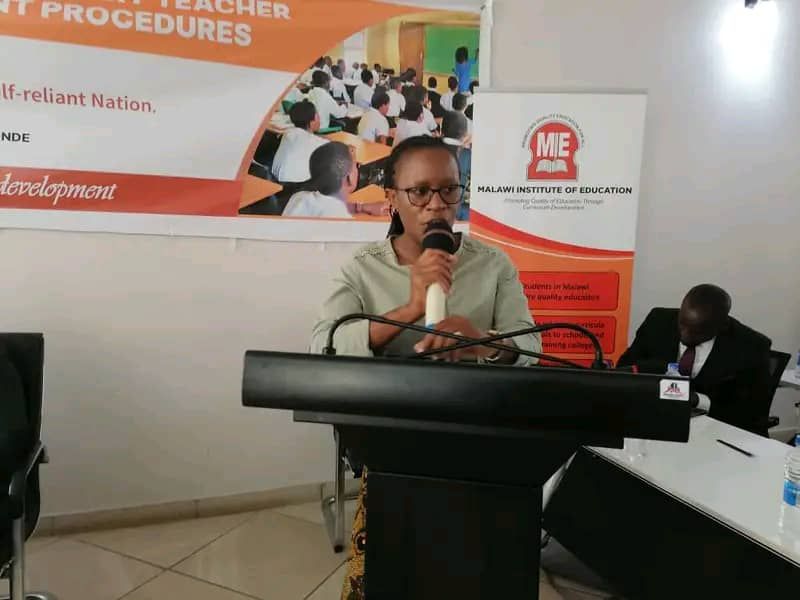
Phiri made these remarks while speaking in Liwonde, Machinga, during a five-day conceptualization workshop organized by the Malawi Institute of Education (MIE).
The workshop brought together education experts, including curriculum specialists, academics, lecturers, and teachers, who are all working together to shape the new curriculum.
The involvement of a wide range of stakeholders highlights the collaborative nature of the curriculum development process.
The workshop provided a platform for the exchange of ideas and insights from various educational professionals, which is crucial in ensuring that the final curriculum is both comprehensive and relevant to the needs of the country.
Dr. Frank Mtemang’ombe, the Executive Director of MIE, also weighed in on the significance of the ongoing curriculum reform.
According to Dr. Mtemang’ombe, the process is designed to align the new curriculum with Malawi’s long-term vision encapsulated in the country’s 2063 agenda.
This alignment ensures that the education system not only meets current needs but also prepares the future generation for the demands of a rapidly changing global environment.
The new curriculum is expected to roll out in September of this year, with pre-primary education set to be the first stage of its implementation.
This phased approach allows for a smooth transition and ensures that educators and institutions are fully prepared for the changes.
The development of the new curriculum is seen as a significant step in Malawi’s efforts to improve its education system.
With the focus on both quality and relevance, the new curriculum aims to equip students with the skills and knowledge they need to succeed in an increasingly globalized world.
As the process continues to unfold, the involvement of education experts, stakeholders, and the Ministry of Education ensures that the new curriculum will address the diverse needs of students, teachers, and the broader society.
The collaborative efforts demonstrated thus far are a promising sign that the curriculum reform will be a success.