
Tuesday, December 23, 2025
No menu items!
spot_img
Home Blog Page 539

IFPJD calls MCP government address commodity prices immediately

0


By Vincent Gunde

The Inter-Faith Forum for Peace, Justice and Dialogue (IFPJD) has called upon all relevant authorities and stakeholders precisely the MCP government to immediately address commodity prices concerns without allowing chaos from the citizenry in response to this sad and unsafe situation.

The IFPJD says commodity prices have badly and heavily risen up and become unaffordable to every Malawian, people have no alternative means of survival, people are angry because they are hungry saying their constitutional rights are in total breach.

The Forum has noted which a great concern that nobody seems accountable at all to the people that are governed on trust, there is no equality at all observing that those in authority have become more equal than the rest.


In a statement dated 20th February, 2025 signed by its Secretary General Bishop Dr. Damson Mchenga, the IFPJD has condemned the secret move and plan to introduce the Age Limit Bill in the current sitting of Parliament describing this as very dangerous, destructive and retrogressive tool against the country’s democracy.

The IFPJD says the acts of introducing Age Limit Bill are capable of causing uncalled for disagreements, violence, and disunity in the August House and indeed the whole country recommending the acts to be stopped by any people or groupings that are planning, funding or working on this mischievous scheme.

The Forum says the Malawi Electoral Commission(Mec) has a crucial role to conduct a free, fair, transparent and credible 16th September, 2025 General Elections devoid of any irregularities whatsoever and to ensuring that it is an independent Umpire.

It says in its previous statement, it presented concerns over the electoral process from different groups of people in the country, but unfortunately, the Forum is continuing receiving concerns on the way the Mec conducted voter registration processes.

The IFPJD has expressed fears that many people still complain and believe that the process was conducted to favor a single electoral player-the Ruling MCP describing this as unwelcome and bias in any democratic society advising Mec to reorganize their conduct to earn the lost trust of many Malawians and the international community.

The Forum says any election results that lack transparency, fairness and credibility is a catalyst of violence and civil instability against a democratic society calling upon the Mec to heed the public’s concern about the introduction and use of the Smartmatic Machine or the use of other electronic election aiding machines.

“The fact that in other countries the Smartmatic machine has become the cause of tensions between the Ruling Party and Opposition Parties after releasing election results, Malawians do not trust the operations of this machine, there’s need for citizens to be given adequate time and civic education to understand how the machine operates,” reads the statement in part.

The Forum has also registered its concern over the political terrain or landscape in the country that it is slowly becoming intolerable observing that Section 65 is no longer applied to Members of Parliament and all political parties are not avoiding the use of handouts.

The IFPJD has finally commended to government that all Malawians be allowed to enjoy their constitutionally guaranteed freedom of speech by commenting on issues that affect their daily lives including the recently made SONA by President Dr. Lazarus Chakwera saying all threats and witch-hunting acts and practices against those exercising their freedom in this regard or any other, is a dangerous Cancer capable of killing the country’s democracy.
Chakwera withdraws part of SONA amid criticism

0

By Twink Jones Gadama

In a surprise move, President Lazarus Chakwera has withdrawn part of his State of the Nation Address (SONA) that was being queried by critics.

The announcement comes after widespread criticism of the SONA, with many accusing the President of presenting a misleading picture of the state of the nation.

Speaking during President Question Time, Chakwera acknowledged that he is not immune to mistakes, just like everyone else.

“Madam Speaker, I have never claimed to be an angel and so are other leaders.Those who are looking for a leader who is an angel should vote for someone else this year,” he said.

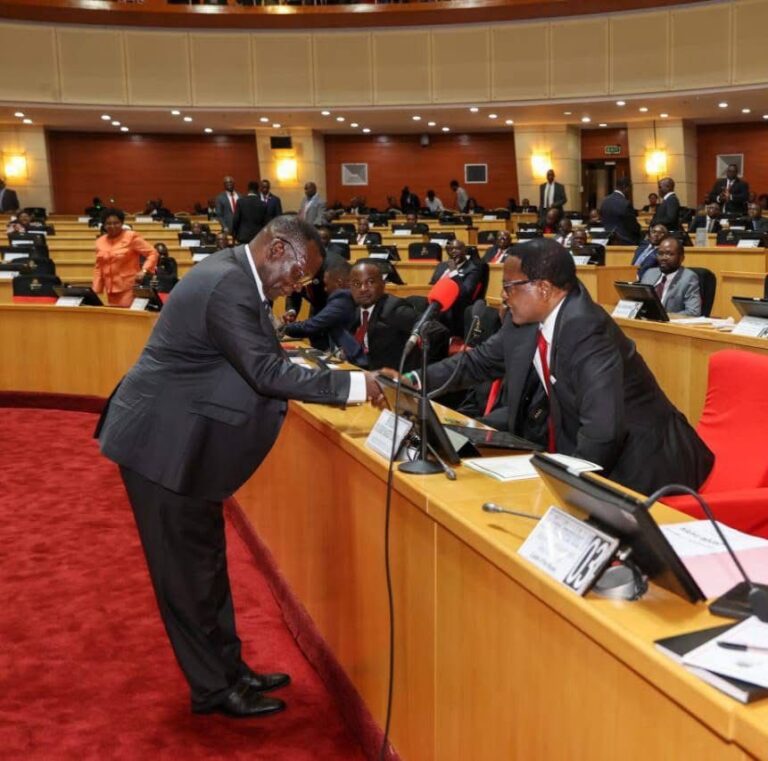
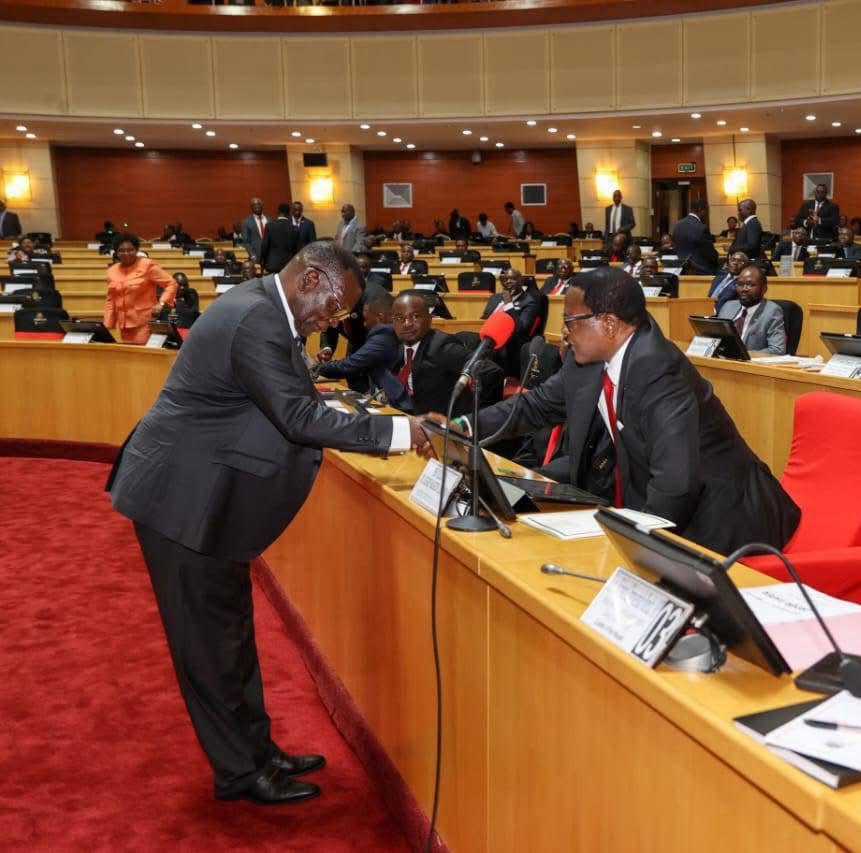
Leader of Opposition Dr George Chaponda greeting  Dr Lazarus Chakwera


However, the President also fired back at his critics, accusing them of trying to gain political mileage by accusing him of lying.

He challenged the Leader of the Opposition to withdraw parts of his speech where he accused him of lying.

The withdrawal of part of the SONA is seen as a significant climbdown by the President, who has been under pressure to defend his address.

The opposition has been vocal in its criticism of the SONA, with Leader of the Opposition George Chaponda describing it as “talk is cheap, lies have short legs”.

The controversy surrounding the SONA has highlighted the deepening divisions between the ruling party and the opposition.

The opposition has accused the President of presenting a misleading picture of the state of the nation, while the ruling party has defended the address as accurate.

The withdrawal of part of the SONA is likely to be seen as a victory for the opposition, which has been pushing for greater accountability from the President.

However, it remains to be seen whether the move will be enough to appease critics and restore trust in the President’s leadership.

As the debate over the SONA continues, one thing is clear: the President’s leadership is under intense scrutiny, and he will need to do more to convince Malawians that he is committed to transparency and accountability.

In related news, the opposition has been calling for the President to withdraw the entire SONA, citing inaccuracies and misinformation.

It remains to be seen whether the President will heed this call, or whether the withdrawal of part of the SONA will be enough to diffuse the controversy.

Mumba appointed new Minister of Trade and Industry

0


By Chisomo Phiri

President Dr.Lazarus Chakwera has today reshuffled his cabinet and appointed Vitumbiko Mumba as the new Minister of Trade and Industry.

Mumba previously served as the Minister of Labour.

Chakwera has not provided any information regarding Sosten Gwengwe, who formerly held the Minister of Trade and Industry position

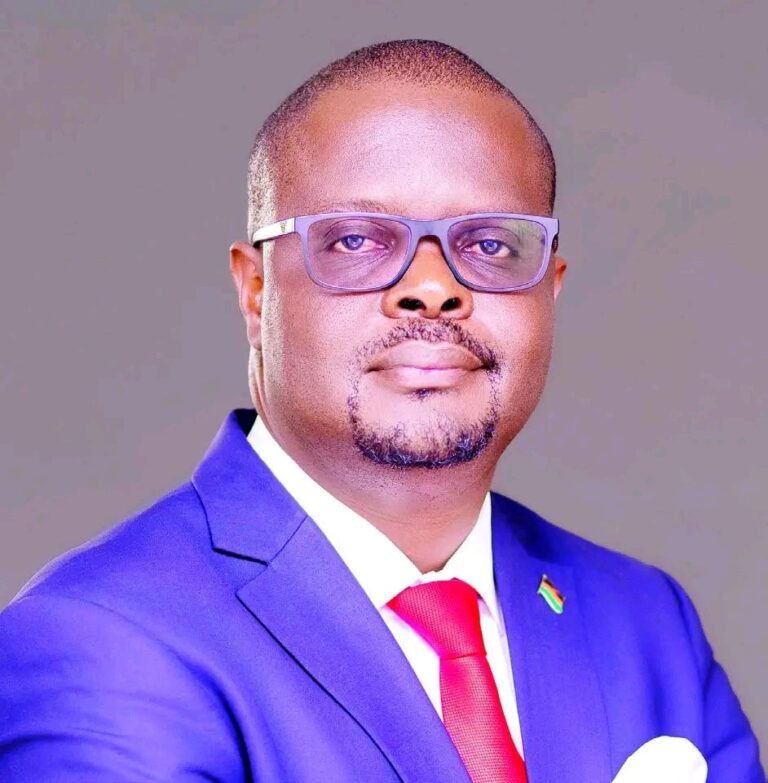
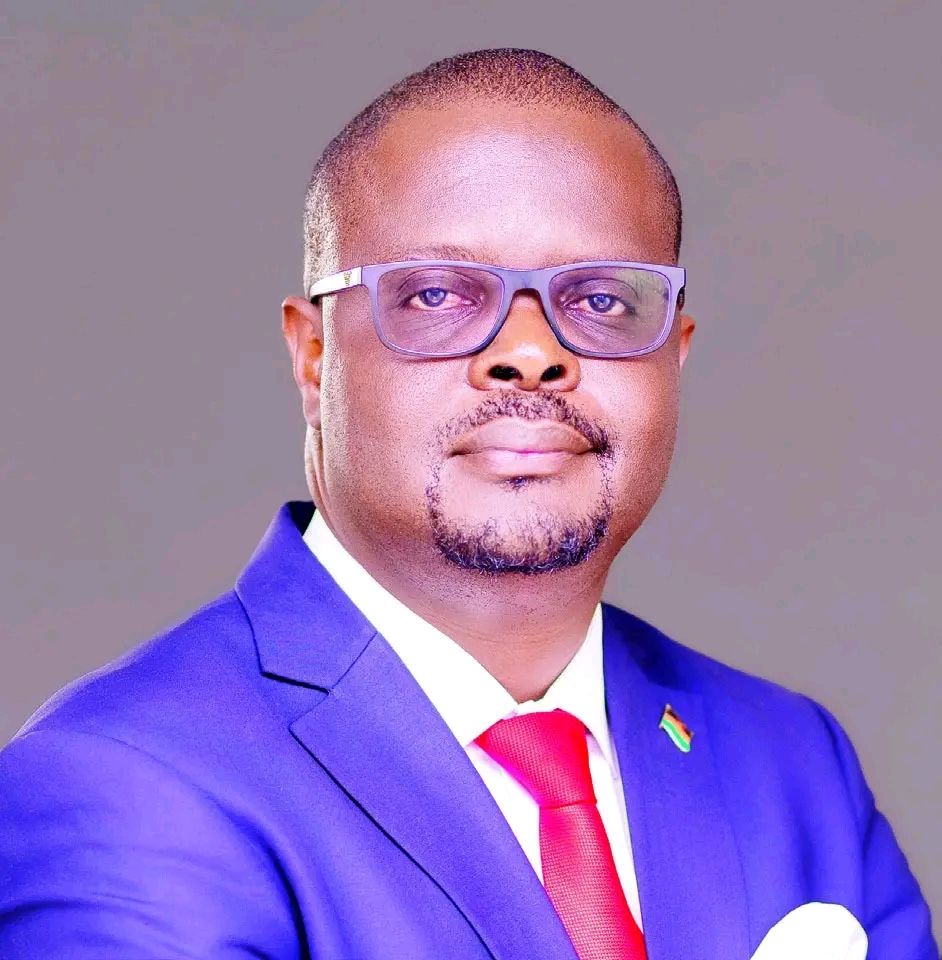
Mumba


Meanwhile, Gwengwe has thanked Chakwera for giving him an opportunity to serve in his cabinet for the past four years.

Writing on his Facebook page a short while ago, Gwengwe, who is also a Member of Parliament (MP ) for Lilongwe Nsozi north,says he served to the best of his capability.

“I would like to thank the state president, His Excellency, the state president of the Republic of Malawi, Dr. Lazarus Chakwera for the opportunity he offered me to serve my country as Minister of trade”, says Gwengwe.

He adds:”I did so to the best of my capability and due diligence. This far, I wish my brother, Hon. Vitumbiko Mumba all the best as he takes up the Ministry of Trade.”

Gwengwe also served as minister of Finance before appointed minister of Trade and Industry in the Chakwera’s administration.

Chakwera rejects SONA accusations

0

By Sheminah Nkhoma

Lilongwe, February 26, Mana: President Dr. Lazarus Chakwera has expressed disappointment over accusations that he was dishonest during the State of the Nation Address (SONA) on February 14, 2025.

He was speaking in Parliament on Wednesday when he appeared before the House to respond to questions from Members of Parliament (MPs) regarding the State of the Nation Address (SONA).

Chakwera said those accusing him of dishonesty are doing so to gain some political mileage. He has however said that he is not immune to mistakes just like everyone else.

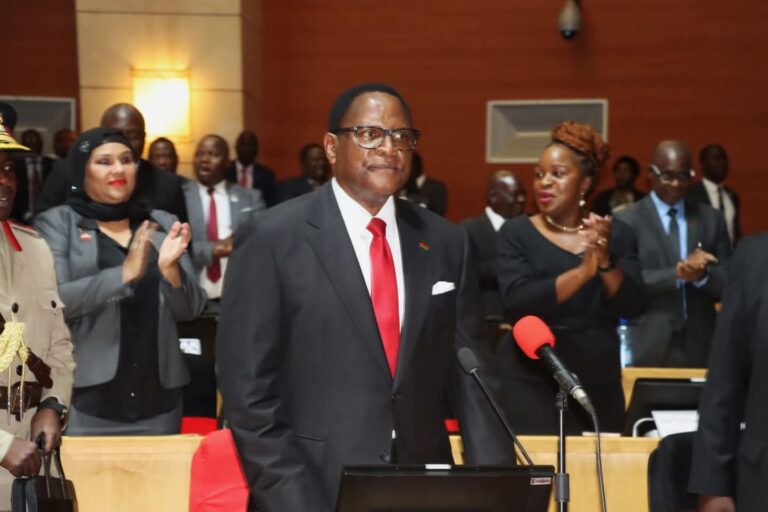
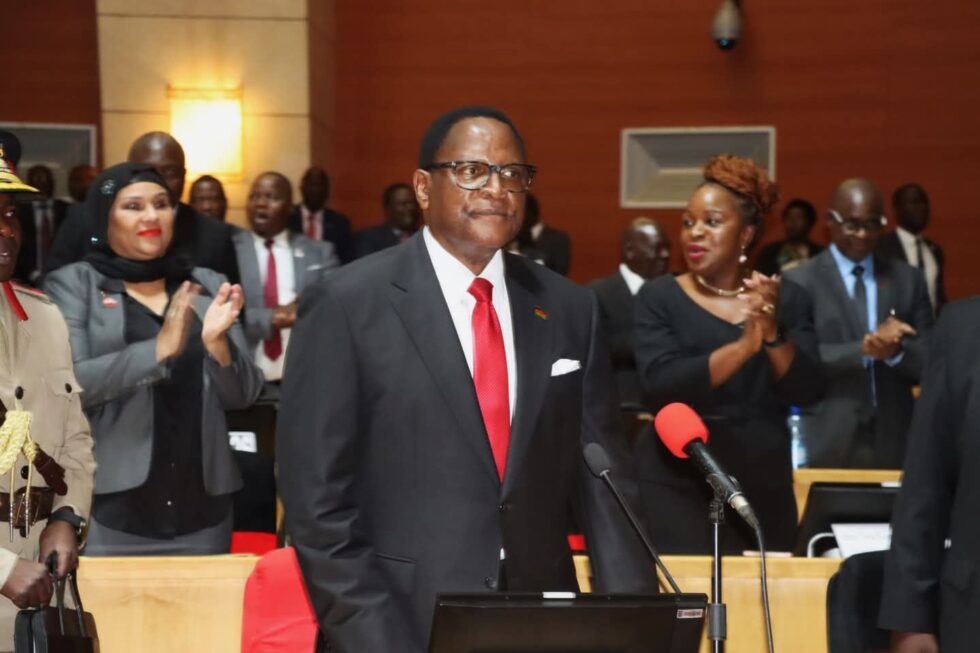
Chakwera in Parliament

“All Data that I presented concerning developments which are taking place in the country are true though some errors were made by the team responsible for these issues,” said Chakwera.

He further said the statement which was made by the Leader of the Opposition must be withdrawn as part of his speech, he accused him of lying to Malawians.

“I am committed to serving Malawians and have no time for lies. As a country, we need to come together to address the challenges Malawians are facing, such as hunger and the rising cost of commodities,” he said.

He stated that he is aware of some individuals who are deliberately sabotaging the country’s economy for political gain and to create the impression that his government has failed.

The president highlighted, that he has taken strong measures to address those who are intentionally harming the economy for personal gains.

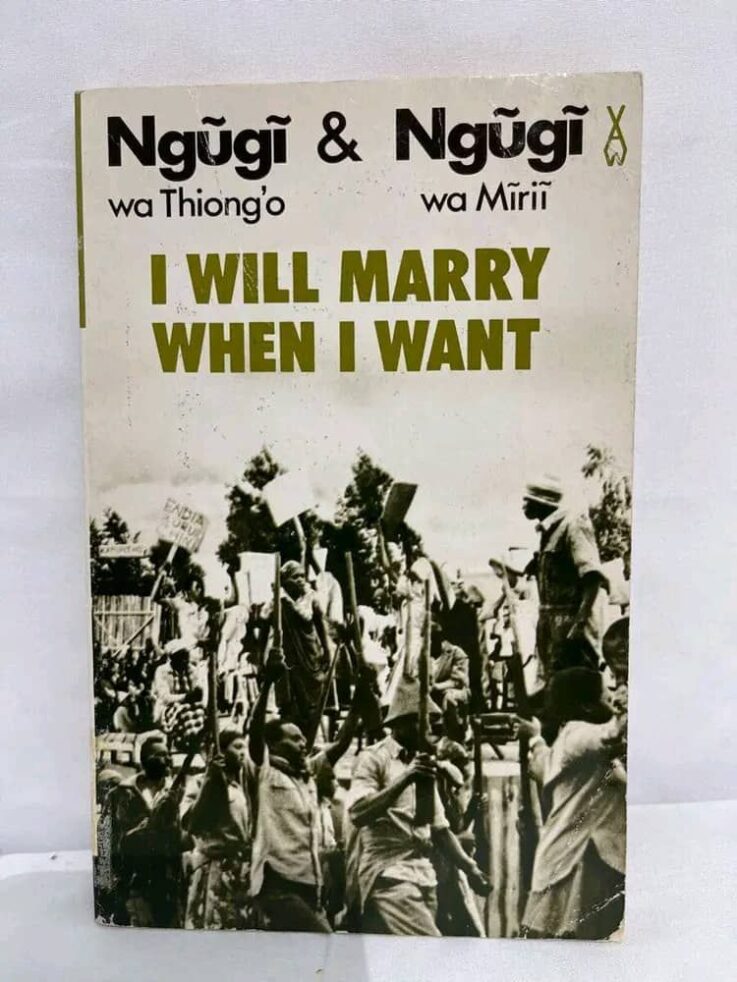
Book review: “I will marry when I want” by Ngũgĩ wa Thiong’o and Ngugi wa Mirii

By Burnett Munthali

Ngũgĩ wa Thiong’o has long been a literary force in African literature, using his works to challenge societal norms, corruption, and oppressive political structures.

I Will Marry When I Want, co-written with Ngugi wa Mirii, stands as one of his most controversial and politically charged works.

First performed in 1977 in Kenya, the play was developed in collaboration with Kikuyu actors at the Kamiriithu Cultural Centre in Limuru.


Its raw and unfiltered critique of post-colonial Kenya’s political, religious, and economic systems led to its banning and likely contributed to Ngũgĩ wa Thiong’o’s detention without trial.

At its core, the play tells the story of Kiguunda, a poor farmer who owns a small piece of land.

His simple life is disrupted when he is deceived into taking a loan, using his land as collateral.

The pressures of religion, capitalism, and societal expectations force him into a situation where he stands to lose everything.

Through this narrative, the play boldly exposes the hypocrisy of religious institutions, which claim to advocate for morality while being complicit in economic exploitation.

It also critiques the capitalist elite, who manipulate the working class for their gain, perpetuating cycles of poverty and disenfranchisement.

One of the most striking aspects of I Will Marry When I Want is its innovative use of performance.

The play incorporates song and dance, enhancing its emotional and cultural resonance.

This blend of storytelling with traditional oral performance made it especially powerful when staged, drawing audiences from all walks of life.

It was not merely a play; it was a movement—one that deeply unsettled the ruling class, leading to its swift ban by the Kenyan government.

Beyond its political message, the title itself—I Will Marry When I Want—holds significant personal and social weight.

It represents a defiance against imposed societal norms, particularly those related to marriage, wealth, and personal agency.

The phrase can be interpreted as a declaration of independence, a refusal to be controlled by cultural and religious expectations that dictate when and how one should make life choices.

While the play is set in Kenya, its themes remain universally relevant across Africa and beyond.

The exploitation of the poor by the wealthy, the entanglement of religion in politics, and the struggle for economic justice are issues that continue to affect many societies.

The play serves as both a historical document of post-colonial Kenya and a timeless call to resist oppression in all its forms.

In conclusion, I Will Marry When I Want is a masterpiece of resistance literature. Its bold critique of societal injustices, combined with its compelling storytelling and cultural authenticity, make it an essential read for anyone interested in African literature, political theatre, or the power of art as a tool for change.

It is a testament to the enduring strength of voices that refuse to be silenced, and its impact remains just as powerful today as it was at the time of its first performance.