Tuesday, December 23, 2025
No menu items!
spot_img
Home Blog Page 540

Kaunjika prices drop following government intervention

0

By Twink Jones Gadama

In a dramatic turn of events, prices of Kaunjika, the popular second-hand clothing market in Malawi, have significantly decreased following the government’s directive to traders.

This development comes after vendors in Lilongwe staged protests yesterday, demanding action against the rising prices of goods.

A snap survey conducted by this publication  in Lilongwe today revealed that prices of second-hand clothes have dropped substantially.
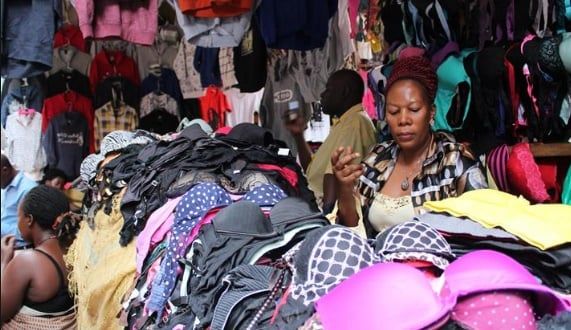


For instance, a Bale No1, which was previously priced at K1.1 million, is now selling for K680,000. Similarly, the price of a Medium bale has decreased from K750,000 to K420,000, while a Mix dress has dropped from K690,000 to K450,000. The price of a Polysilk dress has also plummeted from K1,350,000 to K850,000.

Minister of Trade, Hon. Sosten Gwengwe, assured the public that this is just the beginning of the government’s efforts to regulate prices and protect consumers.

“Prices of goods will continue to go down because we have taken a serious stand to ensure that Malawians are no longer exploited by traders who arbitrarily raise prices of basic necessities,” Gwengwe stated.

The government’s swift action has been welcomed by consumers and traders alike.

People at Bwalo la Njovu, a popular market in Lilongwe, applauded the government’s efforts, urging them to continue engaging with traders to address the rising prices of goods.

Kaunjika sellers at Msikawanjala in Dedza district expressed excitement about the price reduction, stating that it was challenging to make a profit with the previous prices.

However, with the new prices, they can now breathe a sigh of relief.

The reduction in prices is expected to have a positive impact on the livelihoods of many Malawians who rely on Kaunjika for their daily needs.

The government’s intervention is also seen as a step towards promoting fair trade practices and protecting consumers’ rights.

As the situation continues to unfold, it remains to be seen how traders will respond to the government’s directives.

However, for now, consumers can rejoice at the prospect of affordable prices for essential goods.

In related news, the used clothing industry is a significant sector in Malawi, with many people relying on it for employment and income generation.

According to a report, the global second-hand clothing market is expected to double to $51 billion in the next five years, exceeding fast fashion within a decade.

As the demand for second-hand clothing continues to grow, it is essential for the government to strike a balance between regulating prices and promoting fair trade practices.

By doing so, they can ensure that the benefits of the used clothing industry are shared equitably among all stakeholders.


Precious Medical International hosts wellness breakfast meeting

0

By Chisomo Phiri

One of the country’s leading medical insurance companies Precious Medical International on Wednesday morning hosted a wellness breakfast meeting for Executives and Chief Executive Officers(CEOs) of various companies, hospitals, and prospective clients at Amaryllis Hotel in Blantyre.

Speaking to journalists, Precious Medical International CEO Dr. Gertrude Mateyo said the event aimed to promote networking and share the importance of wellness among busy executives. 

Dr. Gertrude Mateyo

“We wanted to bring executives and CEOs out of their offices and provide a relaxed atmosphere where they could learn about wellness and network with peers.

“The meeting featured experienced speakers, including professionals,” said Mateyo.

She expressed her satisfaction with the event’s success saying:”We are happy with the turnout and the positive feedback from our guests.”

Dr.Mateyo emphasized the importance of wellness.

“Wellness is everybody’s business. Everyone wants to be healthy, happy, and have a long life. This event encourages every Malawian to take special care of themselves, focusing on self-care and making conscious choices about their lifestyle,” she said .

On his part,renowned psychologist, Chiwoza Bandawe emphasized the importance of prioritizing mental health, particularly among leaders.

Bandawe highlighted the impact of mental health on productivity and overall well-being.

“Mental health is fundamental because it affects our ability to work and be productive.

“Leaders, in particular, face numerous challenges that can take a toll on their mental health. It is essential for them to maintain resilience and find ways to cope with stress,” he said.

Bandawe noted that while mental health is gaining attention, it still requires more focus and investment.

“Mental health issues need more attention in terms of professionals. We need to train more psychiatrists, clinical psychologists, and counselors,” he said .

The psychologist pointed to the alarming increase in suicide rates as a clear indication of the need for improved mental health services.

“We need to invest more in mental health education and ensure that mental health professionals are available to provide support during crises, such as natural disasters,” he said

Bandawe advocated for a significant increase in the national health budget allocated to mental health, from the current 1% to at least 5%.

“This would enable us to have psychologists in schools, hospitals, and other critical areas,” he said.

Police officers: The unsung heroes of Malawi’s turbulent times


By Twink Jones Gadama

In a heartfelt appeal to Malawians, a concerned government official has shed light on the plight of police officers, who are often at the receiving end of public ire.

The official’s words, laced with empathy and understanding, have struck a chord with many, who are now calling for a more nuanced approach to interacting with law enforcement personnel.

According to the official, police officers are often misunderstood and underappreciated, despite their tireless efforts to maintain law and order in the country.


“It’s very sad to pelt a stone at a police officer,” the official said, highlighting the risks and challenges that police officers face on a daily basis.

The official’s words are a poignant reminder of the sacrifices that police officers make to serve and protect their communities.

From working long hours in challenging conditions to facing verbal and physical abuse from the public, police officers are often the unsung heroes of Malawi’s turbulent times.

One of the most striking aspects of the official’s appeal is the emphasis on the humanity of police officers. “They also have families,” the official said, highlighting the fact that police officers are not just uniformed figures, but individuals with loved ones and personal struggles.

The official’s words are also a reminder of the limitations that police officers face in expressing their own frustrations and disappointments. “A police officer can’t shed or display tears as it is against the law to do so,” the official said, highlighting the fact that police officers are often expected to maintain a stoic exterior, even in the face of adversity.

The appeal has resonated with many Malawians, who are now calling for a more nuanced approach to interacting with law enforcement personnel.

“We need to remember that police officers are human beings, just like us,” said one concerned citizen. “They deserve our respect and understanding, even when we disagree with their actions.”

As Malawi continues to navigate its turbulent times, the official’s appeal is a timely reminder of the importance of empathy and understanding.

By recognizing the humanity of police officers and the challenges they face, we can work towards creating a more just and compassionate society for all.

In conclusion, the concerned government official’s appeal is a powerful reminder of the importance of treating police officers with respect and understanding.

As we move forward, let us strive to create a more nuanced and compassionate approach to interacting with law enforcement personnel, recognizing that they are human beings, just like us.

Government’s revocation of second-hand clothing licenses: A short-sighted move?

By Burnett Munthali

The recent decision by Minister of Trade and Industry, Sosten Gwengwe, to revoke the licenses of all wholesale traders importing second-hand clothing bales has sparked intense debate.

Announced at Parliament in response to a petition from vendors protesting high costs of living, the move is positioned as a measure to cushion traders from economic hardships.

However, this policy raises more questions than solutions, particularly concerning its timing, practicality, and economic consequences.


At face value, the government’s justification for the revocation appears noble—it seeks to address the surging prices of second-hand clothing bales that have crippled small-scale traders.

The logic behind this is that by revoking licenses and forcing wholesale traders to re-register, the government can regulate pricing and ensure fairness.

However, this approach seems more like a knee-jerk reaction rather than a well-thought-out economic strategy.

Firstly, the move risks exacerbating an already dire economic situation.

The second-hand clothing trade is a crucial industry in Malawi, providing livelihoods for thousands of small-scale vendors who depend on affordable access to these bales.

Revoking licenses without an immediate alternative disrupts supply chains, leaving traders without stock and consumers with fewer affordable clothing options.

This could ultimately lead to job losses, further worsening the economic challenges that the government claims to be addressing.

Secondly, the policy’s implementation raises concerns about its feasibility.

Minister Gwengwe declared that traders must stop operations “until they register,” yet no clear roadmap has been provided on how this re-registration process will work. How long will it take?

Will it involve new, burdensome requirements?

What mechanisms are in place to ensure that the process does not result in corruption and favoritism?

Without concrete answers, this directive appears more like a rushed political move than a practical economic reform.

Moreover, the Minister of Local Government, Unity and Culture, Richard Chimwendo Banda, attempted to reassure traders by promising that “resources will be made available” to keep their businesses afloat.

However, such a promise remains vague and, given Malawi’s current financial struggles, raises doubts about whether the government can realistically support affected vendors.

Will traders be compensated for losses incurred due to sudden disruptions?

What exactly are these resources, and how will they be distributed?

The absence of specifics only adds to the uncertainty surrounding this policy shift.

It is also worth noting that the revocation of these licenses does not address the root cause of high second-hand clothing prices.

The surge in costs is largely driven by inflation, currency devaluation, and increased importation costs.

Unless the government tackles these broader economic issues, revoking licenses will only serve as a temporary bandage rather than a lasting solution.

Furthermore, traders might resort to illegal importation, leading to black-market operations that could create even greater regulatory challenges.

Chimwendo Banda also acknowledged the rise in commodity prices but stopped short of outlining tangible solutions, instead deferring to Gwengwe, who is expected to present further details in Parliament.

However, given the government’s history of making ambitious promises without follow-through, skepticism remains high.

Malawians are accustomed to hearing about “measures being put in place,” only to see little to no actual impact on their daily lives.

In essence, while the government may have had good intentions in revoking these licenses, the decision appears reactionary and poorly planned.

Without a clear, structured alternative, this move risks harming more traders than it helps.

Instead of imposing abrupt bans, a better approach would have been extensive stakeholder consultations, gradual policy implementation, and addressing fundamental economic issues like inflation and currency depreciation.

As traders and vendors anxiously wait for further clarification, one thing is clear—this decision has created more uncertainty than relief.

If the government truly wants to support small businesses, it must rethink its approach and focus on long-term solutions rather than short-term political maneuvers.

Government’s revocation of second-hand clothing licenses: A short-sighted move?

By Burnett Munthali

The recent decision by Minister of Trade and Industry, Sosten Gwengwe, to revoke the licenses of all wholesale traders importing second-hand clothing bales has sparked intense debate.

Announced at Parliament in response to a petition from vendors protesting high costs of living, the move is positioned as a measure to cushion traders from economic hardships.

However, this policy raises more questions than solutions, particularly concerning its timing, practicality, and economic consequences.


At face value, the government’s justification for the revocation appears noble—it seeks to address the surging prices of second-hand clothing bales that have crippled small-scale traders.

The logic behind this is that by revoking licenses and forcing wholesale traders to re-register, the government can regulate pricing and ensure fairness.

However, this approach seems more like a knee-jerk reaction rather than a well-thought-out economic strategy.

Firstly, the move risks exacerbating an already dire economic situation.

The second-hand clothing trade is a crucial industry in Malawi, providing livelihoods for thousands of small-scale vendors who depend on affordable access to these bales.

Revoking licenses without an immediate alternative disrupts supply chains, leaving traders without stock and consumers with fewer affordable clothing options.

This could ultimately lead to job losses, further worsening the economic challenges that the government claims to be addressing.

Secondly, the policy’s implementation raises concerns about its feasibility.

Minister Gwengwe declared that traders must stop operations “until they register,” yet no clear roadmap has been provided on how this re-registration process will work. How long will it take?

Will it involve new, burdensome requirements?

What mechanisms are in place to ensure that the process does not result in corruption and favoritism?

Without concrete answers, this directive appears more like a rushed political move than a practical economic reform.

Moreover, the Minister of Local Government, Unity and Culture, Richard Chimwendo Banda, attempted to reassure traders by promising that “resources will be made available” to keep their businesses afloat.

However, such a promise remains vague and, given Malawi’s current financial struggles, raises doubts about whether the government can realistically support affected vendors.

Will traders be compensated for losses incurred due to sudden disruptions?

What exactly are these resources, and how will they be distributed?

The absence of specifics only adds to the uncertainty surrounding this policy shift.

It is also worth noting that the revocation of these licenses does not address the root cause of high second-hand clothing prices.

The surge in costs is largely driven by inflation, currency devaluation, and increased importation costs.

Unless the government tackles these broader economic issues, revoking licenses will only serve as a temporary bandage rather than a lasting solution.

Furthermore, traders might resort to illegal importation, leading to black-market operations that could create even greater regulatory challenges.

Chimwendo Banda also acknowledged the rise in commodity prices but stopped short of outlining tangible solutions, instead deferring to Gwengwe, who is expected to present further details in Parliament.

However, given the government’s history of making ambitious promises without follow-through, skepticism remains high.

Malawians are accustomed to hearing about “measures being put in place,” only to see little to no actual impact on their daily lives.

In essence, while the government may have had good intentions in revoking these licenses, the decision appears reactionary and poorly planned.

Without a clear, structured alternative, this move risks harming more traders than it helps.

Instead of imposing abrupt bans, a better approach would have been extensive stakeholder consultations, gradual policy implementation, and addressing fundamental economic issues like inflation and currency depreciation.

As traders and vendors anxiously wait for further clarification, one thing is clear—this decision has created more uncertainty than relief.

If the government truly wants to support small businesses, it must rethink its approach and focus on long-term solutions rather than short-term political maneuvers.