Friday, April 17, 2026
No menu items!
spot_img
Home Blog Page 665

Police officers: The unsung heroes of Malawi’s turbulent times


By Twink Jones Gadama

In a heartfelt appeal to Malawians, a concerned government official has shed light on the plight of police officers, who are often at the receiving end of public ire.

The official’s words, laced with empathy and understanding, have struck a chord with many, who are now calling for a more nuanced approach to interacting with law enforcement personnel.

According to the official, police officers are often misunderstood and underappreciated, despite their tireless efforts to maintain law and order in the country.



“It’s very sad to pelt a stone at a police officer,” the official said, highlighting the risks and challenges that police officers face on a daily basis.

The official’s words are a poignant reminder of the sacrifices that police officers make to serve and protect their communities.

From working long hours in challenging conditions to facing verbal and physical abuse from the public, police officers are often the unsung heroes of Malawi’s turbulent times.

One of the most striking aspects of the official’s appeal is the emphasis on the humanity of police officers. “They also have families,” the official said, highlighting the fact that police officers are not just uniformed figures, but individuals with loved ones and personal struggles.

The official’s words are also a reminder of the limitations that police officers face in expressing their own frustrations and disappointments. “A police officer can’t shed or display tears as it is against the law to do so,” the official said, highlighting the fact that police officers are often expected to maintain a stoic exterior, even in the face of adversity.

The appeal has resonated with many Malawians, who are now calling for a more nuanced approach to interacting with law enforcement personnel.

“We need to remember that police officers are human beings, just like us,” said one concerned citizen. “They deserve our respect and understanding, even when we disagree with their actions.”

As Malawi continues to navigate its turbulent times, the official’s appeal is a timely reminder of the importance of empathy and understanding.

By recognizing the humanity of police officers and the challenges they face, we can work towards creating a more just and compassionate society for all.

In conclusion, the concerned government official’s appeal is a powerful reminder of the importance of treating police officers with respect and understanding.

As we move forward, let us strive to create a more nuanced and compassionate approach to interacting with law enforcement personnel, recognizing that they are human beings, just like us.
Government’s revocation of second-hand clothing licenses: A short-sighted move?

By Burnett Munthali

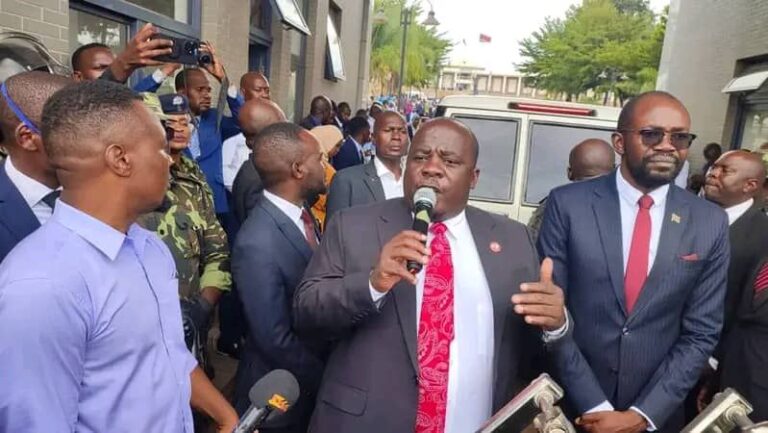
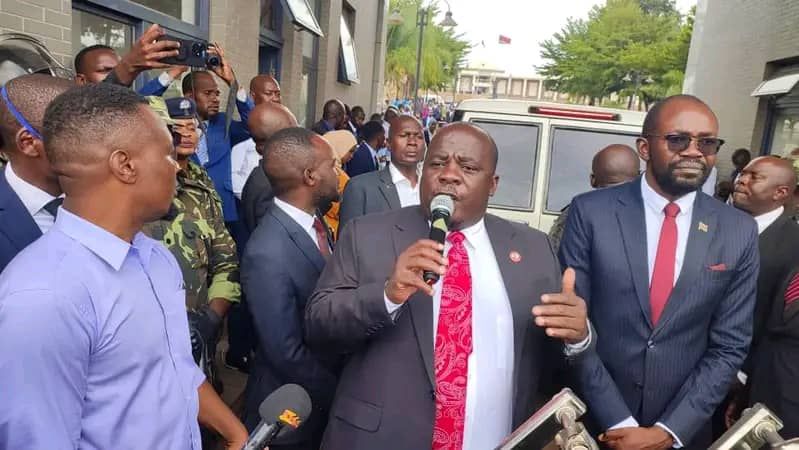
The recent decision by Minister of Trade and Industry, Sosten Gwengwe, to revoke the licenses of all wholesale traders importing second-hand clothing bales has sparked intense debate.

Announced at Parliament in response to a petition from vendors protesting high costs of living, the move is positioned as a measure to cushion traders from economic hardships.

However, this policy raises more questions than solutions, particularly concerning its timing, practicality, and economic consequences.


At face value, the government’s justification for the revocation appears noble—it seeks to address the surging prices of second-hand clothing bales that have crippled small-scale traders.

The logic behind this is that by revoking licenses and forcing wholesale traders to re-register, the government can regulate pricing and ensure fairness.

However, this approach seems more like a knee-jerk reaction rather than a well-thought-out economic strategy.

Firstly, the move risks exacerbating an already dire economic situation.

The second-hand clothing trade is a crucial industry in Malawi, providing livelihoods for thousands of small-scale vendors who depend on affordable access to these bales.

Revoking licenses without an immediate alternative disrupts supply chains, leaving traders without stock and consumers with fewer affordable clothing options.

This could ultimately lead to job losses, further worsening the economic challenges that the government claims to be addressing.

Secondly, the policy’s implementation raises concerns about its feasibility.

Minister Gwengwe declared that traders must stop operations “until they register,” yet no clear roadmap has been provided on how this re-registration process will work. How long will it take?

Will it involve new, burdensome requirements?

What mechanisms are in place to ensure that the process does not result in corruption and favoritism?

Without concrete answers, this directive appears more like a rushed political move than a practical economic reform.

Moreover, the Minister of Local Government, Unity and Culture, Richard Chimwendo Banda, attempted to reassure traders by promising that “resources will be made available” to keep their businesses afloat.

However, such a promise remains vague and, given Malawi’s current financial struggles, raises doubts about whether the government can realistically support affected vendors.

Will traders be compensated for losses incurred due to sudden disruptions?

What exactly are these resources, and how will they be distributed?

The absence of specifics only adds to the uncertainty surrounding this policy shift.

It is also worth noting that the revocation of these licenses does not address the root cause of high second-hand clothing prices.

The surge in costs is largely driven by inflation, currency devaluation, and increased importation costs.

Unless the government tackles these broader economic issues, revoking licenses will only serve as a temporary bandage rather than a lasting solution.

Furthermore, traders might resort to illegal importation, leading to black-market operations that could create even greater regulatory challenges.

Chimwendo Banda also acknowledged the rise in commodity prices but stopped short of outlining tangible solutions, instead deferring to Gwengwe, who is expected to present further details in Parliament.

However, given the government’s history of making ambitious promises without follow-through, skepticism remains high.

Malawians are accustomed to hearing about “measures being put in place,” only to see little to no actual impact on their daily lives.

In essence, while the government may have had good intentions in revoking these licenses, the decision appears reactionary and poorly planned.

Without a clear, structured alternative, this move risks harming more traders than it helps.

Instead of imposing abrupt bans, a better approach would have been extensive stakeholder consultations, gradual policy implementation, and addressing fundamental economic issues like inflation and currency depreciation.

As traders and vendors anxiously wait for further clarification, one thing is clear—this decision has created more uncertainty than relief.

If the government truly wants to support small businesses, it must rethink its approach and focus on long-term solutions rather than short-term political maneuvers.

Government’s revocation of second-hand clothing licenses: A short-sighted move?

By Burnett Munthali

The recent decision by Minister of Trade and Industry, Sosten Gwengwe, to revoke the licenses of all wholesale traders importing second-hand clothing bales has sparked intense debate.

Announced at Parliament in response to a petition from vendors protesting high costs of living, the move is positioned as a measure to cushion traders from economic hardships.

However, this policy raises more questions than solutions, particularly concerning its timing, practicality, and economic consequences.


At face value, the government’s justification for the revocation appears noble—it seeks to address the surging prices of second-hand clothing bales that have crippled small-scale traders.

The logic behind this is that by revoking licenses and forcing wholesale traders to re-register, the government can regulate pricing and ensure fairness.

However, this approach seems more like a knee-jerk reaction rather than a well-thought-out economic strategy.

Firstly, the move risks exacerbating an already dire economic situation.

The second-hand clothing trade is a crucial industry in Malawi, providing livelihoods for thousands of small-scale vendors who depend on affordable access to these bales.

Revoking licenses without an immediate alternative disrupts supply chains, leaving traders without stock and consumers with fewer affordable clothing options.

This could ultimately lead to job losses, further worsening the economic challenges that the government claims to be addressing.

Secondly, the policy’s implementation raises concerns about its feasibility.

Minister Gwengwe declared that traders must stop operations “until they register,” yet no clear roadmap has been provided on how this re-registration process will work. How long will it take?

Will it involve new, burdensome requirements?

What mechanisms are in place to ensure that the process does not result in corruption and favoritism?

Without concrete answers, this directive appears more like a rushed political move than a practical economic reform.

Moreover, the Minister of Local Government, Unity and Culture, Richard Chimwendo Banda, attempted to reassure traders by promising that “resources will be made available” to keep their businesses afloat.

However, such a promise remains vague and, given Malawi’s current financial struggles, raises doubts about whether the government can realistically support affected vendors.

Will traders be compensated for losses incurred due to sudden disruptions?

What exactly are these resources, and how will they be distributed?

The absence of specifics only adds to the uncertainty surrounding this policy shift.

It is also worth noting that the revocation of these licenses does not address the root cause of high second-hand clothing prices.

The surge in costs is largely driven by inflation, currency devaluation, and increased importation costs.

Unless the government tackles these broader economic issues, revoking licenses will only serve as a temporary bandage rather than a lasting solution.

Furthermore, traders might resort to illegal importation, leading to black-market operations that could create even greater regulatory challenges.

Chimwendo Banda also acknowledged the rise in commodity prices but stopped short of outlining tangible solutions, instead deferring to Gwengwe, who is expected to present further details in Parliament.

However, given the government’s history of making ambitious promises without follow-through, skepticism remains high.

Malawians are accustomed to hearing about “measures being put in place,” only to see little to no actual impact on their daily lives.

In essence, while the government may have had good intentions in revoking these licenses, the decision appears reactionary and poorly planned.

Without a clear, structured alternative, this move risks harming more traders than it helps.

Instead of imposing abrupt bans, a better approach would have been extensive stakeholder consultations, gradual policy implementation, and addressing fundamental economic issues like inflation and currency depreciation.

As traders and vendors anxiously wait for further clarification, one thing is clear—this decision has created more uncertainty than relief.

If the government truly wants to support small businesses, it must rethink its approach and focus on long-term solutions rather than short-term political maneuvers.

Zambia Copper Queens suffer 3-2 defeat to Malawi in second FIFA Friendly

0

By Burnett Munthali

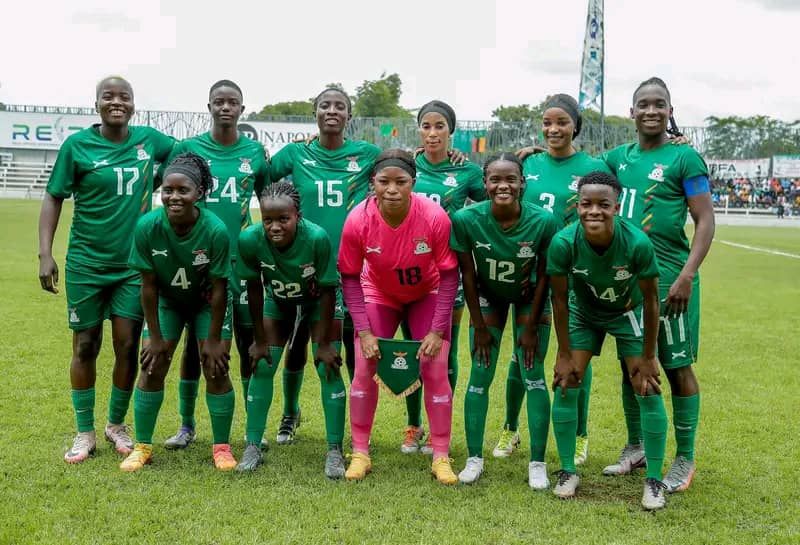
The Zambia Women’s National Team wrapped up their two-match FIFA International Friendly series with a narrow 3-2 loss to Malawi at the REIZ Arena (formerly Woodlands Stadium) on Tuesday.

Despite an early lead and a spirited fightback, the Copper Queens found themselves undone by a resilient Malawian side, led by the influential Tabitha Chawinga.


Zambia started the match with confidence, asserting their dominance from the first whistle.

Their early pressure paid off in the 6th minute when defender Martha Tembo unleashed a powerful shot that ricocheted off the post.

The ball fell kindly to Racheal Kundananji, who reacted quickly to slot home the rebound, marking her second goal in as many games.

The goal gave the Copper Queens an early advantage and further reinforced their attacking intent.

Despite Zambia’s control in the opening half, Malawi grew into the game and looked more dangerous as the match progressed.

The Scorchers came out with renewed energy after the break and wasted no time in restoring parity. Just two minutes into the second half, captain Tabitha Chawinga played a key role in the equalizer, setting up Rose Kabzere, whose effort caught Zambia’s goalkeeper Ngambo Musole off guard, leveling the score at 1-1.

Buoyed by the equalizer, Malawi continued to press forward and soon turned the game in their favor. In the 56th minute, Chawinga once again turned provider, delivering a well-timed pass to Faith Chimzimu, who calmly slotted past Musole to give the visitors a 2-1 lead.

The Copper Queens, visibly rattled, struggled to contain Malawi’s attacking momentum, and just two minutes later, Sabina Thom extended the lead with a clinical finish, making it 3-1.

With Zambia now chasing the game, coach Nora Häuptle introduced substitutes in an attempt to change the tide.

The tactical adjustments paid off in the 80th minute when Mercy Chipasula delivered a pinpoint cross into the box, finding the towering presence of Racheal Nachula.

Rising above her marker, Nachula directed a powerful header past the Malawian goalkeeper, reducing the deficit to 3-2 and reigniting hopes of a comeback.

The Copper Queens piled on the pressure in the final minutes, desperately searching for an equalizer. Captain Barbra Banda came agonizingly close when her thunderous shot struck the crossbar, leaving the home crowd in frustration.

Nachula, who had been lively since her introduction, also had a late opportunity to level the score but fired wide from close range.

Despite their late resurgence, Zambia could not find the much-needed equalizer, and the final whistle confirmed Malawi’s 3-2 victory.

The result meant that the Copper Queens concluded the February FIFA international window with a win and a loss, gaining valuable match fitness as they prepare for the upcoming TotalEnergies Women’s Africa Cup of Nations (WAFCON) Morocco 2025.

While the defeat was disappointing, Zambia will take lessons from the match as they continue refining their tactics and strengthening their squad ahead of competitive fixtures.

BetPawa makes dreams come true with massive Jackpot wins

0

By Shaffie A Mtambo

Two lucky individuals have struck gold with BetPawa’s Aviator and JetX games, taking home a staggering combined total of 267 million kwacha.

Chikondi Banda’s luck soared when she won an astonishing 140 million kwacha, while Billy Shaibu’s fortune flew high with a whopping 127 million kwacha win.

Bita Nakanga, Southern Region Marketing Coordinator for BetPawa, beamed with pride as he congratulated the winners.


“These incredible wins demonstrate our commitment to changing people’s lives and creating unforgettable moments for our players,” said Nakanga.

BetPawa’s Aviator and JetX games have once again proven to be life-changing platforms, empowering players to achieve financial freedom and pursue their dreams.


As the company continues to make waves in the gaming industry, one thing is clear: with BetPawa, anyone can become a millionaire overnight!


BetPawa has consistently shown its dedication to rewarding its players with substantial prizes.


The gaming community is abuzz with excitement, as news of the two massive wins spreads like wildfire.