Minister of Homeland Security Ezekiel Ching’oma has assured the nation that the passport printing and scanning challenges will soon be a thing of the past.
Speaking after inspecting the Immigration and Citizenship Department offices in Lilongwe on Thursday, Ching’oma revealed that a new permanent contractor will take over the task, bringing an end to the current challenges.
Ching’oma
The minister emphasized that the passport issues stem from the temporary contractor engaged after the contract with Techno Brain was cancelled.
He however, said with the new contractor on board, the challenges will be resolved once his ministry finalizes the necessary paperwork.
Ching’oma also launched the Migration Information and Data Analysis System (MIDAS) training, a critical program that will enable officers to track individuals entering the country.
MIDAS is linked to global systems, ensuring a seamless and efficient process.
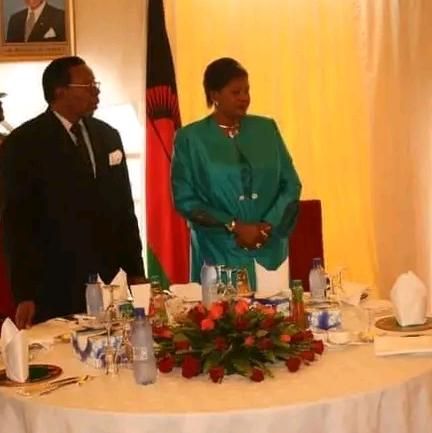
In a bizarre and shocking turn of events, Calista chapola, the widow of former president bingu wa mutharika, suffered a humiliating defeat in the Malawi Congress Party (MCP) primaries yesterday.
Sources close to the matter claim that the ghost of Bingu wa mutharika rose from the grave and flogged Calista, putting an end to her political aspirations.
Calista, who was once married to Bingu wa Mutharika and adopted the name Mrs. Mutharika by marriage, had defected to the mcp after her husband’s death.
The Late Bingu and Callista
Despite bingu’s well-known disdain for the mcp, Calista attempted to use his name and legacy to further her own political career.
However, her plans were dealt a severe blow when she lost the mcp primary elections.
Insiders claim that Calista’s defeat was not just a result of her lack of popularity among party members, but also due to the intervention of bingu’s ghost.
According to eyewitnesses, Calista was seen running out of the polling station, screaming and crying, claiming that she had been flogged by an invisible force.
While some have dismissed the claims as mere superstition, others believe that Bingu’s ghost was indeed responsible for Calista’s downfall. “This is not the first time we’ve warned Calista to stop using Bingu’s name for her own political gain,” said a source close to the mutharika family. “She refused to listen, and now she’s paying the price.”
The mcp has thus far refused to comment on the matter, but insiders claim that the party is relieved to be rid of calista, who was seen as a divisive figure within the party.
As for calista, her future in politics remains uncertain.
While some have speculated that she may attempt to revive her career with another party, others believe that her reputation has been irreparably damaged.
One thing is certain, however: the ghost of bingu wa mutharika will not be forgotten anytime soon.
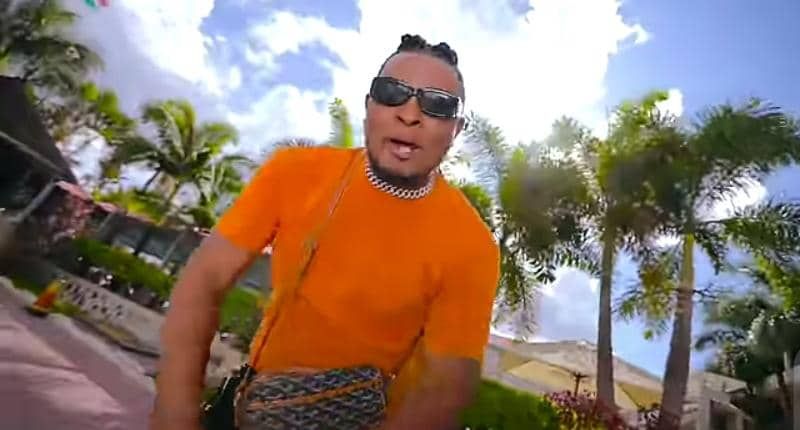
In a remarkable testament to the power of music and cross-border collaboration, Malawian artist Kay Kelly’s song “Bana Pwanya,” featuring Zambian artists Yo Maps and Prince Luv, has achieved an astounding 21 million views on YouTube within just ten months of its release.
This achievement not only highlights the song’s popularity but also prompts a deeper inquiry into the factors contributing to its success and to whom credit should be attributed for this record-breaking milestone.
Firstly, the collaboration itself deserves significant recognition.
By uniting the talents of Kay Kelly, a rising star in Malawi, with established Zambian artists Yo Maps and Prince Luv, “Bana Pwanya” has benefited from the synergy of diverse musical styles and fanbases.
Such collaborations are pivotal in the contemporary African music scene, as they enable artists to reach broader audiences and create a unique sound that resonates across borders.
The fusion of Kay Kelly’s Malawian roots with the distinct sounds of Zambian music has undoubtedly played a crucial role in the song’s appeal, making it relatable to fans from both countries and beyond.
Moreover, the power of digital platforms cannot be underestimated in this context.
With the rise of social media and streaming services, artists now have the ability to share their work with global audiences instantly.
“Bana Pwanya” has capitalized on this digital landscape, attracting views not only from Malawi and Zambia but also from fans around the world.
The accessibility of platforms like YouTube has revolutionized how music is consumed, allowing songs to go viral at unprecedented rates.
Thus, while the artists’ talents are central to the song’s success, the role of digital media in amplifying its reach is equally significant.
The marketing strategy behind “Bana Pwanya” also warrants consideration.
Effective promotion through social media channels, collaborations with influencers, and engaging content can significantly influence a song’s visibility.
The collective efforts of Kay Kelly, Yo Maps, and Prince Luv in promoting the song on various platforms have likely contributed to its rapid accumulation of views.
Engaging with fans through social media, behind-the-scenes content, and live performances can foster a deeper connection and encourage listeners to share the music within their networks, further propelling its popularity.
In addition, we cannot overlook the cultural context surrounding the song.
“Bana Pwanya” resonates with themes that are familiar to both Malawian and Zambian audiences, addressing relatable social narratives and emotions.
Such themes often enhance a song’s relatability, prompting listeners to engage more deeply and share it within their communities.
The universal appeal of love, joy, and social commentary embedded in the song’s lyrics has undoubtedly struck a chord with listeners, making it a favorite across generations.
However, as we celebrate this achievement, it is essential to reflect on the implications of such cross-border collaborations.
The success of “Bana Pwanya” highlights the potential for regional unity in the African music industry.
By working together, artists from different countries can break down barriers and foster a sense of shared cultural identity.
This collaborative spirit can pave the way for more partnerships, encouraging artists to explore diverse sounds and styles, ultimately enriching the African music landscape.
In conclusion, the record-breaking 21 million views of “Bana Pwanya” is a multifaceted achievement that speaks to the talent of Kay Kelly, Yo Maps, and Prince Luv, the power of digital media, and the importance of cultural relevance in music.
While credit should undoubtedly be given to the artists themselves, it is crucial to acknowledge the collaborative efforts, marketing strategies, and cultural contexts that have contributed to this success.
As we continue to witness the evolution of African music, let us embrace the spirit of collaboration and support our artists in their journeys, celebrating not just individual achievements, but the collective potential of the industry as a whole.
Senior Malawi Congress Party (MCP) official in the Southern Region, Brown Mpinganjira, has strongly criticized opposition leaders for their continued resistance to government initiatives, including critical development projects aimed at improving the livelihoods of Malawians.
Speaking at Makata ground in Ndirande, Blantyre, during the launch of the Frank Bauleni Football and Bawo Trophy, Mpinganjira condemned opposition figures whom he accused of deliberately opposing every government policy and project, regardless of its benefits to the nation.
Brown Mpinganjira
He emphasized that President Dr. Lazarus Chakwera’s administration is committed to implementing transformative projects that positively impact citizens, highlighting key initiatives such as road infrastructure development, youth empowerment programs, the National Economic Empowerment Fund (NEEF) loans, and the promotion of large-scale commercial farming.
Mpinganjira called on the people of Ndirande to rally behind Frank Bauleni in his bid for a councillorship position and to support President Chakwera in future elections to ensure continued national development.
He argued that sustainable progress could only be achieved if leaders who prioritize development were given the mandate to lead.
The event, which attracted various community members and football enthusiasts, served as a platform for engaging citizens on the significance of supporting developmental policies.
Mpinganjira’s remarks underscore the ongoing political debate between the ruling party and opposition figures regarding governance and economic transformation in Malawi.
The body of Human rights campaigner Bright Kampaundi will be laid to rest on Monday February 24, at Chilinde cemetery in Lilongwe.
On Sunday, the remains of the late Kampaundi will be collected from Daeyang Mortuary to Chilinde and on Monday, a funeral service will take place starting from 9 o’clock in the morning before the burial ceremony later in the afternoon.
Kampaundi
Kampaundi died on Friday, 21st February, 2025 after suffering from a blood pressure related illness.
Born on 9th July 1976, Kampaundi was the founder of Children Rights Shield and he worked with different organisations in protecting People’s rights especially children.
Until his death Kampaundi was also working as the Marketing and Social Corporate Manager at Matours International Bus Service.