Mzuzu University (MZUNI) on Monday launched Nzeru Hub, a new digital platform designed to enhance students’ digital skills.
Developed through MZUNI’s Department of Information and Communication Technology (ICT), the Nzeru Hub aims not only to promote basic digital literacy but also to provide easy access to learning materials and other academic resources.
Speaking after the launch, a lecturer in the ICT at MZUNI, Joseph Kumwenda, said the platform also offers specialized training in cybersecurity, artificial intelligence (AI), and Microsoft Certified Professional (MCP) courses.
Kumwenda explained that the Nzeru Hub is part of the university’s Inclusive Digital Transformation for Malawi (IDT4M) project, which seeks to make digital education more accessible and affordable.
“Access to learning materials and professional certifications is often expensive. This initiative helps to bridge that gap by making digital skills training more inclusive,” he said.
On her part, a data science student,Queen Sosola,welcomed the initiative, noting that digital technology is a key driver of the Malawi 2063 national vision, and therefore, citizens need to be well-equipped with the necessary digital knowledge and competencies.
The Inclusive Digital Transformation for Malawi (IDT4M) project is being supported by the United Nations Development Programme (UNDP).
A total of K25 million has been spent on the production of a new film titled ‘Chitomero’ which features some of Malawi’s well-known actors, including Ginte, Phwedo, and Mphatso Machira.
The funding was provided by a well-wisher from the United States of America to ensure the smooth production of the film, which features over 40 actors.
In an interview with 247 Malawi News,Phwedo, who wrote the film’s script said ‘Chitomero’ focuses strongly on Malawian culture and was shot entirely in rural areas.
He said in the movie, Ginte plays a character known for spending time at local bars, while both he and Mphatso Machira undergo significant character transformations as the story unfolds.
Phwedo added that the renowned musician Malita directed the film and also plays a role in it.
He said the film is set to be officially released next month, but a teaser trailer will be out in the next two weeks.
Other actors featured in the film include Neria Chikhosi, Yvonne Scott, Pamela Mwenisungo, Everisto Payesa, and several others.
People’s Development Party (PDP) president and the party’s sole Member of Parliament(MP)-elect, Kondwani Nankhumwa, has set his sights on the position of Speaker of Parliament.
Nankhumwa’s spokesperson, Rhodes Msonkho, confirmed to the local media Monday that the Mulanje Central legislator-elect is indeed interested in contesting for the post.
He highlighted Nankhumwa’s pledge to offer impartial leadership and his commitment to ensuring order, decorum, and efficiency in parliamentary proceedings.
Nankhumwa
The election of the Speaker, First Deputy Speaker, and Second Deputy Speaker is scheduled for October 29, 2025, following the swearing-in of newly elected legislators on October 27 and 28,2025.
Last week, the Democratic Progressive Party (DPP) and the United Transformation Movement (UTM) Party confirmed that some of their members had expressed interest in contesting for the Speakership, while the former ruling Malawi Congress Party (MCP) indicated that it was still strategizing.
Nankhumwa has held numerous key positions, including MP since 2009 and Chair of the Parliamentary Media Committee (2009-2011).
He was also a leader of the Opposition from 2020 to 2024.
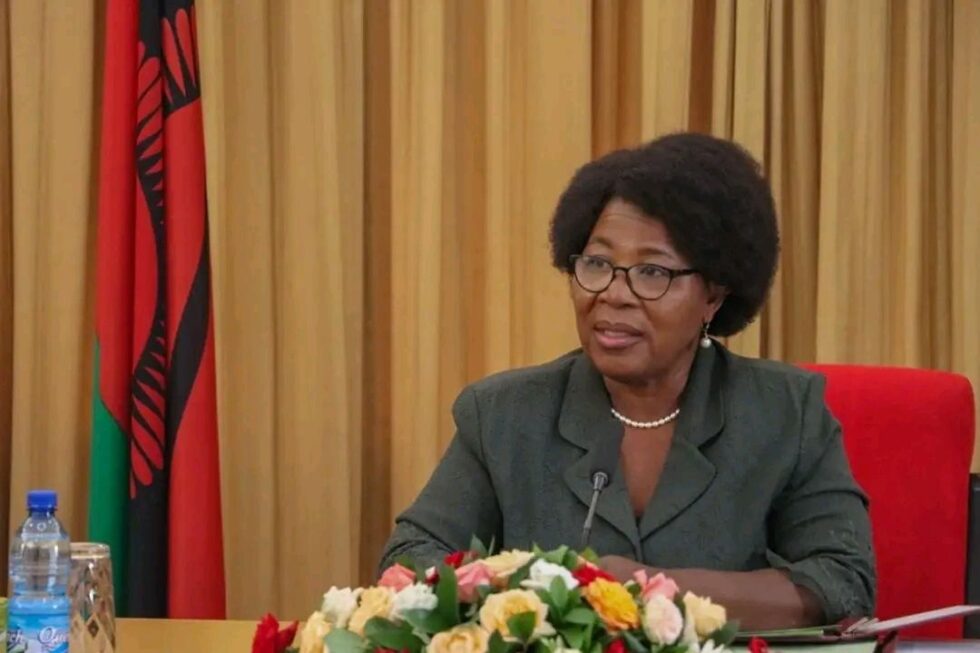
Justice Dr. Jane Ansah, the newly appointed Vice President of the Republic of Malawi, officially began her work today as she stepped into her office for the first time since taking the oath of office.
Her first day carried a sense of symbolism and purpose, marking not just the start of her official duties but also the beginning of a fresh chapter in the country’s political leadership.
Dr. Ansah was warmly received by staff and government officials, who welcomed her with enthusiasm and optimism as she settled into her new role.
Jane Ansah
Known for her distinguished career in law and governance, Dr. Ansah now takes on a broader responsibility — to help steer the country toward stability, accountability, and social transformation.
In her brief address, the Vice President expressed deep appreciation for the confidence placed in her by President Lazarus Chakwera and reaffirmed her commitment to work for the good of all Malawians.
She emphasized that her office would prioritize cooperation, transparency, and service delivery, aligning its efforts with the government’s overall development agenda.
Dr. Ansah also called for unity among Malawians, stressing that progress can only be achieved when citizens, leaders, and institutions work together in good faith.
Her appointment as the nation’s second female Vice President has been widely regarded as a milestone for women in leadership, reflecting a growing recognition of gender balance in Malawi’s political landscape.
Political observers note that her wealth of experience as a judge, attorney general, and public administrator positions her well to handle the complexities of governance and policymaking.
Many believe that Dr. Ansah’s calm demeanor and principled leadership will bring stability and renewed confidence to the Office of the Vice President.
As she embarks on this journey, Justice Dr. Jane Ansah stands as a symbol of perseverance, professionalism, and the enduring belief that leadership is ultimately about service to the people.
On the morning of Sunday, October 12, 2025, I met a friend who works in carpentry and joinery.
After exchanging greetings, our conversation quickly turned serious as he shared a distressing experience that had recently shaken his small business.
He told me that while he was temporarily away from work, a team of young employees received payment from a client without his knowledge.
They never informed him about the transaction, nor did they account for the money.
Days later, when the project owners began following up on incomplete work and missing funds, he was the only one left to answer for the mess.
The young employees had vanished — leaving him alone to face the financial consequences and repair the damage to his professional reputation.
It was a painful story, not only because of the loss involved but because it exposed the fragility of trust in workplaces built on verbal understanding rather than formal agreements.
For many Malawian artisans and small-scale entrepreneurs, teamwork is often based on relationships, loyalty, and informal arrangements rather than structured contracts.
This approach can work well when honesty prevails, but it becomes disastrous when money enters the picture and accountability disappears.
Lessons
The carpenter’s story carries deep lessons about leadership, trust, and communication.
First, it reminds us that trust, while essential, must be supported by clear systems of responsibility.
Relying on good faith alone, especially in business, can lead to betrayal and loss.
Second, it shows the importance of constant supervision and communication between leaders and their teams.
Temporary absences should never mean loss of control over financial transactions or customer relations.
Lastly, it highlights how easily integrity can collapse when greed and lack of accountability take root — especially among young workers who may not fully grasp the long-term impact of dishonesty.
Challenges
The challenges in this story reflect the wider struggles faced by small business owners in Malawi.
Many artisans lack access to formal management training, contracts, or legal mechanisms to hold workers accountable.
They operate in environments where trust is both the foundation and the greatest risk.
When employees misbehave or vanish, the owners bear the entire burden — financially and emotionally.
Additionally, there is the challenge of building work ethics among young employees who sometimes view short-term gain as more important than professional reputation.
Without mentorship, many fail to appreciate that honesty and reliability are the true capital in trades like carpentry and joinery.
Solutions
To prevent similar incidents, small business owners must begin formalizing their operations, no matter how small the enterprise.
Simple written agreements, receipts, and payment records can make a big difference in ensuring transparency and accountability.
Leaders should also introduce basic orientation sessions for their teams, emphasizing ethics, teamwork, and respect for authority.
Involving workers in financial discussions and progress updates can foster a sense of shared responsibility rather than suspicion or secrecy.
Technology can also help — using mobile banking, digital receipts, or group communication platforms to ensure everyone stays informed.
Most importantly, mentorship and leadership must remain central to small business management.
Young employees need guidance, not just instructions. They must learn that trust, once broken, is hard to rebuild — and that integrity is worth more than any quick cash.
Conclusion
My friend’s story is a painful reminder that leadership is not just about skill — it is about foresight, discipline, and structure.
Trust must be earned, protected, and managed through systems that promote transparency and fairness.
In the end, his experience is not just a tale of betrayal but also a valuable lesson for all who dream of building honest, resilient, and professional small enterprises in Malawi.
When trust turns costly, what remains is wisdom — and the determination to do things differently next time.