Wednesday, May 6, 2026
No menu items!
spot_img
Home Blog Page 767

Malawi’s battle for privacy and democracy: February 13 protests against MACRA’s $1.5 million surveillance plan

0

By Burnett Munthali

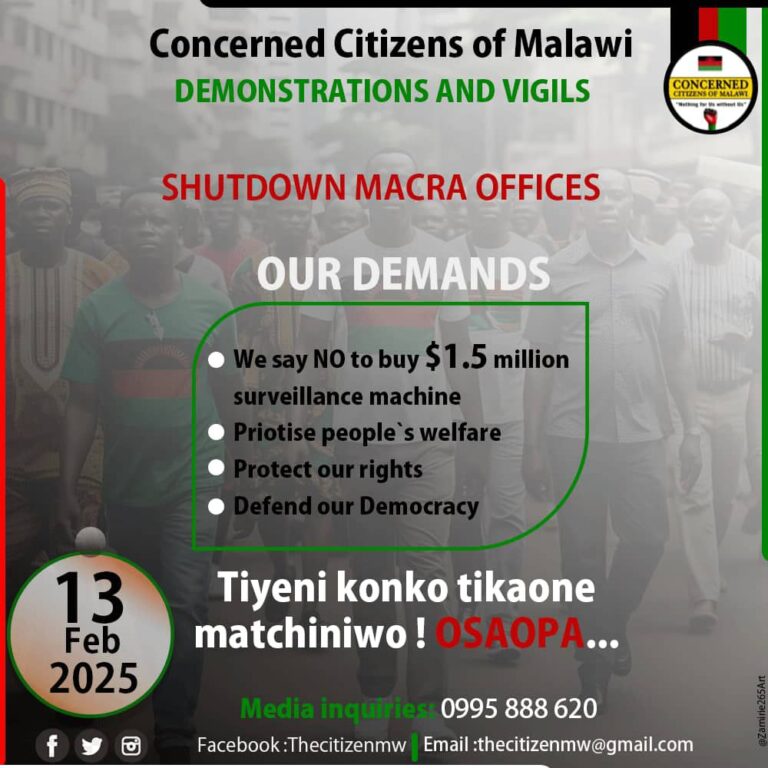
In a remarkable show of public defiance, concerned Malawians are organizing a nationwide protest and vigil on February 13, 2025, to challenge the Malawi Communications Regulatory Authority (MACRA) over its decision to procure a $1.5 million surveillance machine. This move, which critics view as an infringement on the country’s democratic values, has ignited a fierce backlash from civil society organizations, political opposition, and ordinary citizens, all united in their demand for accountability and transparency.

The controversy surrounding the surveillance project is rooted in fears that such a device could be used to monitor citizens’ private communications, undermining privacy and freedom of expression—two pillars of democracy. Protest leaders have warned that this machine could become a tool for political surveillance, enabling the government to track and silence dissenting voices, including journalists, opposition figures, and human rights activists.
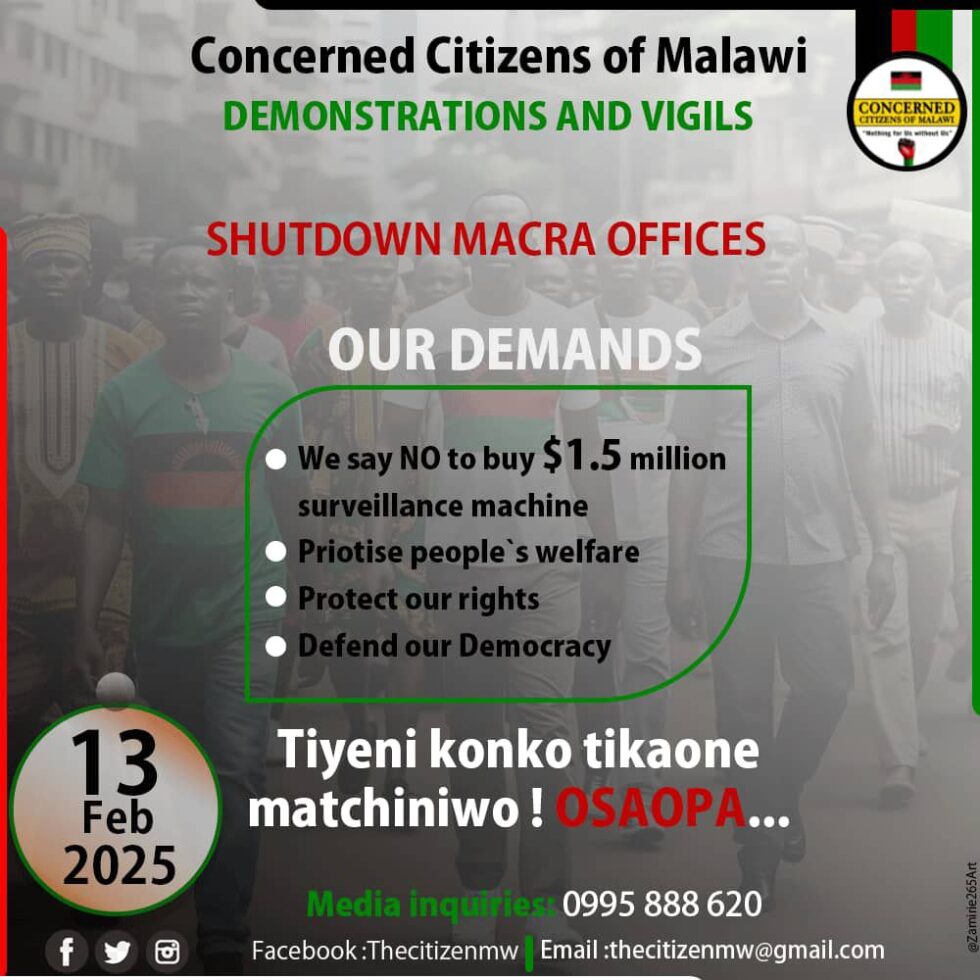
The slogan “Tiyeni konko tikaone matchiniwo”—meaning “Let’s go and see the machine ourselves”—has become the rallying cry for the demonstrations. This slogan captures the sentiment of many who are calling for full disclosure of the project’s details, fearing that it may not serve the public interest but rather enable government overreach.

The protests are centered around four primary demands. First, activists are calling for the immediate halt of the $1.5 million surveillance project. Second, they are demanding that the government shift its focus to improving the welfare of its people, especially in areas such as healthcare, education, and food security. Third, they are advocating for the protection of individual rights and civil liberties, and lastly, they seek to defend democracy from the encroaching surveillance state.

Opponents of the surveillance plan argue that, at a time when Malawi is grappling with severe economic challenges—rampant unemployment, inflation, and a deteriorating healthcare system—the government should be prioritizing essential services and investing in its people, rather than spending millions on a surveillance tool. “Why should we spend money on a machine that invades our privacy, when our people cannot even afford basic necessities?” one protest leader remarked, voicing the frustrations of many Malawians who feel neglected by the government.

The protest is also seen as part of a broader effort to preserve Malawi’s democratic values. Since the fall of one-party rule in 1994, the country has made significant strides in establishing a democratic system that respects human rights. Yet, critics argue that the planned surveillance machine undermines the progress made over the years. The fear is that this could set a dangerous precedent, where citizens’ rights to free speech, privacy, and political opposition are compromised in the name of national security.

Civil society organizations, human rights defenders, and opposition political parties have voiced their support for the protests, calling for transparency about the machine’s intended purpose and scope. The protests are being framed as a collective stand for the people’s right to be informed about government spending and to resist any policies that threaten fundamental freedoms.

The organizers of the demonstration have called for Malawians to take to the streets with the empowering slogan “Osaopa,” meaning “Don’t be afraid.” It is a call for citizens to rise above fear and demand accountability from those in power, insisting that the people’s voices must be heard and their rights defended.

As February 13 approaches, the intensity of public dissatisfaction with the government’s proposed surveillance program continues to grow. The protests are expected to be one of the largest and most significant displays of public dissent in recent years, and the government is under increasing pressure to address the concerns of its people. The demonstrations will test the government’s commitment to democratic principles and human rights, and the outcome may have far-reaching implications for Malawi’s political future.

Malawians are no strangers to standing up for their rights. Whether in the streets or at the ballot box, the country’s citizens have long been willing to take bold action to protect democracy. As the protest movement gains momentum, it sends a powerful message: the people of Malawi are prepared to fight for their freedom, and they will not be silenced by surveillance or political oppression. How the government responds to this movement will be a defining moment in the nation’s ongoing struggle for democracy, transparency, and the protection of civil liberties.
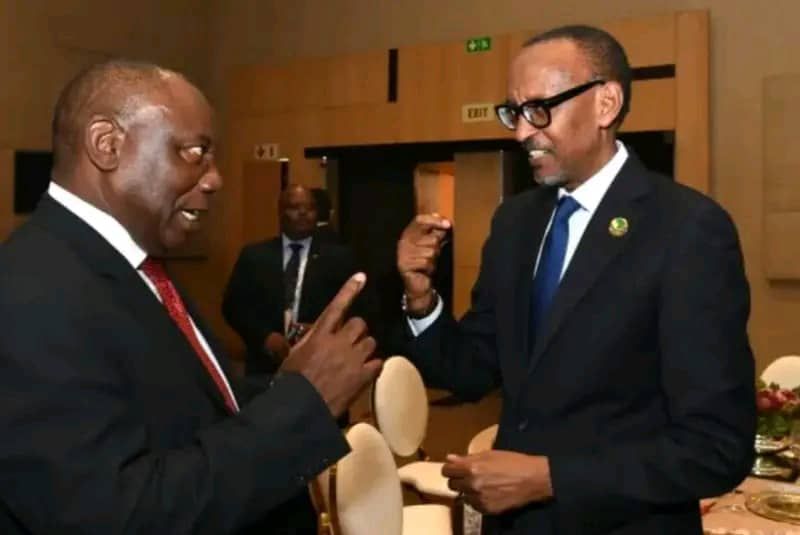
Rwanda-SADC tensions escalate as Kagame responds to Ramaphosa’s warning

By Burnett Munthali

Tensions between Rwanda and the Southern African Development Community (SADC) have reached a critical level following an explosive exchange between Rwandan President Paul Kagame and South African President Cyril Ramaphosa over the ongoing conflict in the Democratic Republic of Congo (DRC). The situation has taken a dramatic turn after Kagame reportedly admitted that Rwandan forces were responsible for the deaths of SADC troops deployed in the DRC.

The revelations, first reported by the popular social media platform Bakili Muluzi TV, suggest that Kagame has openly acknowledged that his forces killed SADC soldiers. This admission has heightened diplomatic hostilities, as SADC countries, including Malawi, Tanzania, and South Africa, have been directly involved in peacekeeping operations in the DRC. Their mission has been to support the Congolese government in stabilizing the region, which has long suffered from armed conflict involving multiple factions, including rebel groups with alleged ties to Rwanda.

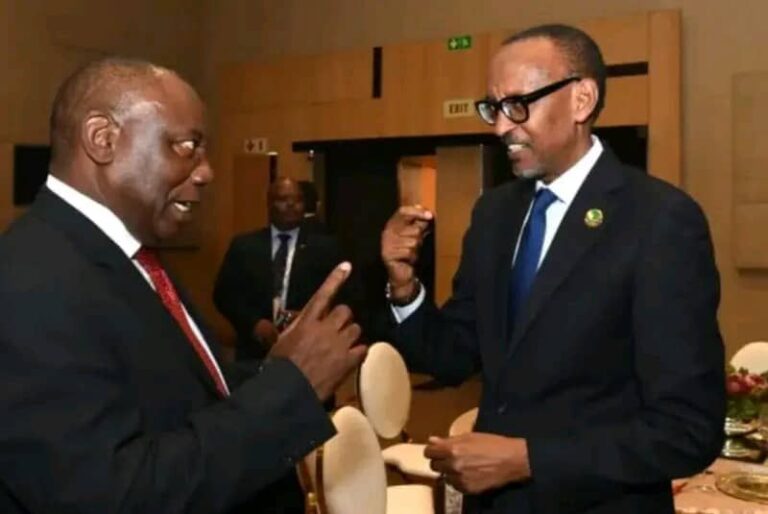
Ramaphosa and Kagame

Ramaphosa’s Warning: A Declaration of War?

Following these reports, President Cyril Ramaphosa issued a stern warning to Rwanda, stating that any further attacks on SADC troops would be considered an act of war. The South African leader’s strong response underscores the severity of the situation, as South Africa plays a significant role in SADC’s military interventions. Ramaphosa’s warning reflects the growing frustration within the regional bloc over Rwanda’s alleged interference in the DRC, particularly its involvement in supporting rebel movements that threaten regional stability.

However, Kagame has not taken the warning lightly. In a bold and defiant response, he dismissed any threats from SADC nations, stating that Rwanda fears no country in the region, including South Africa. According to reports, Kagame made it clear that if SADC nations want war, Rwanda is prepared to fight. His remarks further solidify Rwanda’s unwillingness to back down from its military actions in the DRC, even at the risk of escalating tensions with powerful regional players.

Kagame Rejects South Africa’s Mediation Role

In addition to his defiant stance against SADC’s warnings, Kagame has outrightly rejected South Africa’s role as a mediator in the ongoing conflict. Historically, South Africa has played a key diplomatic role in peace efforts across the African continent, often stepping in to negotiate ceasefires and political settlements. However, Kagame has now made it clear that he does not recognize South Africa’s neutrality in the matter, stating that Malawian, Tanzanian, and South African troops are actively fighting against Rwandan interests in the DRC.

In a direct and provocative statement to Ramaphosa, Kagame reportedly said, “If you want confrontation, Rwanda will respond accordingly.” This statement has raised serious concerns among regional security analysts, as it signals a potential breakdown in diplomatic engagements and an increased likelihood of direct military conflict between SADC forces and Rwanda.

Implications for Regional Stability

The worsening standoff between Rwanda and SADC nations has significant implications for regional stability. The DRC conflict has long been a complex geopolitical issue, with various countries accused of fueling hostilities through proxy wars and strategic military interventions. SADC’s involvement in the DRC was initially meant to counter rebel insurgencies and restore order, but Rwanda’s direct challenge to the mission now risks turning the situation into a broader regional war.

Diplomatic efforts to resolve the crisis have so far been unsuccessful, and with Kagame’s latest remarks, the likelihood of a peaceful resolution appears increasingly uncertain. The next steps by SADC leaders, particularly South Africa, Malawi, and Tanzania, will be crucial in determining whether the situation escalates further or if there is still room for diplomatic negotiations.

As the world watches the unfolding crisis, one thing is clear: the standoff between Rwanda and SADC is reaching a dangerous tipping point, and without urgent intervention, the region could be on the brink of an unprecedented conflict.

Dancehall artist Kapadocia drops a Peace song “Bata ndi Mtendere” for 2025 General Elections

By McLloyd Kudzingo


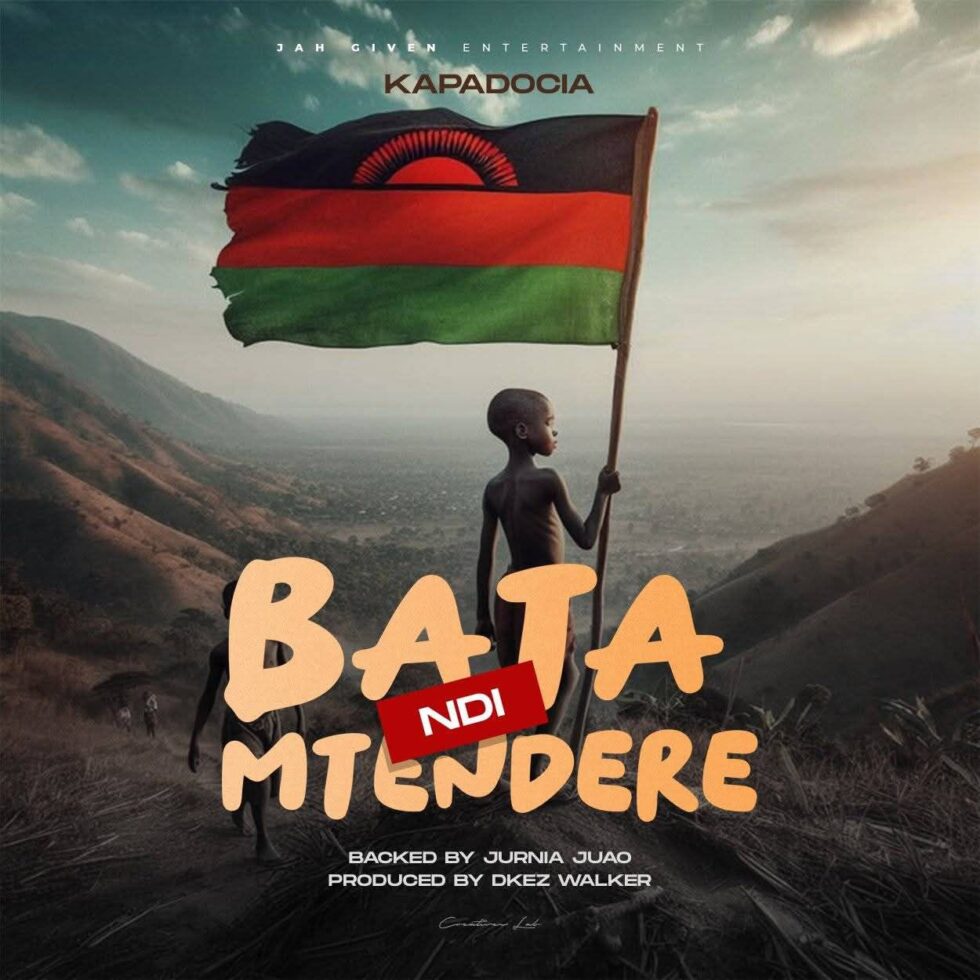
Reggae Dancehall artist Kapadocia has released a peace advocacy song titled “Bata ndi Mtendere” calling on Malawians to make positive and peaceful contributions in the forthcoming General Elections in September this year.

Kapadocia said he noted that some people mostly the youths are used by politicians to commit violence so he decided to use music to preach message of love and unity.

Kapadocia


“We are all Malawians and we should not allow politicians to bring divisions amongst us. Let’s remain peaceful as we await for the General Elections in September,” he said.

“Sitikufana Miyala/  Sitikufana Zikwanje/ Sitikufana Mifuti/ Tikufuna chisankho cha Bata ndi Mtendere…..X2” Goes the Chorus of the song in part.

Produced under a Jah Given Entertainment, the audio of the song was produced by Dikez Walker from Street Vybes Studios  and the video was shot by Red Dot Films.

You can watch Kapadocia’s song by following the link below.

Chatama appointed Ekhaya FC new head coach

0

By Chisomo Phiri

Ekhaya FC has announced the appointment of Enos Chatama, former coach of FCB Nyasa Bullets Reserves, as its new head coach.

Chatama has signed a two-year contract, which will see him at the helm of the Cowboys until January 2027.

Moses Chavula, who successfully guided the team to TNM Super League promotion, has been appointed as his assistant coach.

Unveiled- Chatham, new Ekhaya Boss


In addition to the new coaching staff, Ekhaya FC has also bolstered its squad with the signings of three players who previously worked under Chatama’s mentorship.

These include Kesten Simbi, a defender from Bullets’ main team, Happy Mphepo, a defender from Bullets Reserves, and Elias Missi, a goalkeeper from Bangwe All Stars.

Ekhaya FC’s appointment of Chatama and the new signings come on the back of the team’s impressive performance in the 2024 ThumbsUp Southern Region Football Association (SRFA) League Premier Division, where they earned promotion to the Super League on their first attempt.

TAML reaffirms commitment to safe working environment

0

By Chisomo Phiri

The Tea Association of Malawi Limited (TAML) has reaffirmed its dedication to ensuring a safe working environment for all workers in the industry.

According to TAML Chairperson Sangwani Hara, the sector is committed to upholding the occupational safety and health framework agreed upon by all stakeholders.

Sangwani Hara


He made the remarks during an inspection tour of some tea estates by Minister of Labour Vitumbiko Mumba.

Hara emphasized that risk assessments are conducted within the sector to identify necessary equipment and Personal Protective Equipment (PPE) for workers.

“We assign workers the type of PPE they need based on these assessments to ensure their safety,” he explained.

The tea sector plays a vital role in Malawi’s economy, providing direct employment opportunities to over 60,000 Malawians, making it the second-largest employer after the government.

The sector is the second-highest foreign exchange earner after tobacco.