
Friday, April 17, 2026
No menu items!
spot_img
Home Blog Page 78

WAFCON hosting debate deepens amid conflicting reports

0


By Rahim Abdul

Uncertainty continues to surround the hosting rights of the 2026 Women’s Africa Cup of Nations (WAFCON) following reports that CAF President Patrice Motsepe has revisited an earlier position on the tournament venue.

The confusion began after claims surfaced suggesting that South Africa could take over hosting duties from Morocco, sparking widespread discussion across African football circles.

However, more recent developments indicate that Morocco remains in contention to stage the prestigious women’s football tournament, raising questions about whether any official change was ever finalized.
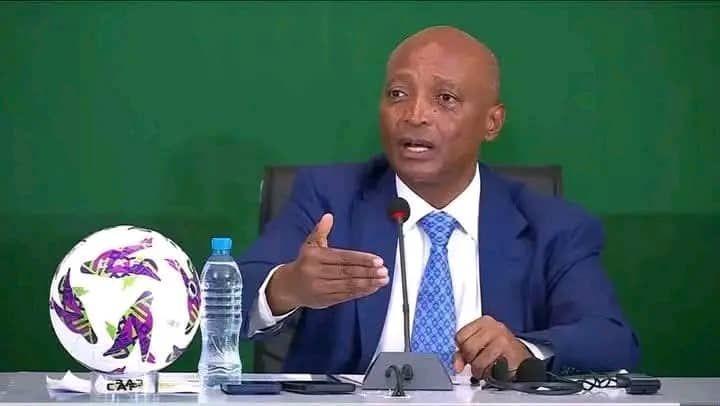
Patrice Motsepe


The Confederation of African Football (CAF), which oversees football on the continent, has yet to release a detailed statement clearly confirming a switch in host nation.

Morocco had originally been awarded the rights to host the 2026 edition, building on its growing reputation as a major destination for continental and international football events.

The North African country has in recent years strengthened its sporting infrastructure, successfully organizing major competitions and positioning itself as a reliable host for high profile tournaments.

On the other hand, South Africa is widely recognized for its experience in staging large sporting events and has the facilities necessary to host a tournament of WAFCON’s magnitude if called upon.

Reports indicating that South Africa was ready to step in fueled speculation that Morocco may have withdrawn, although no formal withdrawal has been officially confirmed by CAF.

The mixed signals have left national teams, sponsors and supporters seeking clarity, as preparations for the tournament depend heavily on knowing the confirmed host country.

WAFCON remains Africa’s premier women’s football championship, showcasing the continent’s top national teams and serving as a pathway to global competitions.

Until an official announcement is made, the focus remains on ensuring that the 2026 Women’s Africa Cup of Nations proceeds smoothly, whether it ultimately takes place in Morocco or another capable host nation.


Chimwemwe Phiri’s “Mama Malawi” Sparks National Reflection on Hunger and Leadership


By Rahim Abdul

Malawian musician Chimwemwe Phiri, who is currently based in South Africa, has stepped into the national spotlight with a powerful new release titled “Mama Malawi,” a song that boldly confronts the country’s ongoing socio economic and environmental struggles.

In the emotionally charged track, Phiri shines a light on the harsh realities affecting many Malawians, including persistent food insecurity and the devastating impact of recurring natural disasters. The song serves as both a lament and a call to action.

Produced in Cape Town and performed in Tumbuka, the song reflects Phiri’s roots in Mzimba District while carrying a message meant for the entire nation. At 45, the artist uses his experience and voice to articulate the frustrations felt by many citizens.

Through heartfelt lyrics, Phiri addresses the worsening food shortages that have left countless families vulnerable.

He paints a vivid picture of communities grappling with hunger as harvests continue to decline.

The musician points to climate change as a major factor behind the country’s challenges.

Chimwemwe Phiri


According to him, erratic rainfall patterns and climate related disruptions are contributing to poor crop yields year after year.

He emphasizes that vulnerable groups, particularly children, are bearing the brunt of these hardships.

The song underscores the urgency of finding lasting solutions to protect future generations.
Phiri believes Malawi’s abundant water resources could be part of the answer.

Speaking from South Africa, he argues that the country should strategically invest in irrigation farming to reduce dependence on unpredictable rainfall.

He suggests that expanding irrigation could provide a sustainable pathway toward food security and shield farmers from the effects of climate change. In his view, practical solutions must accompany national conversations.

Beyond environmental concerns, “Mama Malawi” also takes aim at governance and leadership. The song challenges those in authority to confront the country’s difficulties with honesty and responsibility.

Phiri calls on leaders to acknowledge shortcomings and embrace wisdom in decision making.

He stresses that accountability is essential if Malawi is to move toward stability and prosperity.

The track does not merely criticize but encourages reflection and unity. It urges Malawians, both leaders and citizens, to work collectively toward meaningful change.

With “Mama Malawi,” Chimwemwe Phiri proves that music remains a powerful tool for social commentary. His latest release stands as a reminder that art can amplify the voices of the people and inspire a renewed commitment to building a stronger nation.

Court in Lilongwe adjourns journalist Gadama’s case

0


By Vincent Gunde

The Magistrate court in Lilongwe on Tuesday adjourned the case Journalist Jones Gadama is being accused of writing a story on allegations of misconduct by Ms. Barbara Mwandira, an employee of the public broadcaster-MBC including claims that she had victimized fellow MBC employee Mayeso Chikhadzula following a regime change from the MCP to DPP.

The alleged story found its way for publications in the Maravi Post online and upon seeing the document posted, Barbara Mwandira reported the Maravi Post to Malawi Police Service (MPS) demanding the arrest of the Post administrators and its editors.

A Police officer Mr. Chimwemwe Magawa summoned the Maravi Post Country Manager Lloyd M’bwana for questioning regarding Jones Gadama’s published story who referred the police officer to the Publisher for editorial resolution.

The Police officer refused and started issuing threats of arrests, intimidations and pressure to the Maravi Post administrators to produce staff members behind the publications of such an article and this resulted to Jones Gadama’s arrest.

On 5th December, 2025 Police officers travelled from Lilongwe to Blantyre where they arrested Gadama (Maravi Post Contributor) allegedly at the instigation of Ms. Barbara Mwandira, transporting him over night, detained him at Lingadzi Police Station.

While in the hands of Police, Gadama was denied communication to his family, friends, relatives and fellow journalists through various media platforms to alert them but this did not happen, his mobile phone was confiscated and it is still in the hands of police.

Jones Gadama with two journalists sympathizing with him at the Magistrate Court in Lilongwe.


Appearing in court on Tuesday, the case was not heard due to State’s failure to furnish the Defence Team with the disclosures of the case hence to adjourn the case to 10th March, 2026 at the Magistrate Court in Lilongwe.

Speaking to fellow journalists from Lilongwe who went to the court to sympathize with him, Jones Gadama said he is praying for the truth to come out at the right time lamenting that he spends K50,000 one way travelling from Blantyre to Lilongwe translating to K10,000 transport expenses to honor his bail condition.

“In Lilongwe, I spend a night at a lodge, I am very thankful to Mr. Elwin Mandowa, Maravi Post Managing Director who supports me in meeting some of my expenses to travel to Lilongwe and back to Blantyre,” he said.

The Maravi Post has since written a letter to Minister of Homeland Security Peter Mukhito on its grave concerns for freedom of expression, freedom of the press and the professional independence of journalists in Malawi.

The Publication has complained to Mukhito that despite the matter being before the courts, police officers particularly Mr. Magawa is continuing threatening arrests of Maravi Post staff and its Contributor Jones Gadama is compelled to travel fortnightly from Blantyre to Lilongwe to report for bail despite the availability of Police stations in Blantyre causing unnecessary financial and psychological strain.

Keli P Unveils Debut Album “A Boy from Lunchenza”


By Rahim Abdul

Rising Afrobeat artist Keli P has officially stepped into the music spotlight with the release of his debut album titled “A Boy from Lunchenza,” marking a significant milestone in his artistic journey.

The album represents more than just a collection of songs,it tells the story of his roots, growth and determination to rise from Lunchenza to wider recognition in Malawi’s vibrant music scene.

According to In House Media, the management company overseeing the artist, the album contains seven carefully crafted tracks. The songs were produced and refined by professional producers under the In House Media banner.

Keli P


The management described the project as a well planned body of work that reflects Keli P’s unique Afrobeat sound blended with personal experiences and creative storytelling.

Speaking about the release, Keli P expressed excitement and pride in achieving a long held dream.

He revealed that he has been working on the album since 2023, dedicating time and effort to ensure it meets his artistic vision.

The artist said releasing the album is a major breakthrough in his career and a sign of his growth and commitment to music.

Among the standout tracks on the album are “Lunchenza,” a song that pays tribute to his hometown, “Mtima,” “Luso,” and “Wagwa Nayo,” which features fellow artist Shano Index.

The collaboration with Shano Index on “Wagwa Nayo” adds diversity to the project, blending different styles and voices to create a dynamic listening experience.

In a move to further promote the album, Keli P has already released the official music video for “Mtima,” giving fans a visual taste of what the project offers.

He also disclosed plans to perform songs from the album live at Mikozi Studios, a step that could help him connect more closely with fans and music lovers.

With passion, patience, and a clear sense of identity, Keli P’s new album signals the arrival of a determined Afrobeat voice ready to make an impact both locally and beyond.

Zimbabwe’s democracy under threat: Parliament to choose president

By Burnett Munthali

Zimbabwe’s cabinet has approved a bill allowing Parliament to elect the president, a move that has sent shockwaves across the nation and sparked concerns about the erosion of democracy.

The proposed bill, which still needs to be passed by Parliament, could potentially extend President Emmerson Mnangagwa’s rule to 2030, giving him another seven years in office.

Critics argue that the move is a blatant attempt by Mnangagwa’s party, ZANU-PF, to consolidate power and undermine the democratic process, which has been a hallmark of Zimbabwe’s politics since independence.

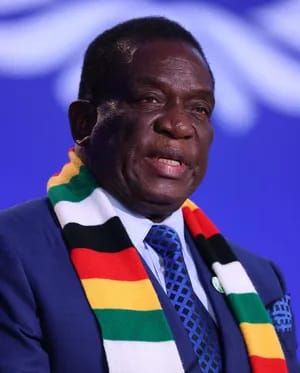
Mnangagwa


The bill’s approval has also raised fears of increased migration, as more Zimbabweans seek stability and opportunities outside the country, particularly in South Africa, which has historically been a popular destination for Zimbabwean migrants.

The proposed changes to the electoral process are seen as a major setback for democracy in Zimbabwe, and have been widely condemned by opposition parties and civil society organizations.

The Zimbabwean government has defended the move, saying it is aimed at strengthening the country’s institutions and promoting stability, but critics argue that the real intention is to suppress opposition and maintain power.

As news of the bill spreads, Zimbabweans are expressing their discontent on social media, with many calling for protests and demonstrations against the move.

The international community is also watching the situation closely, with concerns that the move could further isolate Zimbabwe and undermine its economic recovery efforts.

The outcome of the bill remains uncertain, but one thing is clear: the eyes of the nation are on Parliament, as Zimbabweans wait with bated breath to see if democracy will prevail.