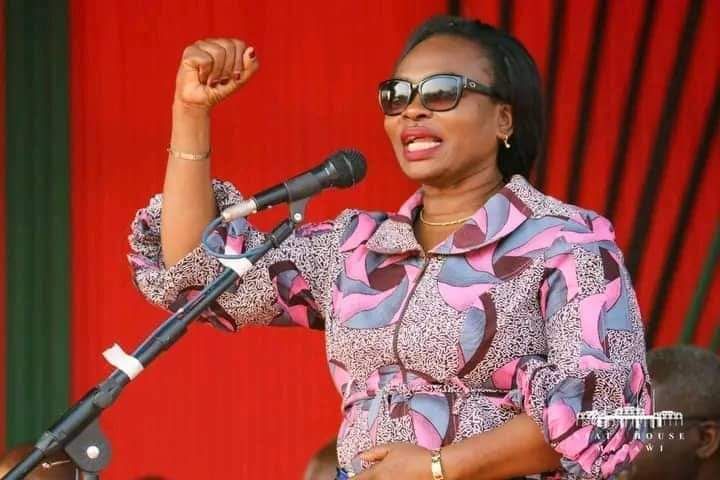
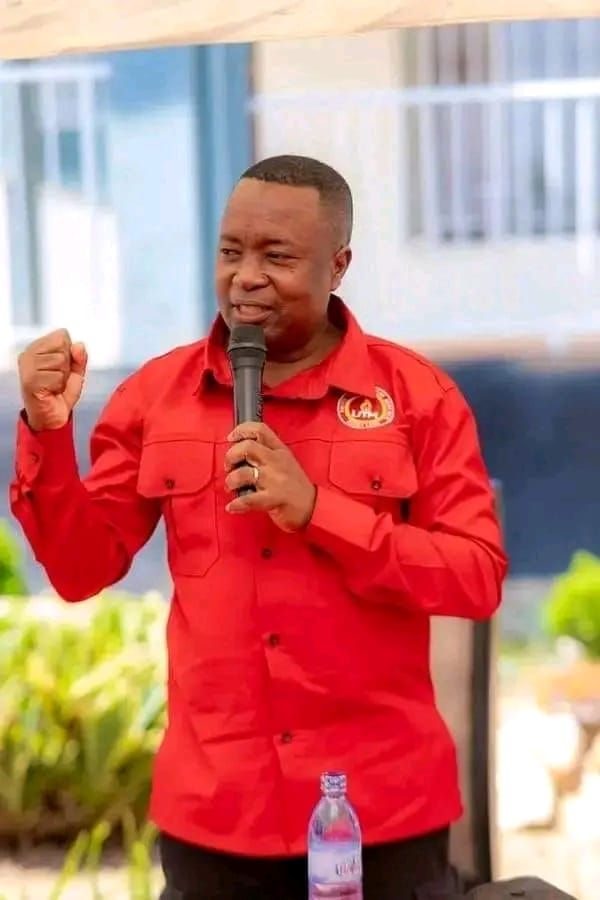
Speaker of Parliament Catherine Gotani Hara has reaffirmed her commitment to maintaining the independence of the office, despite serving as both Speaker and First Deputy President of the Malawi Congress Party (MCP).
Speaking on the sidelines of Parliament Week in Lilongwe, Hara emphasized that the Constitution does not explicitly address this dual role, as long as she upholds impartiality in her duties.
As the first female Speaker of Parliament, Hara has been at the helm since June 2019, bringing a wealth of experience from her background in politics and international development.
Her stance on this issue underscores the importance of checks and balances in Malawi’s governance system.
“The Constitution remains silent on this matter,” Hara stated, “and I am committed to maintaining impartiality in my duties as Speaker.” This assurance comes amidst concerns that her dual role might compromise the independence of the office.
As chairman during debates in the House of Commons, the Speaker plays a crucial role in ensuring that MPs are heard and that rules are observed.
This position demands a delicate balance between party affiliations and the need to maintain neutrality.
The launch of Parliament Week aims to raise awareness about the functions and operations of Parliament, promoting transparency and accountability in governance.
This event provides a platform for citizens to engage with their elected representatives and understand the legislative process.
Catherine Gotani Hara’s experience spans various roles, including Programme Officer for the UK’s Department of International Development and Deputy Minister of Transport and Public Infrastructure.
Her leadership in the MCP and commitment to impartiality will be closely watched as Malawi navigates its governance landscape.
Speaker Hara’s defense of her dual role highlights the complexities of Malawi’s governance system.
As the country moves forward, the interplay between party politics and institutional independence will remain a critical aspect of its democratic development. However a human rights activist Pastor Moses Shumba dismissed Hara’s claim of impartiality in Parliament. “Madam speaker should be ashamed for telling lies,everyone knows that she has never been impartial in Parliament,” said pastor shumba.
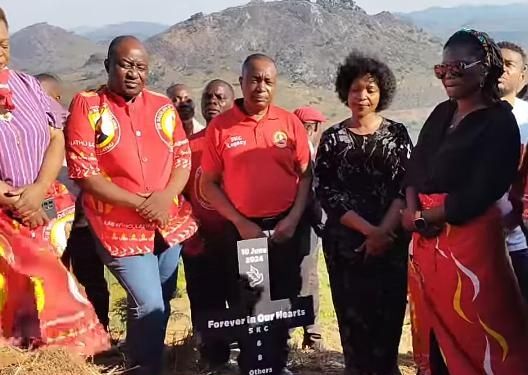
Newly elected UTM party leader, Dr. Dalitso Kabambe, paid his respects today at the site of the tragic plane crash that claimed the lives of former Vice President Saulos Chilima and eight others on June 10 this year.
Kabambe’s visit comes as the Commission of Inquiry, established to investigate the incident, completes its initial two phases of investigation in the Northern and Eastern regions.
During his visit, Kabambe reiterated his commitment to uncovering the truth behind the crash. “We are keenly following the activities of the Commission and will ensure that Malawians know the truth,” he stated. Kabambe also appealed to the government to construct a monument at the crash site, saying, “Let me also ask the government to construct a monument here, not what we have at the moment.”
Kabambe visiting Chikangawa
The Commission of Inquiry, chaired by Justice Jabbar Alide, has expressed concerns over the poor public response to their call for information, with only one person coming forward voluntarily.
Despite this, Kabambe’s visit demonstrates his dedication to transparency and accountability.
Following his visit to the crash site, Kabambe toured registration centers in Nkhata Bay, engaging with locals and reinforcing his commitment to the region’s development.
As Malawi prepares for the 2025 elections, Kabambe’s leadership and commitment to transparency will be closely watched.
The UTM party’s growth and influence under his leadership will likely shape the country’s political landscape.
Minister of Transport and Public Works, Jacob Hara, has warned enforcers of traffic rules and regulations to stop being lenient towards those who fail to comply with laws on the country’s roads.
Speaking at Gymkhana Ground in Zomba on Sunday during the commemoration of Africa Road Safety Day, Hara expressed concern over the behavior of some law enforcers.
Said Hara:”Why give someone a General Receipt (GR) and allow them to commit multiple crimes on the road at the expense of people’s lives?.This has to end forthwith.”
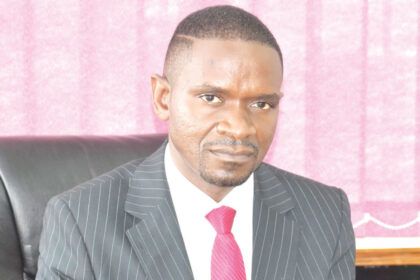
Jacob Hara
The minister underscored the government’s commitment to meeting Malawi 2063, to reduce fatal accidents by 50 percent by 2030.
Mayor for Zomba City, Councilor Christopher Jana, lamented the lack of seriousness in enforcing the law on the roads of Malawi.
“The operators are overloading, using unworthy vehicles, and other shortcuts to beat the law, to satisfy the employer,” said Jana.
The Director of Road Traffic and Safety Services(DRTSS), Andrew Sandula, said that if all stakeholders join hands, accidents could be reduced to minimal levels.
In Malawi,50 percent of the road accidents are caused by kabaza operators, according to the DRTSS.
The African Road Safety Day was commemorated under the theme: Voluntary compliance with road traffic rules saves lives, non-compliance is fatal.
Political activist Bon Kalindo has thanked Dr. Michael Usi for listening to his call not to compete for a presidential seat at the UTMs elective conference in Mzuzu observing that the results which have come from Mzuzu would have destroyed his legacy.
Kalindo said if the UTMs heavy weights were getting 26, 22 and 22 votes, Dr. Usi would have got 11 votes and this should not have surprised anyone as all Malawians were expecting that Dr. Usi’s legacy would be ending at the elective conference in Mzuzu.
Usi
He has advised Dr. Usi that now his legacy has been protected, he should set his eyes in the front not looking behind as he has a lot of job to do being the Vice President of the Republic of Malawi saying there will be no cooking without three-stone pillars (mafuwa).
Speaking through an audio clip, Kalindo has appealed to Dr. Dalitso Kabambe to reach out to all who have failed to make it at the convention assuring him that there will be no UTM without Dr. Patricia Kaliati, Noel Masangwi, Mai Makuta, and Newton Kambala, among others.
Kalindo has also advised Dr. Kabambe not to hold any meeting without the presence of the heavy weights, these are the pillars behind the formation of the UTM in 2017 saying the elective conference has buried Dr. Saulosi Chilima as President of the UTM.
“Congratulations to Dr. Kabambe and all that have made it, celebrate with responsibility to protect Dr. Saulosi Chilima’s legacy,” said Kalindo.
On his part, Limpopo FMs Nkhanga zaona Producer Comrade Mtanyiwa, has advised Dr. Dalitso Kabambe to forget about the past and work together with the losing candidates for the benefit of UTM members and Malawi.
Comrade Mtanyiwa has appealed to Dr. Kaliati, Kambala, Masangwi not to leave Dr. Kabambe alone or even defecting to other parties but to sit down with him whenever things have gone wrong advising the UTM never and ever to change UTM cloth where there’s a picture of Dr. Saulosi Chilima.
He has pleaded with Dr. Kabambe to incorporate Dr. Kaliati, Kambala, Masangwi, and other heavy weights into the National Executive Committee (NEC) of the party saying their experience and expertise, will be a get way to the successes of the UTM.
“Let all the winners and losers be together for the great-UTM, sit down with Madam Mary Chilima in the running of the party,” said Mtanyiwa.
The UTM party’s recent convention has left many Malawians wondering how Dr. Dalitso Kabambe, a relative newcomer, managed to secure a landslide victory over seasoned party members like Patricia Kaliati, Newton Kambala, and Mathews Mtumbuka.
To understand this unexpected turn of events, let’s dive into the factors that contributed to Kabambe’s success.
*The Power of Fresh Perspective*
Dr. Dalitso Kabambe’s landslide victory in the UTM party’s recent convention can be attributed to the power of fresh perspective.
As a relative newcomer, Kabambe brought a fresh set of eyes and ideas to the table, unencumbered by the party’s internal dynamics and historical baggage.
This allowed him to approach problems and challenges with a clean slate, unafraid to challenge the status quo and propose innovative solutions.
Having a fresh perspective can be incredibly valuable, especially in politics where stagnation and complacency can be detrimental.
It enables leaders to identify unseen opportunities, think outside the box, and craft new, improved realities.
In Kabambe’s case, his fresh perspective likely resonated with party members seeking change and a break from the traditional power structures.
By leveraging the power of fresh perspective, Dr. Kabambe was able to connect with party members and secure a landslide victory.
His success serves as a testament to the importance of innovation and forward thinking in politics.
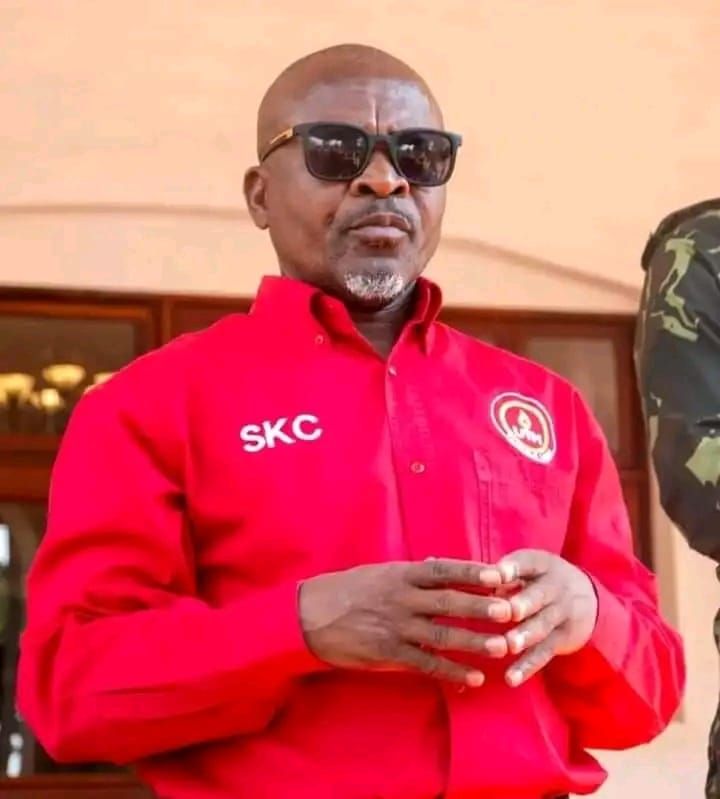
Kabambe
Challenging the status quo
Dr. Dalitso Kabambe’s landslide victory in the UTM party’s recent convention can be attributed, in part, to his willingness to challenge the status quo.
By doing so, he appealed to party members seeking change and growth.
Challenging the status quo means shaking things up and pushing for change, which can be difficult, especially when those in power tend to retain it.
In the context of UTM, Kabambe’s challenge to the status quo likely meant questioning traditional power structures and proposing innovative solutions.
This approach resonated with delegates and party members eager for a fresh perspective.
By challenging the status quo, Kabambe demonstrated his commitment to progress and growth, setting him apart from seasoned party members.
To effectively challenge the status quo, leaders must prioritize ideas, collaborate with others, and be willing to take calculated risks.
By doing so, they can create a culture that values change and progress.
In Kabambe’s case, his willingness to challenge the status quo contributed significantly to his landslide victory.
The role of party dynamics
Dr. Dalitso Kabambe’s landslide victory at the UTM party convention can be attributed, in part, to the role of party dynamics.
The UTM party’s recent constitutional amendments, which aimed to improve the party’s structure and leadership processes, played a significant role in Kabambe’s success.
These amendments included the restructuring of regional divisions, expanding from four to five regions, which allowed for broader representation and greater inclusivity in urban and rural areas.
Additionally, the party introduced a five-year term limit for its leaders, promoting leadership renewal and accountability.
The amendments also ensured greater democracy and member involvement in the selection process of the deputy leader, who is now elected at the party’s convention.
The transition in party leadership following Dr. Saulos Chilima’s passing also created an opportunity for new leadership to emerge.
Michael Usi assuming the presidency and later withdrawing from the convention created a power vacuum that Kabambe capitalized on.
Kabambe’s victory coincided with his birthday, and in his acceptance speech, he acknowledged the strife within the party and congratulated the other candidates.
These factors combined to create a perfect storm that propelled Kabambe to victory, demonstrating the significance of party dynamics in shaping leadership outcomes.
Unity and Inclusivity
In his acceptance speech, Kabambe emphasized the importance of bringing all talent on board, signaling his intention to work collaboratively with all members of UTM.
This inclusive approach resonated strongly with delegates and party members, who are eager for a leader who can unite the party and drive meaningful change.
Kabambe’s commitment to unity was evident in his praise for his fellow competitors, acknowledging their unique leadership qualities and expressing gratitude for their participation in the convention.
By recognizing the strengths of others, Kabambe demonstrated his willingness to put aside personal interests and prioritize the party’s collective success.
By championing unity and inclusivity, Kabambe has set the tone for a new era of leadership within UTM, one that prioritizes collective success over individual interests.
As he prepares to lead the party into the 2025 elections, Kabambe’s commitment to unity will be crucial in maintaining momentum and energizing party members.
Conclusion
Dr. Dalitso Kabambe’s landslide victory is a testament to the power of fresh perspectives, unity, and inclusivity.
As UTM prepares for the 2025 general elections, Kabambe’s leadership will be crucial in shaping the party’s future.
Will he be able to maintain momentum and lead UTM to victory? Only time will tell.