Football Association of Malawi (FAM) President Fleetwood Haiya has announced that he will host a live interactive session on Facebook in the first week of February.
According to Haiya, the session aims to bring together football enthusiasts to share and discuss ideas on how to improve the sport in the country.
Haiya
He says the live session will provide a platform for collaborative brainstorming, allowing participants to contribute their thoughts and ideas on transforming Malawi’s football.
The FAM President says as an incentive, 10 lucky participants will receive FH-branded T-shirts.
A 26-year-old police officer, John Mwenye, has died after being hit by a motorcycle while on duty in Mchinji district.
In an interview,National Police spokesperson Peter Kalaya said the accident occurred at around 4pm on Thursday at Makiyeli when the rider of the motorcycle, Lawrence Mwale, was heading in the direction of Kamwendo from Mchinji Boma on the Mchinji-Lilongwe (M12) road, with a pillion passenger.
The late John Mwenye
He said the motorcyclist hit the officer who was standing on the offside of the road, in the line of duty, and due to the impact Mwenye sustained severe head injuries and was rushed to Mchinji District Hospital where he died while receiving treatment.
Kalaya said the rider and the pillion passenger sustained minor bruises and were also rushed to the same hospital for treatment.
The deceased, hailed from Mbedza Village, Traditional Authority(T/A) Chiwere in Dowa.
FCB Nyasa Big Bullets goalkeeper Richard Chimbamba has signed a new three year-deal that will see him staying at the club until 2027.
Chimbamba started playing for Bullets in 2017 but he was released on loan to Ntopwa FC in the 2019/20 season.
Richard Chimbamba
The 30-year-old returned to Bullets in the 2020/21 season following the injury of the then Bullets goalkeepers Ernest Kakhobwe and Rabson Chiyenda.
He has since become a regular for the People’s team, making over 80 appearances and winning the TNM Super League, Airtel Top 8 and Castel Challenge Cup Golden Gloves.
Civil Service United attacker Festus Duwe is expected to sign a deal with Silver Strikers Football Club after the two sides agreed personal terms.
The development came just a day after Civil Service United Team Manager Edgar Chipalanjira told reporters that the player and another player ‘Masiya Manda’, were not for sale .
Festus Duwe
However, Duwe is reported to have made a decision to leave the club and join the Central Bankers following a lucrative offer from the Area 47 side.
Silver Strikers are reported to have offered the youthful player a K600,000 salary and K6 million signing on fee beating Mighty Wanderers who offered a K450,000 salary and K55 million signing on fee.
Festus Duwe who was loaned to Civil from Ascent Academy, has been the talk of the town since the opening of the transfer window as Silver and Wanderers were chasing for his signature.
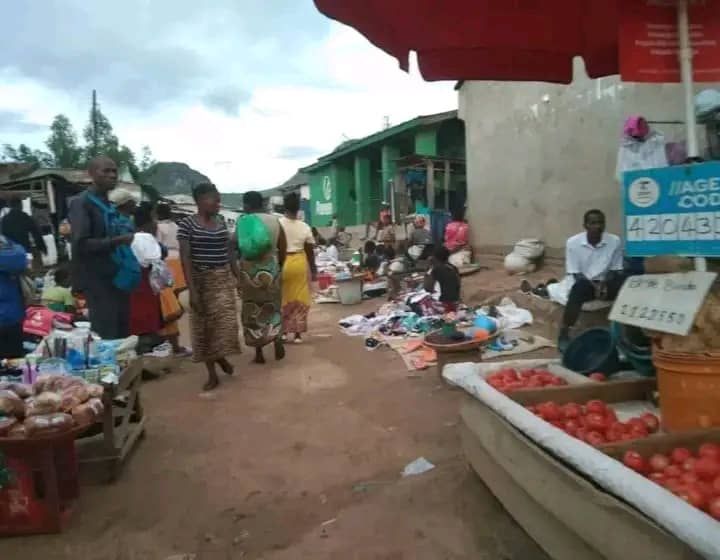
Life in the ghetto has always been challenging, but the escalating prices of essential goods have made it even more difficult for residents to make ends meet. The cost of basic commodities continues to skyrocket, leaving many families struggling to afford even the most basic necessities. Here is a breakdown of the current prices for essential items and the harsh reality faced by those living in the ghetto.
The staple food, maize, is now a luxury for many households. A 5-liter bucket of maize is selling at K7,000, while a 50kg bag costs an eye-watering K70,000. For those who rely on maize flour (ufa) for their daily meals, the situation is equally dire, with 1kg of ufa costing K2,200.
Rice, another alternative staple, is priced at K3,000 per kilogram, making it an expensive option for most families. Beans, a crucial source of protein, are selling at K4,500 per kilogram, while a small heap of bonya (dried fish), a common accompaniment to meals, costs between K700 and K1,400.
Even vegetables, once considered affordable, have become a financial strain. Three bundles of nkhwani (pumpkin leaves), mpiru (mustard greens), or rape are sold for K100, but the bundles are much smaller than they used to be.
Cooking oil prices are particularly concerning, with 2 liters of oil selling for between K13,500 and K14,000. For those who cannot afford this, small quantities are measured and sold in condom packets for K500 each. Sugar prices vary depending on the seller, ranging from K3,000 to K3,500 per kilogram, forcing many families to forgo sweetened tea altogether.
Soap, an everyday necessity, has not been spared from the rising costs. A bar of Azam soap costs K700, while U-Fresh is slightly cheaper at K650. Candles, a necessity in areas with frequent blackouts, cost K400 each, and a box of matches is priced at K150.
Charcoal, the primary source of cooking fuel for many ghetto households, is now selling at K20,000 to K22,000 per bag, with smaller quantities priced at K700. This has forced some families to rely on firewood or cook less frequently.
Fruits, once a cheap and healthy snack, are also becoming unaffordable. Five ripe bananas now cost K500, while a small plate of roasted termites (ngumbi) is sold for K500, with a single termite priced at K10.
Impact on Daily Life: These rising prices are having a devastating impact on ghetto residents. Families are forced to make tough choices between food, school fees, and medical expenses. The high cost of living has also led to increased borrowing, with many turning to informal lenders who charge exorbitant interest rates.
Community Resilience: Despite these challenges, ghetto residents continue to find ways to survive. Many rely on communal cooking, where neighbors pool resources to prepare meals together. Others engage in small-scale businesses, such as selling snacks or second-hand clothes, to make ends meet.
The government and other stakeholders must address this crisis urgently. Subsidies on essential goods, support for small-scale farmers, and strict regulation of market prices are necessary to alleviate the burden on low-income families. Without immediate intervention, the rising cost of living will continue to push many more into poverty.
The ghetto, a place of resilience and community spirit, now faces one of its greatest challenges. It is up to all of us—government, private sector, and individuals—to find solutions and ensure that everyone can afford the basic necessities of life.