
Saturday, December 13, 2025
No menu items!
spot_img
Home Blog Page 79

Kanyama Chiume: The visionary nationalist who shaped Malawi’s independence struggle

0

By Burnett Munthali

Kanyama Chiume remains one of the most influential figures in Malawi’s political history, remembered as a fearless nationalist, eloquent intellectual, and staunch advocate for African self-determination.

Born on November 22, 1929, in Nkhata Bay, northern Malawi, Chiume’s early life was marked by a deep curiosity and a hunger for knowledge that would later define his political and intellectual journey.
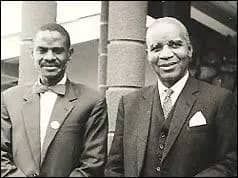
Kanyama and Kamuzu


He attended mission schools in Malawi before pursuing further studies at Makerere University in Uganda, one of Africa’s premier institutions at the time.

At Makerere, Chiume interacted with a generation of emerging African leaders who would go on to shape the continent’s post-colonial future, including Julius Nyerere of Tanzania and Milton Obote of Uganda.

These interactions exposed him to Pan-African ideals and the growing wave of anti-colonial sentiment sweeping across the continent.

Upon returning to Nyasaland (now Malawi) in the early 1950s, Chiume became an educator and journalist, using his platform to challenge colonial injustices and advocate for African empowerment.

His sharp intellect and passionate oratory quickly propelled him into the political spotlight, earning him respect among both his peers and the general public.

In 1956, he joined the Nyasaland African Congress (NAC), which was then the leading political movement fighting for self-governance.

Chiume’s leadership and strategic insight proved instrumental in mobilizing public support for the independence struggle.

When Dr. Hastings Kamuzu Banda returned to Nyasaland in 1958 to lead the nationalist movement, Chiume became one of his closest allies.

Together, they worked tirelessly to organize the Malawi Congress Party (MCP), which succeeded the NAC and became the driving force behind the fight for independence.

Chiume played a crucial role in articulating the party’s vision for a free and self-governing Malawi, emphasizing unity, education, and national development.

His speeches in the Legislative Council were fiery and uncompromising, calling for an end to colonial domination and demanding political representation for Africans.

As independence approached, Chiume served as Minister of Education and later as Minister of Foreign Affairs in the newly independent Malawi government formed in 1964.

However, his relationship with Dr. Banda soon deteriorated as ideological differences emerged over governance, democracy, and human rights.

Chiume, along with other progressive ministers such as Augustine Bwanausi, Yatuta Chisiza, and Henry Chipembere, opposed Banda’s increasingly autocratic leadership style.

This ideological rift culminated in the historic Cabinet Crisis of 1964, one of the most defining political turning points in Malawi’s post-independence history.

Chiume and his colleagues criticized Banda for centralizing power, suppressing dissent, and adopting neo-colonial economic policies.

In response, Banda dismissed the dissenting ministers, forcing Chiume into exile for over three decades.

While in exile, Chiume continued to advocate for democracy and justice in Malawi, writing extensively about African nationalism and the need for accountable governance.

He spent much of his time between Tanzania and Zambia, where he remained active in Pan-African circles and intellectual debates about Africa’s post-colonial trajectory.

Even in exile, his influence persisted as his writings and ideas inspired a new generation of Malawian activists and thinkers who later played roles in advocating for multi-party democracy in the 1990s.

When Malawi transitioned to a democratic system in 1994, Chiume finally returned home after years of exile.

His homecoming was symbolic, representing both reconciliation and recognition of his immense contribution to the nation’s founding.

He continued to participate in public discourse, urging Malawians to remain vigilant in protecting the freedoms they had fought for.

Chiume’s later years were marked by reflection and writing, as he documented his experiences in his memoir Autobiography of a Politician, published in 1975.

The book offers a detailed account of Malawi’s struggle for independence and the political betrayals that followed, making it one of the most important historical texts in the country’s political literature.

Kanyama Chiume passed away on November 21, 2008, leaving behind a legacy of courage, intellect, and unwavering dedication to justice.

His life’s work remains a testament to the power of conviction and the price often paid by those who challenge authoritarianism in pursuit of liberty.

Concluding Analysis

Kanyama Chiume’s story is more than a biography—it is a mirror reflecting the triumphs and tribulations of Malawi’s political evolution.

His commitment to truth and justice, even in the face of exile, exemplifies the resilience required to defend democratic principles in times of oppression.

Chiume’s life serves as a lesson to current and future leaders about the dangers of concentrating power in one individual and the importance of nurturing inclusive, accountable governance.

As Malawi continues to navigate the challenges of democracy and nation-building, Chiume’s vision of a just, educated, and united nation remains as relevant today as it was during the dawn of independence.

His legacy challenges Malawians to honor their democratic heritage not merely through words, but through steadfast action in the pursuit of equality, freedom, and national progress.
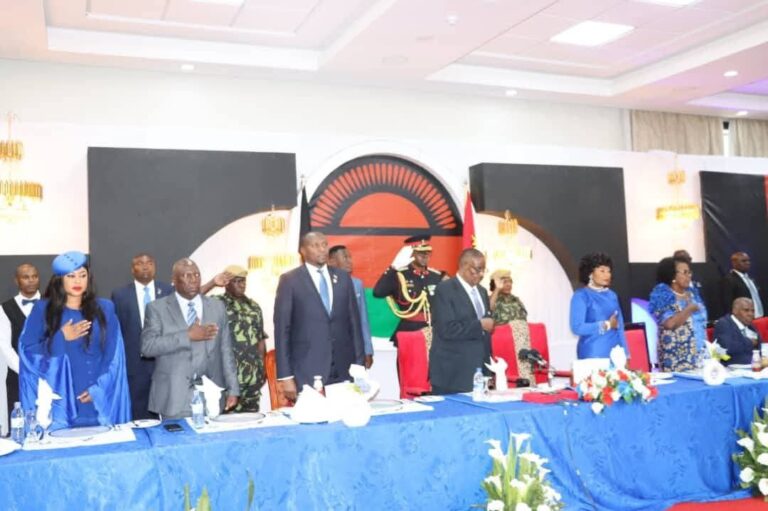
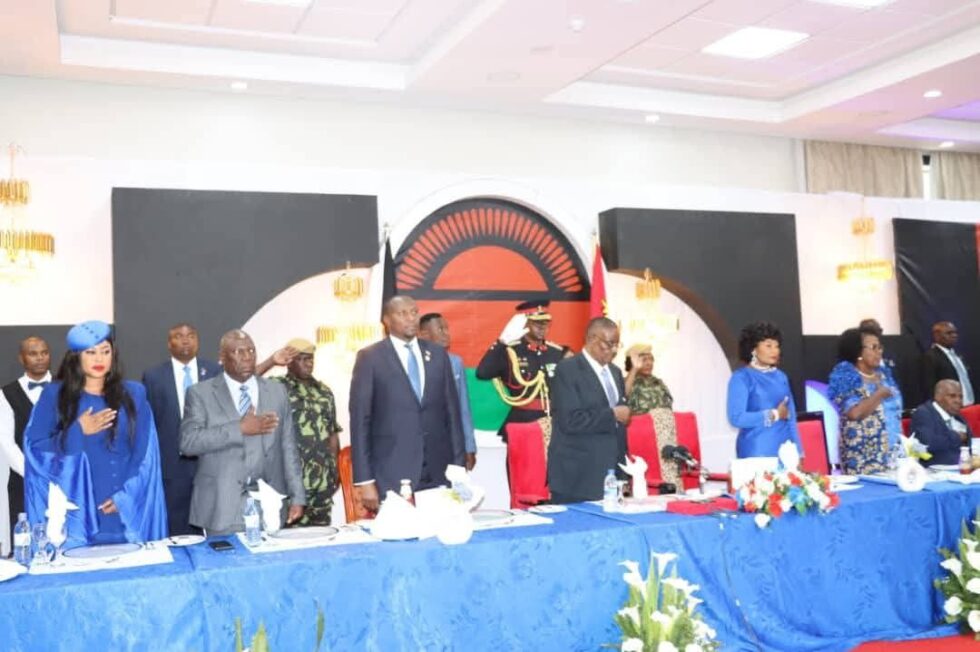
President Mutharika Hosts Dignitaries at State Luncheon Following Inauguration

0

By Wadza Botomani

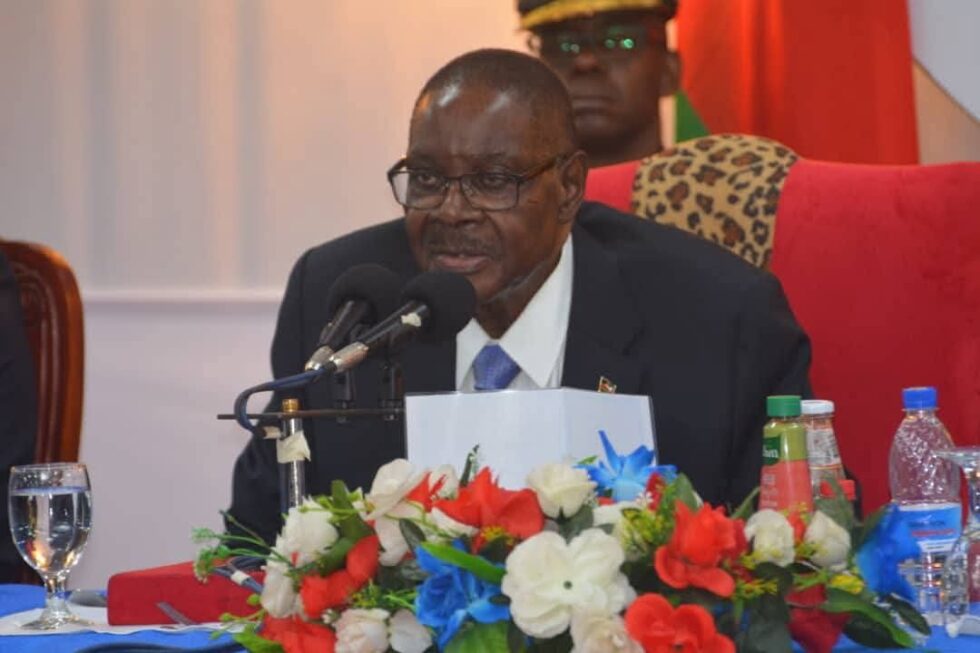
President Arthur Peter Mutharika and the First Lady, Madame Gertrude Mutharika, hosted a state luncheon at the Sunbird Mount Soche Hotel in Blantyre on October 4th, following his inauguration as Malawi’s seventh President. The Vice President, Justice Dr. Jane Ansah, and her husband were also in attendance at the event, which was held for the foreign dignitaries who attended the swearing-in ceremony earlier at Kamuzu Stadium .

The inauguration ceremony was attended by a significant contingent of regional leaders, underscoring the event’s diplomatic importance. The confirmed international guests included Presidents Daniel Chapo of Mozambique, Duma Boko of Botswana, and Emerson Mnangagwaof Zimbabwe .

A high-level delegation from Eswatini was also present . The event also served as a display of national unity, with former Malawian Presidents Dr. Joyce Banda and Dr. Bakili Muluzi in attendance .

During his inaugural address, President Mutharika vowed to root out corruption and rebuild the country’s struggling economy, declaring that the “honeymoon of looting government is over” . He acknowledged that the nation is facing a crisis with acute food shortages, a lack of foreign exchange, and severe cost-of-living pressures . Outgoing President Lazarus Chakwera was notably absent from the ceremony, though his party conveyed a message of goodwill to the new administration .

Swila Calls for Service and Solutions in Congratulatory Message to New President

0

By Wadza Botomani

Presidential candidate Smart Swila has congratulated Professor Arthur Peter Mutharika on his inauguration as Malawi’s President, urging the new leader to focus on the pressing needs of the people. Speaking at the ceremony held at Kamuzu Stadium in Blantyre, Swila expressed hope that President Mutharika and Vice President Justice Dr. Jane Ansah would address the severe challenges facing the nation.

“When I recall what we have been going through for the past five years, my heart burns. It hurts so much,” Swila stated. “That is why we are looking to this government to serve us and address challenges such as unemployment, inflation, and inadequate public services.”

Smart Swila


He further emphasized that public leadership must be rooted in service, accountability, and integrity, calling on the new administration to prioritize citizens’ needs above all else. “We need leaders who listen to the people and act for the benefit of all, not just a few,” he added.

The inauguration saw Professor Arthur Peter Mutharika take his oath as Malawi’s seventh President, administered by Chief Justice Rizine Mzikamanda. The event, symbolizing a peaceful transition of power, was attended by thousands of Malawians and numerous foreign dignitaries, including heads of state from Zimbabwe, Mozambique, Botswana, and Tanzania. The ceremony marked a significant milestone for the country, reflecting a collective optimism for renewed progress under the new administration.

Mutharika Declares Era of Accountability in Inaugural Address

0

By Wadza Botomani

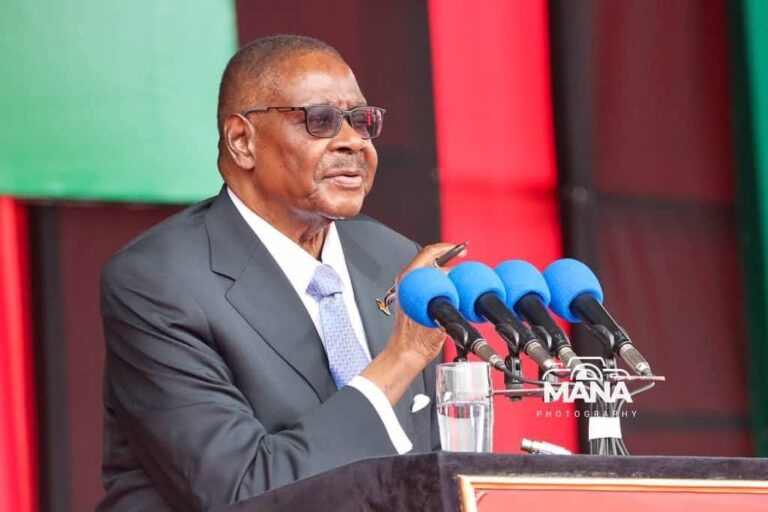
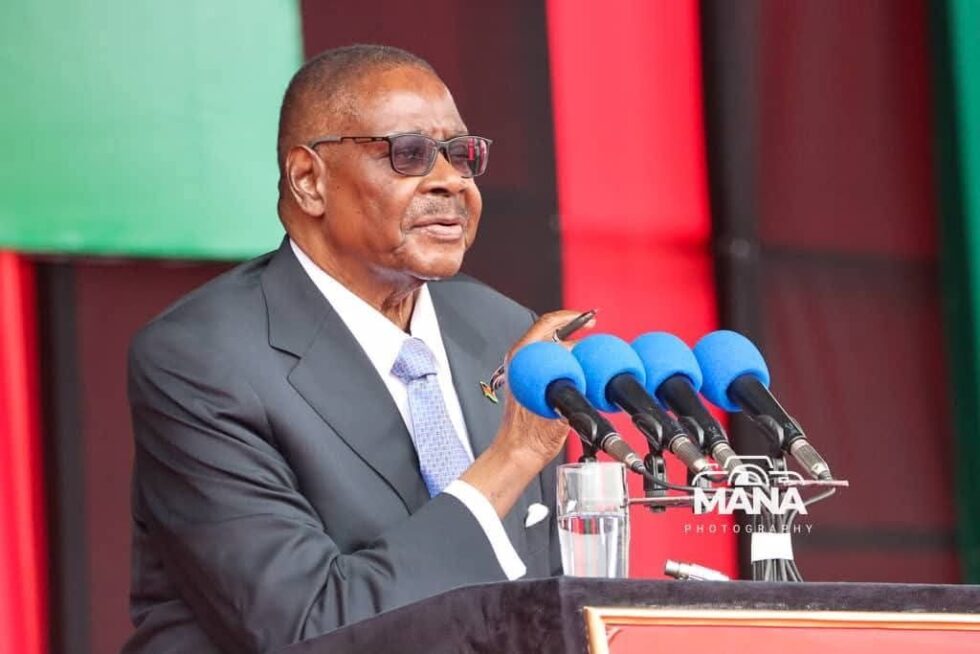
In his inaugural address at Kamuzu Stadium in Blantyre on Saturday, President Professor Arthur Peter Mutharika announced a firm stance against corruption, declaring that the “honeymoon of plundering government resources is over.” He emphasized that his administration, led by the Democratic Progressive Party (DPP), is committed to restoring integrity and efficiency in public service.

President Mutharika stated that holding public office must not be an opportunity for personal enrichment or favoritism. He issued a direct warning, saying, “Malawi belongs to all of us, regardless of political, cultural, or religious background. So, if anyone acts to the contrary, I will go after him or her. Never say I never warned you.”

Mutharika


Acknowledging the country’s challenges, including shortages of foreign exchange and food, the President called on citizens to embrace patience, discipline, and hard work to help rebuild the nation. He pledged that the DPP-led government would pursue a transformative agenda focused on national recovery and progress, declaring, “The mighty DPP is back with a renewed purpose, and we will promote real change.”

He also extended an invitation to international investors, assuring them of a conducive environment for business and investment to improve the living standards of Malawians.

Earlier, Vice President Justice Dr. Jane Ansah praised Professor Mutharika as a visionary and committed leader dedicated to unity, peace, and prosperity. The ceremony was attended by several dignitaries, including former Malawian Presidents Dr. Joyce Banda and Dr. Bakili Muluzi, as well as regional leaders and representatives from Mozambique, Zimbabwe, Tanzania, Angola, Namibia, Zambia, and the Democratic Republic of Congo.

Nankhumwa Endorses Mutharika’s Agenda, Calls for United Action

0

By Wadza Botomani

Kondwani Nankhumwa, president of the People’s Development Party (PDP), has commended newly inaugurated President Professor Arthur Peter Mutharika for prioritizing citizen welfare. Nankhumwa, a former vice president of the ruling DPP for the Southern Region, spoke to reporters at Kamuzu Stadium following the swearing-in ceremony.

He described the president’s address as a very good speech, noting its commitment to eradicating pressing issues like corruption, economic stagnation, and social inequalities. Nankhumwa expressed that Malawians are hopeful these words will translate into meaningful action.

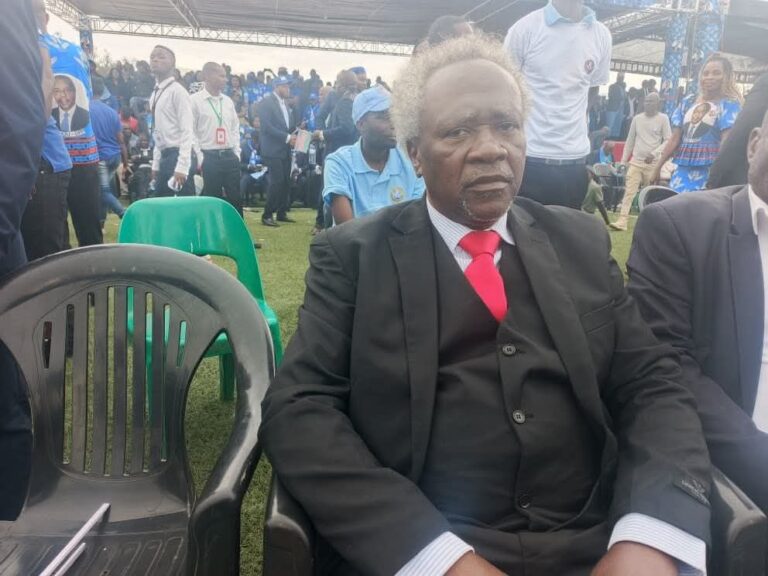
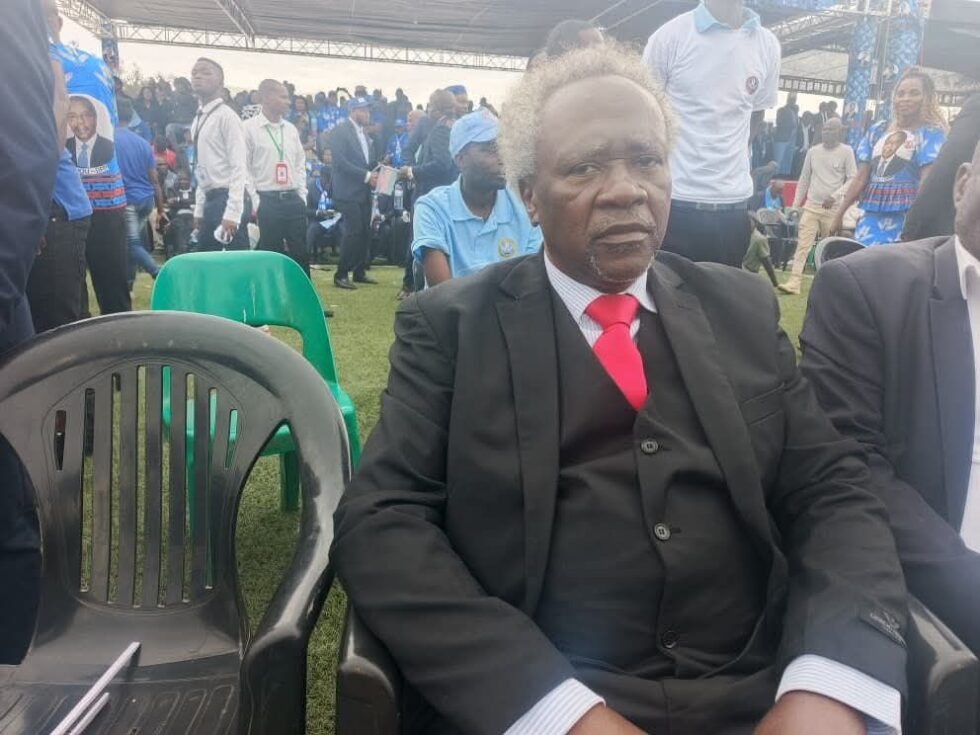
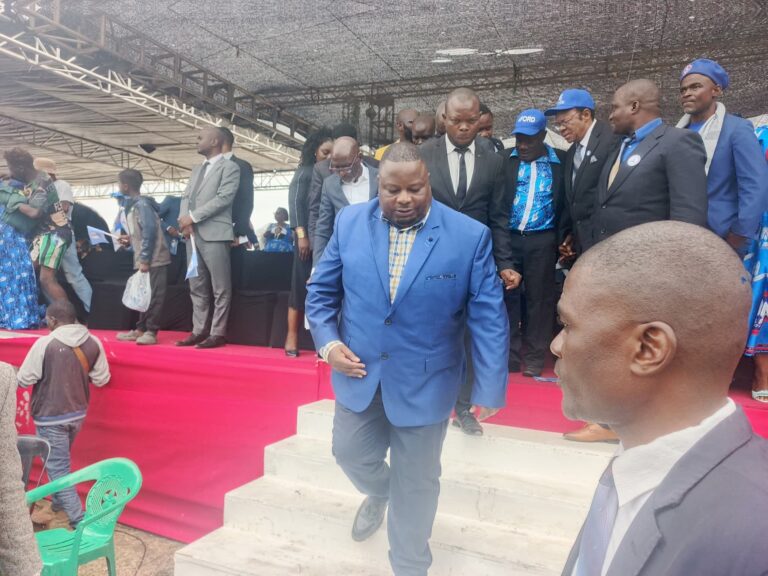
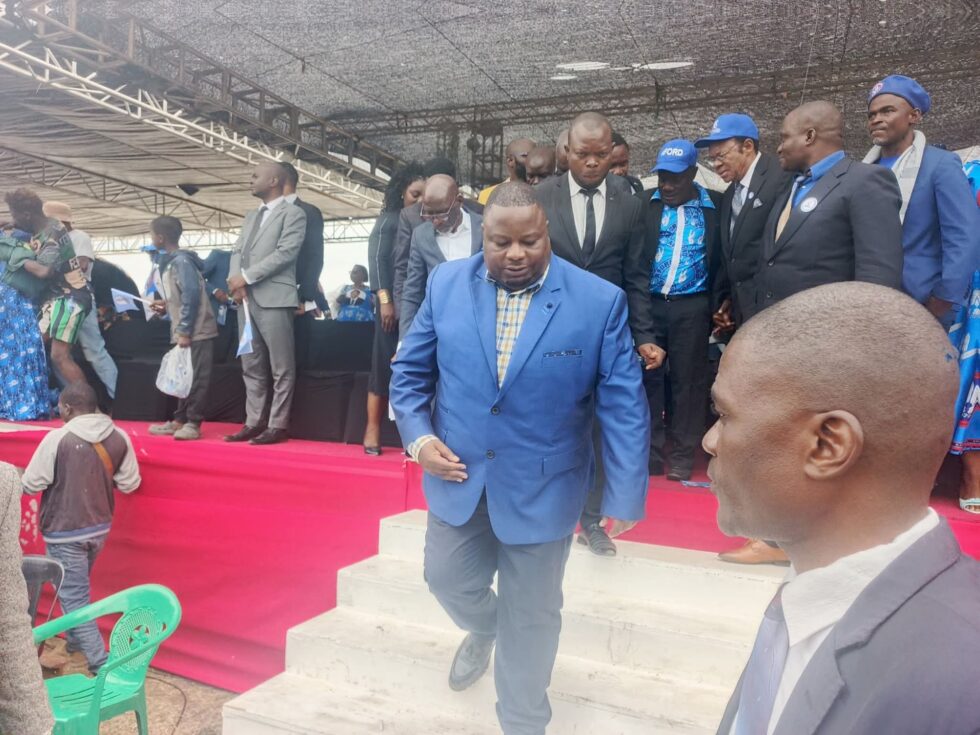
Nankhumwa at the Inauguralation


Nankhumwa further stressed that national leadership requires a collective effort, stating that different political actors must unite for Malawi’s prosperity. He emphasized the need for inclusivity and transparency in implementing the new government’s development programs. He stated that the president’s agenda is achievable with unity and honest collaboration, adding that development is not a partisan affair and requires all stakeholders to put Malawi first.

His attendance at the event followed a personal invitation from President Mutharika. Nankhumwa indicated his readiness to collaborate with the current government for national progress, depending on the type of work he might be tasked to execute, provided it is for the betterment of Malawians and not political expediency.

During his own inaugural speech, President Mutharika vowed to act decisively against anyone misusing public resources, promising that accountability measures would be enforced across all political and cultural divides to drive sustainable development.