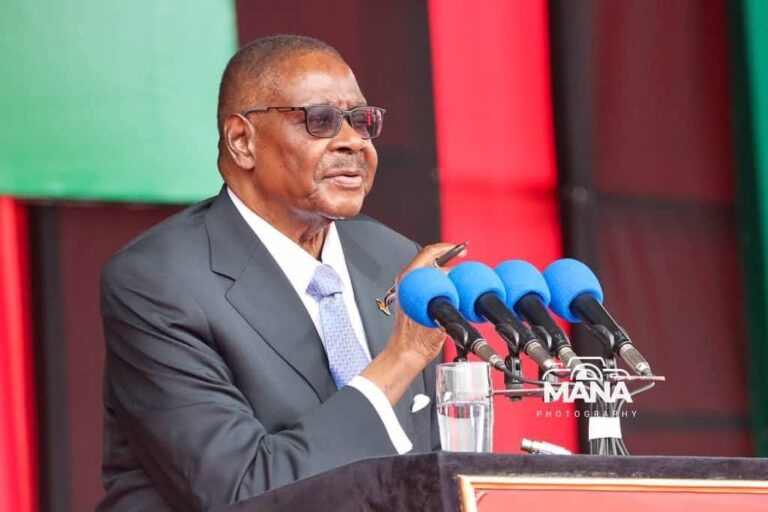
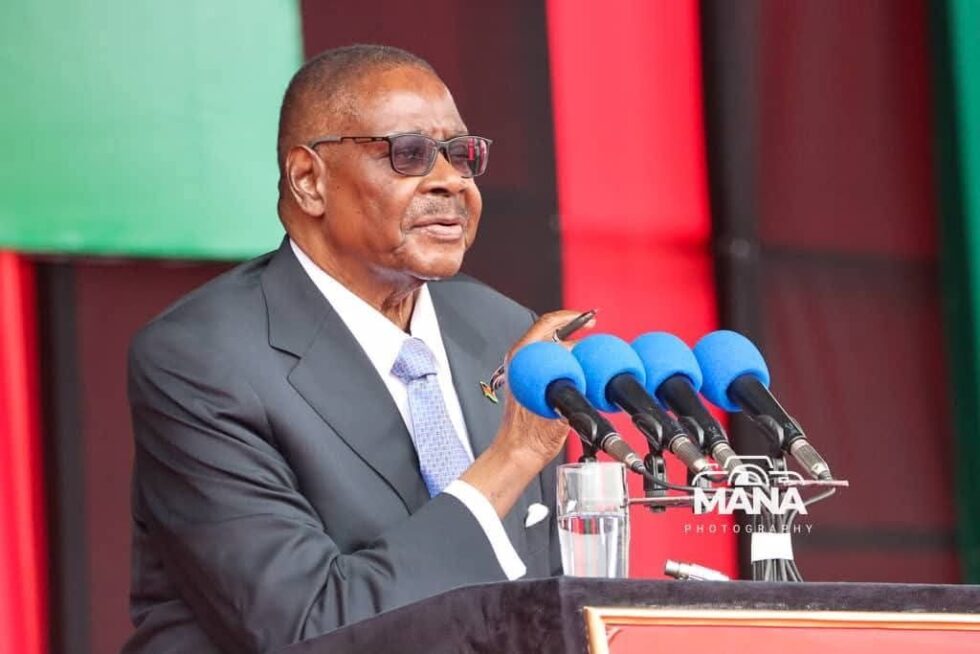
In his inaugural address at Kamuzu Stadium in Blantyre on Saturday, President Professor Arthur Peter Mutharika announced a firm stance against corruption, declaring that the “honeymoon of plundering government resources is over.” He emphasized that his administration, led by the Democratic Progressive Party (DPP), is committed to restoring integrity and efficiency in public service.
President Mutharika stated that holding public office must not be an opportunity for personal enrichment or favoritism. He issued a direct warning, saying, “Malawi belongs to all of us, regardless of political, cultural, or religious background. So, if anyone acts to the contrary, I will go after him or her. Never say I never warned you.”
Mutharika
Acknowledging the country’s challenges, including shortages of foreign exchange and food, the President called on citizens to embrace patience, discipline, and hard work to help rebuild the nation. He pledged that the DPP-led government would pursue a transformative agenda focused on national recovery and progress, declaring, “The mighty DPP is back with a renewed purpose, and we will promote real change.”
He also extended an invitation to international investors, assuring them of a conducive environment for business and investment to improve the living standards of Malawians.
Earlier, Vice President Justice Dr. Jane Ansah praised Professor Mutharika as a visionary and committed leader dedicated to unity, peace, and prosperity. The ceremony was attended by several dignitaries, including former Malawian Presidents Dr. Joyce Banda and Dr. Bakili Muluzi, as well as regional leaders and representatives from Mozambique, Zimbabwe, Tanzania, Angola, Namibia, Zambia, and the Democratic Republic of Congo.
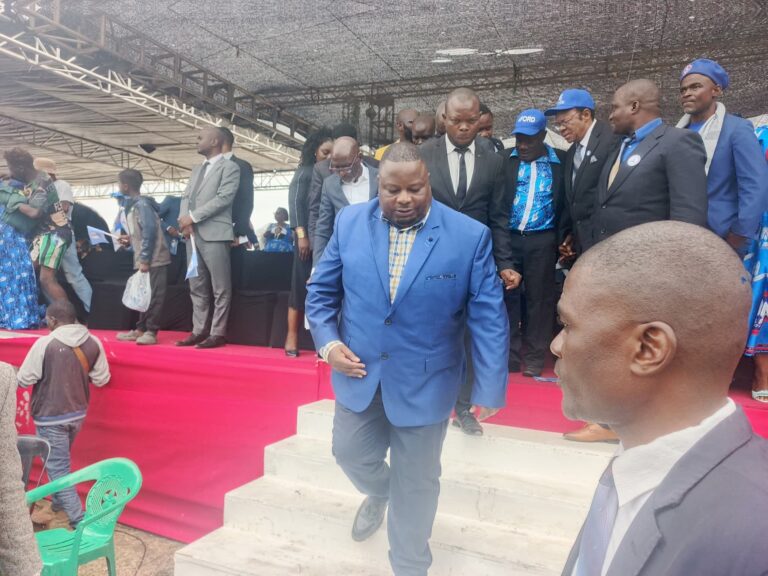
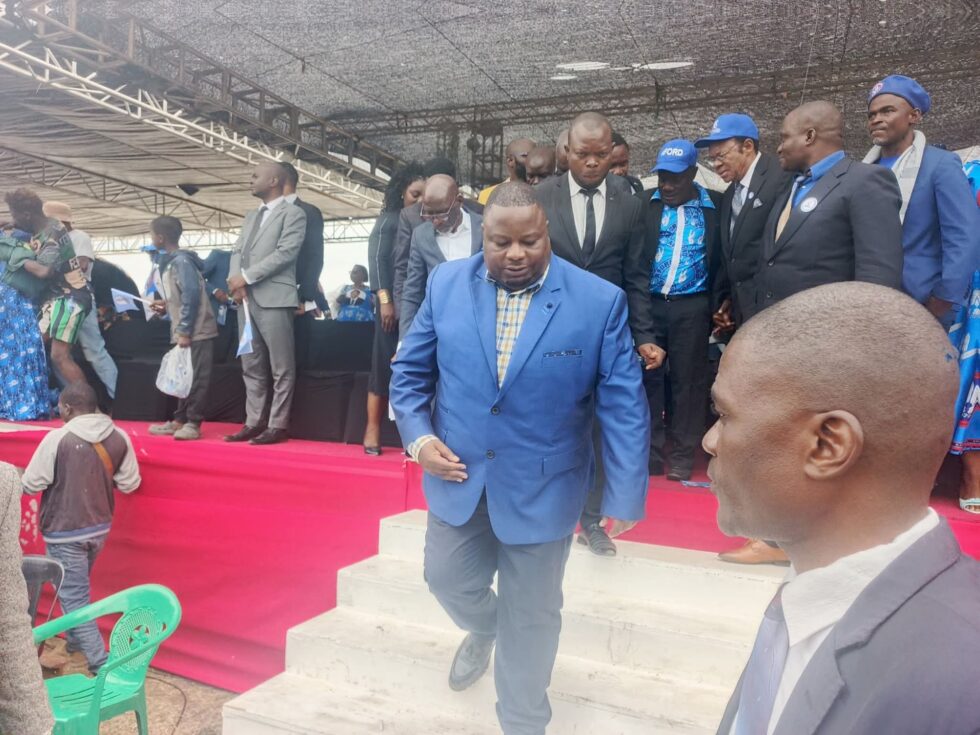
Kondwani Nankhumwa, president of the People’s Development Party (PDP), has commended newly inaugurated President Professor Arthur Peter Mutharika for prioritizing citizen welfare. Nankhumwa, a former vice president of the ruling DPP for the Southern Region, spoke to reporters at Kamuzu Stadium following the swearing-in ceremony.
He described the president’s address as a very good speech, noting its commitment to eradicating pressing issues like corruption, economic stagnation, and social inequalities. Nankhumwa expressed that Malawians are hopeful these words will translate into meaningful action.
Nankhumwa at the Inauguralation
Nankhumwa further stressed that national leadership requires a collective effort, stating that different political actors must unite for Malawi’s prosperity. He emphasized the need for inclusivity and transparency in implementing the new government’s development programs. He stated that the president’s agenda is achievable with unity and honest collaboration, adding that development is not a partisan affair and requires all stakeholders to put Malawi first.
His attendance at the event followed a personal invitation from President Mutharika. Nankhumwa indicated his readiness to collaborate with the current government for national progress, depending on the type of work he might be tasked to execute, provided it is for the betterment of Malawians and not political expediency.
During his own inaugural speech, President Mutharika vowed to act decisively against anyone misusing public resources, promising that accountability measures would be enforced across all political and cultural divides to drive sustainable development.
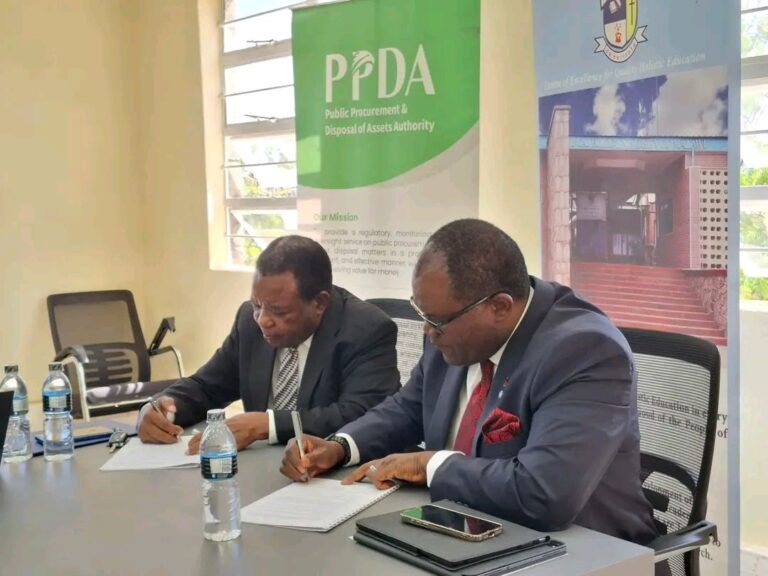
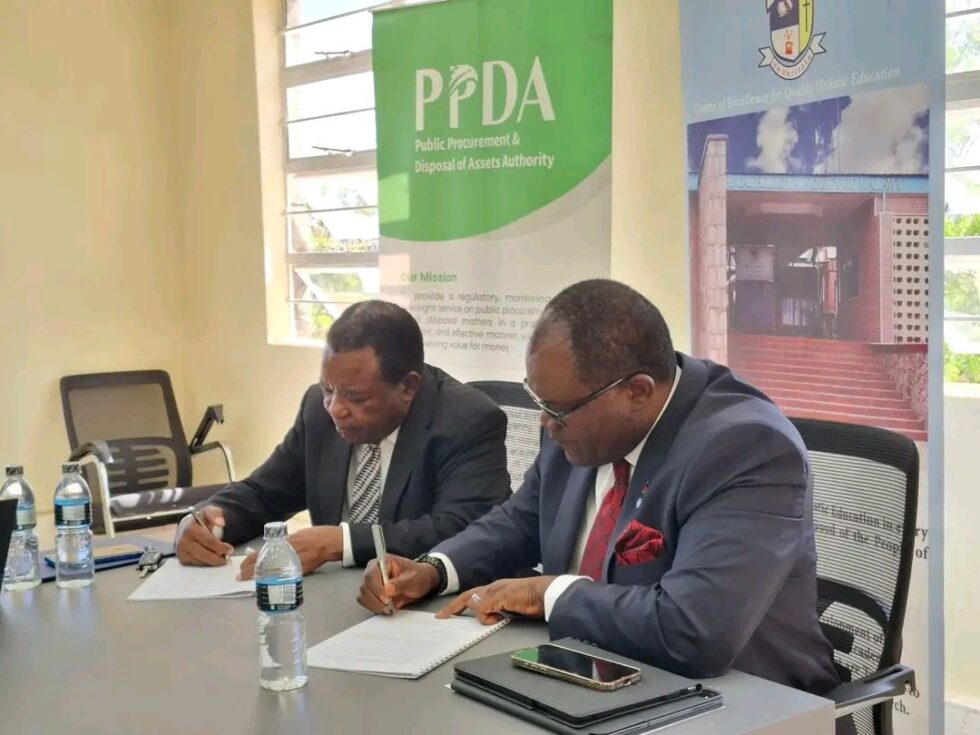
The Public Procurement and Disposal of Assets Authority (PPDA) and the Catholic University of Malawi (CUNIMA) on Thursday entered into a partnership aimed at collaborating on research initiatives.
Speaking at the partnership signing ceremony, PPDA Director General Edington Chilapondwa said the MoU formalizes a commitment between the two institutions to pursue concrete initiatives, including joint research projects, collaborative publications, and data-sharing, all aimed at delivering mutual benefits.
“Beyond that, we will co-design and deliver short-term courses tailored to the needs of stakeholders in public procurement and the disposal of public assets.
“This partnership will not only strengthen capacity within CUNIMA and PPDA but also equip stakeholders across the public sector with the knowledge and skills required to enhance service delivery,” said Chilapondwa.
On his part,CUNIMA Vice-Chancellor Professor Francis Moto emphasized the importance of collaboration in research.
“Research cannot thrive in isolation; it requires partnerships. The work we will undertake will address real societal needs,” he said.
Moto added that the MoU will also bolster CUNIMA’s capacity as a growing institution, enabling it to produce impactful and transformative research that benefits the wider community.
The MoU signing ceremony was followed by a public lecture delivered by Chilapondwa, focusing on the new Public Procurement and Disposal Act and Malawi’s National Electronic Procurement System.
Three people, including a pregnant woman, her guardian and a motorcycle rider, have died in a hit-and-run accident that occurred along the Monkey Bay–Mangochi Road on Thursday night.
The tragic incident happened near Nkhwazi Lodge as the victims were travelling to Koche Community Hospital on a motorcycle.
According to preliminary police findings, an unidentified driver of an unknown motor vehicle, coming from the direction of Monkey Bay towards Mangochi, reportedly lost control and swerved towards the nearside of the road, colliding with the motorcycle. The driver fled the scene immediately after the crash.
The impact left the motorcycle rider with a severe head injury, while the expectant mother sustained a fractured neck, both arms, and the right leg.
Amina
Her guardian also suffered serious head injuries and a fractured right leg. All three were rushed to Koche Community Hospital but were pronounced dead upon arrival.
The bodies are being kept at Koche Community Hospital mortuary awaiting identification.
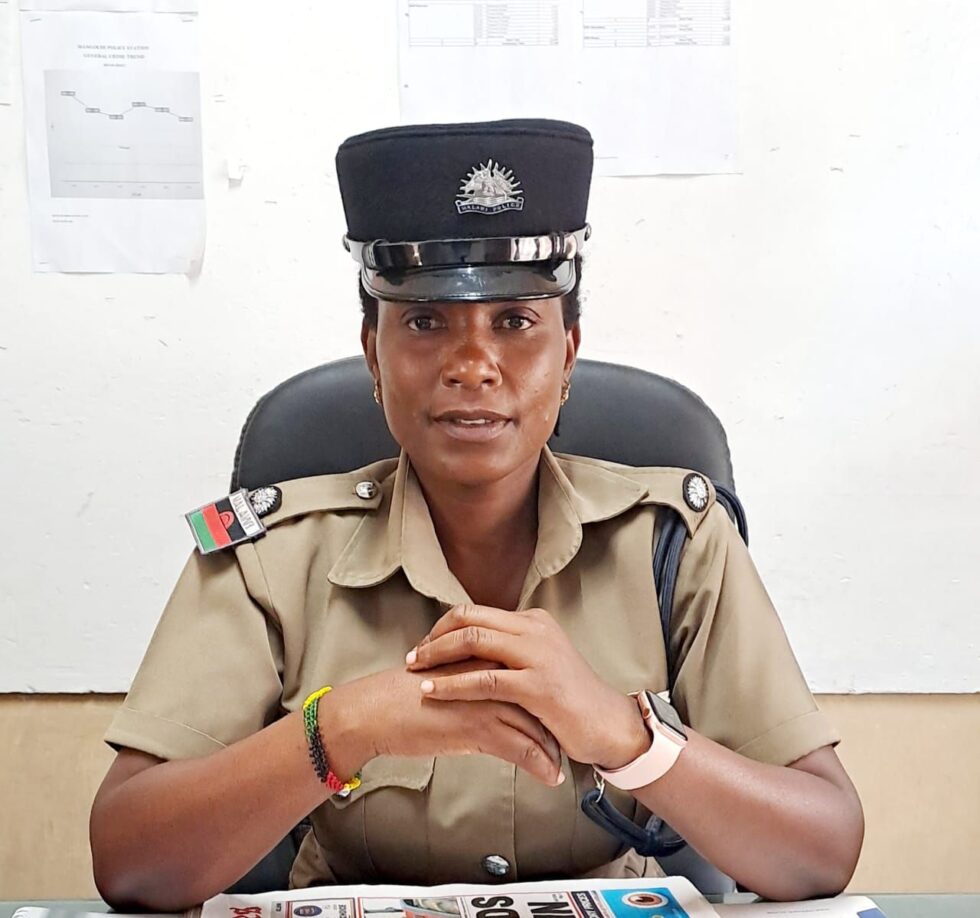
Mangochi Police Public Relations Officer, Inspector Amina Tepani Daudi, confirmed the incident and appealed to the public for assistance.
“We are urging anyone missing relatives or who may have information about this tragic incident to come forward. Information that can help trace and identify the fugitive driver will be greatly appreciated,” said Inspector Daudi.
Police investigations into the matter are underway.
Atupele Muluzi’s last major rally was held in Mangochi, where he told supporters that his number one political enemy is the Democratic Progressive Party (DPP).
The United Democratic Front (UDF) has only managed to secure one Member of Parliament in the Mangochi district.
That single MP, Aisha Mambo, openly declared her support for former president Arthur Peter Mutharika (APM).
Her position has sent a strong message that the UDF’s influence in the district is rapidly shrinking.
Atupele
Other politicians who continue to align themselves with Atupele Muluzi risk losing ground as the political tide in the region shifts.
Based on recent election results, Mangochi and Machinga remain strongholds of the DPP.
The party has consistently performed well in these districts, consolidating its grassroots support and retaining voter loyalty.
For Atupele Muluzi, this reality presents a serious obstacle in his attempt to reposition the UDF as a formidable force.
Analysts argue that without breaking DPP dominance in Mangochi and Machinga, the UDF’s chances of regaining national relevance remain slim.
Atupele may therefore need to explore new political strategies if he is to expand beyond his shrinking base.
One potential avenue is to seek support in other regions, such as T/A Masula, where the UDF might carve out an alternative stronghold.
However, building new political ground will not be easy, given the stiff competition from both the DPP and the Malawi Congress Party (MCP).
The dynamics in Mangochi and Machinga underscore the UDF’s struggle for survival in a political landscape dominated by stronger and better-organized parties.
Unless Atupele finds a way to rebuild alliances and win back public trust, the UDF risks fading further into political irrelevance.
For now, the DPP remains the dominant force in Mangochi and Machinga, leaving Atupele with the difficult task of finding new ground on which to rebuild his political career.
*Historical Context: From Bakili’s Stronghold to Atupele’s Decline*
In the 1990s and early 2000s, Mangochi was the undisputed heartland of the UDF under the leadership of Bakili Muluzi.
The region overwhelmingly supported Malawi’s first multiparty president, who hailed from the district, giving the UDF a loyal and reliable voter base for years.
During Bakili Muluzi’s tenure, the UDF not only dominated Mangochi but also extended its influence to other parts of the Southern Region.
The party’s dominance was so strong that winning in Mangochi was once seen as a foregone conclusion.
However, the rise of the DPP under Bingu wa Mutharika shifted political dynamics, as the party gradually built structures and won over voters in the region.
By the time Atupele Muluzi took over the UDF’s leadership, the once unshakable stronghold had already begun to erode.
Now, with the DPP entrenched in Mangochi and Machinga, the decline of the UDF in its birthplace highlights just how much the political landscape has changed since Bakili Muluzi’s era.
The contrast between Bakili’s dominance and Atupele’s current struggles underscores the challenge of sustaining political legacies in Malawi’s shifting democratic space.
*Concluding Analysis: Atupele vs. Bakili – Style and Legacy*
Bakili Muluzi’s political style was characterized by charisma, personal connections, and a strong grassroots presence that made him a unifying figure in Mangochi.
He was able to cultivate loyalty by blending national politics with local engagement, ensuring that the UDF’s message resonated at both levels.
Atupele Muluzi, by contrast, has adopted a more technocratic and modern political approach, focusing on policy and reform rather than personal charisma.
While Atupele’s style appeals to urban and educated voters, it has struggled to translate into widespread support in rural strongholds like Mangochi and Machinga.
The generational shift, changing voter expectations, and the rise of well-organized rivals like the DPP have further challenged his ability to replicate his father’s success.
Analysts suggest that the UDF’s decline is not only a reflection of political competition but also of the gap between Atupele’s leadership style and the personal, relational politics that once cemented Bakili’s dominance.
For Atupele to revitalize the UDF, he may need to blend his modern reformist approach with a renewed focus on grassroots mobilization and local engagement.
Without this balance, the legacy of the UDF risks fading further, leaving Mangochi and Machinga firmly in the hands of rival parties.
*Strategic Recommendations: Rebuilding the UDF*
To regain political relevance ahead of the next elections, Atupele Muluzi could focus on consolidating support in areas outside the traditional DPP strongholds, such as T/A Masula and neighboring districts where the UDF still has residual influence.
Investing in grassroots engagement, including community meetings, local development initiatives, and youth empowerment programs, could help rebuild trust among rural voters who feel neglected.
Atupele should also strengthen alliances with smaller political parties and influential local leaders to create a broader coalition capable of challenging DPP dominance.
Targeting urban and peri-urban constituencies with a message of technocratic reform, economic opportunity, and good governance could attract younger, educated voters who are more receptive to his policy-focused approach.
Finally, the UDF must craft a clear narrative that ties Atupele’s modern reformist vision to the legacy of his father, showing continuity while addressing current political and economic challenges.
By blending these strategies—grassroots mobilization, coalition-building, and urban outreach—Atupele could realistically carve out a revitalized UDF base capable of competing meaningfully in the next election cycle.