The Malawi Electoral Commission (MEC) says it has registered 2.3 million eligible voters in the first phase of the ongoing voter registration, with Neno registering 59.8% of its potential voters.
According to the commission,in Neno, 82,947 people aged 18 and above were recorded by the National Statistical Office(NSO), but only 49,604 turned out to register.
Of these, 20,621 are men and 28,983 are women.
Malawi will hold its General Elections on September 16, 2025, to elect a Head of State, Members of Parliament, and Councilors.
United Democratic Front (UDF) President, Atupele Muluzi, has expressed his support for Somaliland’s commitment to democratic values ahead of its Presidential and Parliamentary Elections.
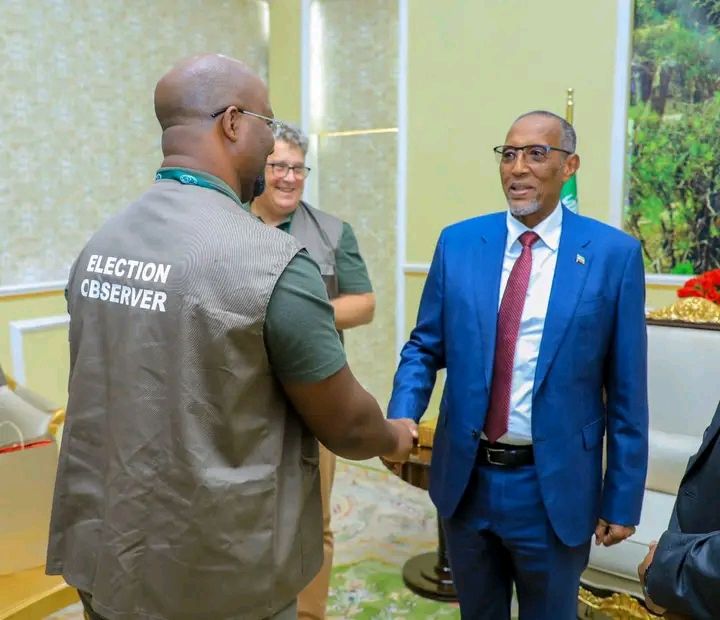
Muluzi met with President Mussa Biti Abdi of Somaliland alongside a group of election observers from the Brenthurst Foundation.
Muluzi emphasized that Somaliland’s dedication to democracy sends a powerful message to the world, demonstrating that democracy and peace can thrive despite challenges.
Atupele in Somaliland
He honored to witness this moment and pledged his support for Somaliland’s democratic journey.
As Malawi prepares for its own elections, Muluzi urged his country to uphold and respect the will of the people.
This sentiment is particularly significant given Malawi’s history of transferring power peacefully, with President Lazarus Chakwera taking office in 2020 after a Constitutional Court-ordered fresh election.
Malawi’s democratic journey has seen its share of milestones, including the transition from Dr. Kamuzu Banda’s 31-year rule to Dr. Bakili Muluzi’s presidency in 1994.
The country has continued to grow its democratic institutions, with a focus on promoting peace and stability.
In his statement, Muluzi drew attention to the importance of respecting the will of the people, a principle that has guided Malawi’s democratic progress.
As the country looks ahead to its next elections, Muluzi’s message serves as a reminder of the significance of upholding democratic values.
The international community is watching Somaliland’s elections closely, and Muluzi’s statement underscores the importance of supporting democratic values globally.
As Malawi and Somaliland navigate their respective electoral processes, the world remains hopeful for peaceful and democratic outcomes.
Atupele Muluzi’s statement serves as a powerful reminder of the importance of upholding democracy and respecting the will of the people.
As Malawi and Somaliland move forward, their commitment to democratic values will shape the future of their nations and inspire others to follow suit.
In a significant development, traditional leaders in Zomba have thrown their weight behind Edith Kachale Banda, daughter of former President Joyce Banda, to represent Zomba Malosa constituency in the National Assembly.
This endorsement is a major boost to Edith’s candidacy, as she seeks to make her mark in the world of politics.
According to sources, the chiefs and people of Zomba Malosa have expressed their desire for Edith to represent them in parliament, citing her commitment to the constituency’s development and her mother’s legacy.
Edith Kachale Banda
This move is seen as a strategic decision, given Joyce Banda’s influence in the region.
Zomba District, where Edith is seeking to contest, is one of the 12 districts in the Southern Region of Malawi.
With a population of over 746,724 people, the district has significant potential for growth and development.
The endorsement by traditional leaders is crucial, as they wield considerable influence in their respective areas.
Edith’s entry into politics is seen as a continuation of her mother’s legacy.
Joyce Banda, who served as President of Malawi from 2012 to 2014, is widely respected for her efforts to promote economic development and women’s empowerment.
Edith’s candidacy is expected to ride on her mother’s popularity and goodwill.
The Zomba Malosa constituency is one of the 10 National Assembly constituencies in Zomba District.
The constituency has been held by members of the Democratic Progressive Party since the 2009 elections.
However, with Edith’s endorsement by traditional leaders, the constituency may witness a change in its political landscape.
The endorsement has generated interest among political analysts, who see Edith’s candidacy as a significant development in Malawi’s politics.
“This endorsement is a game-changer for Edith’s campaign,” said a political analyst. “Traditional leaders play a vital role in Malawian politics, and their support can swing votes.”
Edith’s campaign is expected to focus on development issues, including education, healthcare, and infrastructure development.
Her commitment to empowering women and youth is also likely to resonate with voters.
As the election season heats up, Edith’s candidacy is expected to generate significant interest.
With her mother’s legacy and traditional leaders’ endorsement, Edith is well-placed to make a mark in Malawi’s politics.
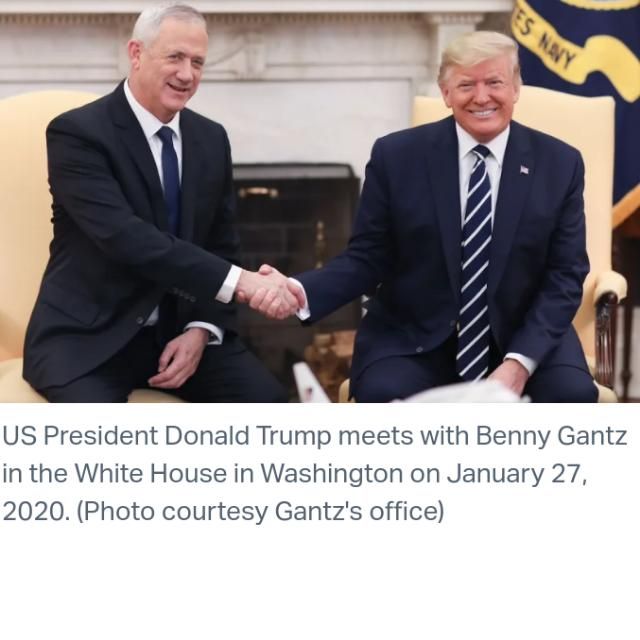
In a recent interview with ALL ISRAEL NEWS, former Israeli Defense Minister Benny Gantz shared his optimism about Donald Trump’s return to office, citing four key reasons why he believes it will be beneficial for Israel’s peace and security.
Gantz thinks Trump’s love and support for Israel, combined with his successes in the region during his first term, make him the ideal leader to restore calm in the Middle East and expand the Abraham Accords. Trump’s pro-Israel convictions and Middle East strategy have earned Gantz’s deep appreciation.
Gantz praises Trump’s Middle East peace plan as the most realistic proposal discussed in recent years. The plan envisions a small, demilitarized Palestinian state, acknowledging Israel’s security needs and the necessity of Palestinians living in peace and security without posing a threat to Israel.
Gantz believes Trump is best suited to quiet and contain Iran.
By re-imposing extreme economic and diplomatic sanctions and maintaining a robust American military threat, Trump may be able to force Iran to stop attacking Israel, pursuing nuclear weapons, and exporting terror.
Gantz is confident that Trump will finalize a groundbreaking peace and normalization agreement between Israel and Saudi Arabia. This agreement, which President Joe Biden and Vice President Kamala Harris were unable to achieve, would be a significant milestone in Trump’s second term.
Gantz’s positive outlook on Trump’s return is rooted in his experience working with the Trump administration during his tenure as defense minister.
He values the intimate partnership they shared and looks forward to collaborating with them again.
As Gantz prepares for the post-Netanyahu era, his focus remains on shaping a better future for the Israeli people and restoring trust between society, government, and the military.
While his own political ambitions are uncertain, Gantz’s commitment to Israel’s security and prosperity is unwavering.
The former defense minister’s assessment of Israel’s wars against Hamas and Hezbollah suggests that major combat operations will conclude in early 2025. With Trump’s return, Gantz sees a unique opportunity for Israel to strengthen its position in the region and advance its interests.
As the political landscape in Israel continues to evolve, Benny Gantz’s thoughts on Trump’s return offer valuable insight into the complex dynamics at play.
Whether or not Gantz will play a major role in Israel’s future, his dedication to the country’s well-being is undeniable.
The Malawi Electoral Commission (MEC) plays a pivotal role in ensuring free, fair, and credible elections in Malawi. As the body responsible for overseeing the electoral process, the integrity and impartiality of its leadership are paramount. In this context, calls for the resignation of MEC Chair Anabel Mtalimanja is not only justified but necessary for the health of Malawi’s democracy. This narrative will explore the reasons behind this call, focusing on her alleged connections to the ruling Malawi Congress Party (MCP), her lack of effective voter sensitization, and the overall implications for electoral integrity.
Anabel Mtalimanja’s appointment as MEC Chair by President Lazarus Chakwera raises immediate concerns about her impartiality. The perception of bias is a significant issue in any electoral process, and her ties to the ruling party cannot be overlooked. Her father, the late John Tembo, was a prominent figure in the MCP, serving as its president for many years. This familial connection raises questions about her ability to remain neutral in her role as the head of the electoral commission. The integrity of the electoral process hinges on the public’s trust in the impartiality of its overseers. If the head of the MEC is perceived as having direct connections to the ruling party, it undermines that trust and raises suspicions about the commission’s ability to conduct fair elections.
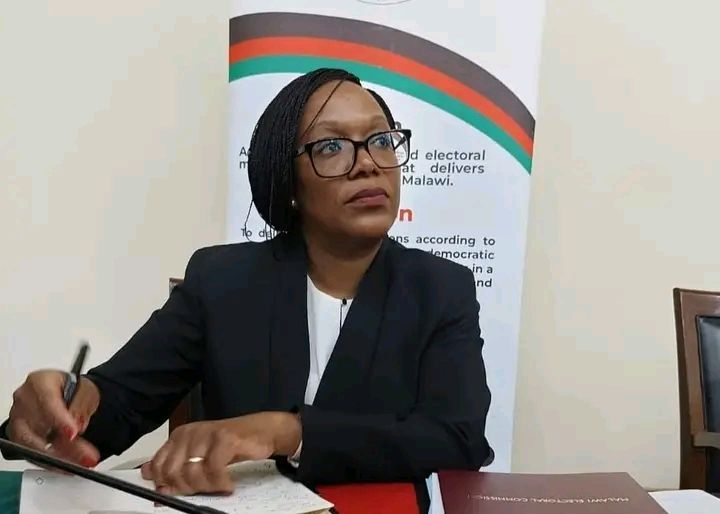
Mtalimanja
Moreover, the MEC under Mtalimanja’s leadership has been criticized for its inadequate efforts to sensitize the public about the importance of voter registration. Voter registration is a fundamental aspect of the electoral process, and it is the responsibility of the MEC to ensure that citizens are informed and motivated to participate in elections. However, reports indicate that the commission has not done enough to reach out to potential voters, particularly in rural areas where access to information is limited. This lack of outreach not only disenfranchises citizens but also skews the electoral process in favor of those who are already politically engaged. A robust democracy requires active participation from all segments of society, and the MEC’s failure to promote voter registration is a significant shortcoming that cannot be ignored.
The first phase of voter registration came to a close on November 3, with alarmingly low numbers sparking concerns of widespread voter apathy in next year’s elections, all unfolding under Anabel Mtalimanja’s supervision.
This underwhelming response has raised questions about civic engagement and the democratic process.
The low registration numbers may indicate a broader issue with voter enthusiasm, potentially influenced by factors such as lack of awareness about the registration process.
Furthermore, there have been allegations of unprofessional conduct among MEC officials, which further tarnishes the commission’s reputation. Reports of rude and dismissive behavior from MEC staff towards citizens seeking assistance with voter registration and other electoral inquiries are alarming. Such conduct not only reflects poorly on the commission but also discourages public engagement in the electoral process. Citizens should feel empowered to participate in democracy, and the MEC’s role is to facilitate that engagement, not hinder it. Calls for Mtalimanja’s resignation are, therefore, a response to a broader pattern of behavior that undermines the integrity of the electoral process.
The implications of Mtalimanja’s continued leadership at the MEC extend beyond her personal connections and the commission’s operational shortcomings. The credibility of the electoral process in Malawi is at stake. If citizens perceive the MEC as biased or ineffective, they may lose faith in the democratic process altogether. This disillusionment can lead to apathy, decreased voter turnout, and ultimately, a weakened democracy. calls for her resignation are not merely a political maneuver; they are a necessary step to restore public confidence in the electoral process and ensure that future elections are conducted fairly and transparently.
In addition to the immediate concerns regarding Mtalimanja’s leadership, the broader context of Malawi’s political landscape must be considered. The country has a history of electoral disputes and allegations of fraud, which have often led to political instability. The opposition’s demand for a change in leadership at the MEC is a reflection of the urgent need for reforms that can help prevent such disputes in the future. By appointing a chairperson who is perceived as neutral and committed to the principles of democracy, the MEC can begin to rebuild trust with the electorate and ensure that future elections are conducted in a manner that reflects the will of the people.
It is therefore concluded that calls for MEC Chair Anabel Mtalimanja to resign are justified and necessary for the health of Malawi’s democracy. Her connections to the ruling MCP, the commission’s inadequate efforts to promote voter registration, and reports of unprofessional conduct among MEC officials all contribute to a perception of bias and ineffectiveness. The integrity of the electoral process is paramount, and the continued leadership of someone with such ties to the ruling party undermines that integrity. For the sake of democracy in Malawi, it is essential that the MEC is led by individuals who are committed to impartiality and the principles of free and fair elections. The calls for Mtalimanja’s resignation are not just a political statement; they are a demand for accountability and a step towards restoring public trust in the electoral process.