
Saturday, December 20, 2025
No menu items!
spot_img
Home Blog Page 801

Joyce Banda warns of civil disorder  if MEC and NRB deny voter registration

0


By Burnett Munthali

Former President and leader of the People’s Party (PP), Dr. Joyce Banda, has issued a stern warning to the Malawi Electoral Commission (MEC) and the National Registration Bureau (NRB), saying that their actions in denying citizens the right to register to vote could lead to civil unrest in the country. Banda’s comments came during a mass rally today at Chinkhoma ground in Kasungu District, where she addressed thousands of Malawians about the current state of voter registration ahead of the 2025 general elections.

Dr. Banda accused both MEC and NRB of deliberately failing to register eligible citizens for political reasons, stating that this could disenfranchise many Malawians and deny them their constitutional right to vote. She suggested that such actions could potentially ignite violence, which she described as “civil war,” warning that if these two government agencies continue with their practices, they would be directly responsible for the chaos that could follow.
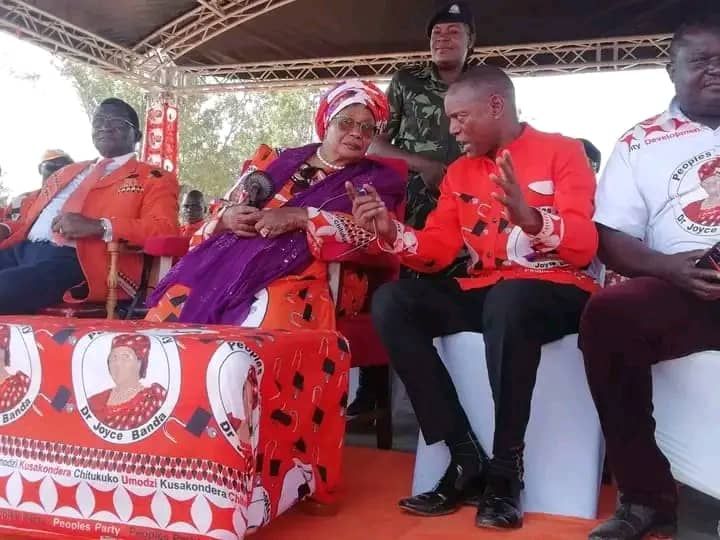
Joyce Banda


The former president provided specific examples where many Malawians were being unjustly denied the opportunity to register, despite having the necessary documentation and fulfilling the required criteria. She highlighted that citizens were being turned away from registration centers without valid reasons, in stark contrast to court orders that directed MEC and NRB to ensure that all eligible voters are registered without discrimination.

Banda’s statement echoes growing concerns about the state of electoral processes in Malawi, particularly regarding the efficiency and transparency of voter registration. She emphasized that it is critical for all government agencies involved in the electoral process to adhere to the rule of law and ensure that every eligible citizen has the right to participate in the democratic process.

Furthermore, Banda’s comments come at a time when the country is preparing for a high-stakes election in 2025, and many are worried about the credibility of the electoral process. With the government facing mounting criticism for its handling of various sectors, Banda’s remarks serve as a reminder that the political stability of the country depends heavily on a fair and transparent election process.

In her speech, Dr. Banda urged Malawians to remain vigilant and to stand up for their rights. She called on citizens to report any instances of disenfranchisement and to work together to ensure that their voices are heard come election day. She also demanded accountability from MEC and NRB, stressing that these institutions must not be allowed to undermine the democratic process.

In conclusion, Dr. Joyce Banda’s warning serves as a stark reminder of the deepening political tensions in Malawi. Her call for justice and fairness in the voter registration process is a crucial message for all stakeholders involved in the electoral process, as the country braces for the upcoming elections. If the concerns raised by Banda and other critics are not addressed, Malawi could face serious repercussions that could threaten the stability of its democracy.
An Analysis of the Working and Business Community Perspective in Malawi


By Burnett Munthali

On Sunday, November 10th, I took a trip to my office to address a few administrative tasks. During my visit, I had a brief conversation with a group of security guards stationed at the main gate. As lunchtime approached, I learned that they had not been able to contribute toward their meal because they were broke. The struggle they described was palpable, and I ended up covering their lunch. Their gratitude was heartfelt, yet the financial hardship they faced left a deep impression on me, one that resonated as I spoke with others in Lilongwe’s working and business communities.

The reality of struggling small businesses

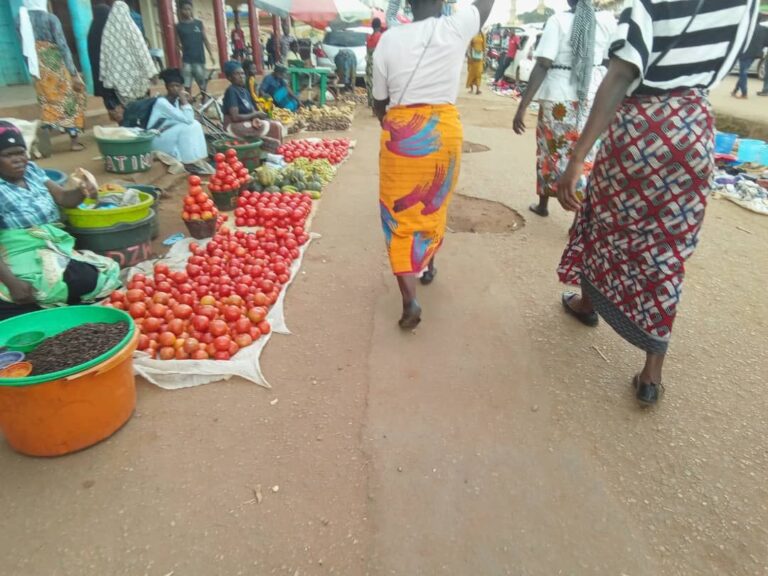
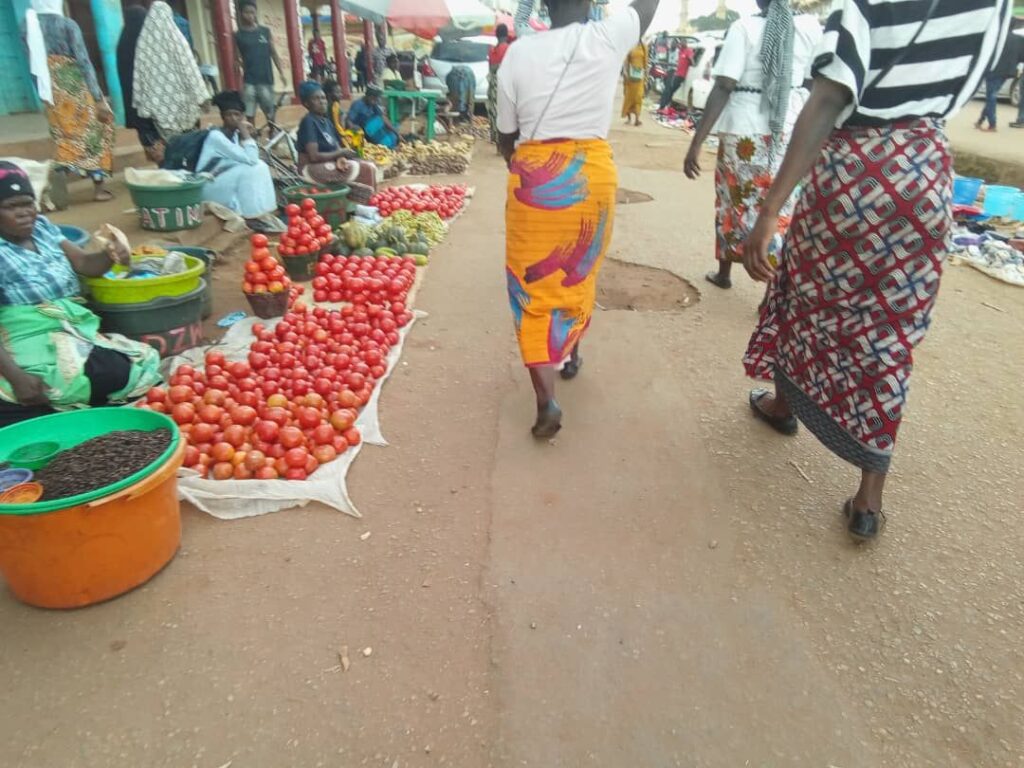
Later in the day, I made my way to Lilongwe’s main market near the bus depot. I engaged with a hardware shop owner about the current state of business. His response was disheartening: “Business inayima kale kale—zinthu sizikuyenda ndipo sitikudzuwa kuti tingachite chiyani,” which translates to “Business has stopped long ago—things aren’t going well, and we don’t know what to do.” This sentiment was not unique to him.

I also spoke with a vendor who sells decoders. His frustration was clear as he explained that business had “effectively stopped,” leaving him in a perpetual state of struggle. Though the streets were teeming with people, he pointed out that most were simply walking around with no intention of buying anything. “You will notice movement of many people, for example, during Christmas, but they just walk around town without even a plastic jumbo, and you rarely see people entering shops to buy because they have no money,” he lamented.


The impact of the Kwacha’s depreciation

One of the major issues fueling these struggles is the rapid depreciation of the Malawi Kwacha. Unfortunately, this is often overlooked in mainstream discourse. Vendors only realize how much the Kwacha has weakened when they attempt to place orders for goods. For many, it becomes clear that prices have escalated, but they are unable to adjust quickly enough to stay afloat. As one vendor put it, “Life is tough today, and survival is even harder.”

This devaluation not only impacts individual livelihoods but has a devastating ripple effect across the economy. The high cost of imports, combined with the declining exchange rate, is creating a severe cash flow crunch for businesses and pushing up the cost of living.

Foreign business owners struggling in Malawi

I also spoke with a Pakistani businessperson who had settled in Malawi, and his story mirrored the challenges faced by many local business owners. Once, his shop was a thriving hub for goods, with products flying off the shelves. Now, customer inquiries have become more frequent, but actual purchases are few and far between. He told me that a container of goods that would have been sold within a month or two in 2019 now takes over a year to clear. The combination of forex shortages, a weakening Kwacha, and high taxes from the Malawi Revenue Authority (MRA) has made the business environment unsustainable. “It’s very unsuitable for business,” he shared, his frustration echoing the sentiments of many others.

The business owner’s plight is not unique. Many small and medium enterprises (SMEs) are facing the same dilemma—struggling to keep their doors open with rising operating costs, and a customer base that is simply unable to spend. It’s becoming increasingly common to see shops displaying products, but unable to make any sales. Some businesses are even being forced to close down due to the unrelenting strain.

The strain of fuel shortages

To add to the growing list of challenges, I spoke to a taxi driver who, like many in the transport sector, is feeling the squeeze of fuel shortages. This ongoing issue has caused significant disruptions to his business and has left him frustrated. As he put it, “boma ndi lomweli tingosintha Chipani chaka Cha mawa basi”—”the government is the same, we need to change the political party in next year’s elections.” This sentiment of frustration is widespread among many in Malawi’s working class, as they feel that the current leadership is not addressing the core economic issues that are threatening their livelihoods.

A stagnant economy and urgent need for reform*

The conversations I had on November 10th painted a stark picture of Malawi’s economic reality. From the security guards to the business owners and the taxi drivers, the common thread was clear—struggling to survive in a stagnating economy. The rapid depreciation of the Kwacha, the rising cost of living, and the lack of access to forex for businesses have combined to create an environment in which staying afloat is an overwhelming challenge.

The real cost of these economic struggles extends far beyond financial hardship—it affects the fabric of society itself. Families are unable to meet basic needs, businesses are closing, and unemployment is climbing. The daily grind for survival has left many feeling powerless and increasingly disillusioned.

For the country to move forward, there is an urgent need for comprehensive economic reform. The Malawi government must find ways to stabilize the currency, address forex shortages, and reduce the cost of doing business. The pain felt by the working and business community cannot be ignored, and immediate action is required to prevent further decline.

Conclusion

The current state of affairs in Malawi reflects a nation in distress, with both individuals and businesses struggling to stay afloat amidst rising costs and a depreciating currency. The need for effective economic policies and leadership has never been more urgent. As the nation approaches the next election, it remains to be seen if the people’s frustrations will be translated into real political and economic change. However, one thing is clear—the working and business community in Malawi can no longer afford to wait. Immediate action is needed to provide relief and create a sustainable future for all.

Uchizi represents Chakwera at the Lilongwe Remembrance day

0

By Durell Namasani

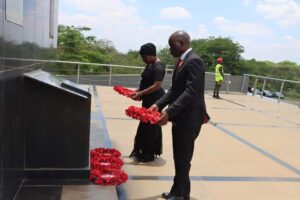
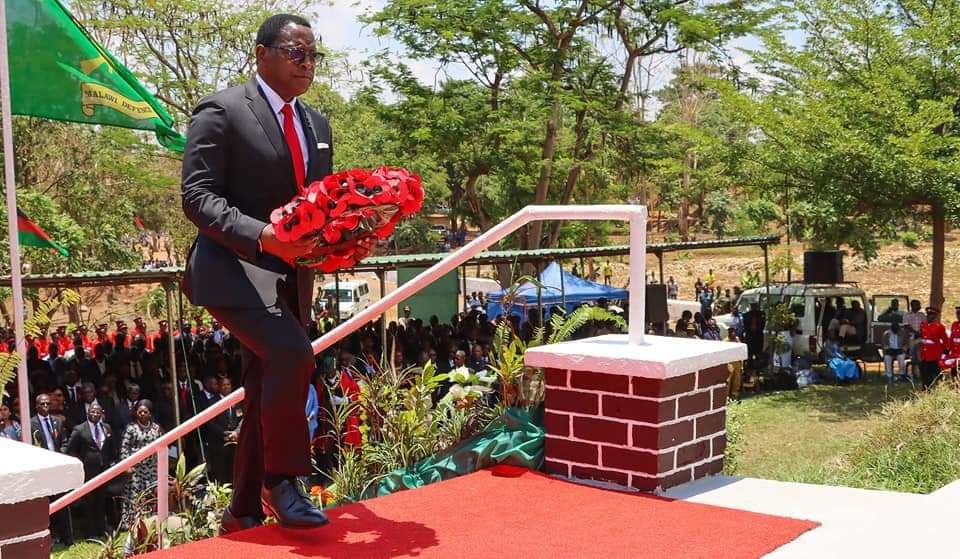
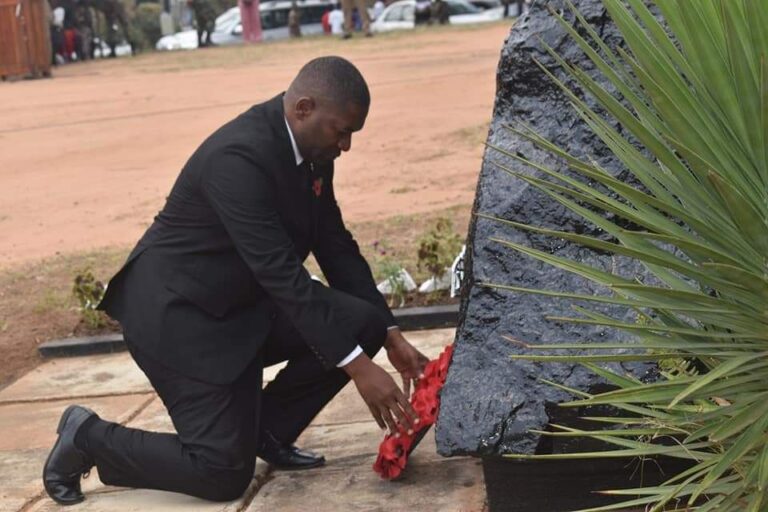
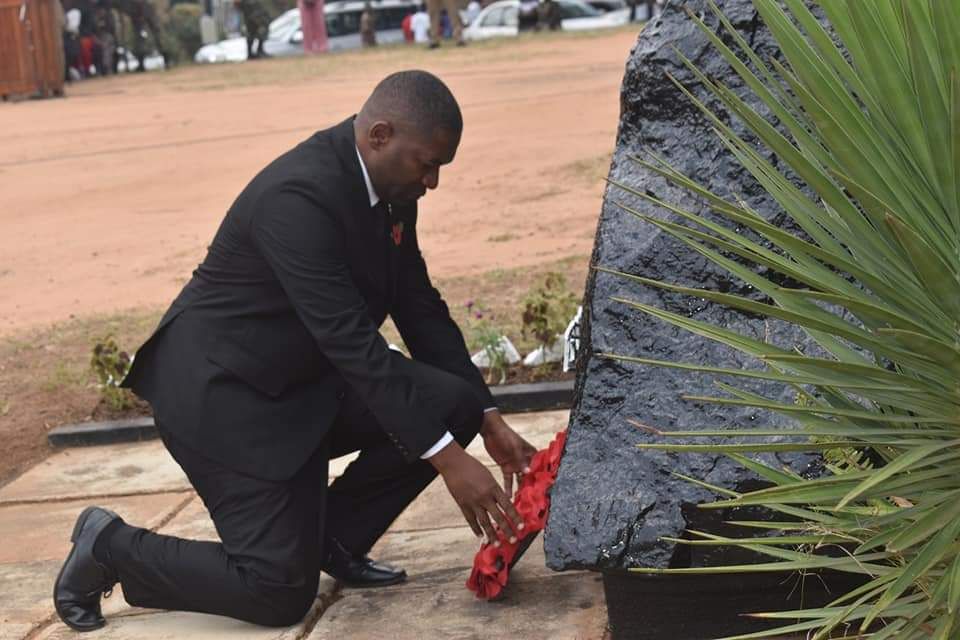
Minister of Youth and Sports, Uchizi Mkandawire today represented the President Dr Lazarus Chakwera  in observing  Remembrance Day at the Area 18 War Memorial Tower in Lilongwe.

The  Remembrance Day is commemorated every year, to honour soldiers who died in the line of duty during First and Second World Wars.

Uchizi representing Chakwera


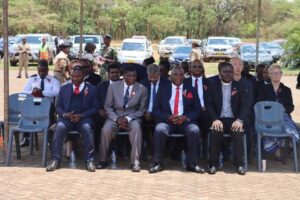
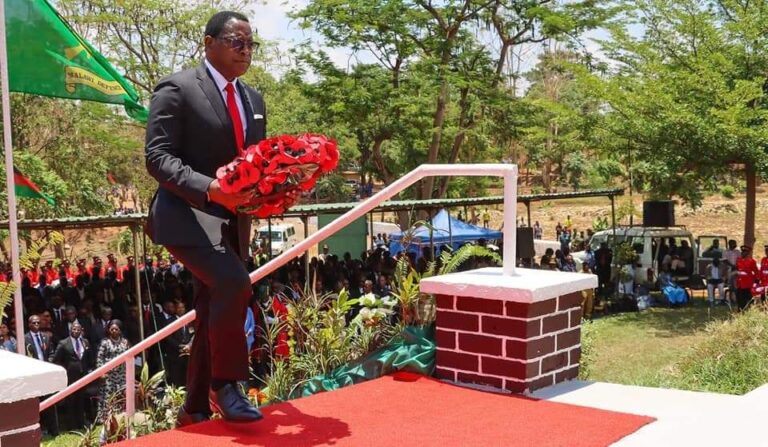
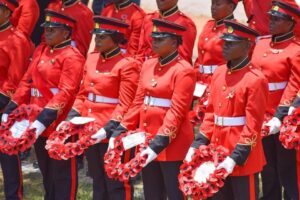
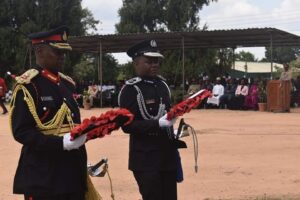
Activities during the commemoration included laying of wreaths by the Minister, a representative of Malawi Defence Force and Inspector General of Police, British high commissioner- Fiona Ritchie, Japanese Ambassador  to Malawi- Oya Yoichi, Germany ambassador- Ute Konig   among other dignitaries.

This was folllowed by a hymn and  prayers from the clergy.

Poppy Day falls on every second Sunday of November, primarily on November 11th or any other Sunday close to it.

Chakwera leads the nation on Remembrance Day

0

By Durell Namasani

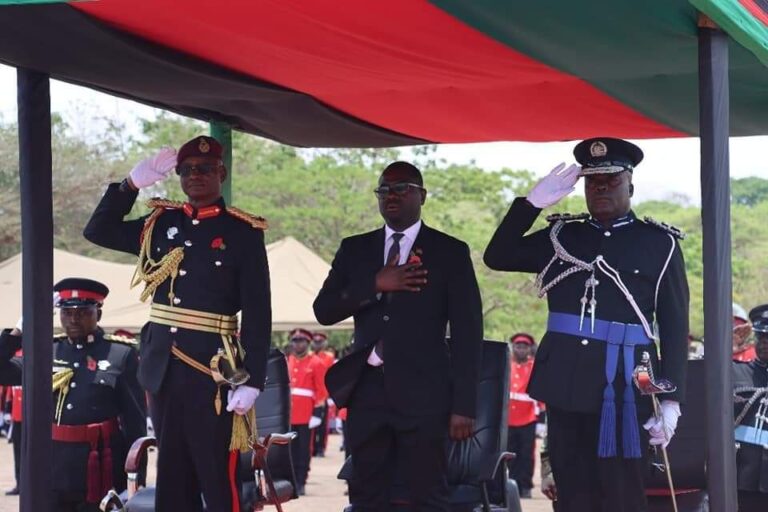
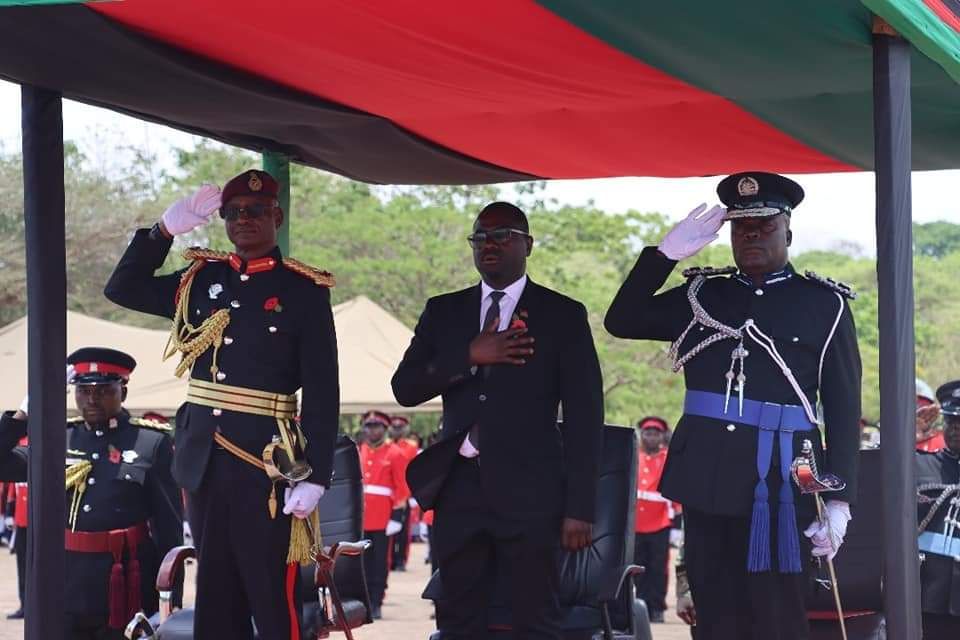
President, Dr Lazarus Chakwera on Sunday, led the nation in Remembrance Day in commemoration of fallen veterans of two world wars, at the Zomba War Memorial Tower.

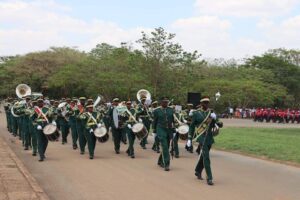
President Chakwera arrived at the Zomba Memorial Tower, Cobbe Barracks at exactly 10:58 two minutes before the hour of 11 o’clock which is the hour that the Second World War ended in 1918.

The Malawi leader was welcomed by the Malawi Defence  Force, Army Commander Paul Valentino Phiri and Deputy Inspector General of the Malawi Police Service responsible for administration, Happy Mkandawire.

President Chakwera


According to Malawi Defence  Force Public Relations Officer Major Calvin Mlelemba
the day is also set aside to appreciate the role that the living and serving soldiers play in safeguarding their countries.

Mlelemba explained that the Remembrance Day is also meant to remember all the contributions that the departed as well as ex-service soldiers made in all the country’s major operations and different operations outside the country citing Democratic Republic of Congo (DRC).

Remembrance Day is globally celebrated  on November 11, to mark the very day that the second world war ended.

The day is also described as the 11,11.

President Dr Chakwera was the first to lay a wreath followed by the First Deputy Speaker of Parliament, Madaliso Kazombo and Deputy Chief Justice, Justice Lovemore Chikopa.

Member of Parliament for Zomba Chisi, Mark Botomani laid a wreath representing opposition parties in parliament.

During the ceremony a living war veteran, Warrant Officer Class 1, Frank Masiano represented all war veterans who took part in wars by laying a wreath.

Tanzanian Ambassador to Malawi, Agness Kayola represented members of the Diplomatic Corps in laying wreath.

In Zomba, the ceremony also marked 100 years since the establishment of the war memorial Pillar.

Kawale represents Chakwera at the Northern Regions Remembrance Day

0

By Durell Namasani


Minister of Agriculture Sam Kawale on Sunday joined people in the Northern region for Remembrance Day, a ceremony to remember soldiers who died in service to humanity in the two world wars and other armed conflicts.

The ceremony took place at Mzuzu Cenotaph.

Kawale who laid his wreath at 11:09 AM was followed by a representative of Malawi Defence Force Brigadier General Swithan Mchungula of Malawi Marine Forces and Commissioner Dennis Chipawo of Malawi Police Service.

Other notable figures who laid their wreaths were City Mayor Councillor Kondwani Brian Nyasulu, Member of Parliament for Rumphi West Yona Mkandawire who represented Speaker of the National Assembly, Justice Kishindo representing the judiciary amongst others.

Hon Sam Kawale


Remembrance Day, also known as Poppy Day falls every second Sunday of November and in Malawi this day is also commemorated to honor militants who gave their lives in subsequent peace keeping missions notably in Democratic Republic of Congo (DRC), Ivory Coast and Mozambique.

During the ceremony,
members of the clergy from different faith groups shared prayers of hope and comfort for the survivors of the wars and conflicts and for protection upon militants still in service.