
Thursday, December 25, 2025
No menu items!
spot_img
Home Blog Page 83

Mutharika returns to power, pledges zero tolerance on corruption and economic mismanagement

0

By Burnett Munthali

Former President Peter Mutharika officially resumed leadership yesterday, signaling a firm commitment to end the era of unchecked state resource abuse.

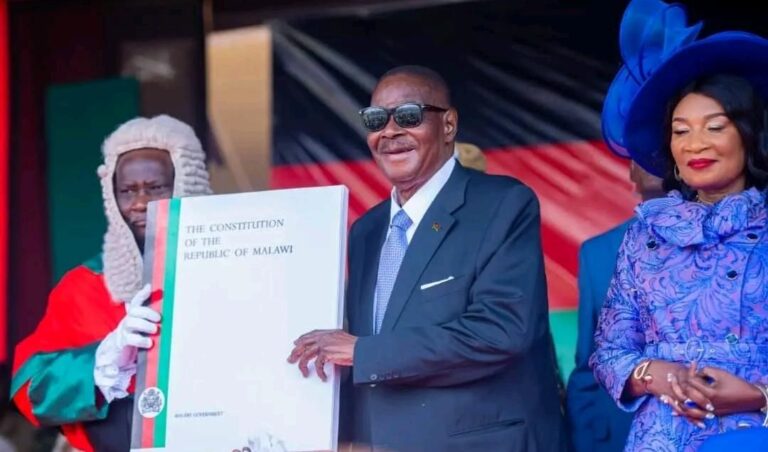
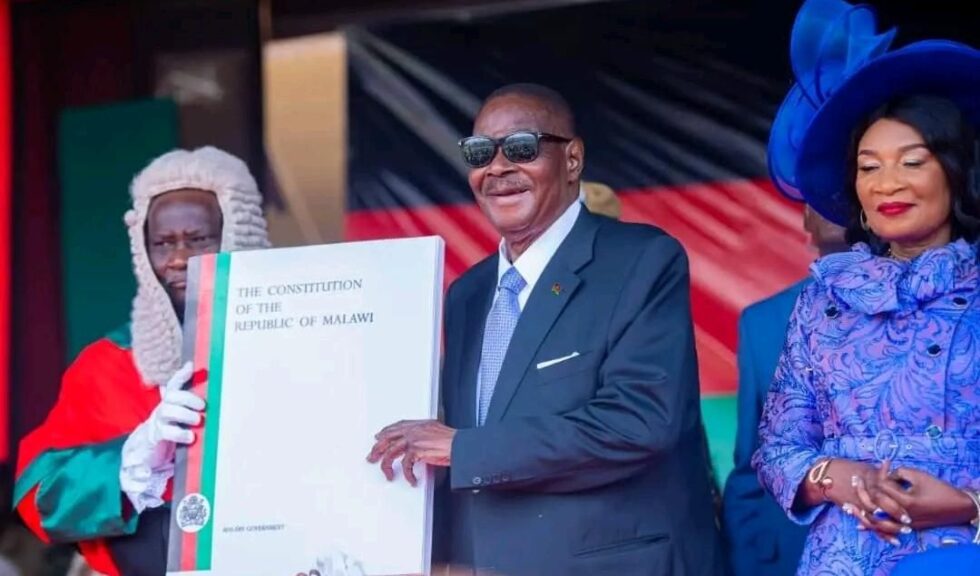
The swearing-in ceremony took place under overcast skies at Kamuzu Stadium in Blantyre, where Mutharika delivered a resolute inaugural address emphasizing discipline, accountability, and the urgency of implementing necessary economic reforms.

Standing atop a podium adorned with Malawi’s national colours, the President declared an uncompromising stance against corruption and misuse of office.


“The era of looting public resources is over,” Mutharika proclaimed. “Whether you are a businessman, politician, or civil servant, anyone caught stealing will face the consequences.”

He outlined a clear departure from the practices of previous administrations, focusing on rebuilding public trust and revitalizing the nation’s faltering economy.

Acknowledging the country’s severe economic challenges, including foreign exchange shortages, rising living costs, and widespread public distress, Mutharika insisted that these crises were man-made but solvable.

“The only path to national recovery is through bold, sometimes painful decisions,” he stated. “I ask for your patience as we strive to create a country that fulfills the dreams and aspirations of our children.”

Despite the threat of rain, thousands of citizens and international dignitaries gathered to witness the event, which combined military precision with cultural vibrancy.

The ceremony featured a formal parade, a 21-gun salute, and traditional dances, while the stadium reverberated with songs and chants supporting Mutharika and his Democratic Progressive Party (DPP).

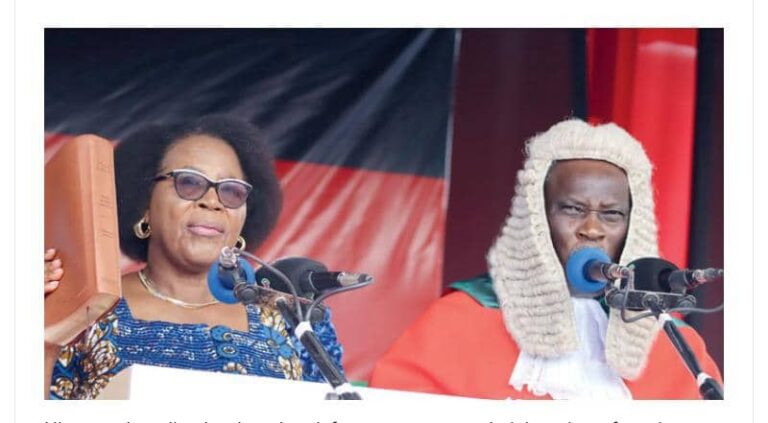
Vice President Jane Ansah was the first to take her oath, administered by Chief Justice Rezine Mzikamanda.

At 11:08 am, Mutharika followed, flanked by First Lady Gertrude Mutharika, receiving the national flag, coat of arms, presidential standard, and sword of command, symbolizing his renewed authority as Commander-in-Chief.

Former presidents Bakili Muluzi and Joyce Banda attended, alongside former vice-presidents Michael Usi, Khumbo Kachali, and Cassim Chilumpha, highlighting the historical significance of the occasion.

However, the absence of outgoing President Lazarus Chakwera was notable.

The Malawi Congress Party (MCP) issued a statement, signed by publicity secretary Jessie Kabwila, explaining that Chakwera’s name had been omitted due to a last-minute schedule change, and he extended his congratulations remotely.

International representation included Mozambique’s President Daniel Chapo, Zimbabwe’s Emmerson Mnangagwa, and delegations from Botswana, Zambia, Tanzania, Eswatini, Angola, and Kenya.

Political analysts welcomed Mutharika’s stern anti-corruption message, urging him to uphold the rule of law without shielding political allies.

Ernest Thindwa emphasized the need for a concrete economic recovery plan and warned that difficult but necessary decisions must be made early to prevent later political pressures.

He specifically cautioned against unsustainable subsidies, noting that programs such as free fertiliser are financially untenable for the country.

Supporters expressed optimism about the new administration.

Rex Mahaya from Thyolo said, “Mutharika’s record gives me confidence. I believe this government will foster development throughout Malawi.”

Later, at a luncheon for delegates at Sunbird Mount Soche, Mutharika reinforced his call for national unity and spoke emotionally about his motivation to reclaim the presidency after his earlier removal.

The event marked a symbolic and decisive moment in Malawi’s political history, as the nation watched its leader promise transparency, accountability, and decisive economic governance.
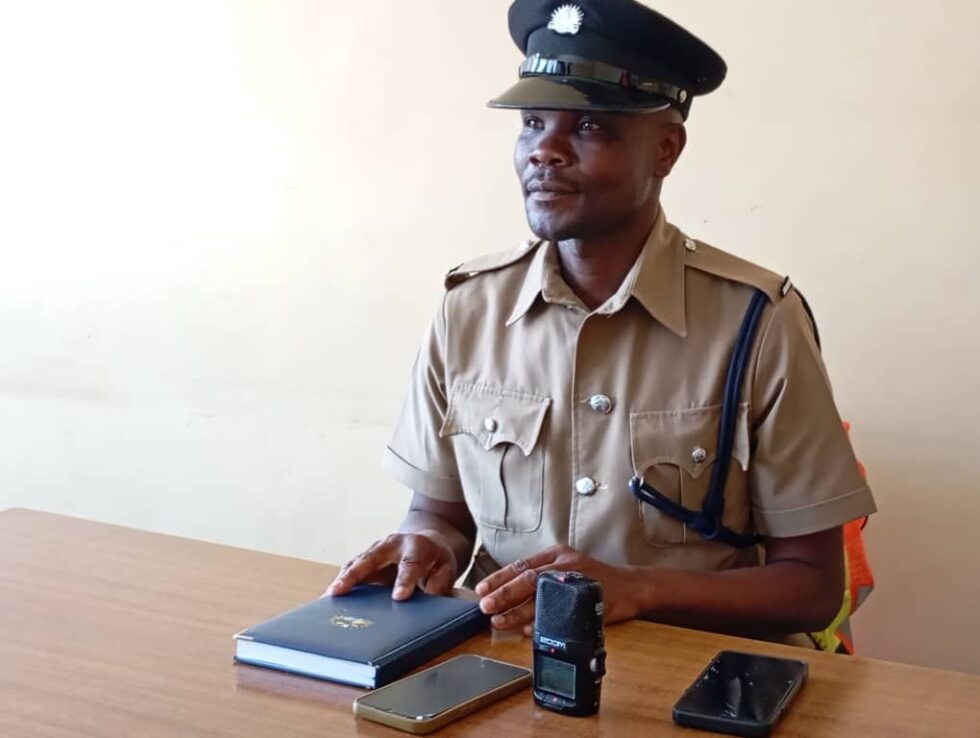
Unknown man commits suicide in Chiwembe, Limbe

0

By Rahim Abdul

Police in Limbe are investigating a suspected suicide case involving an unidentified man who was found hanging from a tree near the sewage area in Chiwembe on Thursday afternoon. The tragic incident occurred at around 1:00 p.m. for reasons yet to be established.

According to information gathered by police, the deceased was earlier seen by some learners from Misesa Primary School walking from the direction of Soche and crossing the Chiwembe River before heading past the sewage area. His movements did not raise suspicion at the time.


However, later in the day, when the learners knocked off from school and were heading home, they were shocked to discover the same man hanging from one of the trees near the sewage site. The sight left them disturbed, prompting them to immediately alert one of their teachers about the incident.

The teacher then wasted no time in informing authorities at Limbe Police Station. A team of detectives was dispatched to the scene, where they confirmed the death and conducted preliminary investigations before removing the body.

Police later transported the deceased’s body to Queen Elizabeth Central Hospital in Blantyre for postmortem and further identification processes. As of Friday, the man’s identity and the motive behind the suicide remained unknown.

In the meantime, law enforcement officers have appealed to members of the public to reach out for help when facing emotional, financial, or social challenges. They emphasized that support is available through the police’s Victim Support Unit and other mental health services.

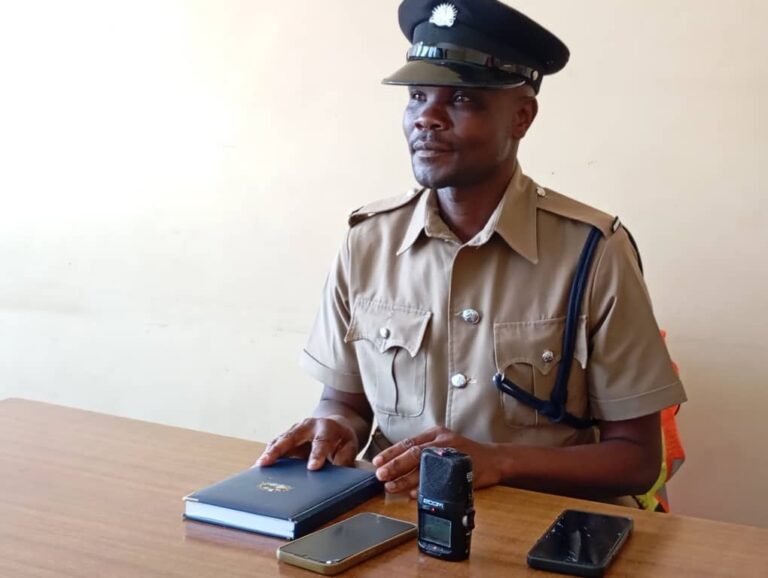
Limbe Police Station Deputy Public Relations Officer, Sub-Inspector Sam Kadyole, has since urged communities to take mental health issues seriously and to intervene early when they notice signs of distress among friends, relatives, or neighbors.

MCP’s September 16 Loss: Lessons, historical patterns, and paths to renewal

By Burnett Munthali

The recent general elections left a bitter taste in the mouths of many Malawi Congress Party (MCP) supporters, sparking internal debates and critiques of leadership performance.

While Secretary General Richard Chimwendo Banda has been singled out for criticism, blaming one individual oversimplifies a multifaceted electoral outcome.

Historically, MCP’s performance has fluctuated with shifts in leadership, national sentiment, and party strategy.

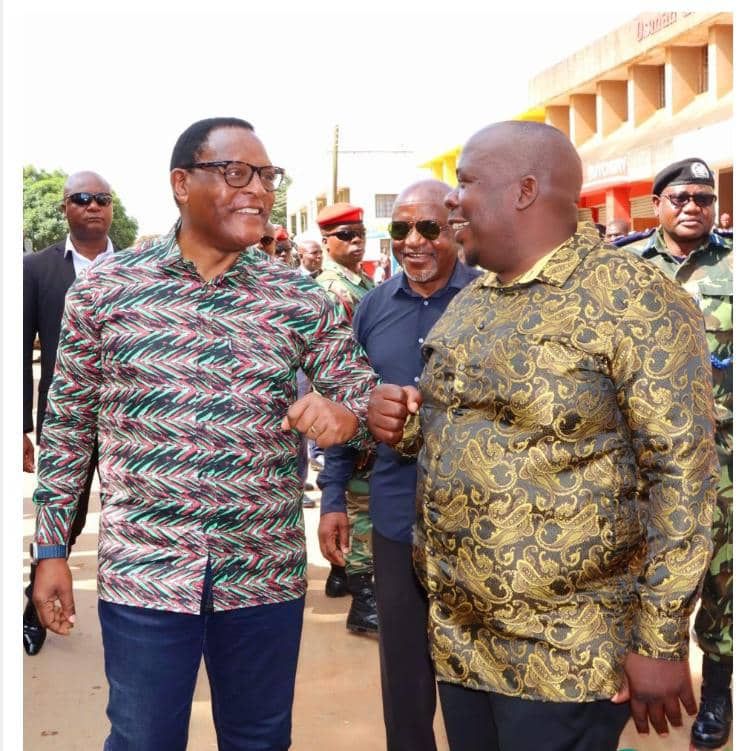
Chakwera and Chimwendo


In the 2019 and 2020 elections, MCP leveraged widespread dissatisfaction with the ruling Democratic Progressive Party (DPP) to secure victory, demonstrating the party’s ability to mobilize public support when the broader political and socio-economic context favored it.

However, the 2025 elections presented a different landscape. Internal divisions, emerging opposition coalitions, and voter fatigue played significant roles in shaping outcomes, factors beyond the control of any single party official.

Political analysts argue that structural weaknesses, including limited grassroots engagement in certain regions and inconsistent messaging, contributed to MCP’s setbacks.

Chimwendo Banda’s one-year tenure as Secretary General coincided with these broader challenges, making it unfair to attribute the party’s defeat solely to his leadership.

The “cadets” controversy illustrates the complexity of party management. Many members criticized as problematic joined during the previous administration, highlighting the difficulty of reconciling new leadership objectives with established structures and personnel.

Experts stress that purging long-standing members risks alienating committed supporters and could be perceived as internal vendetta rather than genuine reform.

Dr. Patricia Chirwa, a political analyst at Chancellor College, notes that “MCP’s setbacks are symptomatic of broader institutional and strategic challenges. Leadership is important, but so is a coherent strategy, internal cohesion, and adaptability to changing political contexts.”

Comparatively, other parties in Malawi have experienced similar post-election introspections. The DPP faced internal crises after 2019 and again in 2022 following contested nominations, demonstrating that electoral disappointments often trigger debates about leadership, strategy, and party renewal.

For MCP, the path forward lies not in blaming individuals but in critically evaluating party structures, decision-making processes, and the mechanisms that enable effective grassroots mobilization.

Investments in leadership development, inclusive decision-making, and evidence-based policy communication are essential. Additionally, fostering a culture of accountability while avoiding factional purges will help build long-term party resilience.

Political commentator Mabvuto Bamusi argues that “MCP must institutionalize reform, not personalize it. Only by embedding professionalism, transparency, and strategic foresight can the party regain public trust and electoral viability.”

Ultimately, the 2025 election results should be treated as an opportunity for reflection, learning, and renewal rather than a platform for personal blame.

By acknowledging historical patterns, understanding structural limitations, and implementing measured reforms, MCP can position itself to reengage Malawian voters and strengthen its democratic credentials in future contests.

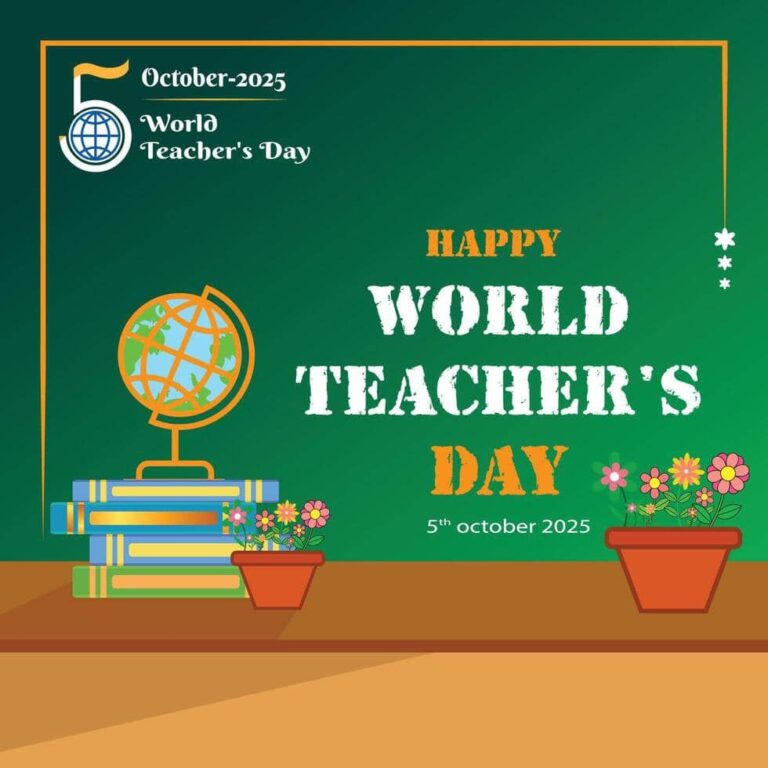
World Teachers’ Day 2025: Recasting teaching as a collaborative profession

0


By Burnett Munthali

Globally, the 2025 World Teachers’ Day emphasizes the vital and collective nature of the teaching profession.

This year’s theme, “Recasting teaching as a collaborative profession,” underscores the importance of cooperation and shared responsibility among educators.

The theme reflects a growing recognition that teaching is not a solitary endeavor but a profession strengthened by collaboration, mentorship, and knowledge sharing.

Educators worldwide are encouraged to work together to enhance teaching practices, support one another, and improve learning outcomes for students.

Collaboration among teachers is increasingly seen as a critical factor in addressing challenges such as educational inequality, curriculum reforms, and the integration of technology in classrooms.


By working collectively, teachers can exchange innovative strategies, learn from one another’s experiences, and build professional networks that enrich the teaching and learning process.

Moreover, fostering a collaborative culture within schools promotes mutual support, reduces burnout, and strengthens the sense of community among staff and students alike.

World Teachers’ Day 2025 also invites policymakers and education stakeholders to recognize and invest in professional development initiatives that encourage teamwork and cooperative learning among teachers.

In essence, the day serves as a reminder that the quality of education is closely tied to the cohesion, collaboration, and collective expertise of the teaching workforce.

As nations celebrate World Teachers’ Day this year, the call to recast teaching as a collaborative profession presents an opportunity to reimagine education systems that value teamwork, innovation, and shared commitment to student success.

Mutharika vows to lead with discipline

0

By Chisomo Phiri

The newly elected 7th Malawi president Professor Arthur Peter Mutharika has vowed to lead a government rooted in integrity, hard work, and service to the people.

Speaking during his colorful inauguration ceremony at Kamuzu Stadium (KS ) in Blantyre on Saturday, Mutharika,who also led the country from 2014 to 2019 and again briefly from 2019 to 2020,said he has returned with a new vision and a new agenda, emphasizing that his comeback is driven by both the will of God and the collective will of Malawians.

“I promised that I  would be back  and today, I  am back with a new vision, a new agenda.

“I am back by the will of God and the will of the people. I must never forget the invisible hand of God in this historic election,” he said.

Mutharika who is also the leader of the Democratic Progressive Party (DPP ) urged Malawians to unite around a common vision for development, saying the election showed that the nation was ready for change.

Mutharika


“We all wanted change. We voted for change. We expect change. I promise you real change. Zithuzi zisintha! But real change must begin with each one of us.

“If we want a different Malawi, we must begin to think differently and do things differently,” he said.

The new president reminded members of his party and public officials that government exists to serve citizens, not for personal gain.

“Malawi does not belong to any person, tribe, or political party not even the DPP. Government is not a feast. It is not about kudyelela. It is about serving, delivering, and helping everyone prosper in their businesses, farming, and education,” he said.

In a firm tone, Mutharika declared that the honeymoon of looting government is over, warning public servants against corruption, theft, and abuse of office.

“You are dealing with a different president now.I will not allow anyone to destroy this country under my watch  and I mean anyone,” he said.

The new president added that both he and his vice, Jane Ansah, would enforce strict discipline in public offices to restore integrity and accountability.

“We will clean up the house to restore discipline and sanity in government.Never say I didn’t warn you,” said Mutharika.

He extended his gratitude to voters, the DPP membership, and the party’s alliance partners for the victory.

Mutharika specifically thanked Enock Chihana of Alliance for Democracy (AFORD ) and his party for contributing to what he described as a ‘national consensus.’

He also expressed appreciation to religious leaders, both Christian and Muslim, for their role in standing against corruption and injustice.

“Malawians voted out corruption, theft, looting, and state-sponsored terror.The spirit that destroys our nation comes from within us.We are the people destroying our own country, and we must heal it,” said Mutharika.

The new president thanked Malawi’s international partners  including the United States, the United Kingdom, the European Union, SADC, and the UNDP  for supporting the country’s democratic process.

“Please send us investors and every support you can.Malawi is now open for business. You can trust my government on financial management and my previous government proved that,” appealed Mutharika.

He also acknowledged messages of goodwill from world leaders, including U.S. President Donald Trump, and expressed readiness to strengthen international cooperation.

Turning to his new administration’s vision, Mutharika said Malawi had inherited an economic crisis, citing severe shortages of food, fuel, and foreign exchange, as well as high public debt.

“Malawi’s crisis is man-made, not a natural tragedy.Any problem created by humans can be solved by humans. We will fix this country  but it will not be easy. I promise not milk and honey, but hard work and tough decisions,” he said.

The new president urged Malawians to remain patient and disciplined as his government works to rebuild the economy.

“With patience, discipline, and hard work, we will make Malawi a country we are proud to live in,” said Mutharika.

Concluding his address, Mutharika said his administration has a comprehensive development and governance blueprint to guide national transformation.

“Our manifesto is a pledge for total transformation.The DPP government is ready to govern and ready to rebuild this country,” he said.

The new president also thanked regional leaders and foreign dignitaries who attended the ceremony and wished them safe travels back home.

On September 24, 2025, Malawi Electoral Commission (MEC) Chairperson Justice Annabel Mtalimanja declared Mutharika as the winner of the presidential election held on September 16, 2025.

He amassed 3,035,249 votes against 1,765,170 for Malawi Congress Party (MCP ) leader,Dr.Lazarus Chakwera, securing 56.8 percent of the vote and crossing the 50-percent-plus-one threshold required for an outright win.