

Malawi’s fashion industry is stepping into the spotlight with the launch of Creative DNA Malawi, a project aimed at highlighting the country’s rich cultural aesthetics through innovative design.
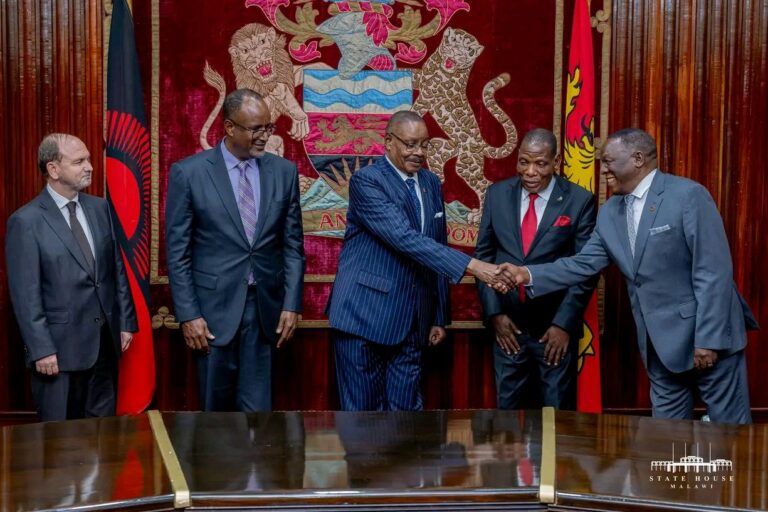
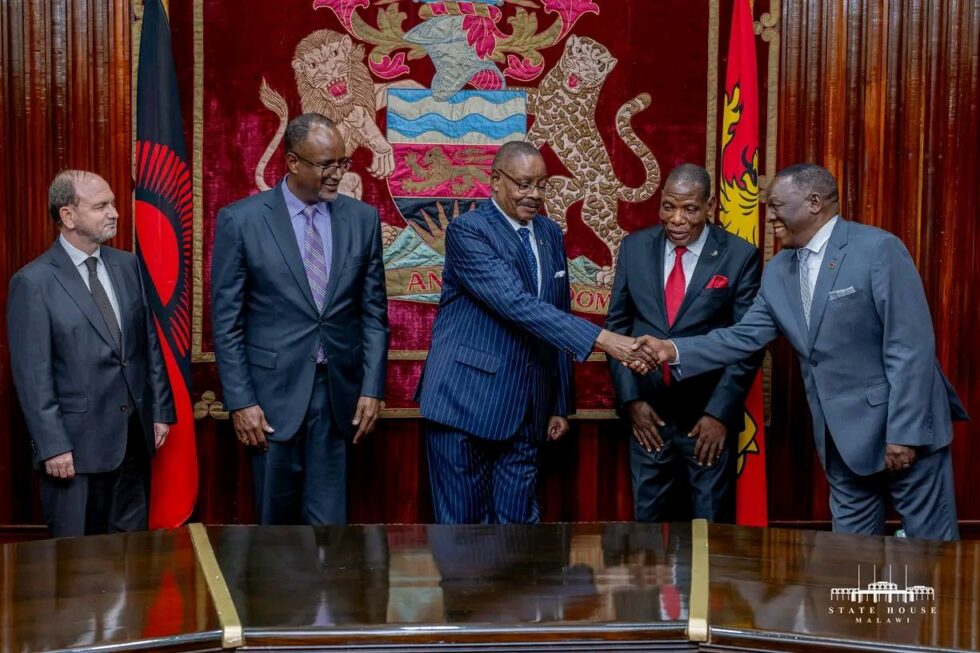
Vice President Dr. Jane Ansah graced the occasion, signaling the government’s recognition of the creative sector as a potential driver of economic growth and youth empowerment.
Ansah graced the event
The initiative, founded by celebrated designer Lily Alfonso, seeks to provide a platform for local designers to showcase their talent, gain mentorship, and attract both local and international opportunities.
Supported by the British Council, Creative DNA Malawi is designed to bridge gaps in infrastructure, funding, and exposure that have long hindered the growth of Malawi’s fashion industry.
Alfonso, addressing the audience, emphasized that Malawi is home to an untapped reservoir of creative talent capable of transforming the nation’s economy if properly supported.
She called on private sector players and policymakers to invest in fashion, describing it not only as an art form but as a practical tool for entrepreneurship, job creation, and cultural preservation.
Highlighting the challenges faced by designers, Alfonso pointed to limited exhibition spaces, lack of financial support, and insufficient training opportunities as barriers that the project aims to overcome.
Vice President Ansah commended the initiative, noting that Creative DNA Malawi offers young people a chance to turn their creativity into sustainable livelihoods while simultaneously promoting Malawi’s cultural identity.
She encouraged partnerships among designers, institutions, and investors to build a robust creative ecosystem that nurtures innovation and ensures the long-term viability of the fashion sector.
Dr. Ansah concluded by stressing that supporting creative industries like fashion is critical not just for economic diversification, but also for inspiring confidence, showcasing Malawi on a global stage, and empowering the next generation of innovators.
Cary-Hiroyuki Tagawa, the internationally acclaimed Japanese-American actor known for his powerful roles in action and martial-arts films, has died in California, USA. He was 75 years old at the time of his passing.
Family sources confirmed that Tagawa died after battling a degenerative nerve disease, a condition that gradually weakens muscles and affects movement. His illness had reportedly worsened in recent months.
Tagawa was born in Tokyo, Japan before later relocating to the United States with his family.
His early exposure to martial arts and film shaped the path that eventually made him one of Hollywood’s most recognizable Asian actors.
Throughout his career, Tagawa appeared in several high-profile movies and television productions.
His breakout role came in Showdown in Little Tokyo, where his disciplined acting style and commanding presence attracted attention from major film producers.
He went on to achieve global fame for portraying Shang Tsung in Mortal Kombat, a character that became a defining part of his legacy. His performance remains one of the most iconic villain portrayals in action cinema, making him a fan favourite for decades.
Tagawa also featured in other notable works such as The Phantom, Johnny Tsunami and Planet of the Apes, demonstrating his ability to adapt to different genres beyond martial-arts films.
Later in his career, he returned to the character of Shang Tsung in Mortal Kombat 11, lending both his voice and likeness to the video game. Fans praised this as a nostalgic tribute to one of his greatest roles.
Tributes from across the world have poured in following news of his death. Actors, directors, and fans described him as a humble, disciplined, and exceptionally talented individual whose impact stretched far beyond the screen.
Many acknowledged Tagawa’s contribution to improving Asian representation in Hollywood, noting that he paved the way for many actors of Asian descent to gain recognition in mainstream film.
His family shared a touching message after confirming the news, saying, “We came from God, and to Him we shall return,” as they asked the public to remember him for his life, artistry, and legacy.
Malawi’s boys’ and girls’ teams began their COSAFA Schools Championship campaigns with a statement of intent, not only through their victories but through the maturity and structure displayed in their performances.
The wins over Lesotho in Stellenbosch hinted at a football system that is steadily growing in confidence and identity.
For years, Malawi’s youth teams have shown flashes of brilliance without fully establishing consistency. But Friday’s matches reflected a country beginning to bridge that gap, as both teams delivered composed, disciplined and purposeful football.
The boys took early control of their match, showcasing tactical awareness uncommon at school level.
Their quick strikes from Innocent Jauma and Intias Adam within the first eight minutes highlighted Malawi’s readiness to impose their game early.
Even when Lesotho pulled one back late in the match, the boys showed composure, protecting their lead with improved game management an area that has cost them in past tournaments.
Head coach Joseph Malizani noted that the opening victory was not just about the scoreline but about the team’s ability to maintain structure under pressure.
He stressed that consistency will be key, especially against Botswana, a side known for its physicality.
Malizani believes that if Malawi stays disciplined, they can break the pattern of falling short in the final stages.
On the girls’ side, the 5–0 triumph did more than impress the scorekeepers it showcased Malawi’s increasing dominance in the women’s youth game.
Their creativity, passing rhythm and balanced team play reflected a squad that has grown after last year’s runner-up finish.
While the goals from Tryness Chawala, Flora Banda, Sifati Chitenje, Eunice Sitchaya and Talandira Kachala were headline-worthy, it was Malawi’s patience and build-up play that truly defined the win.
Coach Bridget Chirwa’s emphasis on mental readiness paid off as the team overcame a slow start to completely control the match.
Chirwa said the game showed how much the girls have matured in reading the game and adjusting their tempo.
She expects a tougher challenge against Botswana but expressed confidence in her squad’s ability to adapt one of the key elements missing in previous editions but now clearly improving.
The broader story of the day was Malawi’s evolution. The boys’ three-year journey of near triumphs two runner-up finishes and a semifinal appearance appears to be shaping a mentally tougher squad. The girls, having also experienced highs and lows since 2022, now look more balanced and less reliant on individual brilliance.
Malawian music sensation Emmie Deebo has emerged as one of the country’s most-watched female artists on YouTube in 2025, according to new figures she shared on her official Facebook page.
The singer, who has continued to grow her footprint across Southern and Eastern Africa, says the year has been her biggest yet in terms of digital reach.
The statistics reveal that Deebo’s music amassed a remarkable 11.3 million views on YouTube this year alone.
Emmie Deebo
This milestone places her among the leading Malawian artists commanding strong online presence at a time when digital platforms are shaping success in the music industry.
Of the total views, Malawians themselves contributed the largest share with 4.9 million views recorded locally.
The artist says this strong support from home continues to motivate her, proving that Malawian audiences have fully embraced their own talent on global platforms.
South Africa followed with 1.5 million views, highlighting how Deebo’s sound is breaking barriers beyond Malawi’s borders.
The country has become one of the key markets for Malawian urban and Afro-soul music and Deebo’s statistics reflect this continued trend.
Kenya came third with 1.2 million views, cementing East Africa as one of the regions where her music is gaining growing acceptance.
The artist has previously spoken about her desire to collaborate with East African stars, a move that could further boost her presence in the region.
Deebo described the numbers as a sign of growth not only for her career but also for the Malawian music industry as a whole.
She believes these results show that Malawi’s creative sector is now being recognised across the continent thanks to digital platforms.
Deebo, who has been active in the music scene for several years, says she plans to use this momentum to release more projects in 2026.
Chalo Mvula recently took time to tour the iconic United States Congress building, a landmark that symbolizes the core of American democracy.
His visit offered him a rare opportunity to walk through the halls that house the Senate and the House of Representatives, two chambers that together shape the legislative heartbeat of the United States.
The United States Capitol is more than just a government building; it is a historic testament to the centuries-old political system that has influenced global democratic values.
As Mvula navigated its corridors, he was immersed in the architectural grandeur and political legacy embedded in nearly every corner of the structure.
The Capitol Dome, standing tall and commanding, reminded him of the depth of history and craftsmanship invested in creating a national symbol of unity and governance.
Inside the building, he witnessed how the Senate Chamber and the House Chamber operate as the twin engines of America’s legislative machinery.
The Senate, often referred to as the “upper house,” is known for its deliberative nature, slower pace, and its responsibility to provide oversight, confirm presidential appointments, and ratify international treaties.
The House of Representatives, on the other hand, serves as the “people’s chamber,” where laws often originate and where the political pulse of the nation can be felt most intensely.
Mvula’s visit highlighted how these two chambers complement each other while maintaining distinct roles within the broader system of checks and balances.
He found it fascinating how every debate, vote, and bill introduced within these chambers contributes to national policy, governance, and the day-to-day lives of millions of Americans.
Walking through the Rotunda, he was surrounded by grand murals, statues, and historical artifacts that tell the story of America’s struggles, triumphs, and evolving identity.
The artwork and architecture serve not only as decorative elements but also as powerful reminders of the country’s long journey toward freedom, justice, and institutional stability.
His tour also provided insight into how Congress integrates public engagement, with spaces designed for visitors, journalists, and citizens seeking to witness legislative activities firsthand.
Mvula observed that transparency and accessibility are crucial components of the American democratic system, allowing citizens to stay informed and hold their leaders accountable.
He was also impressed by the technological systems in place, which support live broadcasts, real-time voting records, and digital transparency tools that keep the public connected to the legislative process.
The experience sparked reflections on how such structures of governance could inspire improvements in parliamentary systems across the world, especially in developing democracies.
He noted that the level of organization and institutional pride reflected in the Capitol could serve as a model for countries seeking to strengthen their legislative frameworks.
His tour also reminded him that leadership and policy formulation require both historical awareness and structural support, elements that are visibly embedded in the American Congress.
In speaking about his experience, Mvula expressed admiration for the dedication of the staff working behind the scenes to maintain the operations, security, and historical preservation of the Capitol.
He acknowledged that such institutions thrive because of their commitment to professionalism, continuity, and respect for democratic traditions.
His visit to the Capitol also deepened his appreciation for the importance of civic education, especially in Malawi and Africa, where many citizens remain detached from parliamentary processes.
He believes that exposing young people and professionals to global democratic practices can help nurture informed leadership and inspire long-term institutional development.
Chalo Mvula’s visit, therefore, was not just a tour but a learning experience that connected him with the foundational principles of modern governance.
It offered him a firsthand understanding of how robust legislative structures contribute to national progress, stability, and accountability.
The U.S. Congress stands not only as a political institution but as a historic monument that reflects the nation’s resilience, adaptability, and commitment to democracy.
Mvula left the building with a renewed sense of appreciation for the role of legislatures worldwide and the crucial importance of safeguarding their integrity.
His tour reinforces the idea that democracy grows stronger when citizens engage, learn, and draw lessons from global institutions that have withstood the test of time.