Wednesday, May 6, 2026
No menu items!
spot_img
Home Blog Page 10

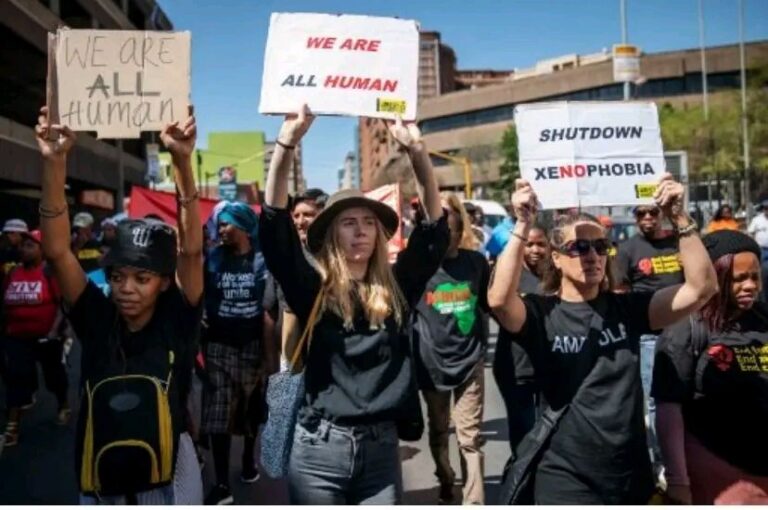
Government monitoring xenophobia attacks in South Africa

0

 
By Jones Gadama

Government says it is closely monitoring the situation in South Africa following intensified reports of xenophobic attacks targeting foreign nationals.

The attacks, linked to growing anti-foreigner sentiment in parts of the country, have left a trail of destruction, with several victims losing property, being displaced from their homes, and in some cases losing their lives. 

Ministry of Foreign Affairs Spokesperson Charles Nkhalamba told reporters on Tuesday that Lilongwe is keeping a close watch on developments.



He said while the authorities have not yet received any formal complaints or distress calls from Malawians living in South Africa regarding the latest wave of attacks, precautionary measures have been put in place.

According to Nkhalamba, the ministry has instructed the Malawian Embassy in Pretoria and the consulate in Johannesburg to remain on high alert and to provide immediate assistance to any Malawian national who may be affected. 

“Our embassy has been directed to monitor the situation on the ground and to open lines for any Malawian who needs help. We are also in touch with diaspora associations to ensure we get timely information,” Nkhalamba said.

He added that government is urging Malawians in South Africa to exercise caution, avoid areas where tensions are high, and report any incidents to the nearest diplomatic mission or local authorities. 

South Africa has over the years witnessed sporadic outbreaks of xenophobic violence, often fueled by perceptions that foreign nationals are taking jobs and business opportunities from locals.

The latest incidents have sparked fresh anxiety among migrant communities, including Malawians, Zimbabweans, Mozambicans, and Nigerians, many of whom run small businesses or work in the informal sector.

Videos circulating on social media show shops being looted and set ablaze, with some foreign nationals fleeing their homes in fear of further attacks. 

Human rights groups in South Africa have condemned the violence and called on President Cyril Ramaphosa’s administration to act decisively. They argue that repeated attacks undermine South Africa’s constitutional commitment to human dignity and regional solidarity.

The South African Police Service has confirmed that arrests have been made in some areas, but community leaders say more needs to be done to protect vulnerable groups and prosecute perpetrators. 

Back home, the opposition United Democratic Front has expressed deep concern over the reports. UDF president Atupele Muluzi, speaking through the party’s spokesperson Genarino Lemani, said the violence is regrettable and called for urgent action from both Malawi and South Africa.

Lemani appealed directly to South African authorities to immediately end the attacks and guarantee the safety of all foreign nationals living and working in the country. 

“We cannot watch our brothers and sisters being attacked and displaced. We call on the South African government to uphold the rule of law and protect every person within its borders, regardless of nationality,” Lemani said.

He further urged the Malawi government to engage its South African counterpart through diplomatic channels and to prepare contingency plans, including possible evacuation, should the situation deteriorate. 

Lemani also asked Malawians in South Africa to remain united, share verified information, and avoid retaliatory actions that could escalate tensions.

He commended diaspora groups that have started documenting incidents and offering shelter to those displaced. 

Meanwhile, the Ministry of Foreign Affairs has reiterated that it will issue regular updates as the situation evolves.

Nkhalamba encouraged families in Malawi who have relatives in South Africa to stay in contact and to relay any emergencies to the ministry’s headquarters in Lilongwe or to the embassy in Pretoria. 

The African Union and SADC have previously condemned xenophobic violence and called for peaceful coexistence among African nations.

Analysts say the recurrence of such attacks tests regional integration efforts and the free movement of people and goods across borders. 

For now, government insists there is no need for panic but stresses vigilance.

As diplomatic efforts continue, the safety of Malawians and other foreign nationals in South Africa remains a top priority for Lilongwe, with officials promising that no Malawian will be left without support.


Minister Navicha warns against child abuse after Ntchisi incident

0


By Jones Gadama

Minister of Gender, Children, Disability and Social Welfare, Mary Navicha, has issued a stern warning to Malawians against all forms of child abuse, describing the vice as both a moral failure and a criminal offense punishable by law.

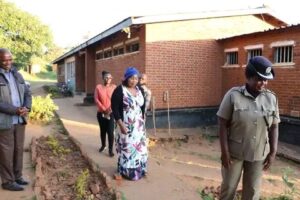
The minister made the remarks during an impromptu visit to Ntchisi District this week, following the arrest of a 39-year-old man accused of tying his 12-year-old stepchild to a tree in a nearby bush. 

The suspect, identified as Kingstone Headson, was apprehended by police after reports emerged that he had bound the minor to a tree and left him in the bush for several hours. Headson allegedly accused the boy of losing a slasher, a tool commonly used for clearing grass.


Neighbors who discovered the child raised an alarm, leading to the intervention of community members and local authorities.

The boy was rescued in distress and taken to Ntchisi District Hospital where he received medical attention and psychosocial support. Medical officials confirmed he sustained rope burns and trauma but is in stable condition. 

Addressing community members, traditional leaders, and child protection workers in Ntchisi, Minister Navicha condemned the incident as “inhumane, illegal, and unacceptable.” She said the government will not tolerate any acts that threaten the safety and dignity of children. “Children are not property.

They are human beings with rights. They deserve full care, love, and protection from all of us,” Navicha said. “Anyone caught abusing, neglecting, or exploiting a child will face the full force of the law. There will be no sacred cows.” 

The minister stressed that the Ministry of Gender, in collaboration with the Malawi Police Service, the Judiciary, and the Ministry of Justice, has intensified efforts to prosecute child abuse cases swiftly.

She cited the Child Care, Protection and Justice Act, the Penal Code, and Malawi’s Constitution as key legal instruments that criminalize corporal punishment, torture, and any form of cruel treatment against children.

Under Malawian law, child abuse offenses can attract custodial sentences ranging from several years to life imprisonment, depending on the severity. 

Navicha also used the visit to engage with local structures, including the District Social Welfare Office, Community Child Protection Committees, and Mother Groups. She urged them to strengthen reporting mechanisms and community surveillance systems to detect and prevent abuse before it escalates.

“Silence protects the abuser, not the child,” she said. “I am appealing to every citizen in Ntchisi and across Malawi: if you see something, say something. Report to the police, to social welfare officers, to chiefs, or to any trusted authority. Your action can save a life.” 

Traditional Authority Kalumo, who was present at the meeting, pledged the full support of local leaders in fighting child abuse.

He admitted that some harmful cultural beliefs still contribute to violence against children, especially stepchildren, and promised to use village forums to sensitize subjects.

“We must change the mindset that children can be disciplined through violence. There are better ways to correct a child,” the chief said. 

Meanwhile, civil society organizations working in the district have welcomed the minister’s visit. The Ntchisi Civil Society Network said high-profile government intervention sends a strong message that child protection is a national priority.

The organization’s coordinator, Grace Banda, however, called for more investment in community awareness campaigns and in training police and social workers to handle child abuse cases with sensitivity. 

Police in Ntchisi confirmed that Headson remains in custody and will appear in court soon to answer charges of child cruelty and unlawful confinement.

Ntchisi Police Station spokesperson Yohane Bilesi said investigations are complete and the docket has been forwarded to the Director of Public Prosecutions for direction. “We are treating this matter with the urgency it deserves,” Bilesi said. 

The Ntchisi incident adds to a growing list of child abuse cases reported across the country this year, prompting calls for a national dialogue on parenting, mental health, and poverty-related stressors that often trigger violence.

According to the Ministry of Gender, over 3,000 child abuse cases were recorded nationwide in 2025, ranging from physical assault and defilement to child labor and trafficking. 

Minister Navicha concluded her visit by interacting with the survivor and his guardians, assuring them of government support, including counseling and safe placement. She reiterated that protecting children is a collective responsibility.

“A nation is judged by how it treats its most vulnerable,” she said. “Let us all be guardians of our children. Let us build a Malawi where every child grows up free from fear and harm.” 

As the case proceeds to court, residents of Ntchisi say they hope it will serve as a deterrent to others.

Community members have since formed a local watch group to monitor the welfare of vulnerable children in the area, a move the ministry has pledged to support with training and resources.

Silent achiever: How Ben Phiri’s deeds roared louder than words to earn him Africa’s top local government crown


By Jones Gadama

The Ministers’ Accountability Network Africa (MANA) has named Malawi’s Minister of Local Government, Hon. Ben Phiri, the finest local government minister Malawi has produced since the dawn of democracy three decades ago.

The ringing endorsement came during MANA’s first quarter review of ministerial performance across the continent, a report that instantly set social media ablaze and placed Phiri’s quiet, results-driven leadership under a continental spotlight.

MANA, a respected organization that has assessed the performance of African ministers for over forty years, said Phiri’s tenure stands out for its rare blend of vision, discipline, and tangible delivery.

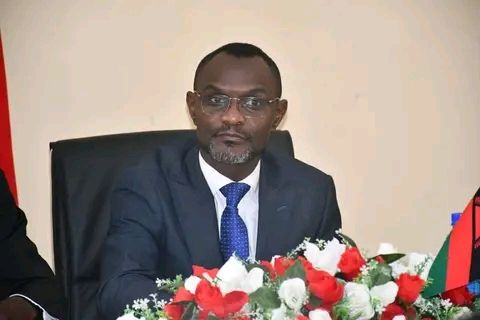
Hon Ben Phiri


“Malawi is in the right direction in the local government ministry with Ben Phiri,” MANA President Pereira Fatch declared while releasing the findings in Johannesburg last week. “We assess ministers objectively, based on service delivery, innovation, and impact on ordinary citizens. On all those fronts, Minister Phiri is exemplary.”

Fatch explained that MANA’s review teams spent three months measuring key indicators across 54 nations. They examined decentralization efforts, financial prudence, rural infrastructure, and citizen engagement.

Malawi’s Ministry of Local Government under Phiri topped the regional chart. The report praised him as “steadfast, transformative, and deeply pragmatic,” a leader who shuns fanfare and lets his record do the talking.

According to MANA, Phiri’s office rolled out 186 community development projects between January and March alone, ranging from upgraded markets in Mzimba to solar-powered water schemes in Nsanje. The organization also highlighted his “no-nonsense” approach to accountability, noting that Phiri instituted quarterly audits for all district councils and slashed bureaucratic delays that previously choked local projects.

What makes the recognition even more compelling is Phiri’s personal style.

Colleagues describe him as meticulous, humble, and fiercely patriotic. He rarely grants lengthy interviews and avoids political grandstanding.

Instead, he is often found in gumboots, inspecting a feeder road at dawn or chairing a late-night budget review with council staff. That quiet intensity has earned him a reputation as a “workhorse minister” whose footprint is visible from Chitipa to Nsanje.

Pereira Fatch put it bluntly: “Africa needs more doers and fewer talkers. Ben Phiri is the blueprint. He does not campaign for praise. He earns it in boreholes, bridges, and better by-laws.”

Responding to the honor, Phiri struck the same modest tone that has defined his career. “It is humbling to learn that our work is being recognized beyond our borders,” he said. “But this is not about me. It is about the council workers who wake up early, the chiefs who mobilize their people, and the president who gave us a clear mandate. I promise to keep serving the nation with loyalty and to help fulfill the development dream of President Peter Mutharika. We will not rest until every Malawian feels government in their village.” Phiri added that the MANA review would only push him to “work harder, listen more, and deliver faster,” noting that local government is the heartbeat of public service.

The news has triggered a wave of approval at home. Social and political commentator Mathews Namukhoyo said Phiri’s recognition was “long overdue” and reflects a new standard for public office. “Ben Phiri has redefined what it means to be a minister,” Namukhoyo observed. “He is diligent, unassuming, and allergic to excuses. While others hold press conferences to announce intentions, Phiri holds site meetings to finish projects. He has turned the Ministry of Local Government into a delivery powerhouse. If you want to see transformation, visit the districts.The evidence is in the clinics, the school blocks, and the rural roads that were impassable two years ago.” Namukhoyo further argued that Phiri’s model proves that effective leadership is about systems, not slogans. “He strengthened internal controls, empowered district commissioners, and demanded monthly progress reports. That is why money now works for the people, not for files.”

Ordinary Malawians appear to agree. In Machinga, farmer Eluby Jameson pointed to a new irrigation canal that has doubled her harvest. “We used to hear promises. Now we see water,” she said. In Karonga, youth leader Kondwani Mbewe credited Phiri’s youth-in-development initiative for funding 40 local enterprises. “He doesn’t talk much, but when he visits, things move,” Mbewe said.

MANA’s report also offered guidelines to other nations, citing Phiri’s “performance contracts” with district councils as a best practice. Under the system, every council signs a public pledge outlining targets, timelines, and penalties for non-delivery. The ministry then publishes a scorecard, creating healthy competition among districts. Pereira Fatch urged other African governments to study the “Phiri Method,” describing it as “practical, replicable, and refreshingly free from politics.”

As Malawi celebrates this continental nod, the pressure is now on Phiri to sustain the momentum. Yet those who know him say pressure is his natural habitat.

From his days as a grassroots mobilizer to his current role, he has carried a simple philosophy: “Plan in silence, execute in full view, let results make the noise.” Today, Africa is listening to that noise. And in the quiet towns and trading centers of Malawi, the noise sounds a lot like progress.

At a time when public trust in leadership is fragile, Ben Phiri has given Malawians a reason to believe again.

He has shown that integrity, focus, and a bias for action can still triumph in public service. For that, MANA says, he is not just Malawi’s best local government minister in 30 years. He is, right now, Africa’s gold standard.

National Bank of Malawi introduces online account opening with NBM smartonboard

0

 
By Jones Gadama

National Bank of Malawi has launched a new digital platform that allows customers to open bank accounts and update their Know Your Customer (KYC) information online.

The platform, called NBM SmartOnboard, is aimed at improving convenience and expanding access to banking services through technology. 

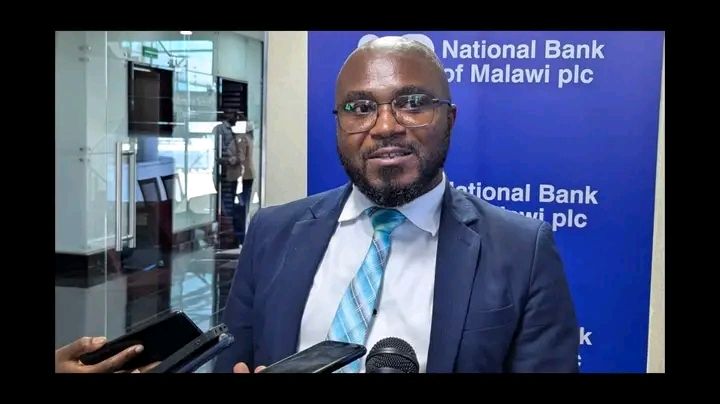
Yusuf Mdala


Speaking during a demonstration of the system, one of the bank’s senior officials, Yusuf Mdala, said NBM SmartOnboard will eliminate the need for customers to make multiple trips to branches just to open an account or update their personal details.

“This innovation is part of our commitment to digital transformation. It saves time for customers and reduces congestion in our banking halls,” Mdala said. 

According to Mdala, the platform is user-friendly and secure, enabling customers to complete the entire onboarding process remotely using internet-enabled devices. He added that the move supports the bank’s broader strategy of advancing financial inclusion and modernizing service delivery.

By digitizing account opening and KYC updates, the bank expects to reach more people, especially those with limited access to physical branches. 

One of the key features of NBM SmartOnboard is that it allows Malawians living in the diaspora to open accounts with National Bank without having to travel back home.

This is expected to make it easier for citizens abroad to invest, save, and support families in Malawi. In addition, the platform permits parents and guardians to open accounts for their children, promoting a culture of saving from an early age. 

Mdala noted that the financial sector is evolving rapidly and banks must adapt to changing customer needs. “With NBM SmartOnboard, we are not only making banking more accessible but also contributing to the growth of the digital economy,” he said.

The bank has urged customers to take advantage of the platform and assured them that all necessary security measures have been put in place to protect personal data. 

The launch of NBM SmartOnboard comes as more financial institutions in Malawi embrace technology to streamline operations and improve customer experience.

National Bank said it will continue to invest in digital solutions that align with global banking trends while addressing local market needs.

Hardworking Namalomba leads African ICT ministers in backing Ruto’s one Africa digital market push

0

By Jones Gadama


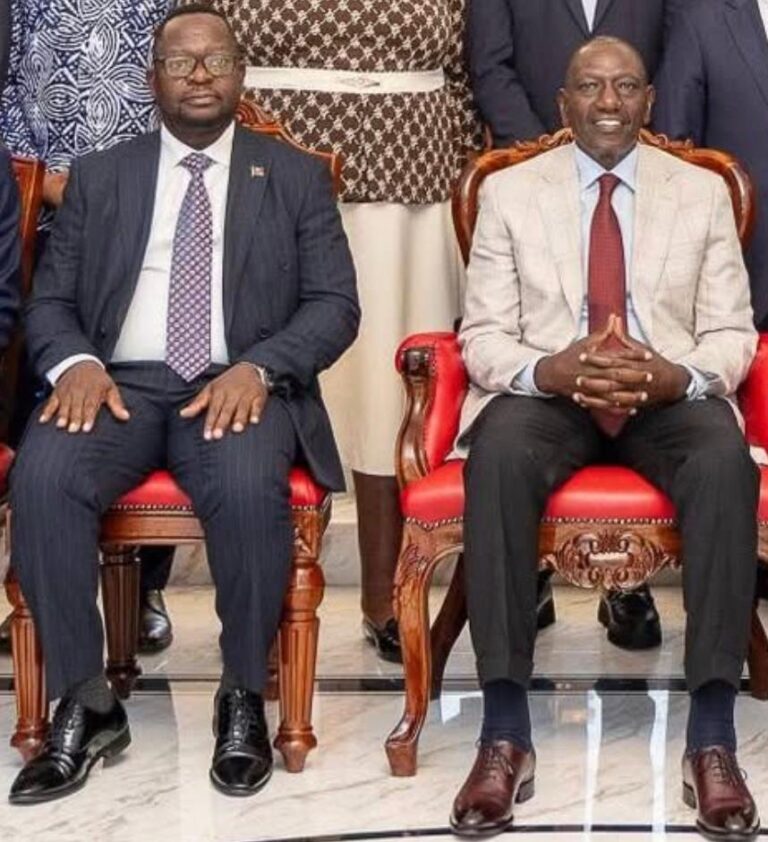
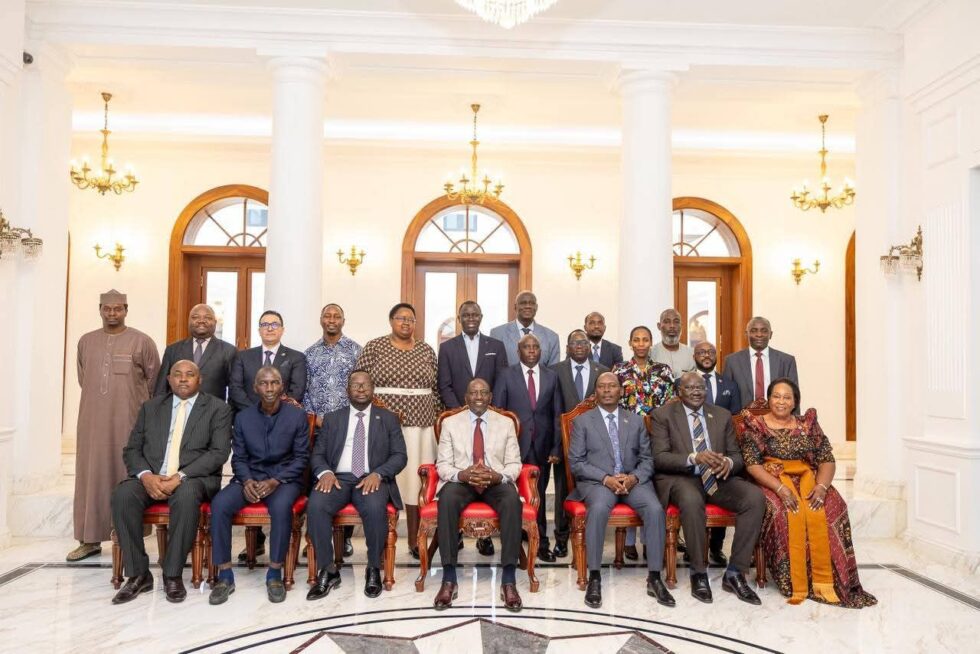
Minister of Information and Digitalisation Hon. Shadreck Namalomba on Wednesday led a high-level delegation of African ICT ministers to pay a courtesy call on Kenya’s President, His Excellency Dr. William Ruto, at State House, Nairobi.

The delegation applauded President Ruto for taking a decisive leadership role in championing the creation of a One Africa Digital Market, describing it as a transformative step toward continental integration and economic growth. 

Namalomba in Kenya


Speaking during the meeting, Namalomba hailed President Ruto’s vision, saying Africa cannot afford to lag behind in the global digital economy.

“Your Excellency, your bold and decisive leadership in facilitating the One Africa Digital Market is commendable.
This initiative will break down barriers, harmonize policies, and open opportunities for millions of Africans. We stand with you in this journey,” Namalomba said. 

The meeting brought together ministers and senior officials from over 12 African countries who are attending the ongoing Africa ICT Ministers’ Forum in Nairobi.

The forum seeks to accelerate digital infrastructure, data governance, and cross-border e-commerce under the African Union’s Digital Transformation Strategy 2020–2030. 

Namalomba used the occasion to highlight Malawi’s own strides in digitalisation under the leadership of President Prof. Arthur Peter Mutharika.

He noted that the Ministry of Information and Digitalisation has prioritized expanding broadband access, digitizing government services, and promoting ICT skills among the youth.

“Back home, under the visionary guidance of His Excellency President Arthur Peter Mutharika, we are working tirelessly to ensure Malawi is not left behind. We believe in a digitally empowered Malawi that contributes meaningfully to a digitally connected Africa,” he added. 

The minister’s remarks drew praise from delegates who described him as a hardworking and focused leader committed to translating policy into tangible results.

Known for his hands-on approach, Namalomba has been at the forefront of pushing digital literacy campaigns, rural connectivity projects, and public sector reforms aimed at reducing bureaucracy through technology.

President Ruto, in his response, thanked the delegation for their solidarity and reaffirmed Kenya’s commitment to work with all African nations to fast-track digital integration.

He stressed that a unified digital market would boost intra-African trade, create jobs for young people, and position the continent as a competitive player in the global tech space. “Africa must speak with one voice on digital policy. We must dismantle the silos that have kept our people apart and build the highways of the digital future together,” President Ruto said. 

The courtesy call also discussed joint efforts to tackle cybercrime, harmonize data protection laws, and mobilize investment for undersea cables and satellite internet to connect underserved regions.

The ministers agreed to set up a technical taskforce that will present a roadmap at the next African Union Heads of State Summit. 

Before departing State House, Namalomba reiterated Malawi’s commitment to regional collaboration.

“We may be different nations, but our challenges and opportunities are shared. As Africans, we must own our digital destiny,” he said, earning applause from fellow ministers. 

Namalomba’s active role in Nairobi adds to his growing reputation as one of Malawi’s most industrious cabinet ministers, often cited for his loyalty and dedication to President Mutharika’s vision.

Observers say his engagement on continental platforms continues to raise Malawi’s profile in ICT and digital governance. 

The Africa ICT Ministers’ Forum is expected to conclude on Friday with the adoption of the Nairobi Declaration on Digital Integration, a framework that will guide member states toward the realization of a single African digital market by 2030.

Namalomba and Ruto