Malawi Government says has found a long term measure which is aimed at addressing pesistent fuel shortage the country has been experiencing since 10 years now.
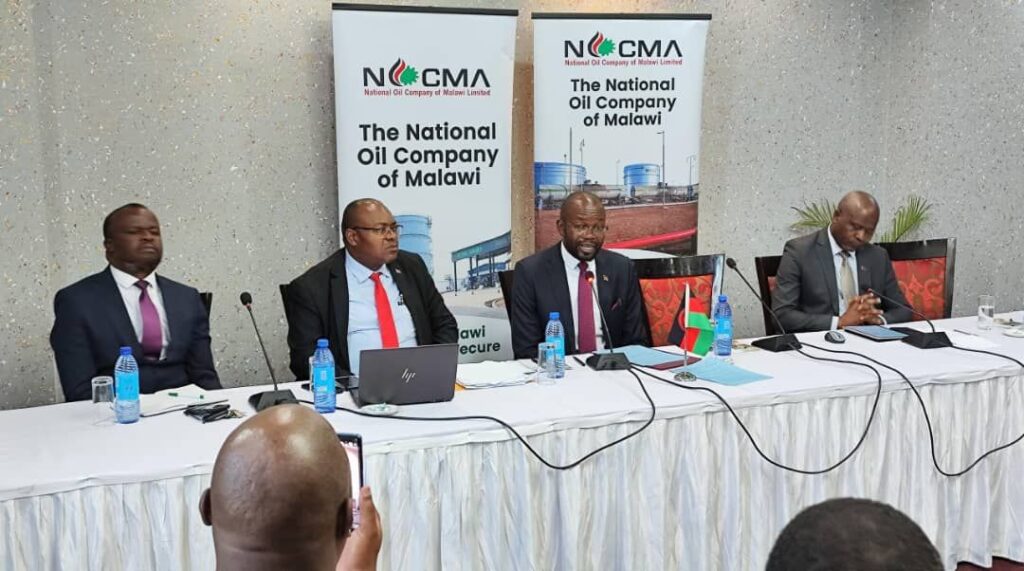
Minister of Information and Digitalization, Moses Kunkuyu said this during a media briefing held in Lilongwe.
Kunkuyu revealed that discussions are underway to obtain a $100 million facility from the Arab Bank for Economic Development in Africa.
He said this money will be enough to cover the costs each month. Kunkuyu said shortage of forex has been main cause of fuel shortage in the country.
Kunkuyu, said Government recognized the difficulties and dissatisfaction that Malawians are experiencing due to the current fuel shortage.
He elaborated that fuel suppliers in Tanzania and Mozambique had suspended fuel loading for a period of 10 days due to unpaid invoices.
He indicated that a monthly sum of $51 million is necessary for fuel imports, yet the government has only managed to allocate $37 million.
He mentioned that $21.5 million has already been secured, which will enable the importation of 29.9 million litres of fuel.
Additionally, he emphasized the government’s dedication to ensuring that 20 percent of the fuel is transported via rail to improve logistics.
President and Commander in Chief of Muvi wa Chilungamo Revolutionary Party (MRP) Bantu Saunders Jumah, has praised Minister of Information and Digitalization Moses Kunkuyu as a master-minder of change in Malawi.
Jumah said he expected Kunkuyu to bring transformation in the MCP led government of President Dr. Lazarus Chakwera saying it is sad that the MCP is being hated because it has lost direction with its campaign promises not fulfilled.
He said the MCP commanded 1.7 million votes in the June, 2020 elections but today, the party cannot claim that these voters are still with them claiming that many people have lost hope with the party forgetting that the party came into power because of DPP arrogance.
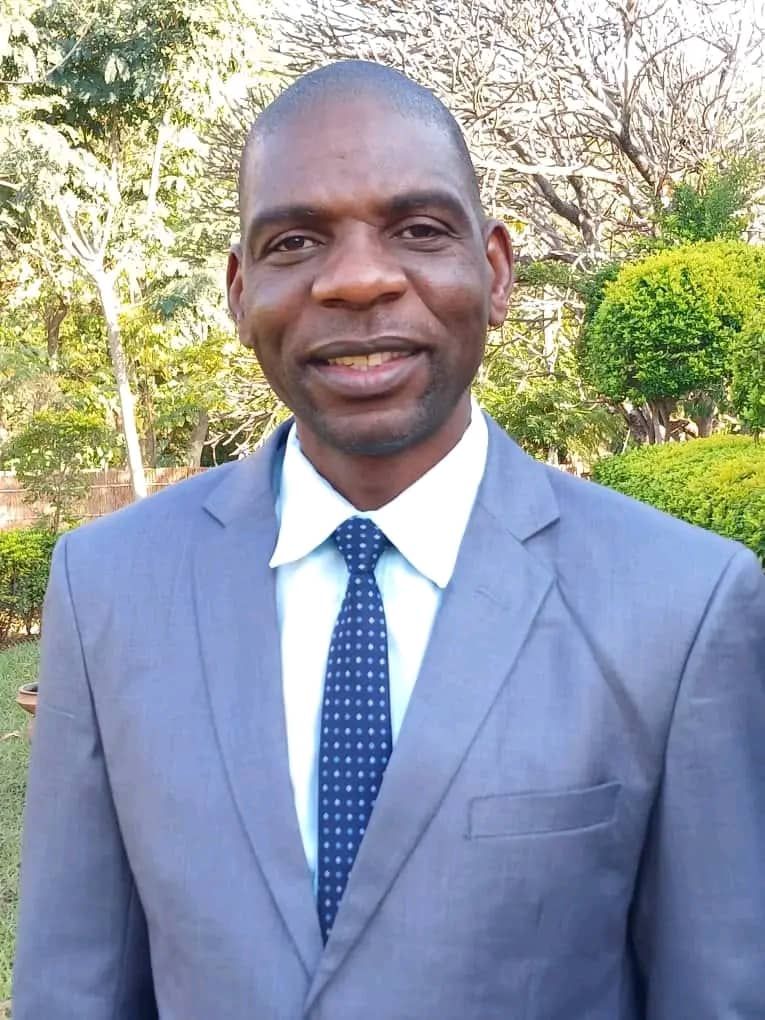
Moses Kunkuyu
Speaking through a Revolutionary voice, Jumah has expressed fears that 1.7 million people that voted for the MCP into government in June, 2020 are the victims of lies making others think that DPP and Professor Arthur Peter Mutharika were the devils better off than the MCP and President Chakwera.
Jumah said the country’s economy has faced an earthquake under President Chakwera and is more similar to the war taking place in Gaza between Israel and militants, democracy under siege, people dying of eating wild roots, no forex beside the MCP government borrowing K12.5 trillion in just 4 years.
He said the national debt has risen from K3.16 trillion the MCP found in June, 2020 to K15.5 trillion claiming that every government is changed because people want transformation through reforms but unfortunately, President Chakwera has maintained what the DPP was doing in government.
The MRP President has assured Kunkuyu being a democrat himself that Malawi will never and ever go back to one-party state and dictatorship saying in 2020 every Malawian expected a blanket transformation and reforms in the country not knowing that Chakwera was cheating them.
He said the Malawi citizens are angry with President Chakwera for over-turning the hard-won democracy of 1994 to a one-party state and dictatorship assuring Kunkuyu and Chakwera that no single person, party or government will change Malawi back to one- party state and dictatorship.
Jumah has assured the MCP that even if they can manipulate figures with the NRB, Smartmatic firm for already a broken system to rig the 2025 elections, this will not work claiming that even the Chewas in the central region of Malawi are feeling the pain more than those in other regions of Malawi.
“President Chakwera has abandoned all the friends and colleagues who supported him to perform his doctrine in government for a one-party state and autocracy,” said Jumah.
He has finally pleaded with 21 registered political parties in Malawi to love and be patriotic the country first their interest second for a democratic government in Malawi to be of the people, for the people and by the people.
The Nkhoma Synod of the CCAP has announced plans to provide food assistance to over 1,700 families in the area of Traditional Authority Salima in Salima District, in an effort to alleviate the hunger crisis facing the community.
Speaking on the initiative, the Synod’s General Secretary, Reverend Vasco Kachipapa, explained that the church saw it necessary not only to minister spiritually to the affected communities but also to offer practical support through food aid.
Reverend Vasco Kachipapa
“As a church, we felt it was wise to extend our hand by providing food assistance to these families alongside our spiritual work. The initiative will cost around MWK 869 million and will run from this month until March next year,” said Reverend Kachipapa.
He further added that the relief will include maize flour, beans, and cooking oil for the affected families, who have been struggling due to droughts and floods that have severely impacted crop yields in the district.
Traditional Authority Salima expressed deep gratitude to the Nkhoma Synod for the support, noting that many families in the area failed to harvest enough crops because of the droughts and floods.
“The assistance from the Synod is a blessing for my people, who are suffering due to poor harvests caused by the extreme weather conditions,” said Chief Salima.
The food relief initiative is expected to make a significant difference in the lives of many families in the district who are currently facing severe hunger.
As Malawi prepares for its upcoming voter registration, scheduled to commence on Monday, political experts are raising concerns over potential voter apathy due to ongoing disputes surrounding the use of national identity cards (IDs) as the sole form of identification for the exercise. The issue has sparked debate among opposition leaders, creating uncertainty ahead of the 2025 general election.
Political analyst George Chaima has voiced his concerns, noting that widespread discontent among opposition figures regarding the mandatory use of national IDs could influence their supporters to refrain from participating in the registration process. “This disillusionment with the national ID requirement could lead to lower voter turnout, ultimately affecting the results of the 2025 general election,” Chaima warned.
Chaima
He questioned why opposition members are now criticizing the use of the national ID, despite having previously supported its implementation in Parliament. “It is surprising that this issue has suddenly become a point of contention, given that the same opposition leaders were involved in recommending the ID system in legislative discussions.”
Echoing Chaima’s sentiments, another political expert, Victor Chipofya, has called for intensified civic education to address the concerns surrounding the national ID and voter registration process. “Voter apathy is a real threat if people are not properly informed about the importance of the national ID in the registration exercise,” Chipofya said. He emphasized the need for thorough awareness campaigns to ensure that citizens understand the purpose of the ID system and its role in maintaining electoral integrity.
As the voter registration exercise approaches, it remains to be seen whether the government’s efforts to promote the national ID will successfully counter the potential apathy stirred by opposition discontent. For now, political observers are watching closely, concerned about how the debate may impact voter turnout in the upcoming elections.
Hip-hop artist ‘Phyzix’ has released a new single titled ‘Kaliya’ and music fanatics have been reacting to the new song.
The song which features Loiso and Kedarah has been produced by Sameface Beats and Tricky Beats while the video has been directed by Twice P.
Following the release of the video Malawians took to Social media to share their views on the song.
Below are some of the comments by some music fans
Bread Winner
“Zamadiss ife zisatikhuze, but Phyzix is a hard worker… you can argue with your ancestors.”
Sur Scoliat Chithokonya
“Nice tune Gamba. Loiso Loiso keep up the amazing work. Kuigwira hook za international.. Best tune in October. #Certified.”
Devies Kayulayula Munthali
“This is good music Phyzix…Keep up the amazing work.”
Kelvin Kelz Genah
“Good song with Worldclass vidz 🔥🔥🔥big up to you Man Phyzo.”
Mwiza Chunda
“I can say am impressed…. Sports sports zakaliya yemweyo 🔥🔥.”
DC Da’hustla
“Such a hard working man. Big up Phyzo been inspiring me from day one.”
However, despite the positive reaction from most of the music fans, there are some people who are not amused with the artists’ Nigerian outfit in the music video.
“Osangopita Ku Nigeria komweko uzikakhala komweko,” wrote Enless Kazembe.
You can watch Phyzix’s new song by following the link below https://m.youtube.com/watch?v=goI_6eNvLOw&sfnsn=wa#bottom-sheet