TNM Super League Defending champions FCB Nyasa Big Bullets came from behind to draw 1-1 against Premier Bet Dedza Dynamos at Kamuzu Stadium on Thursday afternoon.
Ibrahim Sadik put the visitors in front in the 65th minute but Lameck Gamphani scored the equaliser against his former club after an assist from Crispin Mapemba.
Donnex Mwakasinga receiving the man of the match award
Both sides started the game very well but it was Dedza who got the first clear chance through Marko Chiwaya in the 18th minute but Richard Chimbamba made a brilliant save to deny the visitors an early lead.
Babatunde Adepoju had a chance to put Bullets in front from the penalty spot in the 25th minute following a hand ball incident but his spot-kick was saved by Dynamos’ goalkeeper Donnex Mwakasinga
The second half proved to be very exciting but it was not without any drama as Dynamos player Khumbo Banda was shown a Red Card for foul language in the 83rd minute before an alleged Bullets fan jumped onto the pitch to drop a bottle of urine at the visitors goal.
After the match Dedza Dynamos goalkeeper Donnex Mwakasinga was voted man of the match.
Following the draw, the People’s team remain third on the log table with 41 points after playing 24 games and Dynamos are stuck on position 11 with 30 points.
Elsewhere, Moyale Barracks thumped bottom placed Baka City 4-1 at Mzuzu Stadium to move to position 6 on the log table.
The soldiers scored through Emmanuel Allan, Raphael Phiri, Khumbo Mhone and Jimmy Viyuyi while Tambulani Mwale scored a consolation for the visitors.
In Lilongwe Mafco FC and Bangwe All Stars played out to a goalless draw at Nankhaka Stadium as Bangwe’s Shukuran Goba received a first consecutive man of the match award after receiving another award last weekend.
Mafco are on 10th position with 35 points while Bangwe have dislodged Chitipa United on Position 14 with 21 points from 25 games.
The Malawi Human Rights Commission (the Commission) has called for inputs from the general public and interested organizations to inform it on any issues affecting access to justice and judicial accountability in the country.
The MHRC says it has noted the recent calls for accountability of the judiciary which has the responsibility of interpreting, protecting and enforcing the Constitution of the Republic of Malawi and all laws in an independent and impartial manner.
Lawyer and activist, Alexious Kamangila…..the whistleblower for the rotten, corrupt and compromise judiciary… … .
The Commission says the accountability of the judiciary has a bearing on the right to access justice where there is an allegation of violation of any right in the Constitution, it is mandated to investigate such a violation.
In a statement dated 29th October, 2024 signed by its Chairperson Chikondi Chijozi, the Commission says it has plans to undertake a public inquiry into access of justice and judicial accountability focusing on challenges in accessing justice.
The Commission says it will look at the current costs of accessing justice and securing legal representatives, the impact of these costs on access to, and quality of justice, an assessment of judicial accountability, integrity, and competency, and the need for any changes in the law, policies, and practices in addressing issues related to access to justice.
“The Commission must assist any individual, group of individuals with sufficient interest who wish to defend their constitutional rights,” reads the statement in part.
The Malawi Electoral Commission (MEC) has announced plans to extend the first phase of the voter registration exercise, currently underway in select parts of the country.
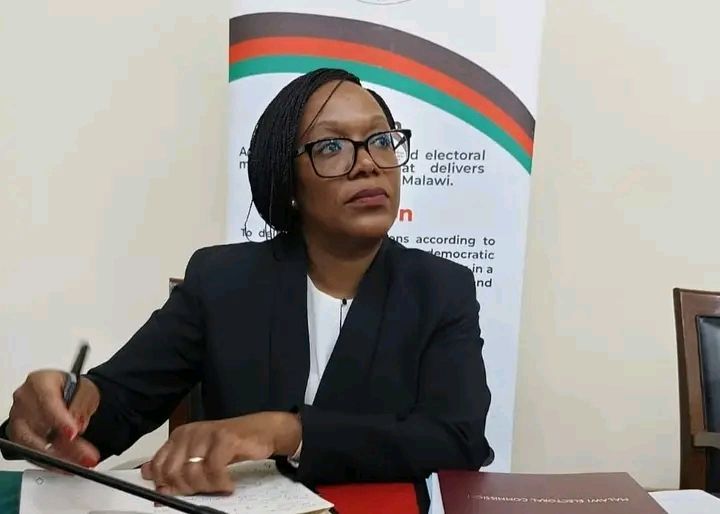
This decision, made public by MEC Chairperson Annabel Mtalimanja, aims to address the disruption caused by the recent court ruling on national identity cards on October 25, 2024, which temporarily halted citizen registration services at voter registration centers.
Mtalimanja revealed that the specific dates and duration of this extension will be disclosed upon completion of phase 3.
Mtalimanja
In the meantime, the MEC will collaborate with the National Registration Bureau (NRB) to ensure seamless citizen registration processes, adhering to the court’s directives.
This development comes on the heels of a stern ultimatum issued by the Democratic Progressive Party (DPP), UTM, United Democratic Front (UDF), and Alliance for Democracy (AFORD), demanding that the MEC address their concerns within 14 days.
The parties cited numerous challenges plaguing the first phase of the registration exercise, calling for its suspension.
The initial phase of voter registration, launched on October 21, 2024, targeted 12 districts nationwide, with an original deadline of November 3, 2024.
However, the unforeseen court ruling and subsequent service disruptions necessitated the extension.
As Malawi gears up for the 2025 General Elections, the MEC has emphasized its commitment to conducting free, fair, and credible polls.
The Commission’s theme for the 2025 elections, “Promoting Democratic Leadership Through Your Vote,” underscores the importance of citizen participation in shaping the country’s future.
To achieve this goal, the MEC has been engaging stakeholders, including political parties, civil society organizations, and traditional leaders.
The Commission has also accredited 116 civil society organizations to conduct voter education and has planned demonstrations of the voter registration process using Election Management Devices (EMDs).
In preparation for the elections, the MEC will conduct fresh voter registration in three phases, each lasting 14 days.
This exercise aims to ensure the accuracy and integrity of the voter register, remove deceased individuals, and provide precise figures for logistical planning.
As the voter registration extension is implemented, the MEC urges all eligible citizens to participate and exercise their democratic right to vote.
The Commission remains dedicated to upholding the principles of transparency, accountability, and inclusiveness throughout the electoral process.
For more information on the voter registration exercise and the 2025 General Elections, citizens can visit the MEC website or contact their district offices.
In related news, the MEC has trained civic and voter education assistants and conducted pilot voter registration exercises to test the new system.
These efforts demonstrate the Commission’s resolve to deliver credible elections and promote democratic leadership in Malawi.
The sentencing of Annie Mumba to 53 years in prison for the murder of her husband, Peter Mumba, has not only brought closure to a high-profile criminal case but has also ignited public discourse on issues surrounding domestic violence, justice, and sentencing in Malawi. This case’s circumstances, involving a respected educator from Lilongwe University of Agriculture and Natural Resources (LUANAR), have stirred intense public scrutiny, as well as reflection on the larger societal issues at play.
Judge Mzondi Mvula’s 53-year sentence for Annie Mumba reflects both the gravity of the crime and the court’s intent to deter similar incidents in the future. Malawi’s justice system has often been criticized for inconsistent sentencing, but in this case, the lengthy prison term suggests an effort to communicate a zero-tolerance stance on domestic violence resulting in death. This approach is significant in a country where many still view family disputes as private matters, often sidelining serious interventions.
Judge Mvula’s sentencing comments highlighted that the decision was aimed at balancing justice for the victim while sending a strong warning to society. In recent years, Malawi has seen an increase in domestic violence cases reaching the courts, which signals both growing awareness and the need for effective preventive and punitive measures.
This case is notable not only for its tragic end but also for its illustration of gender dynamics in domestic violence. While men are traditionally seen as perpetrators in many domestic abuse cases, this instance highlights that both genders can be victims or aggressors in intimate relationships. It is a reminder of the importance of addressing domestic abuse holistically, without preconceived notions about gender roles. Both men and women can be driven to extremes when violence, jealousy, or mistrust takes root in relationships.
The high-profile nature of this case, involving a well-known teacher from LUANAR, has added a layer of shock and sadness in the community. Friends, colleagues, and students of the late Peter Mumba have been deeply affected by the details that emerged during the trial. Public opinion, often a powerful force in such cases, has been divided. Some sympathize with Annie Mumba, suggesting that deeper underlying issues may have driven her to commit this act, while others believe that the punishment is fitting and will serve as an effective deterrent.
This spectrum of public opinion reveals the complexity of understanding domestic violence, which is often deeply rooted in social, psychological, and economic factors. For many, this case has become a painful reminder of the hidden tensions that can exist within seemingly ordinary relationships.
Annie Mumba’s sentencing raises questions about how Malawi’s justice system can better address the root causes of domestic violence. While this verdict may deter some, long-term change will likely require a shift beyond punitive measures alone. Malawi’s institutions could benefit from investing in education on conflict resolution, mental health support, and accessible counseling services for married couples or those experiencing relationship challenges.
The case also brings to light the need for more robust protective measures for victims and at-risk individuals. Strengthening legal protections and providing support services are essential steps in preventing domestic violence from escalating to lethal levels.
The 53-year prison sentence for Annie Mumba is a powerful and complex conclusion to a tragic story. For many, it marks justice served, while for others, it underscores the need for society to better address the root causes of domestic violence. As Malawi reflects on this case, there is hope that it may inspire a stronger, more preventive approach to domestic violence—one that values life and provides avenues for conflict resolution before tragedy strikes.
In the wake of this sentencing, the community remains somber, reminded of the fragility of life and the need for compassion, support, and understanding in intimate relationships. Judge Mvula’s decision may indeed serve as a landmark, encouraging change in how Malawians view, discuss, and address issues of domestic violence moving forward.
Annie Mumba, the widow of the late Peter Mumba, has been sentenced to 53 years in prison after being found guilty of her husband’s murder in April 2020. The sentence was delivered moments ago by Judge Mzondi Mvula.
The late Peter Mumba, who was a teacher at Ukachenjede School at the Lilongwe University of Agriculture and Natural Resources (LUANAR), tragically lost his life in circumstances that led to an extensive investigation and trial. The court found sufficient evidence to convict Annie Mumba, resulting in the severe sentence handed down today.
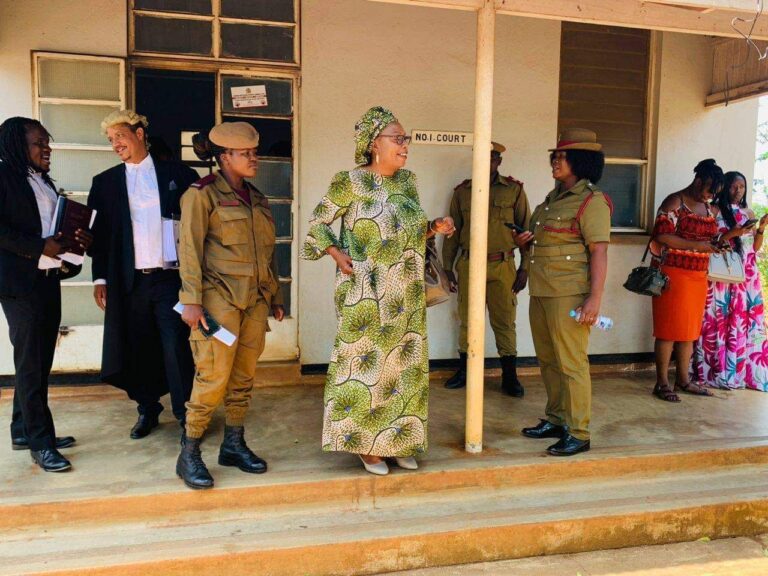
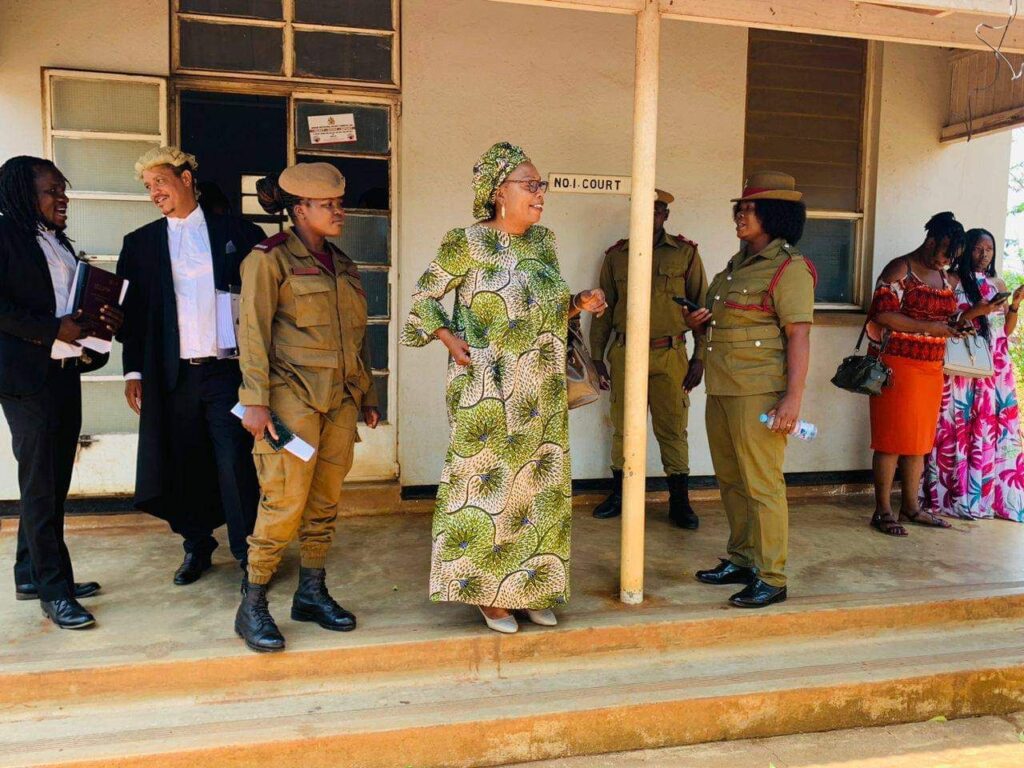
Annie Mumba
Judge Mvula expressed that the decision was intended to serve as both a punishment and a deterrent for similar crimes. This case has drawn significant public interest, given the tragic nature of the incident and the high-profile background of the individuals involved.
The sentencing marks the conclusion of a case that has weighed heavily on the community, leaving many shocked and saddened by the events leading up to the tragedy.