By Burnett Munthali
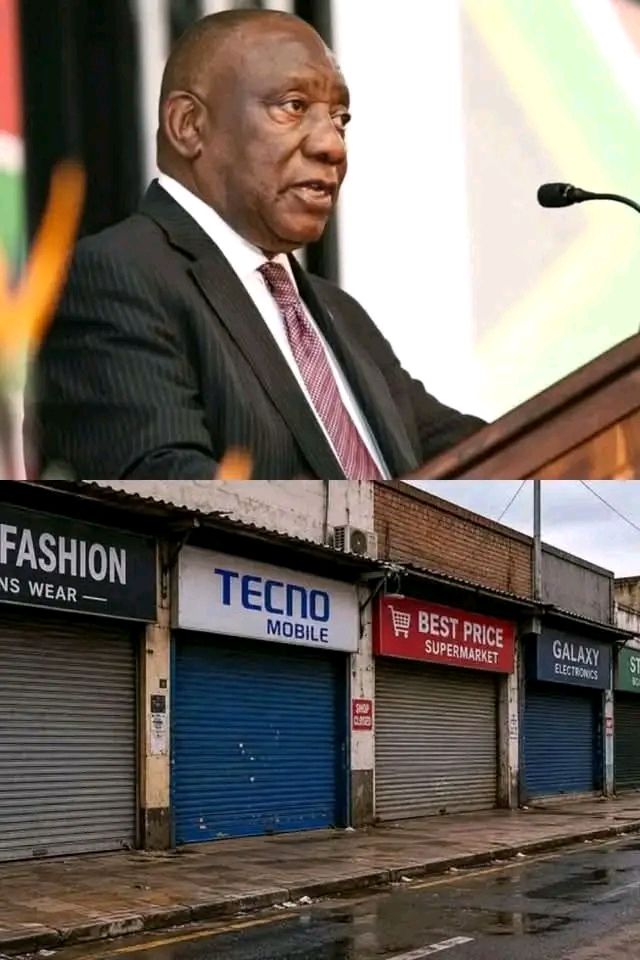
Shops and business centers operated by foreigners across parts of South Africa have been shut down in recent weeks.
The closures have left hundreds of local South Africans who worked in those businesses suddenly without an income.
Cashiers, cleaners, stock handlers, and drivers who depended on foreign-owned spaza shops and trading centers now face an uncertain future.
The message from protesters is clear: no foreigners means no foreign businesses in South Africa.
But the reality on the ground is more complicated.
South Africa does not have enough locally owned businesses to fill the gap left by those closures.
In many townships and informal settlements, foreign nationals run the small shops that provide daily essentials at prices and hours that larger retailers cannot match.
These businesses also form a key part of the informal economy that employs South Africans who struggle to find work in the formal sector.
The question now facing communities and policymakers is how South Africa will meet the demand for goods and services if foreign-run shops remain closed.
Supply chains that once moved quickly through small, locally embedded traders are being disrupted.
Consumers in affected areas report higher prices and longer distances to reach basic groceries and household goods.
More urgent is the fate of the South Africans who lost their jobs overnight.
Many were breadwinners supporting extended families in areas where unemployment already exceeds 40 percent.
Without alternative employment, their loss deepens household poverty and increases dependence on social grants.
Economists warn that removing foreign traders without building local capacity does not solve unemployment, it simply displaces it.
Attempts to replace foreign-owned shops with South African cooperatives have faced challenges around capital, management, and market access.
Until those gaps are addressed, the closures risk creating new economic voids rather than opportunities.
The situation underscores a tension at the heart of South Africa’s xenophobic violence: the desire to protect local jobs versus the dependence on foreign-run businesses to provide them.
As tensions simmer, the immediate cost is being paid by the very South Africans the campaigns claim to defend.