


Editorial Comment
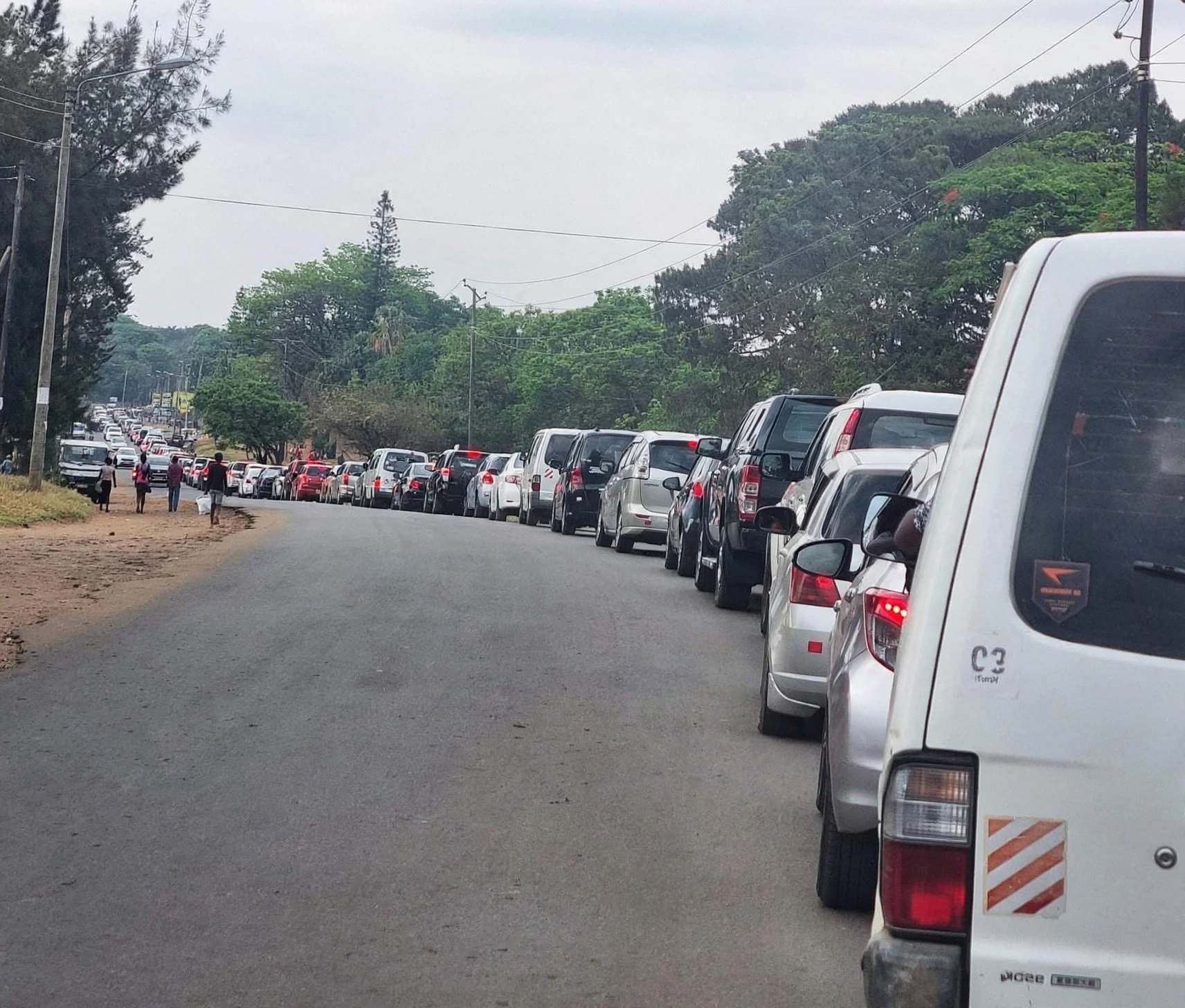
How long must Malawians continue waking up to the same nightmare of fuel queues, empty filling stations, frustrated motorists and an economy struggling to move because petrol and diesel have become difficult to find?
When shall fuel scarcity end in Malawi?
This is no longer simply a question motorists ask while moving from one filling station to another in search of fuel.
It is a question that should be keeping those entrusted with managing the country’s energy sector awake at night.
For months, Malawians have endured a fuel crisis that has exposed serious weaknesses in the country’s fuel procurement arrangements, foreign exchange management, supply chain coordination and government communication.
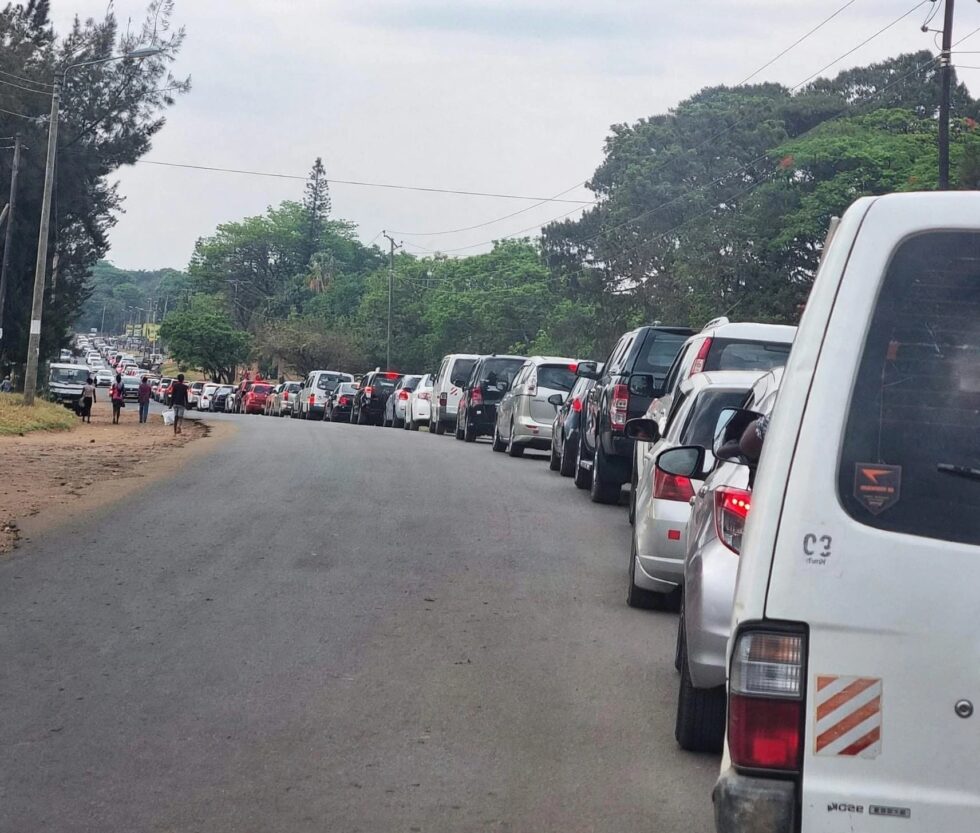
Motorists queueing for fuel
What is particularly frustrating is that the country appears to have become accustomed to living with fuel scarcity.
Every time the situation deteriorates, authorities come forward with explanations, announcements of new consignments, promises of improved availability and assurances that normal supplies will soon return.
Yet the queues remain.
Motorists continue spending valuable hours searching for petrol and diesel. Public transport operators struggle to maintain their businesses. Small-scale traders face increased operating costs, while companies that depend on fuel to sustain production are forced to reconsider their operations.
At what point does government move beyond explaining the problem and demonstrate that it has the capacity to solve it?
On November 18, 2026, government spokesperson Shadric Namalomba admitted that government cannot provide a definite date for ending the fuel crisis.
He disclosed that the Ministry of Finance released US$30 million for fuel procurement and that Petroleum Importers Limited (PIL) had purchased an additional 100 million litres of fuel.
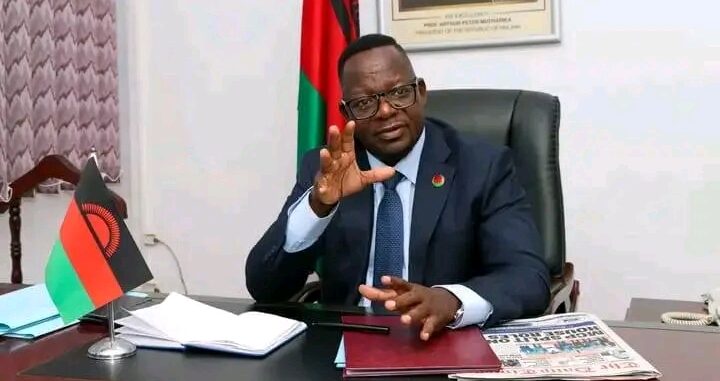
Namalomba speaking on fuel scarcity
While these announcements may offer some hope, they do not answer the most important question confronting ordinary Malawians: When will fuel consistently be available at filling stations across the country?
Namalomba himself acknowledged that Malawians are more interested in finding fuel at filling stations than receiving updates about the movements of fuel tankers.
That admission captures the frustration perfectly.Malawians are tired of hearing that fuel has been purchased, that tankers are travelling from neighbouring countries or that supplies are expected to arrive soon.
They want to fill their vehicles, motorcycles and other equipment without having to sacrifice an entire day searching for a service station with available fuel.
The government cannot continue treating announcements of procurement as equivalent to solving the crisis.Purchasing fuel is one thing. Ensuring that it arrives, is distributed fairly and remains consistently available is another.
The success of government interventions should be measured by what motorists find at the pumps, not the number of press statements issued by authorities.
There is no denying that Malawi’s foreign exchange challenges have contributed significantly to the fuel crisis.
Malawi depends on imported petroleum products, meaning that the country requires substantial amounts of foreign currency to maintain uninterrupted supplies.
Without sufficient foreign exchange, importing fuel becomes difficult, and the consequences are felt throughout the economy.
However, the question government must answer is why the country continues finding itself in a situation where a commodity as essential as fuel becomes difficult to secure.
Foreign exchange shortages did not begin yesterday. They have been a longstanding economic challenge.
Successive administrations have struggled to address the country’s limited export earnings, excessive dependence on imports and weaknesses in foreign exchange generation.
But this is precisely why the current administration must demonstrate that it has a clear strategy rather than repeatedly presenting the same challenges as though they are unforeseen circumstances.
If foreign exchange is the biggest obstacle, what concrete measures are being implemented to ensure that fuel imports receive adequate and predictable financing?
How much foreign currency is required monthly to meet national fuel demand? How much is currently available? What mechanisms are being used to prioritise fuel imports against competing national needs?
These are legitimate questions.
Government must also recognise that foreign exchange cannot be generated through political promises. It requires a productive economy capable of exporting more, attracting investment, supporting manufacturing and earning revenue from agriculture, mining and other productive sectors.
Malawi cannot continue importing almost everything it needs while expecting foreign currency pressures to disappear.
Perhaps one of the most disturbing aspects of this crisis is the apparent absence of accountability when government assurances fail to translate into lasting improvements.
Malawians will remember that Energy Minister Jean Mathanga announced on October 27 that the country procured 23.6 million litres of petrol and diesel, with approximately 11.6 million litres reportedly in transit.
The announcement raised expectations that fuel availability will improve.
However, the shortages persist, with motorists continuing to experience difficulties accessing fuel in different parts of the country.
Previously announced deadlines for stabilising supplies also passed without the promised nationwide improvement.
This raises serious questions about the accuracy of fuel supply forecasts, the effectiveness of distribution arrangements and the quality of coordination between institutions responsible for managing the petroleum sector.
When a minister announces that fuel has been procured, what mechanisms exist to verify that the consignment has arrived?
When supplies reach the country, who ensures that they are distributed according to demand and that no region is unfairly disadvantaged?
When filling stations run dry despite announcements of new consignments, who takes responsibility?
Malawians deserve more than explanations after every failed promise.
There must be institutional accountability.
The Ministry of Energy, the National Oil Company of Malawi (NOCMA), the Malawi Energy Regulatory Authority (MERA) and other relevant institutions must be prepared to explain their respective responsibilities and what is being done to restore reliable supplies.
This is not about blaming individuals for the sake of political convenience. It is about ensuring that public institutions deliver on their mandates.
Fuel scarcity has also created opportunities for unscrupulous individuals to exploit desperate motorists.
When fuel becomes unavailable at conventional filling stations, informal markets emerge.
The Consumer Association of Malawi (CAMA), through its executive director John Kapito, previously raised concerns about alleged fuel diversion and unfair distribution, with reports of black-market prices reaching between K15,000 and K20,000 per litre.
These allegations deserve serious investigation.
It is unacceptable that ordinary motorists should struggle to access fuel through legitimate channels while some individuals find opportunities to make extraordinary profits from the suffering of others.
If fuel is entering the country but is not reaching consumers through authorised distribution channels, government must investigate.
MERA should strengthen monitoring of fuel distribution, investigate suspected diversion and ensure that filling stations operate transparently.
There should also be clear mechanisms for reporting suspected malpractice without exposing whistleblowers to intimidation.
A national fuel crisis must never become a business opportunity for those interested in exploiting the desperation of ordinary citizens.
The fuel crisis is much bigger than motorists waiting in queues.
Fuel is an essential input in almost every productive sector of the economy.
Agriculture depends on diesel-powered machinery, irrigation equipment and transportation.
Manufacturing companies require petroleum products to operate machinery and move raw materials and finished goods.
The mining sector needs fuel for exploration, transportation, drilling and other operational activities.
Public transport operators depend on petrol and diesel to move people to workplaces, schools, hospitals and markets.
When fuel becomes scarce, the entire economic chain suffers.
A farmer who cannot access diesel for irrigation or transportation faces additional production challenges.
A minibus operator who spends hours searching for fuel loses valuable working time and income.
A manufacturer who cannot secure adequate supplies risks production disruptions.
A small business owner who relies on transportation must absorb higher operating costs or transfer them to consumers.
Ultimately, ordinary Malawians pay the price.
The situation is particularly concerning because the country is already battling high living costs and widespread economic hardships.
Fuel shortages create additional pressure on transport fares, commodity prices and the cost of doing business.
FEWS NET’s October 2026 food security outlook warned that fuel availability will remain below average through May 2027 because of continuing foreign exchange constraints.
This is a worrying projection because it suggests that Malawians may not experience a quick and permanent resolution unless the underlying challenges are addressed.
Government must therefore stop treating fuel scarcity as an isolated inconvenience. It is an economic emergency with consequences for national productivity, household incomes and the cost of living.
One of the biggest questions arising from this crisis concerns the country’s preparedness.
How does a country that depends entirely on imported petroleum products fail to establish a sufficiently reliable system for ensuring that supplies remain available?
Fuel demand is not a mystery. Government institutions should have reliable estimates of national consumption, import requirements, stock levels and the foreign exchange needed to sustain supplies.
Why should the country repeatedly find itself in emergency procurement situations?
Why should motorists have to wait for a crisis before hearing announcements about new fuel consignments?
Why are authorities not providing regular, credible information about national fuel stocks and expected deliveries?
The government must also review its fuel procurement arrangements and establish whether the existing system is delivering value for money, reliability and efficiency.
Former Energy Minister Ibrahim Matola previously criticised the abandonment of Government-to-Government (G2G) fuel procurement arrangements, arguing that direct engagements with fuel-producing countries could provide favourable purchasing conditions and credit arrangements during periods of foreign exchange pressure.
Whether G2G procurement or open tendering is the better approach should be determined through transparent assessments of cost, reliability, competitiveness and accountability.
The country should not become trapped in political arguments over procurement models while motorists continue struggling to find fuel.
What matters is establishing a system that delivers petroleum products consistently, affordably and transparently.
The administration of President Arthur Peter Mutharika must appreciate that the fuel crisis is testing public confidence in its ability to manage the economy.
It is understandable that the government inherited economic difficulties. It is also reasonable to acknowledge that some structural problems cannot be resolved overnight.
However, inheriting a problem does not absolve an administration of the responsibility to solve it.
Government cannot indefinitely rely on explanations about the previous administration, international market conditions, foreign exchange shortages or logistical difficulties.
Leadership is demonstrated by the ability to confront difficult circumstances and produce measurable improvements.
If the country requires additional foreign exchange, government must explain how it intends to mobilise those resources.
If there are outstanding obligations to international suppliers, the public deserves to know how these are being addressed.
If transportation arrangements are contributing to delays, authorities must demonstrate that they are engaging all capable transporters.
Indeed, the Transporters Association of Malawi (TAM) disclosed in November that locally owned fuel tankers were grounded while government relied heavily on Tanzanian tankers to transport fuel into the country.
The association indicated that local transporters are ready to resume fuel importation if engaged.
This raises another important question,Why should available domestic transportation capacity remain underutilised during a national fuel crisis?
Government must engage all relevant stakeholders and eliminate unnecessary bottlenecks in the supply chain.
There is no justification for allowing institutional disagreements, poor coordination or administrative inefficiencies to worsen a crisis affecting millions of people.
At this stage, government must move beyond general assurances and present a comprehensive, publicly accessible fuel recovery plan.
Such a plan should include:
First, regular disclosure of national fuel stock levels, indicating available petrol and diesel quantities.
Second, a transparent schedule of expected fuel imports and deliveries, with realistic timelines.
Third, clear information on the foreign exchange requirements for fuel procurement and the measures being taken to meet them.
Fourth, stronger monitoring of fuel distribution to prevent diversion, hoarding and unfair allocation.
Fifth, effective engagement with local transporters and other stakeholders to improve the movement of petroleum products into the country.
Sixth, a long-term strategy to strengthen foreign exchange generation through agriculture, mining, manufacturing, tourism and exports.
Most importantly, government must establish measurable targets and regularly report on progress.
Malawians should not have to rely on rumours, social media posts and unverified information to establish which filling stations have fuel.
The responsible institutions must communicate directly and consistently with the public.
Ultimately, this crisis is about more than petrol and diesel.It is about the relationship between government and the people it serves.
It is about whether public institutions can deliver essential services reliably.
It is about whether leaders understand the economic suffering of ordinary citizens.
It is about whether promises made by those in authority carry any meaningful weight.
A motorist who spends an entire night waiting for fuel is losing more than sleep. A minibus operator who cannot secure diesel is losing income. A farmer who cannot access fuel for machinery is risking productivity. A business owner who cannot transport goods is losing customers.
These are real economic losses that cannot be compensated for by another government press statement.
The government must understand that people are becoming increasingly impatient.
Malawians do not want to hear that another tanker has left Dar es Salaam. They do not want another announcement that millions of litres have been purchased without knowing when those supplies will translate into reliable availability.
They want fuel.
They want predictable supplies.
They want accountability.
And above all, they want a government that understands that access to essential commodities should not become a daily struggle.
The President and his Cabinet must treat this matter with the urgency it deserves. The Ministry of Energy, NOCMA, MERA and the Ministry of Finance must work together and demonstrate that they have a coordinated strategy capable of restoring confidence in the petroleum supply chain.
If the government cannot immediately guarantee a date for ending the crisis, it must at least demonstrate, through measurable actions, how and when the situation will improve.
Malawians have been patient. But patience should not be mistaken for acceptance of endless suffering.
A country cannot aspire to economic transformation when its people cannot reliably access the fuel needed to move its economy.
The question is no longer whether government knows that Malawi has a fuel crisis. It clearly does.
The real question is whether government has the determination, capacity and political will to end it.
When shall fuel scarcity end? Malawians deserve an answer, and they deserve more than another promise.