


By Rick Dzida
Malawi is witnessing a dangerous, all-too-familiar political drama. Speaker of Parliament Sameer Suleman’s decision to launch 12 aggressive joint parliamentary committee inquiries has sent shockwaves through the political establishment.
While ordinary Malawians look on with a desperate hope for accountability, a predictable panic has gripped the Democratic Progressive Party (DPP). Terrified that these sweeping probes will catch powerful political gurus red-handed in historical and ongoing looting, political networks are actively fighting back.
History warns us that in Malawi, exposing institutional theft is a lethal venture. If we do not protect Speaker Suleman right now, the system will swallow him just as it has swallowed whistleblowers, activists, and leaders for decades.
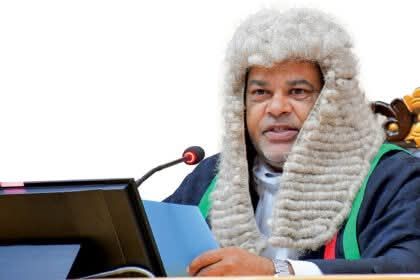
The fear for Suleman’s safety is grounded in a grim, documented legacy of state-sponsored intimidation, mysterious deaths, and forced exiles. This is urgent.
For starters, the high-stakes pressure of parliamentary accountability has killed a Speaker Rodwell Munyenyembe before. Amidst a bitter, high-tension power struggle, political panic peaked when an opposition lawmaker moved to impeach President Bingu wa Mutharika. The sheer chaos, shouting matches, and intense institutional panic culminated in Speaker Munyenyembe collapsing on the chamber floor while trying to restore order.
He subsequently suffered a severe stroke and cardiac arrest, a stark reminder of how the toxic pressures of the Malawian political theatre can become physically fatal.
As the Chief Economic Advisor to former President Bakili Muluzi, Kalonga Stambuli in 2003, became a massive liability when he authored an explosive 22-page dossier unearthing his boss’s dubious, secret financial dealings.
After fleeing briefly into exile, he was lured back to Malawi, only to be found dead in his bedroom. A conclusive postmortem later revealed a brutal premeditated murder—he had been poisoned with an organophosphate compound and manually strangled.
In November 2001, Evison Matafale, the legendary reggae icon and leader of the Black Missionaries refused to stay silent about the failures of the Muluzi administration.
After authoring bold complaint letters exposing state misconduct, “the prophet” was hunted down and arrested by police. Within three days of being thrown into Maula Prison, Matafale died under deeply suspicious circumstances, sparking mass riots across the country.
Ten years later in September 2011, Robert Chasowa, the 25-year-old university student leader used a campus newsletter to expose high-level state corruption and economic mismanagement. He was found dead in a pool of blood on campus, a crime the regime tried to mask as a suicide until a judicial inquiry proved he was bludgeoned to death.
Martha Chizuma between 2022 and 2024 as Director-General of the Anti-Corruption Bureau (ACB), she faced endless institutional harassment, an illegal midnight police raid, and politically motivated lawsuits designed to paralyse her investigations until her contract lapsed.
Moving forward, the cost of exposing corruption is still driving truth-tellers out of Malawi. For instance, private lawyer Alexious Kamangila went on a fearless crusade to expose systemic corruption in the judiciary, specifically naming powerful figures like High Court Judge Kenan Manda.
After public broadcasts alleging massive corporate payout manipulation, Kamangila faced severe death threats, and his own lawyer was violently attacked.
Today, Kamangila lives in exile, using his displacement to study abroad while the Malawian courts continue to hit him with multi-million kwacha default defamation rulings in his absence.
Interestingly, immediate panic stems directly from the specific targets Speaker Suleman’s new committees are digging into. Chief among these is the staggering K700 million ($403,605) cyber-fraud heist at the state-owned National Oil Company of Malawi (NOCMA).
Under the guise of a chaotic rollout of fuel procurement models, scammers hijacked email correspondence from a Mozambican port handling firm and effortlessly duped NOCMA into wiring millions to a fraudulent Bank of America account.
The parliamentary heat has already forced law enforcement to act. Police arrested NOCMA Deputy CEO Miklas Reuben and Senior Operations Manager Thokozani Jacob Sesani, while the Anti-Corruption Bureau (ACB) has actively grilled CEO Emmanuel Matapa for severe abuse of office.
Truth be told, Malawians cannot stand by and watch another anti-corruption figure get crushed by the state apparatus. To protect Speaker Suleman, a multi-layered shield must be built immediately without any possibility of options.
First, Parliament must enforce complete financial and operational independence. When a legislature relies on the executive branch to fund its oversight committees, corrupt elites can easily starve investigations of vital resources.
Second, the Speaker must be granted independent, multi-agency physical security. The state’s law enforcement bodies have historically been abused to execute middle-of-the-night raids or turn a blind eye to political thugs. Suleman’s security detail must be entirely insulated from executive control.
Finally, civil society and ordinary citizens must immediately mobilize themselves. Political cartels operate best in the dark. By keeping intense public scrutiny on the 12 joint committees, the public can ensure that any attempt to intimidate, compromise, or harm the Speaker is met with immediate, destabilizing resistance. Speaker Suleman is doing his job; it is now up to the nation to ensure he survives it.