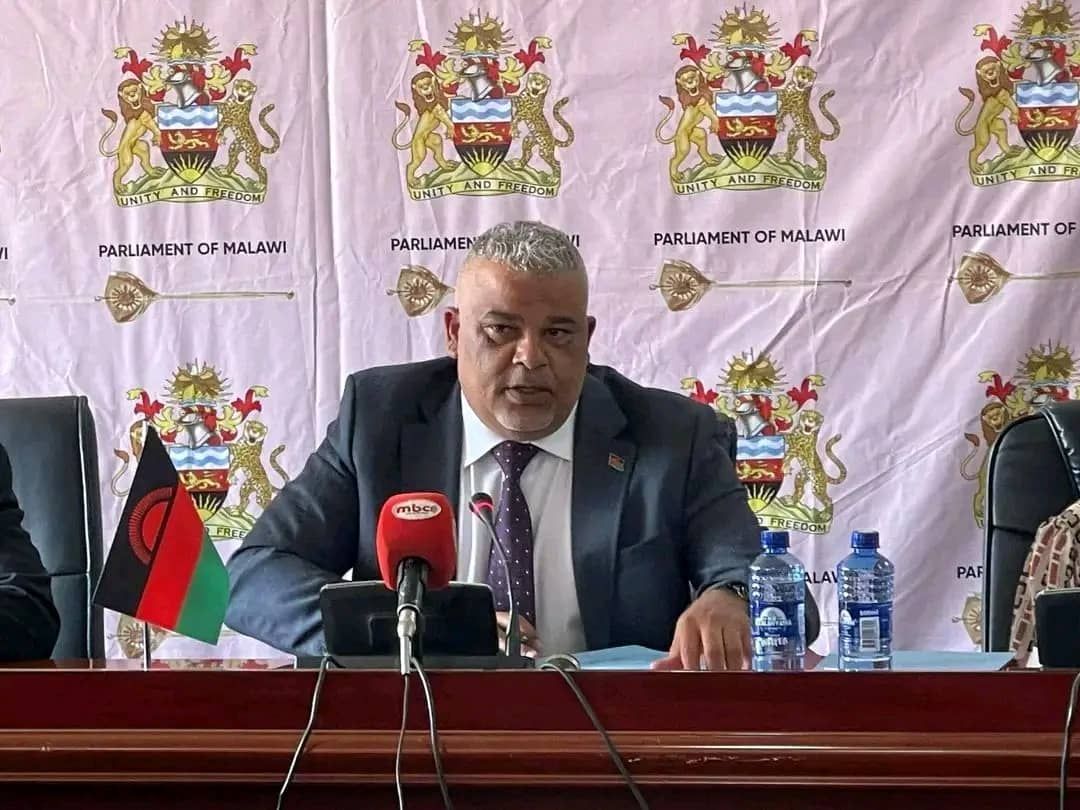
The hard truth is that Hon. Sameer Suleman, Speaker of the National Assembly, blurred the line between oversight and investigation during his press briefing on Tuesday, September 2, 2026 in Room 251, Parliament Building. In doing so he has risked undermining the very institutions he claims to defend.
Standing before the media in Room 251, the Speaker announced that Parliament will probe 12 issues including NOCMA fuel deals, passport delays, electricity, pension schemes, prison conditions, mining, agriculture and tobacco.
He said “Parliamentary committees should not be ceremonial” and went further: “As Parliament, we are not saying we are police but we should behave like police especially on following up public resources.”
The hard truth is that this is not the constitutional role of Parliament, and certainly not the role of the Speaker alone.
The Constitution is clear. Investigation of crime sits with the Malawi Police Service.
Investigation of corruption sits with the Anti-Corruption Bureau. Financial audits sit with the Auditor General.
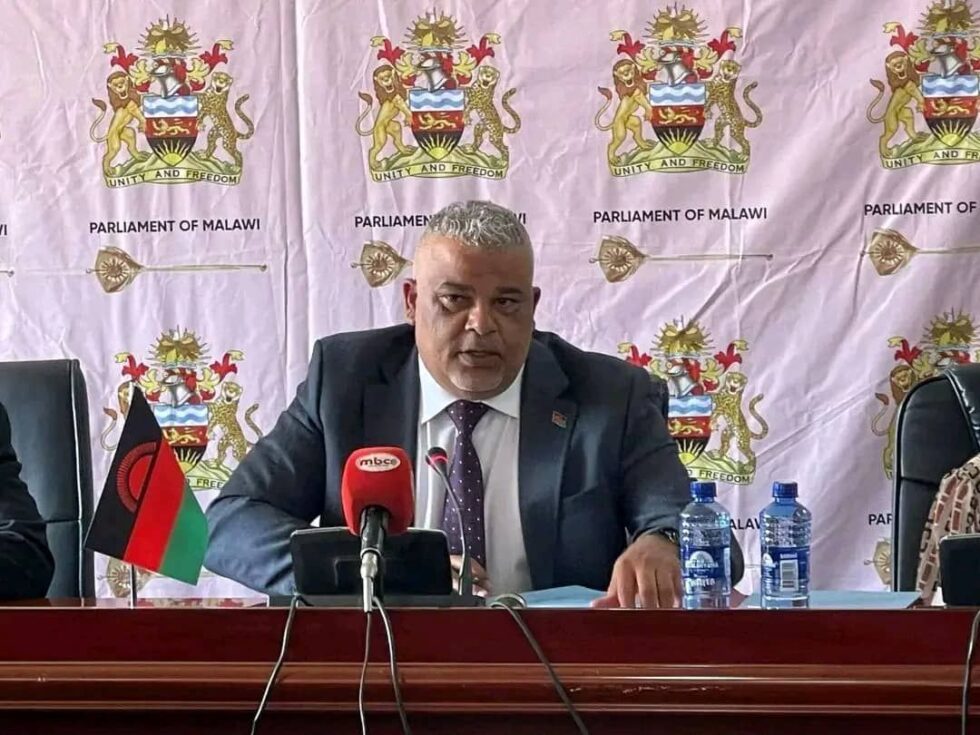
Prosecution sits with the Director of Public Prosecutions. Parliament’s job is oversight, legislation and budget approval.
When the Speaker tells the nation from Room 251 that Parliament should “behave like police,” he blurs those lines and invites confusion about who does what in our democracy.
That kind of language, coming from the third most senior office in government, carries weight. And with weight comes responsibility.
The hard truth is that such a serious announcement should not have been made without proper coordination.
The Speaker is head of the Legislature, but he is not above the authority of the President, and he is not above the need to work with other arms of government.
Before committing Parliament to 12 wide-ranging inquiries and setting timelines, the decent and constitutional thing would have been to consult the President, the Executive, and the very agencies mandated to investigate.
To skip that step makes the September 2 briefing look less like institutional oversight and more like a solo declaration. That weakens Parliament because it makes it appear political, not procedural.
The hard truth is that timing and perception matter. The September 2 announcement came weeks after the Tobacco Commission licensed a new buyer, Eastbridge, as the 11th buyer for the 2024/2025 season.
It also came amid public discussion and media reports linking the Speaker to political realignments ahead of 2030.
Nyasa Times and other outlets have carried public questions about possible conflict of interest around the tobacco sector, including reports that a relative was associated with a company with a similar name before resigning.
Those reports have not been independently verified by Parliament. But the fact that they are in the public domain means the Speaker should have been extra careful to avoid even the appearance of impropriety.
Instead of consulting widely and clarifying process, the Room 251 briefing has left more questions than answers.
The hard truth is that oversight does not mean duplication. Parliament has every right to summon ministers, demand documents, and review how public money is spent.
That is healthy and necessary. But telling Malawians that committees must “behave like police” or “behave like ACB” sends the wrong message.
It suggests that constitutionally mandated bodies can be sidelined. It also puts MPs in an uncomfortable position where they may be seen as investigators, judges and prosecutors all at once.
That is not how separation of powers works, and it is not how public trust is built.
The hard truth is that the Speaker’s position has also found defenders, and in defending it they have exposed their own misunderstanding of roles.
Public Affairs Committee, CDED, and UTM’s Matthews Mtumbuka have all come out to side with what the Speaker said on September 2. But by doing so, they have only confirmed how far we have drifted from institutional discipline.
The hard truth is that if you cheer for Parliament to “behave like police,” then you do not understand the difference between oversight and investigation. That is not leadership, that is confusion.
As for PAC, the hard truth is that it has become an institution driven too much by emotions and headlines.
That is why Malawians have lost trust in it. Committees must be guided by law and procedure, not by who shouts loudest.
The only PAC that commanded respect was the first PAC instituted in the 1990s. It set a standard of sober, evidence-based work. What we see now is a shadow of that.
When institutions that are supposed to guide public debate instead endorse overreach, they shame themselves and raise questions about whether they are worthy of the mandate they hold.
We need a strong Parliament. We need it to ask hard questions about NOCMA, about ESCOM, about why farmers get low tobacco prices. But strength comes from discipline.
The moment Parliament starts to sound like ACB, DPP and Police combined, it loses credibility and it sets itself up for conflict when those bodies produce different findings.
The hard truth is that leadership requires humility. The Speaker has done good work in defending Parliament’s independence. He has told MPs to chase every kwacha. He has said the grace period for asset declaration is over.
Those are welcome. But on September 2 in Room 251, he went too far. He announced investigations without clear coordination.
He used language that overreached. And he did it at a time when Malawians are demanding that institutions respect their mandates.
For the sake of Parliament, for the sake of the ACB, Police and other agencies, and for the sake of Malawians who deserve clarity, the Speaker should do the right thing.
He should clarify that Parliament’s role is oversight, not investigation. He should confirm that findings will be referred to the constitutionally mandated bodies. And yes, he should apologise for the language that suggested Parliament will replace those bodies.
Malawi does not need heroes who act alone. It needs institutions that work together. The Speaker is not above that rule.