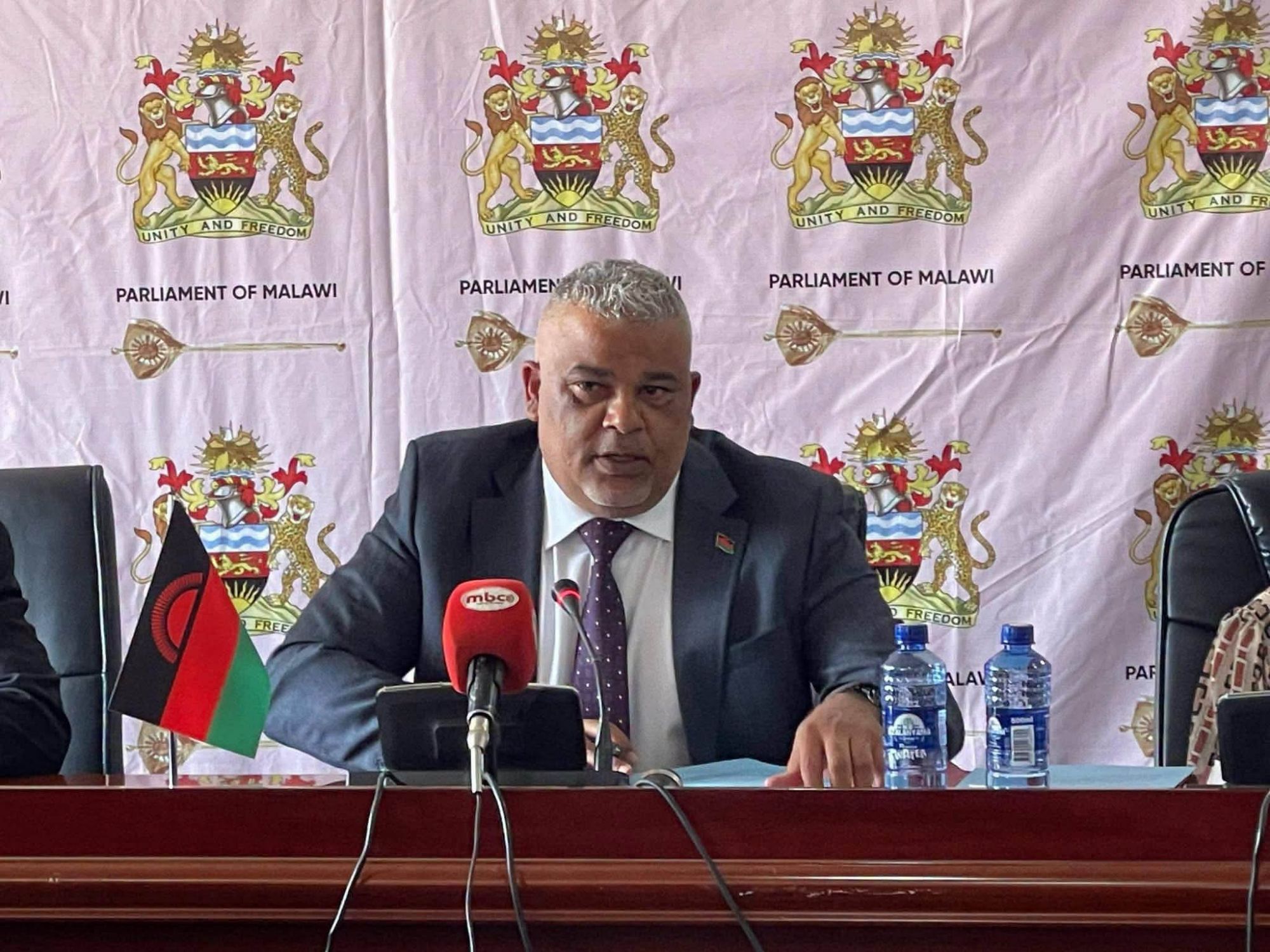


By Rick Dzida
The political standoff between the Speaker of the National Assembly, Sameer Suleman, and the Democratic Progressive Party (DPP) Secretary General, Peter Mukhito, has sparked a fundamental constitutional crisis over the separation of powers.
At the heart of this conflict is Speaker Suleman’s decision to launch 12 aggressive public investigations via joint parliamentary committees into widespread state failures.
While the DPP leadership views this as a direct usurpation of executive powers, a deep legal and empirical analysis reveals a different reality.
The Speaker is not overstepping his bounds to seize control; rather, Parliament is fulfilling its constitutional duty to address a governance vacuum left by a failed, absent, and deeply compromised executive branch.
The executive’s outcry of power usurpation ignores the foundational tenets of the Malawi Constitution. Under Section 7 the state’s branches are distinct, but they are deliberately designed to function through checks and balances.
Crucially, the Constitution does not demand legislative passivity in the face of total governance failure.
Section 12 of the Constitution establishes that all legal and political authority is held in trust for the people of Malawi, and that this trust can only be maintained through open, accountable, and transparent governance. When the executive fails to perform its duties, it violates this sacred constitutional trust.
Section 9 of the Malawi Constitution explicitly outlines the mandate of the legislature to look after the public interest. Far from staging a coup, Speaker Suleman is utilizing established parliamentary protocols to ensure that public institutions account for their performance.
When the executive is in a state of constructive absence or constructive resignation—evidenced by an elderly, ailing President Peter Mutharika who is rarely seen in public outside of medical checkups in South Africa—the constitutional matrix dictates that Parliament must serve as the republic’s anchor.
The 12 joint committees are targeting specific multi-billion-kwacha failures where executive inaction has directly harmed ordinary Malawians.
For instance, the Department of Immigration has presided over a multi-year crisis that has frozen the mobility of citizens. Following systemic failures and contract cancellations, a backlog exceeding 100,000 pending applications accumulated. This is a crisis.
The Minister traced the passport delays to hurdles in executing a February 2025 deal with Madallas Security Printers of India which was intended to supply booklets and roll out modern printing systems.
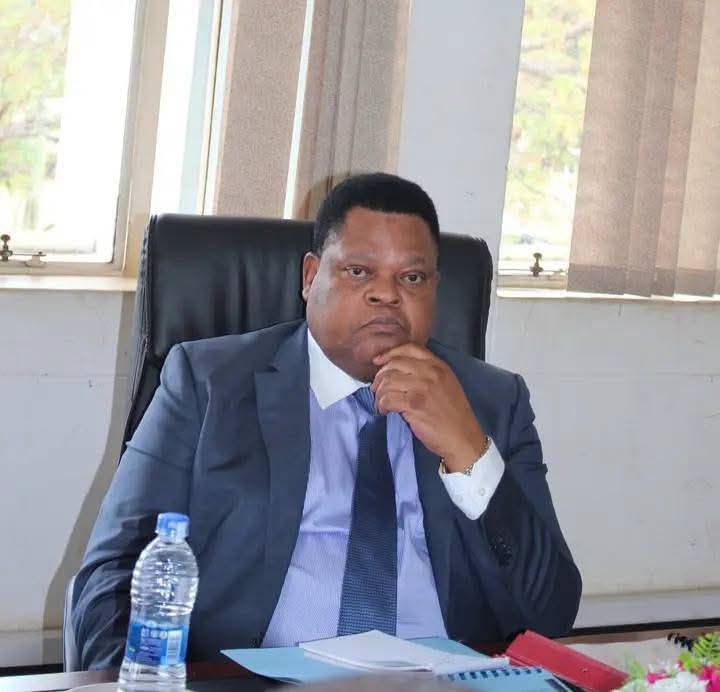
Despite subsequent delivery promises and system rollouts, the executive’s slow financial mobilization crippled production, forcing desperate citizens to pay bribes of up to K150,000 to middlemen just to secure a document with a standard K50,000 fee. Should the National Assembly like the Executive sit phwiii over this?
Originally launched in 2015 to pump 100 million litres of water per day from Lake Malawi to the capital, this vital K535.5 billion ($315 million) megaproject has faced severe bottlenecks. Constrained by acute forex scarcity, the project only stood at roughly 34% to 36% completion as of late 2025, pushing the ultimate completion target back to 2027. Should the National Assembly like the Executive sit phwiii!!!! over this?
The executive’s law enforcement agencies completely failed to act when the National Oil Company of Malawi (NOCMA) allegedly processed a massive K700 million payment to suspected fraudsters.
By launching inquiries into these specific crises, Suleman has targeted systemic corruption. The fierce pushback from DPP Secretary General Peter Mukhito is not a defence of the Constitution; it is an attempt to shield a compromised regime from being caught red-handed by legislative spotlights.
To resolve this institutional deadlock and restore stability to Malawi’s governance, the following steps must be taken immediately without any option.
First, the executive branch must recognize that Section 7 of the Constitution does not immunize the government from accountability. Parliament has the full legal right to investigate state failures.
Second, the Office of the President and Cabinet must provide clear updates on President Mutharika’s health and operational availability to assure the nation that there is active leadership at the helm otherwise citizenry will be tempted to speculate about a leaderless executive branch of government resulting in presidential constructive resignation.
Third, all state institutions, particularly NOCMA, ESCOM, and the Department of Immigration, must hand over all requested documents to the joint committees without hiding behind executive privilege.
Most importantly, the Judiciary should mediate a structured dialogue between the Speaker and the Executive to define the scope of these investigations, ensuring they proceed without crippling the daily functions of the state.
In a nutshell, as Suleman has promised Malawians that parliamentary committees will go ahead scrutinising the rot in our midst, patriotic Malawians are urged to provide critical information that may lead to these crooks to face the long arm of the law.