By Rick Dzida
President Peter Mutharika’s exclusive interview with MBC on 4 October 2026 is an opportunity for us to reflect on his first year performance.
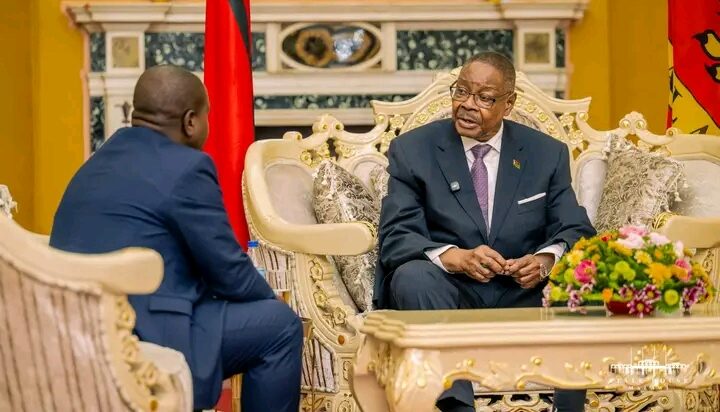
Contrary to rumours about his ill-health and advanced age, Mutharika appeared healthy, composed and firmly in control. His articulation was generally clear, his memory lapses were not particularly alarming, and he appeared more comfortable than in some previous public appearances. Most notably, he seemed to have overcome the hearing difficulties that had been noticeable before.
On food, there is arguably genuine progress. Food availability and maize prices have improved compared with the previous period, although food insecurity has not disappeared.
On the other hand, electricity shortages, dry taps, fuel difficulties and shortages of essential medicines continue to expose weaknesses in basic service delivery.
On forex, Mutharika deserves credit for acknowledging the problem. But acknowledging scarcity is not the same as solving it. Malawi cannot permanently borrow, ration or wait for forex. The sustainable answer is to earn more foreign exchange.
That requires aggressively promoting exports of processed and finished products rather than relying heavily on exporting raw commodities.
Malawi could increase forex earnings through value addition in agriculture, mining, manufacturing, tobacco processing, tea, macadamia, tourism and other export-oriented industries.
Government must also reduce unnecessary import dependence, improve energy reliability, attract productive foreign investment and negotiate better export prices.
The President’s interview, however, offered insufficient detail on how Malawi will dramatically increase export earnings
Fuel availability has been presented as an achievement, although reports of renewed queues demonstrate that the situation remains fragile.
The arrest of activist Sylvester Namiwa on treason-related allegations over remarks concerning a possible succession involving Vice-President Jane Ansah raises an uncomfortable question about the meaning of political freedom.
If the statement was merely a hypothesis or prediction, how could a prediction that Ansah would become president within two months automatically become an act of treason?
Two months have passed, and Mutharika remains President. This does not mean every statement is legally protected. But it does raise a fundamental democratic question: can a government criminalise a political prediction simply because it dislikes or fears its implications?
If the four Fs are treated as four equally important performance indicators, Mutharika’s own score deserves scrutiny.
Food: largely available.
Forex: serious shortage.
Fuel: unstable/partially improved.
Freedom: contested.
On that assessment, claiming 50 percent appears generous. A strict interpretation would put the administration closer to one out of four—25 percent.
That is not necessarily a final five-year verdict. Mutharika is correct that economic recovery cannot realistically be completed in one year. But it is a reasonable first-year progress report.
Mutharika’s acknowledgement of a good relationship between the public and private sectors is potentially important. A functioning public-private relationship can attract investment, create jobs, expand the tax base, improve innovation and allow government to concentrate on regulation and infrastructure while businesses drive production.
But the relationship must be based on transparency, competition and equal opportunity, not political connections.
A private sector that succeeds because of proximity to government is not the same thing as a competitive private sector that succeeds because of productivity.
Mutharika ended by urging Malawians to work together. That is a legitimate and necessary appeal.
But Malawians have already demonstrated considerable political solidarity: voters across ethnic, regional and social divisions overwhelmingly supported his return to power.
The next step is for APM government to reciprocate that solidarity. That means appointing people to public offices on competence rather than ethnic or political affiliation; refusing to shield DPP loyalists facing credible corruption allegations; being transparent about costly private presidential trips; suspending officials where necessary to facilitate impartial investigations; and avoiding the appointment or promotion of individuals facing unresolved corruption allegations where such
appointments could compromise investigations or evidence.
The Amaryllis Hotel controversy illustrates why these safeguards matter. Parliament and investigative authorities have raised serious governance questions around the K128.7 billion pension-fund acquisition, while investigations remain ongoing.
The question therefore becomes blunt: how can Malawians be expected to work with corrupt politicians if government itself appears unwilling to establish an uncompromising firewall between political loyalty and accountability?
Corruption is not merely about money disappearing from government accounts. Its side effects are structural.
In fact, corruption weakens public services because resources intended for hospitals, schools, water, electricity and roads are diverted or wasted.
Truth be told, corruption destroys investor confidence because businesses cannot compete fairly. It distorts public appointments, placing loyalty above competence. It slows economic development by rewarding rent-seeking rather than productivity. And ultimately it damages Mutharika’s own legacy. How?
A president who promises economic recovery but presides over weak accountability risks leaving behind an economy where corruption becomes institutionalised rather than eliminated.
Mutharika’s interview therefore leaves Malawi with a simple challenge: the Four Fs cannot remain political slogans. They must become measurable outcomes.
Paradoxically, President Mutharika looked healthy and sounded confident. Now Malawians need the country itself to become healthier, freer, better supplied and economically stronger.