


By Linda Kwanjana
Citrine’s Rwanda Launch And What It Could Mean For Malaw
The economic expert and Financial analyst Dr Ben Dzolowere has commended Malawi Business pundit, Benedicto Bena Nkhoma for his vision and capabilities of establishing Citrine Investment Bank in Rwanda.
Dzolowere said Nkhoma deserves commendation for not waiting for capital to come to Malawi, but for going out to build a platform where Malawi can meet capital.
“This is what economic transformation looks like in practice. Nkhoma has understood that Malawi’s biggest problem has not been lack of ideas or lack of viable businesses, but lack of access to structured, patient and affordable capital,” Dzolowere said.

“He has gone to Rwanda, built credibility, satisfied a serious regulator, and secured a licence. That is not talk, that is execution. Malawi must celebrate and learn from this kind of vision.”
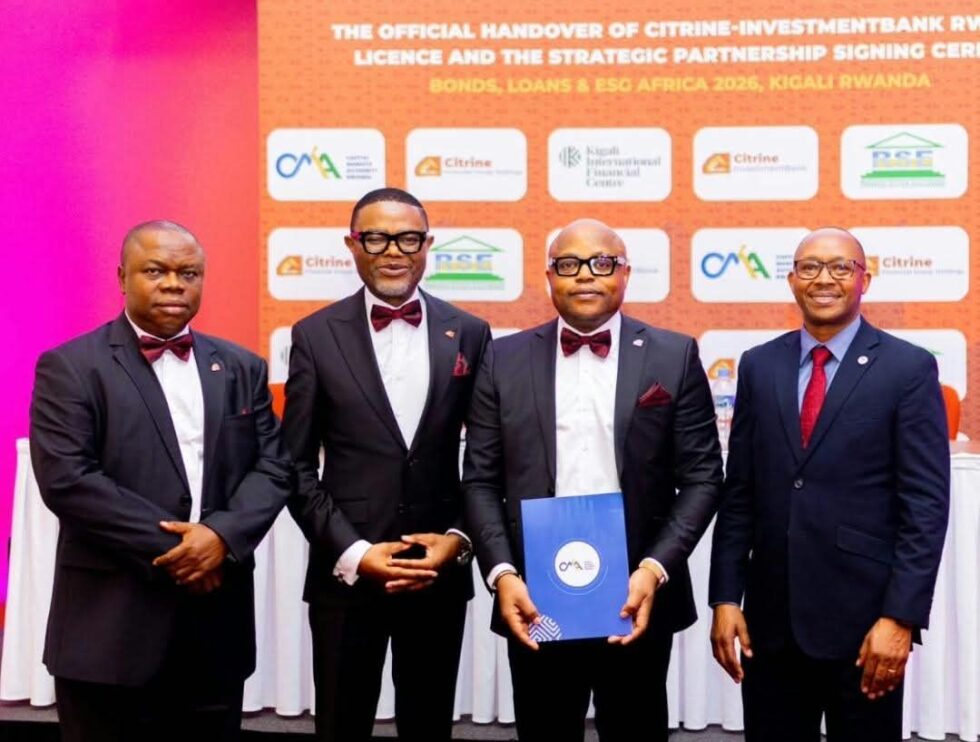
When Citrine Investment Bank Rwanda Plc received its investment banking licence at a ceremony in Kigali on 17 November 2026, it marked the first licensed operation for Citrine Financial Group Holdings Plc.
That is according to Citrine Investment Bank Rwanda Plc Group Board Chairman, Benedicto Bena Nkhoma.
He was speaking in an exclusive interview.
For Malawi, Nkhoma said the significance of that milestone can be understood through a practical question.
How does a Malawian business with a viable expansion plan find investors with the right expertise, terms and patience to see it through?
That question, Nkhoma said, is what Citrine was created to answer.
Citrine was established in 2024 by four founders from three African countries: Nkhoma of Malawi, Jean-Paul Animbom and Kelly Mua Kingsley of Cameroon, and Isong Udom of Nigeria. The group is headquartered in Kigali, Rwanda, and aims to link African markets with investors from the Middle East and global markets through the Kigali International Financial Centre.
The Rwanda Capital Market Authority granted the licence after being impressed with the group’s business plans, strategy, capital adequacy, and profiles of shareholders, directors, and senior management, according to CMA Chief Executive Officer Romeo Ngarambe.
Dzolowere said the Rwanda launch matters for Malawi in five direct ways.
Citrine has set out a five-year plan to mobilise $1 billion, roughly K1.75 trillion, in combined debt and equity capital, and to build a $3 billion, or about K5.2 trillion, pipeline of ready-to-finance opportunities in Malawi, Cameroon, Nigeria and Mauritius.
Dzolowere said if even a fraction of that pipeline is directed to Malawi, it could transform agribusiness, manufacturing, mining, tourism, energy and ICT.
“Many Malawian businesses fail not because they are not profitable, but because local financing is short-term, expensive and risk-averse. Citrine offers a bridge to longer-term investors who understand African risk and African growth,” he said.
Dzolowere said businesses that get proper capital grow, hire more people, produce more for export, and bring in foreign exchange. That, he said, directly supports Malawi 2063’s vision of a wealthy, self-reliant and industrialised nation.
“When a Malawian company expands, Malawi benefits through jobs, taxes, exports and skills transfer. That is the real dividend of this Rwanda investment,” he said.
Dzolowere said the fact that a Malawian-led group passed Rwanda’s rigorous licensing process sends a strong signal to global investors that Malawian expertise can compete at international level.
“It breaks the narrative that Malawi only receives aid and investment. Malawi can also originate investment, structure deals and lead Pan-African financial institutions,” he said.
He said Nkhoma’s model – Malawi, Cameroon and Nigeria working together from Kigali – is a practical example of African Continental Free Trade Area (AfCFTA) in action, where Africans pool capital, expertise and markets instead of waiting for outside help.
Dzolowere urged Malawi’s regulators and government to study why Rwanda was able to license Citrine quickly and transparently, and to make Malawi equally attractive for investment banks, venture capital and private equity.
“If Rwanda can do it, Malawi can do it. We need predictable regulation, fast licensing, protection of investors, and a clear pipeline of bankable projects. Nkhoma has shown the way, now the system must follow,” he said.
In conclusion, Dzolowere said Nkhoma’s Citrine vision should not be seen as a Rwandan story, but as a Malawian breakthrough with African impact.
“History will remember those who built bridges for others to cross. Benedicto Bena Nkhoma has built one such bridge in Kigali. It is now up to Malawian businesses, banks, regulators and government to walk across it,” Dzolowere said.