


The Democratic Progressive Party (DPP) may be heading towards its first serious internal test since returning to power in October last year, following First Vice-President Jane Ansah’s public admission that she is being sidelined in the discharge of her duties.
While Ansah has maintained that her relationship with President Peter Mutharika remains cordial, her complaints raise a much bigger question,can a governing party remain united when its second-highest office bearer feels excluded from important government business?.
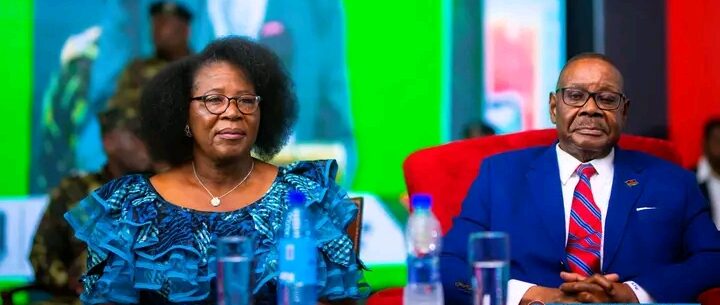
Ansah and Mutharika
Ansah’s concerns should not simply be dismissed as a personal disagreement within government.
The First Vice-President is a constitutionally recognised office, and the occupant is expected to assist the President in running the affairs of the country.
Therefore, when the Vice-President says she is being prevented from effectively performing her duties, Malawians have a legitimate reason to ask whether the problem is administrative, political or a combination of both.
What makes the situation particularly interesting is Ansah’s insistence that her problem is not with Mutharika himself, but with people around him.
This is an important distinction.
If the President and his Vice-President genuinely maintain a good working relationship, then the responsibility falls on the President to ensure that officials around him do not create unnecessary divisions between the two offices.
A President cannot afford an inner circle that becomes more powerful than the institutions it serves.
The controversy over Ansah’s access to Cabinet and government business also deserves serious attention.
Government has previously rejected suggestions that she is being systematically marginalised, while Ansah has now publicly presented a different picture.
When senior officials give conflicting accounts about the responsibilities and access of the Vice-President, it creates uncertainty about who is actually making decisions within the executive branch.
There is also a political lesson for the DPP in this development.
Ansah did not become Vice-President by accident.
She was selected as Mutharika’s running mate and subsequently elected alongside him in the 2025 presidential election.
That political arrangement created expectations among DPP supporters and voters that the two will work as a team.
If that partnership begins to appear dysfunctional, the damage will not be limited to government administration, it can eventually affect the party itself.
The DPP should also be careful not to underestimate the importance of history.
Malawi has already witnessed how disagreements between presidents and vice-presidents can evolve into major political disputes.
The relationship between Mutharika and his former vice-president Joyce Banda deteriorated dramatically, eventually contributing to Banda’s departure from the DPP.
Although the circumstances surrounding Ansah are different, history shows that tensions at the top of government can have consequences far beyond the individuals involved.
For Mutharika, the wisest course would be to address the matter before it becomes an open factional struggle.
If Ansah is being unfairly excluded, the President has the authority and responsibility to correct it.
If there are legitimate administrative reasons for changes to her responsibilities, those reasons should be communicated clearly.
Silence, conflicting statements and anonymous accusations are fertile ground for speculation, mistrust and factional politics.
The DPP therefore, has an opportunity to prevent a small crack from becoming a political fracture.
Ansah’s decision to speak publicly should be treated as a warning rather than merely an embarrassment.
A strong ruling party does not prove its strength by suppressing internal disagreements, it proves it by resolving them before they become destructive.
If Mutharika and Ansah can restore a clear and functional working relationship, the current controversy may eventually fade.
But if the sidelining continues, the question may no longer be whether there are cracks in the DPP, but how wide they have become.