


By Gift Chiponde
For decades, Malawians have been promised a future where the country will move from poverty to prosperity through industrialisation.
Successive governments have spoken about creating industries, adding value to local products and creating employment for thousands of young people. Yet despite these ambitions, many economic indicators suggest that Malawi still has significant groundwork to complete before it can become a truly industrialised nation.
One of the biggest concerns is that Malawi remains largely a consuming economy rather than a producing one. Supermarket shelves are filled with imported goods ranging from food products and household items to construction materials and machinery. Local manufacturers continue to face stiff competition from imports, while the country’s export base remains narrow.
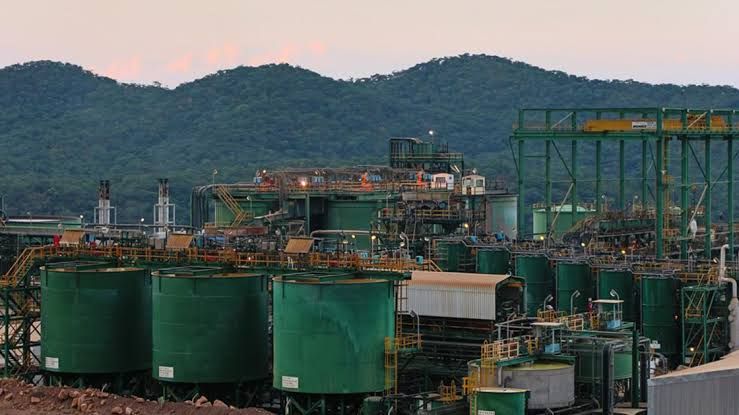
Economists often argue that a nation cannot build a strong industrial economy if it imports far more than it produces.
Another challenge is the country’s continued dependence on donor support for many development programmes. While development partners have played an important role in supporting sectors such as health, education and infrastructure, reliance on external financing can make long-term planning difficult when funding priorities change.
Building a resilient economy requires stronger domestic revenue generation, productive industries and increased private-sector investment.
Taxation has also become a subject of public debate. Many households and small businesses say the rising cost of living, coupled with various taxes and levies, is reducing their disposable income.
Critics argue that when businesses spend more on taxes and operating costs, expansion becomes more difficult, while ordinary citizens have less money to spend. This can slow economic activity, which is essential for industrial growth.
Agriculture, which employs most Malawians, remains heavily dependent on traditional farming methods and rainfall. Mechanisation, irrigation, modern seed technologies and value addition are still limited in many parts of the country.
Without a modern agricultural sector capable of supplying industries with reliable raw materials, manufacturing growth may remain constrained.
Some analysts also argue that politics has, at times, taken centre stage over long-term economic planning. Infrastructure projects and development initiatives can become subjects of political contestation instead of broad national priorities.
Investors generally look for policy consistency, predictability and stability, regardless of changes in political leadership. Such an environment is often viewed as important for sustained industrial investment.
On the international stage, Malawi has maintained diplomatic relations with many countries. However, some observers believe there is room to strengthen economic diplomacy by placing greater emphasis on trade partnerships, export promotion, technology transfer and foreign direct investment.
Expanding commercial relationships could help open markets for Malawian products and support industrial development.
Even with these challenges, Malawi’s potential should not be overlooked.
The country has fertile land, abundant water resources, a youthful workforce and opportunities in agriculture, mining, tourism and manufacturing. If supported by reliable electricity, improved transport networks, skills development, access to finance and policies that encourage local production, these advantages could help lay the foundation for industrial transformation.
Ultimately, the question is not whether Malawi can industrialise, but whether the country is prepared to make the difficult structural changes required to achieve that goal. Reducing dependence on imports, modernising agriculture, encouraging investment, strengthening productive industries and pursuing long-term economic policies could move the nation closer to prosperity.
Until those fundamentals are firmly established, the aspiration of becoming a fully industrialised economy is likely to remain a work in progress rather than a completed journey.