By Our Staff Reporter
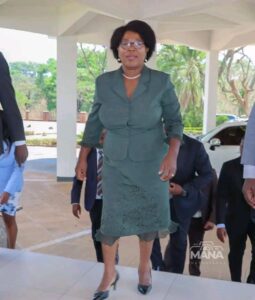
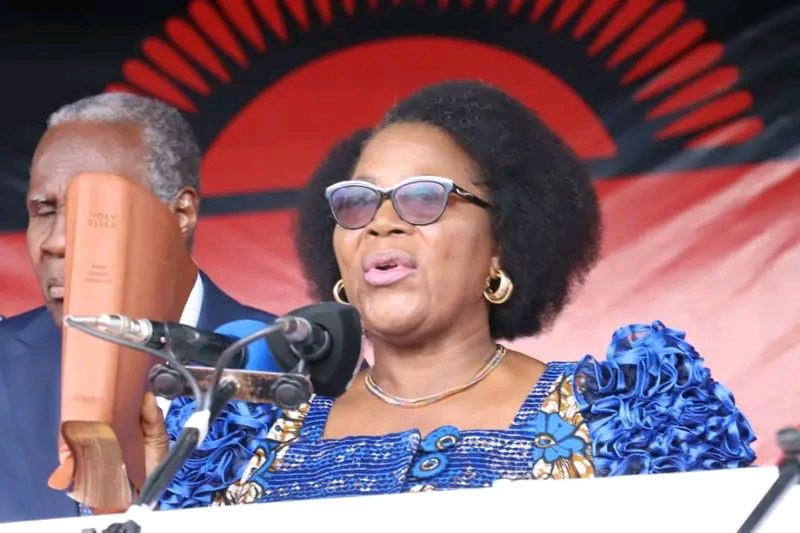
Jane Ansah was sworn in as Malawi’s First Vice President on October 4, 2025, beside President Arthur Peter Mutharika at Kamuzu Stadium in Blantyre.
The moment carried historic weight because she became only the second woman in Malawi’s history to hold the vice presidency.
She arrived in the role not from party politics, but from the bench, as a retired Supreme Court Justice and former chair of the Malawi Electoral Commission.
That legal pedigree immediately shaped how she entered government, with discipline and structure taking priority over rhetoric.
On October 13, she reported for duty at Capital Hill in Lilongwe, telling her management team that their work now carried the trust of millions of Malawians.
Her message was blunt: deliver with integrity, humility, and purpose, or fail the public mandate that put the DPP back in power.
Four days later, she sat down with human resource teams from ministries and agencies to start reviewing public sector reforms.
She pressed for accountability on service delivery and ordered an audit of redundant positions to cut waste in public spending.
The move signaled that her office would not be ceremonial, but operational, even within the limits of a vice presidency constitutionally subordinate to the president.
By October 31, she was in a closed-door cabinet orientation with ministers and private sector leaders, aligning the new administration’s goals for the next five years.
That two-day meeting confirmed her formal designation as First Vice President following a cabinet reshuffle, placing her at the center of executive coordination.
Throughout October, her public statements avoided political theatrics and instead stressed institutional transparency and rule-of-law principles.
Observers noted a clear pattern: she was applying courtroom logic to governance, testing systems, demanding evidence, and pushing for measurable outcomes.
The early focus on administrative transitions suggested she understood that Malawi’s economic challenges could not be solved without a functional bureaucracy first.
In just 27 days, Ansah established an executive presence that looked more like a chief administrator than a traditional deputy.
For international audiences, the question now is whether that technocratic approach can survive the political pressures of party, patronage, and public expectation.