

By Burnett Munthali
Malawi has reported progress in access to justice, legal identity and gender equality while calling for increased funding and stronger African cooperation to address water and sanitation challenges.
Chief State Advocate Duncan Zikagwa of the Ministry of Justice and Constitutional Affairs presented the country’s position during the 89th Ordinary Session of the African Commission on Human and Peoples’ Rights in Dakar, which runs until October 22, 2026.
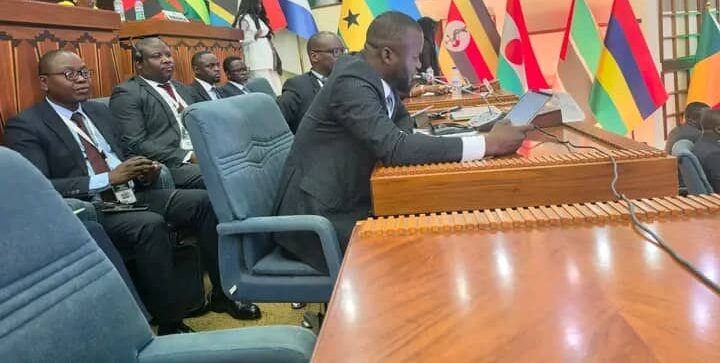
Zikagwa reaffirmed Malawi’s commitment to democratic governance, the rule of law and the protection of fundamental rights under the Constitution and national legislation.
He reported that nearly 89 percent of Malawi’s population has access to improved drinking water services, supported by initiatives such as the National Water and Sanitation Project and the Malawi Watershed Services Improvement Project.
However,he said inadequate sanitation and climate change-related water stress remain challenges, prompting calls for increased funding and continental solidarity.
On birth registration, Zikagwa said more than 3.5 million children have been registered out of an estimated 7.5 million eligible children as of July 2026.
He stressed that registration safeguards children’s rights to a name and nationality while supporting access to education, healthcare and social protection.
Zikagwa said Malawi has also promoted legal identity through the Nzika Digital ID wallet, launched on September 16, 2026, and the removal of expiry dates from national identity cards.
On access to justice,he cited the Malawi Legal Aid Bureau(MLAB)’s efforts to reach underserved communities through new district offices, recruitment, staff training and expanded legal assistance.
He said the Bureau has conducted 39 public awareness campaigns and 41 legal aid clinics, particularly in rural areas.
Zikagwa said partnerships across the justice sector have also expanded pro bono services and strengthened protection for survivors of gender-based violence and children.
On gender equality, he cited implementation of the Gender Equality Act through its 2025–2030 implementation and monitoring plan, which addresses sex discrimination, sexual harassment, equal opportunities and gender representation.
Zikagwa further said the country is consulting stakeholders to validate its periodic reports under the African Charter on Human and Peoples’ Rights and the Maputo Protocol before submitting them to the Commission.
He said despite the progress, challenges remain in registering millions of eligible children, improving sanitation and ensuring vulnerable communities can access legal aid.
Zikagwa said sustained financing, transparent monitoring and effective implementation will be crucial to translating these commitments into tangible improvements in people’s lives.