


By Lyson Swala
Politics is not only judged by wbhat leaders say but also by the responsibilities they are entrusted with.
In government, power is often reflected in assignments, visibility in decision-making, and participation in key national affairs.
That is why the growing debate over whether Vice President Jane Ansah is being sidelined deserves serious public discussion not merely because it concerns one individual, but because it touches on the broader principles of governance, accountability, and constitutional leadership.
Recent developments have fueled speculation that Ansah’s influence within government has diminished significantly.
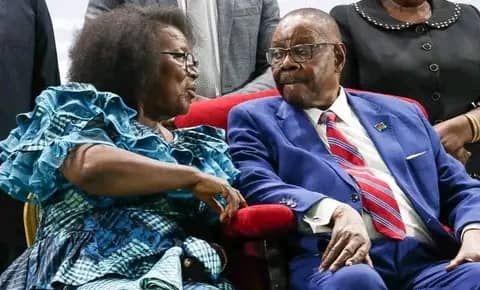
Although the Office of the President and Cabinet (OPC) has strongly dismissed reports that she is being marginalized, insisting that she continues to perform her constitutional duties and attends Cabinet meetings, the sequence of events has left many Malawians unconvinced.
One of the most significant developments was the transfer of the Department of Disaster Management Affairs (DoDMA) from the Office of the Vice President (OVP) back to the OPC.
The move came only weeks after President Peter Mutharika had assigned the department to Ansah following the formation of government after the 2025 elections.
Government described the transfer as part of broader public sector reforms.
However, political observers noted that DoDMA had been the Vice President’s most substantial operational responsibility and that its removal effectively reduced her administrative influence, even if her constitutional office remained intact.
The issue becomes even more significant considering Malawi’s recent experiences with disasters.
Floods during the 2025/26 rainy season affected thousands of households, while millions of Malawians have continued to require humanitarian assistance due to food insecurity.
Disaster management has therefore become one of the government’s most critical portfolios.
Removing it from the Vice President naturally raises questions about confidence, responsibility, and executive priorities.
Another recent incident that has intensified public debate is the Ansah’s absence from a Cabinet meeting, prompting widespread speculation that she had not been invited.
Although government later maintained that she continues to participate fully in Cabinet business, the incident has added to existing perceptions that her role within the administration is shrinking.
Perception matters in politics. Leadership is as much about public confidence as it is about constitutional provisions. When citizens repeatedly witness decisions that appear to reduce the visibility of a Vice President, questions inevitably arise.
Malawi has seen similar political developments before.
During President Peter Mutharika’s first administration, the Department of Disaster Management Affairs was also removed from then Vice President Saulos Klaus Chilima after political disagreements between the two leaders.
At the time, many analysts interpreted the move as an attempt to reduce the Vice President’s influence.
The current situation naturally invites comparisons, even though the political circumstances differ considerably.
Unlike Chilima, Jane Ansah is not regarded as a political rival to President Mutharika.
She was his running mate in the 2025 General Election, and her political future is closely tied to his administration. That reality makes the current developments more intriguing because they cannot easily be explained by internal political competition.
Supporters of the government argue that the Constitution gives the President broad authority to assign and reassign responsibilities to the Vice President.
Indeed, Section 79 of the Constitution provides that the Vice President performs duties assigned by the President.
Legally, therefore, the President acted within his constitutional mandate.
However, legality does not automatically settle the political debate and ood governance is not only about exercising constitutional powers but also about ensuring institutions function effectively and transparently.
Concentrating more executive responsibilities within the Office of the President may be lawful, yet it also raises legitimate questions about checks and balances within the Executive.
History has shown that Vice Presidents in Malawi often occupy uncertain political space.
Several have found themselves with limited responsibilities despite occupying the country’s second-highest office.
This recurring pattern clearly shows that the problem may be institutional rather than personal.
Malawi’s Constitution provides for a Vice President but leaves the office heavily dependent on presidential discretion regarding executive responsibilities.
As a result, the effectiveness of any Vice President largely depends on the confidence and willingness of the President to delegate authority.
This uncertainty has implications beyond politics.
Development partners, investors, and humanitarian agencies generally prefer stable and predictable governance structures.
Frequent administrative changes involving key government institutions can create uncertainty about policy implementation, coordination, and accountability.
There is also a broader democratic concern.Strong governments are not built by concentrating authority in one office alone. They function best when responsibilities are shared among capable leaders, institutions operate independently, and senior officials are empowered to deliver results.
Effective delegation is often a sign of confidence rather than weakness.
This discussion should not be interpreted as an attack on President Mutharika or a defence of Jane Ansah personally.
Rather, it is an opportunity to reflect on how Malawi structures executive leadership.
If the Vice President is constitutionally the second-highest elected official, citizens naturally expect the office to carry meaningful responsibilities.
Otherwise, the position risks becoming largely ceremonial, leaving the public questioning its practical value.
Government has every right to reject claims that Ansah is being sidelined.
Nevertheless, restoring public confidence requires more than official statements.
It requires visible responsibilities, consistent participation in major government programmes, and clear communication about the Vice President’s role in national development.
Ultimately, institutions
matter more than personalities. Today’s debate is about Jane Ansah, but tomorrow it could involve another Vice President under a different administration.
Malawi should therefore use this moment to have an honest national conversation about whether the Office of the Vice President should continue depending almost entirely on presidential discretion or whether reforms are needed to guarantee meaningful constitutional responsibilities regardless of who.